
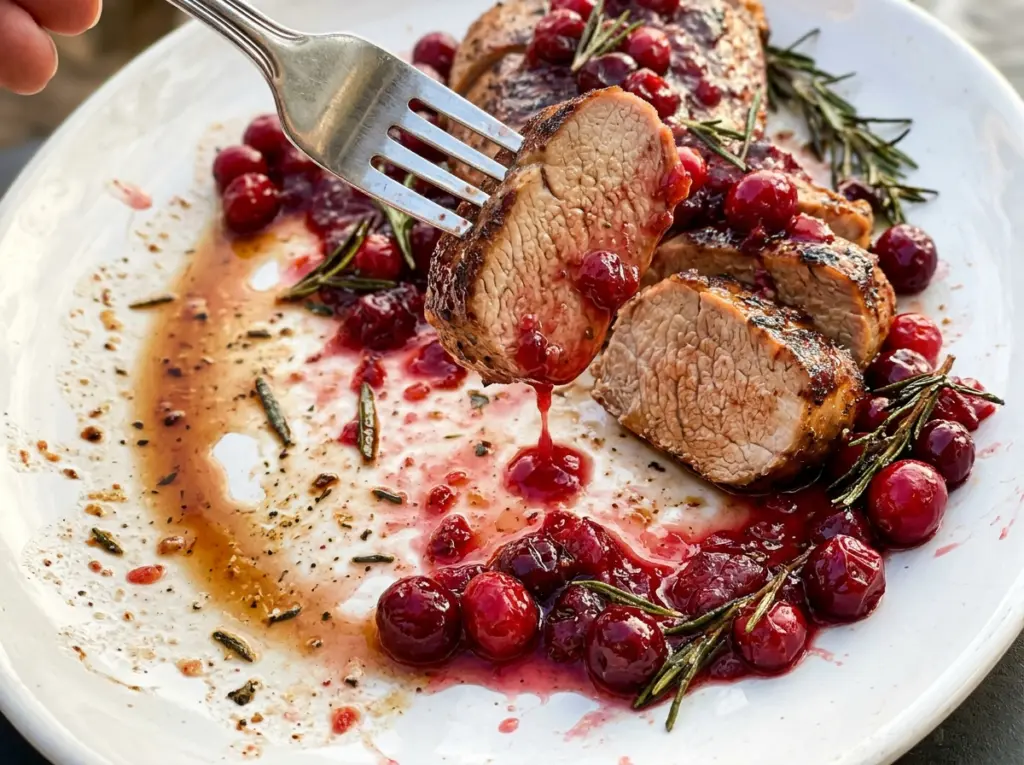
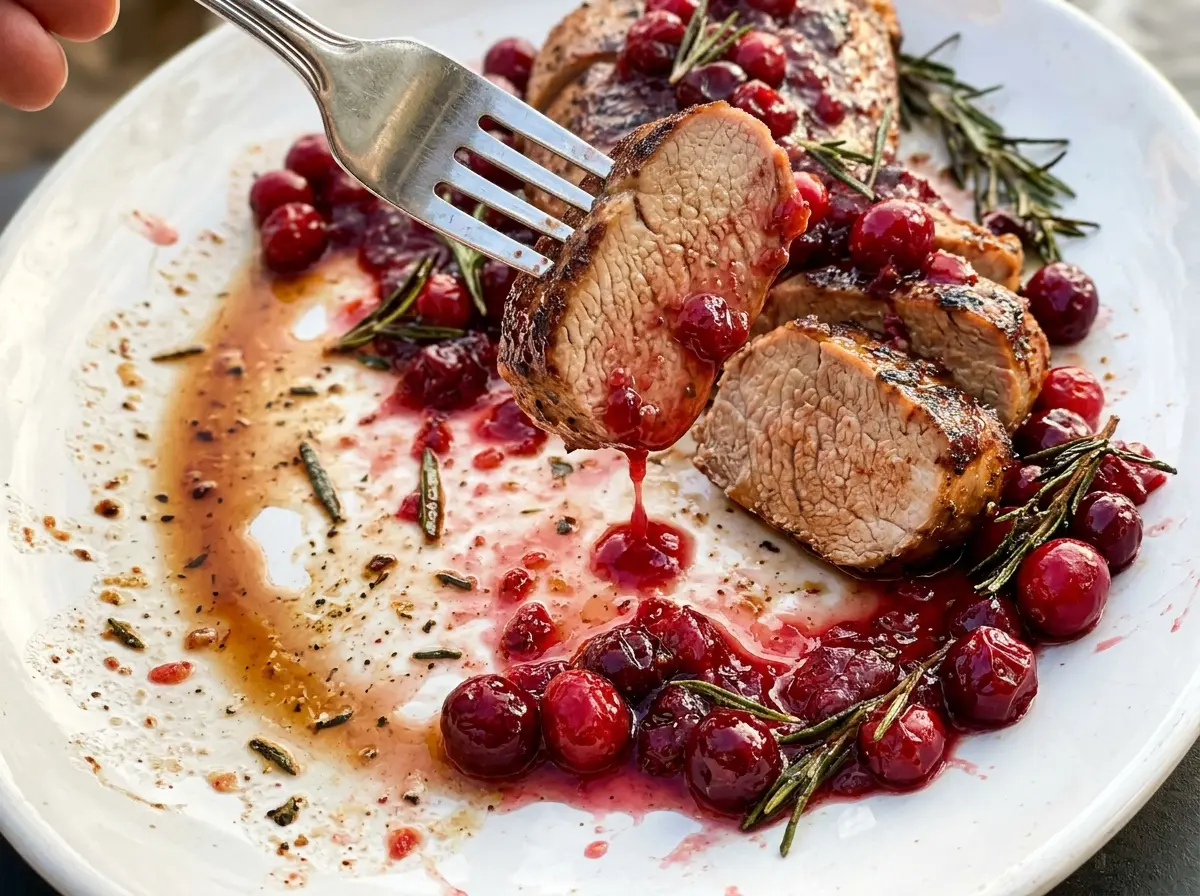
When the pork comes out of the oven, the skillet can look like it’s done its job. But those browned bits on the bottom are where the cranberry rosemary sauce starts, and leaving them behind means missing the best part of this cozy dinner.
I sear the tenderloin first, then roast it in that same 12-inch oven-safe skillet while the browned exterior and juicy center finish together. The cranberry sauce comes together in the pan afterward, with fresh rosemary, a little brown sugar, and balsamic to balance the berries’ tartness. It’s a straightforward way to get a polished-looking dinner on the table without juggling extra pans, and each slice gets a bright, savory spoonful of sauce.
Kitchen Note
Give the pork its full 5 to 10 minutes on the cutting board before slicing. If you cut into it straight from the oven, more of the juices run out instead of staying in the meat.
Save this cranberry rosemary pork tenderloin for a cozy dinner with tender slices and a tart, buttery cranberry sauce.
The Skillet Does Two Jobs, and the Browned Bits Matter
A good sear leaves color on the pork and a layer of browned bits in the skillet. Those bits aren’t burnt scraps to scrub away; they’re concentrated savory flavor from the meat. When the chicken broth goes into the hot pan, scraping the bottom loosens them and folds that flavor into the cranberry sauce.
Using the same skillet also keeps the sauce connected to the pork instead of tasting like a separate topping. Pour off most of the fat, but leave about a tablespoon behind with the browned bits. The shallot softens in that small amount of fat, and the broth lifts what’s stuck to the pan. Then the cranberries, brown sugar, balsamic, and rosemary simmer together in that savory base. It’s a small bit of pan work that gives the tart berries a deeper, more rounded finish.
Why Cranberries Need Brown Sugar, Balsamic, and Fresh Rosemary

- Pork tenderloin — Tenderloin is lean and cooks quickly, so trimming away the silver skin and drying the surface helps the seasoning cling and the outside brown. A tenderloin is not the same cut as pork loin, which is larger and won’t follow the same roasting time.
- Cranberries — Fresh or frozen berries both work here. They bring the sharp, bright flavor that keeps the sauce from feeling heavy, and simmering until they burst gives it a naturally textured body.
- Brown sugar and balsamic vinegar — The sugar softens the cranberries’ tart edge, while balsamic contributes a tangy depth that keeps the sauce from tasting one-note sweet. Neither needs to overpower the fruit.
- Fresh rosemary — Finely chopped fresh rosemary has a fragrant, piney quality that suits both pork and cranberries. Keep the chop fine so the leaves distribute through the sauce instead of landing in large, woody bites.
- Low-sodium chicken broth and unsalted butter — The broth loosens the browned bits and gives the sauce a savory base. Unsalted butter stirred in off the heat adds richness without making the sauce taste greasy.
How to Brown the Tenderloin and Finish the Sauce in One Skillet
Dry and season the pork before it hits the pan
Heat the oven to 400°F, then pat the trimmed tenderloin dry with paper towels. Season it all over with kosher salt and black pepper. Drying the surface gives the pork a better chance to brown rather than steam as it sears. Have the oven-safe skillet ready before you start so you can move from stovetop to oven without delay.
Sear until the outside is browned all over
Heat olive oil in a 12-inch oven-safe skillet over medium-high heat. Add the pork and turn it occasionally until it’s browned on all sides, 6 to 8 minutes total. Let each side make contact with the hot pan long enough to develop color before turning. If the pork is moved constantly, it won’t build the same browned exterior.
Roast to temperature, then let the meat rest
Transfer the skillet to the oven and roast the tenderloin for 12 to 18 minutes, checking the thickest part with an instant-read thermometer. Take it out when that spot reads 145°F; relying only on the clock can leave a lean tenderloin overcooked or underdone. Move the pork to a cutting board and let it rest for 5 to 10 minutes. Keep the skillet nearby for the sauce.
Turn the skillet drippings into cranberry rosemary sauce
Carefully pour off all but about 1 tablespoon of fat, then set the skillet over medium heat. Stir in the finely chopped shallot until softened, about 2 to 3 minutes. Add the chicken broth and scrape up the browned bits, then stir in the cranberries, brown sugar, balsamic vinegar, and rosemary. Simmer for 6 to 8 minutes, until the cranberries burst and the sauce thickens; take the skillet off the heat before stirring in the butter until melted.
Three Practical Ways to Adapt the Cranberry Sauce
Use frozen cranberries for an easy pantry-friendly version
Frozen cranberries work in place of fresh ones without changing the ingredient balance. The sauce keeps its tart, rustic character, and you can simmer the berries until they burst and the sauce thickens just as you would with fresh cranberries.
Make the sauce dairy-free by leaving out the butter
Omit the butter at the end for a dairy-free version. The cranberry sauce will be less glossy and less rounded, but the broth, berries, brown sugar, balsamic, and rosemary still make a bright sauce for the pork.
Choose gluten-free low-sodium chicken broth
For a gluten-free dinner, use a low-sodium chicken broth labeled gluten-free. It keeps the savory base in place without changing the sauce’s balance or the way it cooks.
Storage and Reheating
- Refrigerator: Store pork and sauce in airtight containers for 3 to 4 days. The pork may be a little firmer after chilling.
- Freezer: Freeze the sliced pork and sauce in separate airtight containers for up to 2 to 3 months. Thaw them in the refrigerator before reheating; the pork may lose some tenderness.
- Reheating: Warm the sauce gently in a small saucepan and heat the pork covered with a spoonful of sauce until it reaches 165°F. Avoid prolonged high heat, which can dry out the lean tenderloin.
Questions That Come Up With Pork Tenderloin and Cranberry Sauce
Cranberry Rosemary Pork Tenderloin – Cozy Dinner Recipe
Ingredients
Equipment
Method
- Heat the oven to 400°F.
- Pat the pork dry with paper towels.
- Season the pork all over with the salt and pepper.
- Heat the olive oil in a 12-inch oven-safe skillet over medium-high heat.
- Sear the pork, turning occasionally, until browned on all sides, 6 to 8 minutes total.
- Transfer the skillet to the oven.
- Roast until an instant-read thermometer inserted into the thickest part reads 145°F, 12 to 18 minutes.
- Transfer the pork to a cutting board and let it rest for 5 to 10 minutes.
- Carefully pour off all but about 1 tablespoon of fat from the skillet.
- Set the skillet over medium heat and cook the shallot, stirring, until softened, 2 to 3 minutes.
- Add the chicken broth and scrape up the browned bits.
- Stir in the cranberries, brown sugar, balsamic vinegar, and rosemary.
- Simmer until the cranberries burst and the sauce thickens, 6 to 8 minutes.
- Remove the skillet from the heat and stir in the butter until melted.
- Slice the pork and serve with the sauce.