
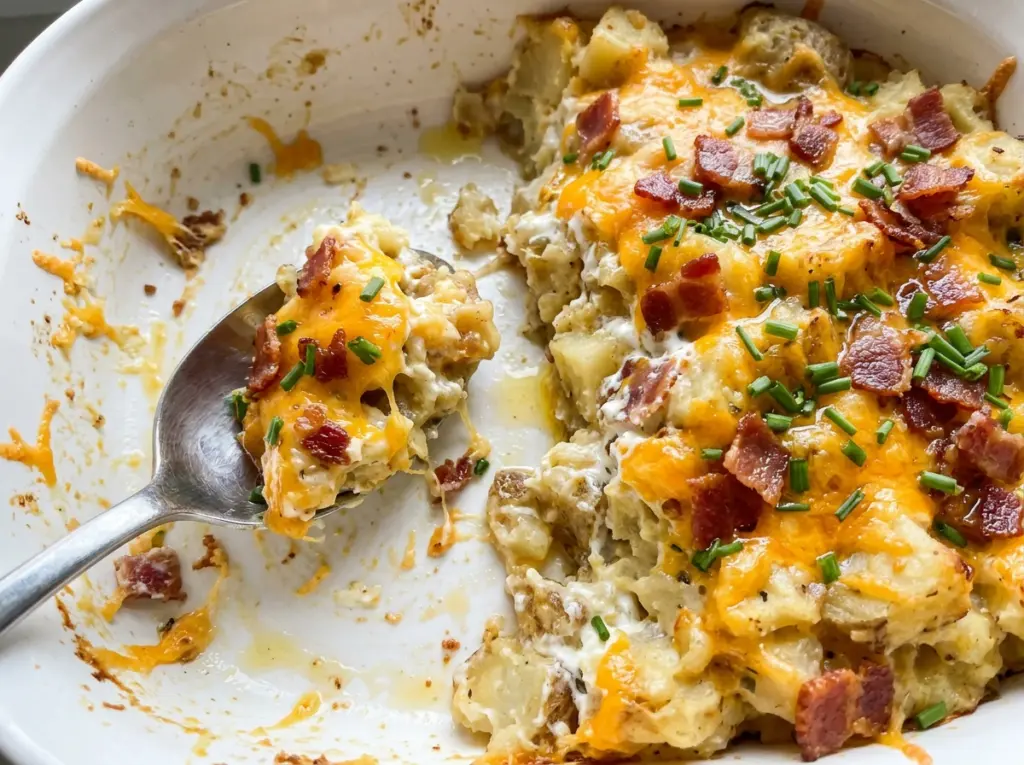
The potato skins wrinkle and the kitchen starts smelling like baked potatoes before the bacon even hits the skillet. That’s the moment I know this Twice Baked Potato Casserole is on its way: fluffy russets, buttery mash, crisp bacon, and cheddar that melts into the top.
Baking the potatoes directly on the oven rack gives their centers a drier, fluffier texture than boiling them in water. I mash the flesh with sour cream, milk, and butter, then fold in the cheese, bacon, and scallions while keeping the mixture soft rather than perfectly smooth. The finished casserole comes out creamy in the middle, with a savory, cheesy top and little pops of scallion in every scoop.
Kitchen Note
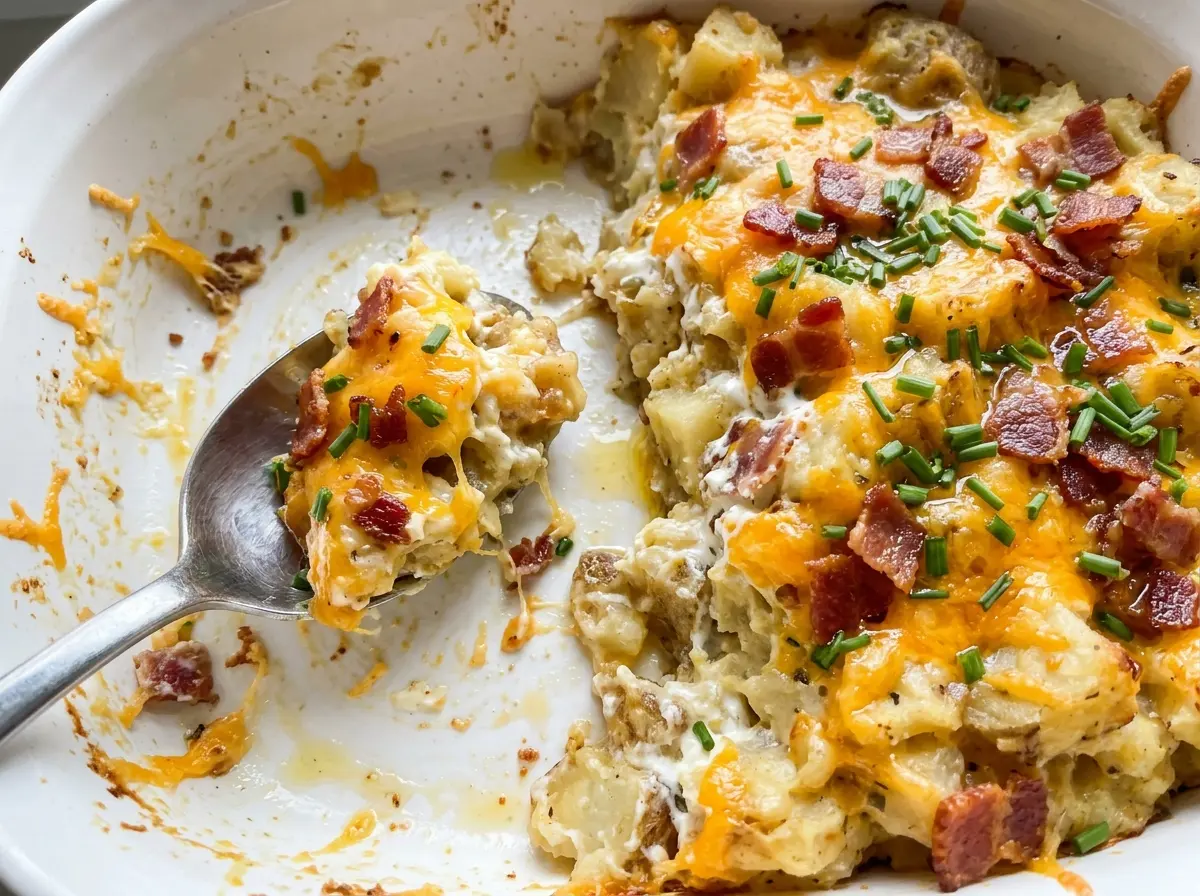
Give the casserole its full 10-minute rest before scooping. The filling settles as it sits, so portions hold together instead of slumping onto the plate.
Save this Twice Baked Potato Casserole for a cozy meal: fluffy russets, crisp bacon, and a blanket of melted cheddar.
Why a Baked Russet Makes a Better Casserole Than a Boiled One
Boiling potatoes seems like the quick route to mashed potatoes, but the extra water can work against you here. This casserole already gets moisture and richness from butter, sour cream, and milk. Starting with waterlogged potato flesh can leave the finished filling loose, especially once the cheese melts through it.
Russets are starchy, and that’s a good fit for this bake. Their fluffy centers mash easily and take on the dairy without turning the casserole into a dense, wet layer. Baking them whole also keeps the potato flavor concentrated, so you don’t have to compensate with extra seasoning or more cheese. That balance matters in a dish with bacon and cheddar, which bring plenty of savory richness.
There’s a useful difference between a fluffy mash and a silky one, too. For this casserole, I stop once the butter, sour cream, milk, salt, and pepper are combined. The cheese and bacon get folded in afterward, so the potato still tastes like potato instead of becoming one uniform paste. The result holds its shape on a plate but stays tender inside.
What the Russets, Bacon, and Cheddar Each Bring

- Russet potatoes — Their starchy flesh turns fluffy after baking and gives the casserole its structure. Choose firm potatoes without soft spots; smaller or larger ones are fine, but the knife test matters more than appearance because the centers need to be tender before scooping.
- Bacon — Crisp bacon brings a salty, smoky crunch that contrasts with the soft potato. A regular grocery-store package works well; the useful cue is crispness, not a particular brand. Drain it before chopping so excess grease doesn’t weigh down the filling.
- Butter, sour cream, and whole milk — Butter gives the mash a round, rich base, sour cream adds a gentle tang, and milk loosens the potato enough to spread. Full-fat sour cream gives the most body; plain Greek yogurt can replace it in the same quantity, though the casserole will taste tangier.
- Cheddar — Cheddar melts into the filling and forms the top layer. A block you shred yourself usually melts more smoothly than pre-shredded cheese, but a store-brand cheddar is perfectly fine here. Pepper Jack works as a same-quantity swap if you want a warmer, spicier finish.
- Scallions — Thin slices bring a fresh onion note that keeps the dairy and bacon from tasting too heavy. Chives can stand in for scallions, but they’re milder and don’t add the same little bite.
From Rack-Baked Potatoes to a Melted Cheddar Top
Bake the Russets Until Their Centers Are Tender
Heat the oven to 400°F and prick the potatoes all over with a fork. Set them directly on the oven rack and bake for 50 to 60 minutes. A knife should slide easily into the center of each potato; if one still feels firm, give it more time rather than trying to mash an undercooked center.
Cook the Bacon Until It Holds Its Crunch
While the potatoes bake, cook the bacon in a 12-inch skillet over medium heat for 8 to 12 minutes, turning it as needed. Watch for crisp edges and a texture that feels firm rather than bendy. Drain the bacon, then chop it once it’s cool enough to handle; pieces that are still greasy can soften in the filling.
Scoop the Potato Flesh Without Rushing
Grease a 9×13-inch baking dish and reduce the oven temperature to 375°F. Let the potatoes cool until they’re comfortable to handle, then halve them lengthwise and scoop the flesh into a large bowl. If they’re too hot to hold securely, wait a little longer; rushing this part makes it harder to get clean halves and scoop the centers safely.
Mash Gently, Then Fold in the Mix-Ins
Add the butter, sour cream, milk, kosher salt, and black pepper to the potato flesh. Mash until the ingredients are combined, then fold in 1 1/2 cups of cheddar, 4 ounces of bacon, and all the thinly sliced scallions. Folding keeps the bacon and cheese distributed without beating them into the potatoes.
Top and Bake Until Heated Through
Spread the mixture in the prepared dish, then scatter the remaining 1/2 cup cheddar and 4 ounces of bacon over the top. Bake at 375°F for 20 to 25 minutes, until the casserole is heated through and the cheese has melted. Let it settle before serving so the creamy filling is easier to scoop.
Three Changes That Give This Casserole a Different Feel
Make It Vegetarian Without Losing the Creamy Base
Leave out the bacon and use cheddar made with vegetarian-friendly enzymes. The casserole will lose the smoky crunch and taste gentler, but the potato, sour cream, and cheddar still make a satisfying, rich filling.
Use Pepper Jack for a Little Heat
Swap the cheddar for the same amount of shredded Pepper Jack. It melts into the potatoes much like cheddar, with a mild chile warmth that makes the bacon taste a little bolder.
Leave a Few Potato Pieces for More Texture
Mash the potato flesh until most of it is smooth, but stop while a few small pieces remain. Those tender bites give each serving a more rustic feel without changing the toppings or bake.
Storage and Reheating
- Refrigerator: Store leftovers in an airtight container for 3 to 4 days. The potato filling firms up when chilled; it softens again as it warms. Refrigerate within 2 hours of baking.
- Freezer: Freeze portions in a tightly sealed, freezer-safe container for 2 to 3 months. Thaw overnight in the refrigerator for more even reheating.
- Reheating: Cover and warm in a 350°F oven until the center reaches 165°F, then uncover briefly to refresh the cheese topping. Avoid reheating uncovered from the start, since the top can dry out before the middle is hot.
Questions That Come Up When Making This Potato Casserole
Twice Baked Potato Casserole
Ingredients
Equipment
Method
- Heat the oven to 400°F.
- Prick the potatoes all over with a fork and bake them directly on the oven rack for 50 to 60 minutes, until a knife slides easily into the centers.
- Cook the bacon in a 12-inch skillet over medium heat for 8 to 12 minutes, turning as needed, until crisp.
- Drain and chop the bacon.
- Grease a 9x13-inch baking dish.
- Reduce the oven temperature to 375°F.
- Let the potatoes cool until comfortable to handle.
- Halve the potatoes lengthwise and scoop the flesh into a large bowl.
- Add the butter, sour cream, milk, salt, and pepper to the potatoes and mash until combined.
- Fold in 1 1/2 cups of the cheddar, 4 ounces of the bacon, and all the scallions.
- Spread the potato mixture in the prepared dish and top with the remaining 1/2 cup cheddar and 4 ounces bacon.
- Bake at 375°F for 20 to 25 minutes, until heated through and the cheese is melted.
- Let the casserole rest for 10 minutes before serving.