
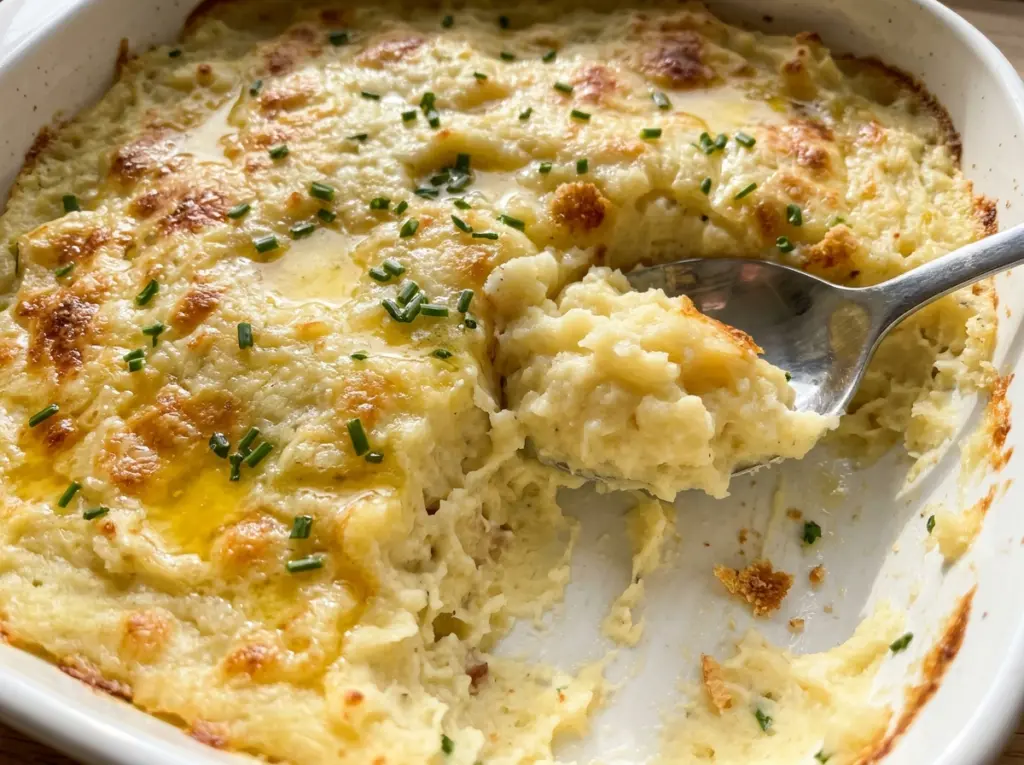
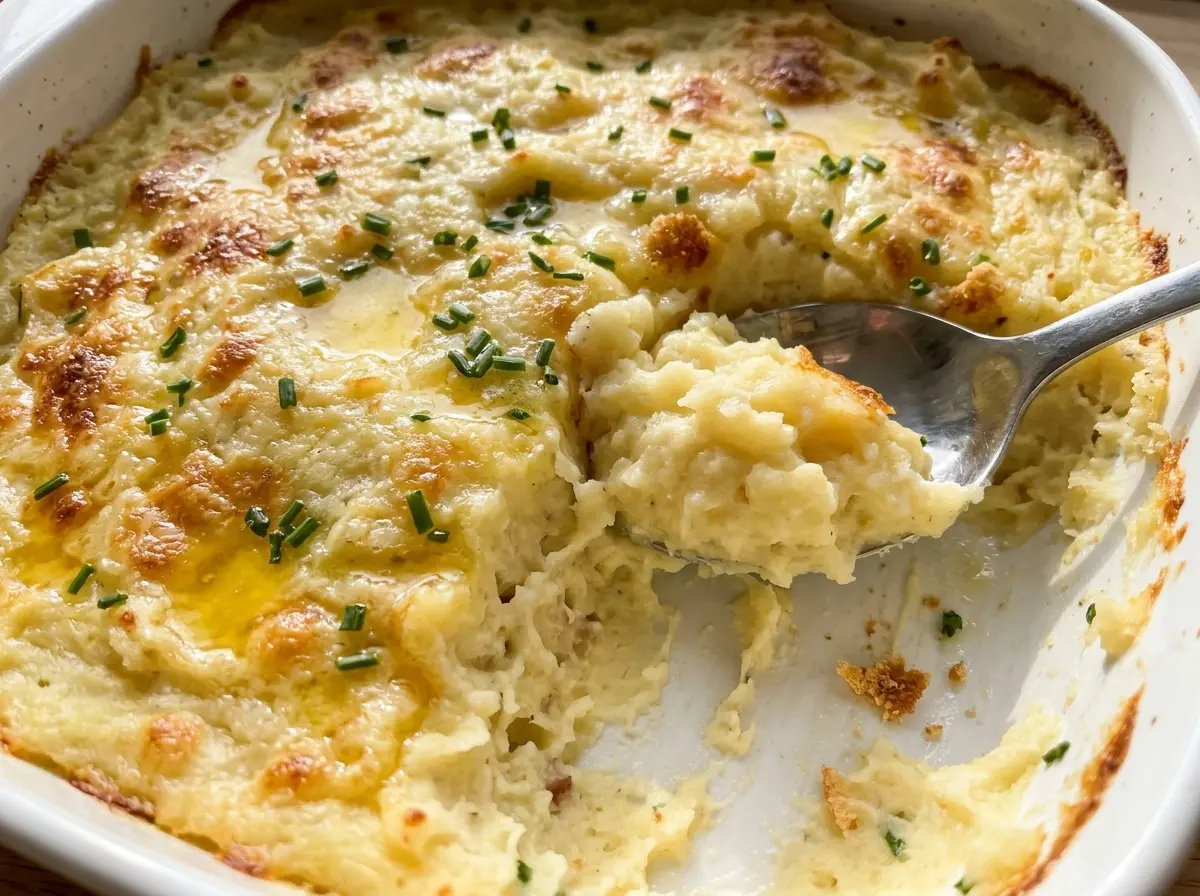
The dish comes out of the oven with a creamy center and a narrow ring of lightly golden edges. That little contrast is what makes these creamy baked mashed potatoes feel different from a bowl of mash served straight from the pot. The potatoes are already tender and buttery before they go into the oven, so the baking time is there to heat everything through and finish the surface.
I keep the cream mixture warm before adding it, then work it into the potatoes gradually. Cold dairy can cool the mash down, and pouring everything in at once makes it harder to stop at the right texture. Russets turn soft and fluffy when cooked, while sour cream adds a gentle tang to balance the butter and cream. Each scoop comes out rich without feeling flat, with those buttery edges tucked around the sides.
Kitchen Note
Don’t skip the five-minute rest after baking. The potatoes settle just enough to scoop neatly, while staying warm and creamy in the middle.
Save these creamy baked mashed potatoes for a meal that calls for a warm, buttery side with golden edges and a soft center.
Why Bake Mashed Potatoes After They’re Already Creamy?
The oven isn’t doing the same job as the pot. By the time the potatoes are spooned into the baking dish, they’re fully cooked and mashed; the bake gives the cream, butter, and sour cream time to heat together, then brings a little color to the edges. That makes the potatoes easy to serve hot from the dish, with a subtle contrast between the soft center and the more set edges.
Leaving the dish uncovered matters for that finish. A covered dish traps steam, so the surface stays softer instead of developing the light golden edges you’re looking for. Dotting the top with the remaining butter also gives the exposed surface a richer finish without adding anything new to the mash itself.
Keep an eye on the edges near the end of baking rather than waiting for the whole surface to brown. The center should be hot throughout, but it doesn’t need a crust. If the edges are lightly golden after the stated bake, the dish is ready for its short rest and serving.
Russets, Warm Dairy, and Butter: What Each One Brings

- Russet potatoes — Their starchy, fluffy texture makes a soft mash that takes in the cream mixture well. Peel them and cut the pieces evenly so they become fork-tender at about the same time. Waxy potatoes work differently and give a denser result, so russets are the right choice for this texture.
- Heavy cream — It adds richness and helps loosen the potatoes without making the mash watery. Warm it with the butter before mixing it in; the heat makes it easier to incorporate. A thinner liquid isn’t a like-for-like replacement and can leave the mash looser.
- Sour cream — Its tang keeps the butter and cream from tasting one-note. If you leave it out, the potatoes will still mash, but they’ll lose that gentle acidity and some of their creamy body. Adding more heavy cream won’t replace the tang.
- Unsalted butter — Using unsalted butter keeps the salt level in your control, and splitting it between the mash and the top gives each portion a buttery finish. The butter doesn’t need to be an expensive specialty brand; use one you like the taste of.
- Kosher salt and black pepper — The salt is divided between the cooking water and the mash, so seasonings are built in at two points. Freshly ground black pepper gives a more noticeable aroma, though ordinary ground pepper works too.
- Nonstick cooking spray — A light coating helps the potatoes release from the baking dish after the edges have set. A basic cooking spray is all you need here.
From Tender Russets to Golden Edges
Boil the potatoes until a fork slips through
Heat the oven to 350°F and coat a 2-quart baking dish with nonstick cooking spray. Put 3 pounds of peeled russet potatoes, cut into 1 1/2-inch chunks, in a large pot and cover them with cold water by 1 inch. Stir in 1 tablespoon of the kosher salt, bring the water to a boil, then lower it to a simmer for 15–20 minutes. The potatoes are ready when a fork goes through a chunk without meeting a firm center.
Warm the dairy while the potatoes drain
Drain the potatoes well and return them to the pot. Let them stand for 2 minutes so excess moisture can evaporate. Meanwhile, heat 6 tablespoons of the butter with 1 cup of heavy cream in a microwave-safe bowl for 60–90 seconds, until the butter has melted and the mixture is hot. If the butter hasn’t melted, give it a little more time rather than adding a cool mixture to the potatoes.
Mash gently and add the cream mixture gradually
Mash the potatoes while they are still warm, adding the hot butter-and-cream mixture a little at a time. Add 1/2 cup sour cream, the remaining 1 teaspoon kosher salt, and 1/2 teaspoon black pepper as you mash. Stop once the potatoes look creamy; continuing to work them after that can turn the texture gluey. The finished mash should hold together but still look soft, not stiff or pasty.
Finish the top in the oven
Spoon the potatoes into the prepared 2-quart dish and dot the top with the remaining 2 tablespoons butter. Bake uncovered for 25–30 minutes, until hot throughout and lightly golden at the edges. If the center is hot but the edges are still pale, give the dish the remaining time in the range. Let it rest for 5 minutes before serving.
Two Ways to Adjust the Texture and Finish
Use a ricer for a finer mash
For an extra-even texture, press the hot, drained potatoes through a potato ricer, then gently fold in the warm cream mixture, sour cream, salt, and pepper. This takes an extra piece of equipment, but it breaks up lumps without vigorous mashing. Stop folding as soon as the mixture is creamy.
Give the pepper a little more presence
Keep the same 1/2 teaspoon of black pepper, but stir most of it into the mash and reserve a pinch to scatter over the top before baking. You get a fresh pepper aroma when the dish comes out, with visible flecks on the golden edges. The overall seasoning stays balanced because you aren’t increasing the amount.
Storage and Reheating
- Refrigerator: Store leftovers in a covered container for 3–4 days. The potatoes may firm up as they chill.
- Freezer: Freeze in an airtight container for up to 1 month for the best texture. Thaw overnight in the refrigerator; the potatoes may look a little less smooth after thawing.
- Reheating: Reheat in a covered baking dish at 350°F until hot throughout and 165°F in the center. Keeping the dish covered helps prevent the edges from drying out; don’t judge the center by the warmth of the top alone.
Questions That Come Up While Making Baked Mashed Potatoes
Creamy Baked Mashed Potatoes
Ingredients
Equipment
Method
- Heat the oven to 350°F.
- Coat a 2-quart baking dish with nonstick cooking spray.
- Put the potatoes in a large pot and cover with cold water by 1 inch.
- Stir in 1 tablespoon of the salt.
- Bring to a boil, then simmer for 15–20 minutes, until the potatoes are fork-tender.
- Drain the potatoes well and return them to the pot.
- Let them stand for 2 minutes so excess moisture can evaporate.
- In a microwave-safe bowl, heat 6 tablespoons of the butter with the heavy cream for 60–90 seconds, until the butter melts and the mixture is hot.
- Mash the potatoes, gradually adding the warm cream mixture, sour cream, remaining 1 teaspoon salt, and black pepper; mash until creamy, without overworking them.
- Spoon the potatoes into the prepared baking dish.
- Dot with the remaining 2 tablespoons butter.
- Bake uncovered for 25–30 minutes, until hot throughout and lightly golden at the edges.
- Let rest for 5 minutes before serving.