
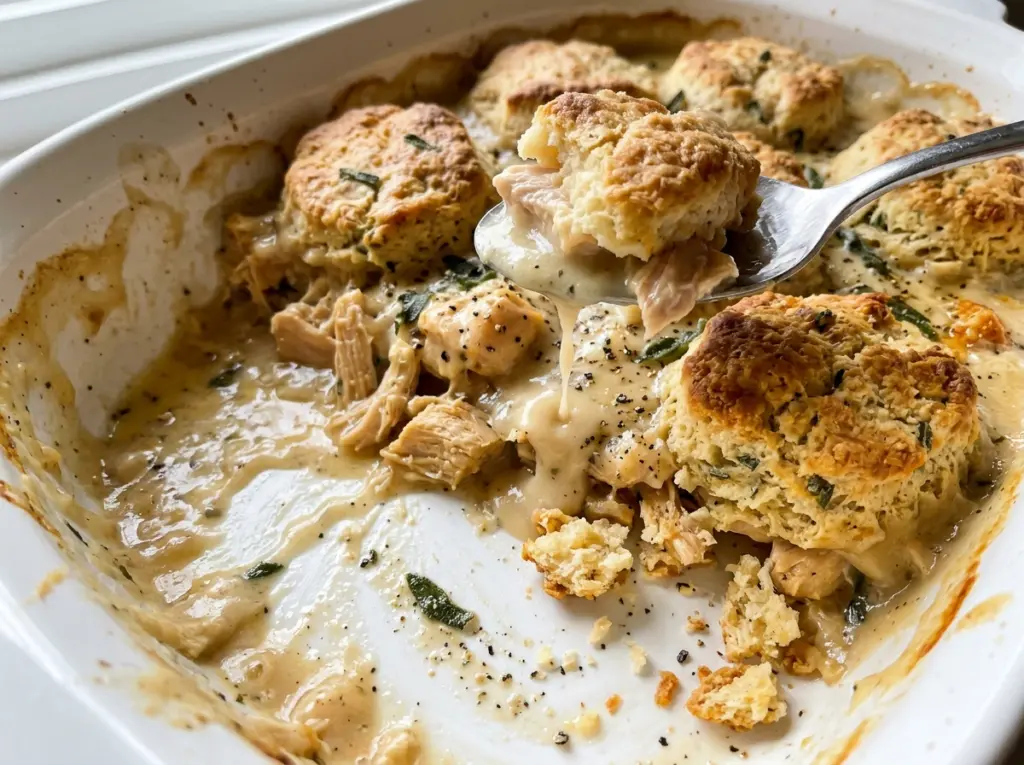
The first time I made a biscuit-topped chicken bake, the gravy looked loose enough to run across the plate before it ever reached the oven. I learned to let it thicken on the stovetop first, while it’s still easy to see what’s happening in the pan. That gives the Chicken and Sage Biscuit Bake with Creamy Gravy a creamy filling that holds together beneath the biscuits instead of turning watery.
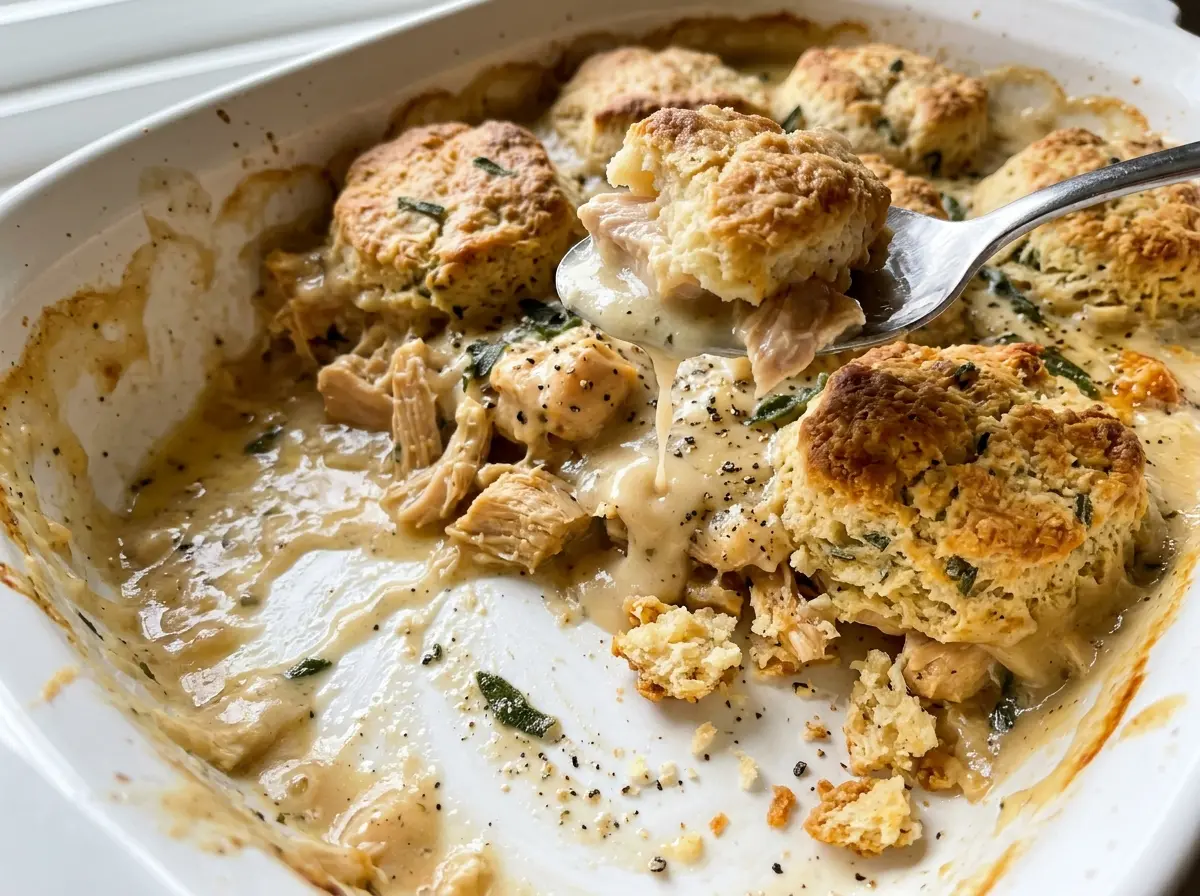
The topping needs a different kind of attention. Cold butter and a light hand keep the sage biscuits tender, and the dough should look shaggy rather than smooth when you stop mixing. Once the hot chicken gravy is in the baking dish, eight biscuit mounds bake into golden tops with soft, savory bottoms. The first spoonful has creamy gravy, tender chicken, and a little fresh sage in every bite.
Kitchen Note
Stop stirring the biscuit dough as soon as the buttermilk is worked in and it looks shaggy. A few pea-sized pieces of cold butter should still be visible; smooth dough has been mixed more than this topping needs.
Save this Chicken and Sage Biscuit Bake for a cozy dinner with thick, creamy gravy and tender sage biscuits baked right on top.
Why the Gravy Needs to Thicken Before the Biscuits Go On
The biscuits bake for 20 to 25 minutes, which is enough time to cook the dough and heat the filling through, but it isn’t a shortcut for building the gravy. The flour needs a few minutes in the skillet to thicken the broth and milk before the chicken and peas go in. That stovetop stage is where you get control over the filling’s texture.
A gravy that still looks thin in the skillet won’t become reliably creamy just because it’s covered with biscuit dough. Let it reach a gentle simmer and cook until it visibly thickens, stirring so the bottom doesn’t catch. It should coat a spoon rather than look like broth. The filling will bubble as it bakes, and the biscuits will sit on top instead of disappearing into a soupy layer.
There’s a practical bonus to cooking the filling until hot before assembling: the oven can focus on baking the biscuits while the center of the dish comes up to temperature. That matters in a 9×13-inch pan, where the biscuit mounds cover the filling but leave spaces for steam to escape. A bubbling filling and golden biscuits are good visual cues; the center should also reach 165°F before the bake comes out.
What the Flour, Butter, and Sage Each Bring to This Bake

- All-purpose flour — It has two jobs here: a small amount thickens the gravy, and the rest gives the biscuits their structure. Keep the gravy flour separate from the biscuit flour as you measure; mixing up those portions changes both textures. All-purpose flour from an everyday bag works well.
- Cold unsalted butter — Little pieces of butter in the biscuit dough create a tender, layered bite. Cut it into small cubes just before mixing and keep it cold; softened butter blends into the flour and makes a heavier topping. Unsalted butter also lets the salt in the dough stay measured.
- Fresh sage — Finely chopped sage gives the biscuits an earthy aroma that stands up to the creamy chicken gravy. Use leaves that smell fragrant and look fresh, since wilted herbs bring less aroma. If you prefer a milder biscuit, leaving the sage out changes the flavor but not the basic dough method.
- Buttermilk — It brings moisture and a gentle tang to the biscuits. Keep it cold until you add it, then stir only until a shaggy dough forms; adding more liquid to make the dough smooth can leave the biscuits dense.
- Chicken and frozen peas — Either shredded or diced cooked chicken works; shredding gives you strands throughout the gravy, while diced pieces make more distinct bites. Frozen peas go straight into the hot filling, so there’s no need to thaw them first. Regular chicken broth is a good fit here, and whole milk gives the gravy its creamy body.
Build the Gravy First, Then Keep the Biscuit Dough Tender
Soften the Vegetables and Cook the Flour
Heat the oven to 425°F and brush a 9×13-inch baking dish with 1 teaspoon of the olive oil. Warm the remaining oil in a 12-inch skillet over medium heat, then cook the diced onion, carrots, and celery, stirring occasionally, for 6 to 8 minutes. They should soften without taking on deep color. Sprinkle the gravy portion of the flour over the vegetables and stir for 1 minute so it coats them evenly.
Whisk the Gravy Until It Coats a Spoon
Gradually whisk in the chicken broth, working out any flour lumps before adding the whole milk. Bring the mixture to a gentle simmer and stir for 3 to 5 minutes, until thickened. Stir in the cooked chicken, frozen peas, the gravy portion of the salt, and the black pepper. Cook for 1 to 2 minutes, just until the filling is hot.
Mix the Sage Biscuits Without Overworking Them
In a medium bowl, whisk together the remaining flour, baking powder, the remaining salt, and finely chopped sage. Cut in the cold butter with a pastry cutter or your fingertips until the pieces are about pea-sized. Pour in the cold buttermilk and stir just until the dough comes together in a shaggy mass. If it still looks a little rough, that’s the right point to stop.
Top the Hot Filling and Bake Until Golden
Transfer the hot chicken gravy to the prepared baking dish. Drop the biscuit dough in 8 evenly spaced mounds over the top, using about 1/4 cup of dough per mound. Bake for 20 to 25 minutes, until the biscuits are golden and cooked through, the filling is bubbling, and the center reaches 165°F. Let the bake rest for 10 minutes before serving so the filling can settle.
Simple Changes for Different Biscuit Bakes
Shredded Chicken for a More Blended Filling
Use shredded rather than diced cooked chicken, keeping the same amount. The strands mingle with the gravy and peas for a more uniform spoonful, while diced chicken gives the filling clearer, larger bites.
A Sage-Free Biscuit Topping
Leave the chopped sage out of the biscuit mixture if you want a plainer, buttery topping. The biscuit method stays the same, but the herbal note won’t compete with the savory gravy.
Skip the Peas for a Simpler Gravy
Leave out the frozen peas if you’d rather keep the filling focused on chicken and the diced vegetables. The gravy will have fewer sweet pops of texture, but the rest of the bake can be prepared the same way.
Storage and Reheating
- Refrigerator: Refrigerate leftovers in a covered container for 3 to 4 days. The biscuits soften as they sit against the gravy.
- Freezer: Freeze cooled portions in an airtight container for up to 2 months. The gravy holds up well, though the biscuit topping will be softer after thawing.
- Reheating: Warm portions in a 350°F oven, covered, until hot throughout; uncover near the end if you’d like the tops to dry a little. Microwaving works for a quick portion, but the biscuit will be softer.
Questions That Come Up When Making This Chicken Biscuit Bake
Chicken and Sage Biscuit Bake with Creamy Gravy
Ingredients
Equipment
Method
- Heat the oven to 425°F.
- Brush a 9x13-inch baking dish with 1 teaspoon of the olive oil.
- Heat the remaining olive oil in a 12-inch skillet over medium heat.
- Add the onion, carrots, and celery and cook, stirring occasionally, until softened, 6 to 8 minutes.
- Sprinkle 1/3 cup flour over the vegetables and cook, stirring, for 1 minute.
- Gradually whisk in the chicken broth until smooth, then whisk in the milk.
- Bring the gravy to a gentle simmer and cook, stirring, until thickened, 3 to 5 minutes.
- Stir in the chicken, peas, 1/2 teaspoon salt, and pepper; cook until hot, 1 to 2 minutes.
- In a medium bowl, whisk together the remaining 2 cups flour, baking powder, remaining 1/2 teaspoon salt, and sage.
- Cut in the cold butter with a pastry cutter or your fingertips until the pieces are about pea-sized.
- Pour in the buttermilk and stir just until a shaggy dough forms.
- Transfer the hot chicken gravy to the prepared baking dish.
- Drop the biscuit dough in 8 evenly spaced mounds over the filling, using about 1/4 cup dough per mound.
- Bake for 20 to 25 minutes, until the biscuits are golden and cooked through, the filling is bubbling, and the center of the filling reaches 165°F.
- Let the bake rest for 10 minutes before serving.