
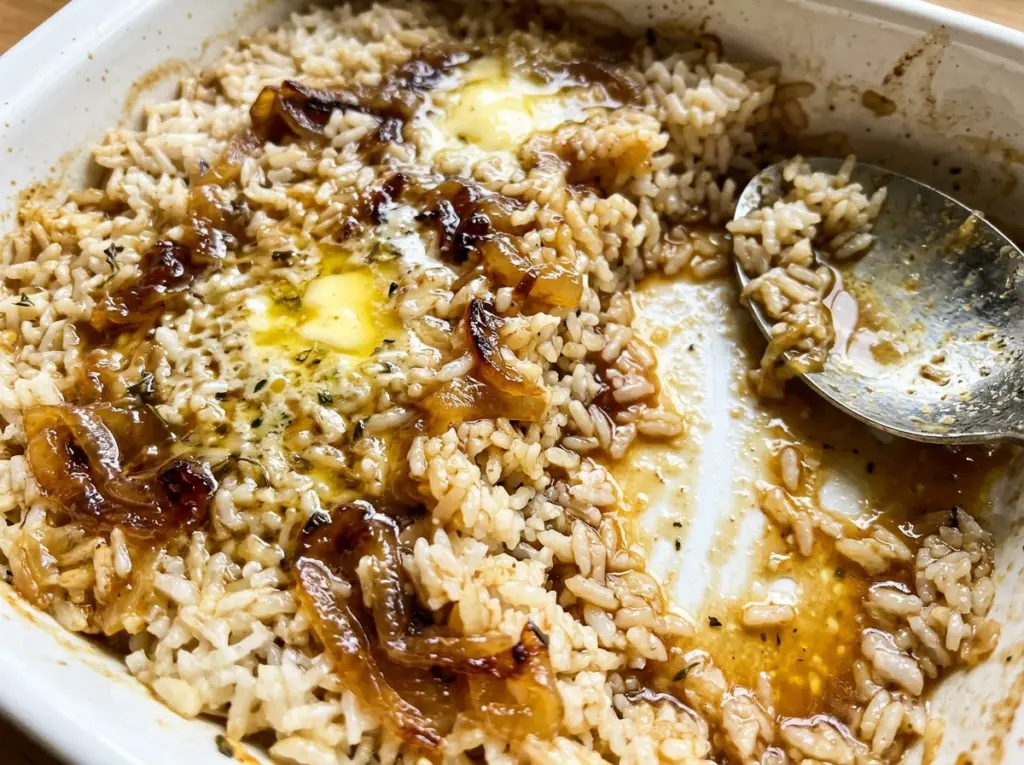
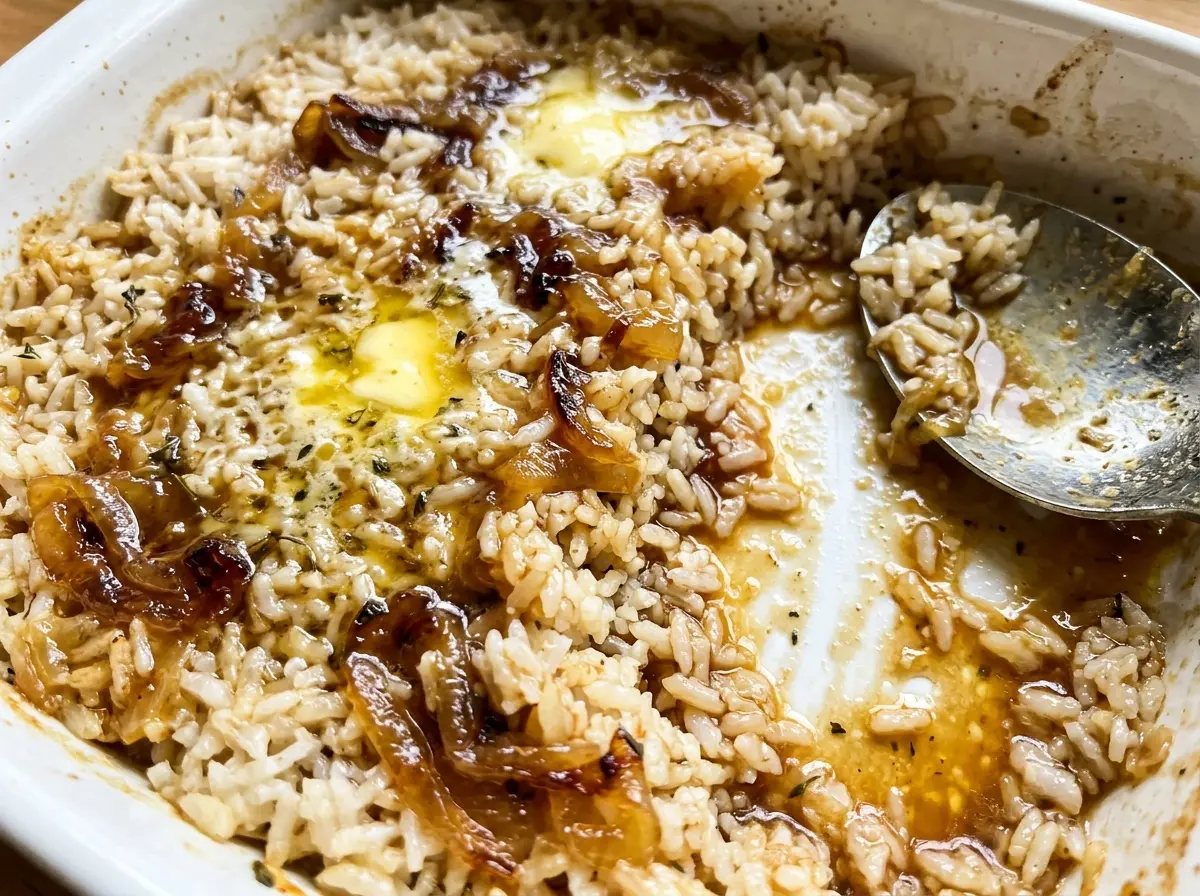
When you lift the foil, the rice should be tender and the liquid absorbed, with butter melted through the grains instead of sitting in a puddle at the bottom. That’s the simple payoff of baking Classic French Onion Rice in one covered dish: the rice takes on the savory flavor of the soup and beef consommé while it cooks.
I like this method for a dependable side that doesn’t need a separate pot or constant attention. The rice goes into the baking dish uncooked, and the two canned soups supply the liquid and seasoning. Keep the foil snug and give the finished dish its full rest before serving; you’ll have tender, savory rice with a buttery finish.
Kitchen Note
A 2-quart baking dish gives the rice room to sit in an even layer. In a much smaller dish, the deeper pile can cook unevenly, leaving some grains firm while others soften.
Save Classic French Onion Rice for a savory, buttery side that bakes in one covered dish.
Why This Rice Goes Into the Oven Uncooked
There’s no need to cook the rice first. It absorbs the soup and consommé as the covered casserole bakes, so the grains take on their savory flavor from the start. Pre-cooking would change how much liquid the rice needs and leave this carefully balanced combination too wet.
The foil does more than keep the top from drying out. It holds steam inside the dish, giving the long-grain rice the moist, steady heat it needs to soften throughout. That’s also why the rice and liquid need to be spread evenly before the dish goes into the oven: a crowded patch or loose cover can mean uneven cooking.
This is a hands-off side, but it isn’t a dish to rush by peeking repeatedly or pulling it out early. Keep it covered for the bake, then judge doneness by the rice itself: tender grains and no visible pool of liquid. If it needs more time, the foil goes back on to hold in the steam.
What the Rice, Soup, and Consommé Each Bring

- Long-grain white rice — Its relatively firm, separate grains suit a casserole where the rice cooks directly in seasoned liquid. Use plain long-grain white rice rather than a quick-cooking variety; the covered bake time is designed for the former.
- Condensed French onion soup — This brings the onion character and a concentrated savory base. Since it is condensed, use it straight from the can rather than diluting it; adding water would change the amount of liquid the rice cooks in.
- Beef consommé — The consommé supplies the rest of the cooking liquid and a deeper beefy note. It works alongside the onion soup rather than replacing it, so using both gives the rice its particular balance.
- Unsalted butter — Pieces arranged over the surface melt into the casserole as it bakes, adding richness throughout. Unsalted butter keeps the butter itself from bringing extra salt to the canned soup mixture.
Getting the Covered Bake Right, From Dish to Rest
Spread the Rice and Layer the Flavor
Heat the oven to 350°F, then spread the uncooked rice across a 2-quart baking dish. Stir in the French onion soup and beef consommé so the rice is distributed through the liquid instead of clumping in one spot. Arrange the butter pieces evenly over the top. Take a moment to spread everything before covering; an even layer gives the rice a better chance of cooking at the same pace.
Seal in the Steam Until the Grains Soften
Cover the dish tightly with foil and bake for 55 to 65 minutes. The rice is ready when the grains are tender and the liquid has been absorbed. If the center is still firm, cover the dish again and bake for another 5 to 10 minutes. A loose foil cover lets steam escape, so press it snugly around the dish before baking.
Let the Rice Settle Before Serving
Once the rice is tender, leave the dish covered and let it rest for 10 minutes. That short pause gives the moisture a chance to settle through the grains after the oven heat stops. Keep the foil on during the rest rather than uncovering the dish right away. Fluff and serve after the covered rest.
Two Smart Ways to Adapt the Soup-and-Butter Combination
A Lower-Sodium Pantry Version
Use reduced-sodium condensed French onion soup and reduced-sodium beef consommé in the same amounts. The finished rice will taste less salty, though the onion and beef notes may be a little gentler than they are with standard canned versions.
A Dairy-Free Adaptation
Replace the butter with the same amount of dairy-free butter-style baking sticks, and use a dairy-free condensed French onion soup. The rice still bakes in the same way, though the buttery flavor will depend on the product and may be less pronounced.
Storage and Reheating
- Refrigerator: Refrigerate leftovers within 2 hours and use them within 3 to 4 days. The chilled rice will firm up as it sits.
- Freezer: Freeze airtight portions for up to 1 month for the best texture. Thaw in the refrigerator before reheating; the grains may be a little softer afterward.
- Reheating: Reheat a covered portion in the microwave with a small splash of water, stirring partway through, until it reaches 165°F. Don’t heat it uncovered for too long, or the rice can dry at the edges.
Questions That Come Up When Baking French Onion Rice
Classic French Onion Rice
Ingredients
Equipment
Method
- Preheat the oven to 350°F.
- Spread the rice in a 2-quart baking dish.
- Stir in the French onion soup and beef consommé.
- Arrange the butter pieces evenly over the top.
- Cover the dish tightly with foil.
- Bake for 55-65 minutes, until the rice is tender and the liquid is absorbed.
- If the rice is still firm, cover and bake for another 5-10 minutes.
- Let the rice rest, covered, for 10 minutes before serving.