
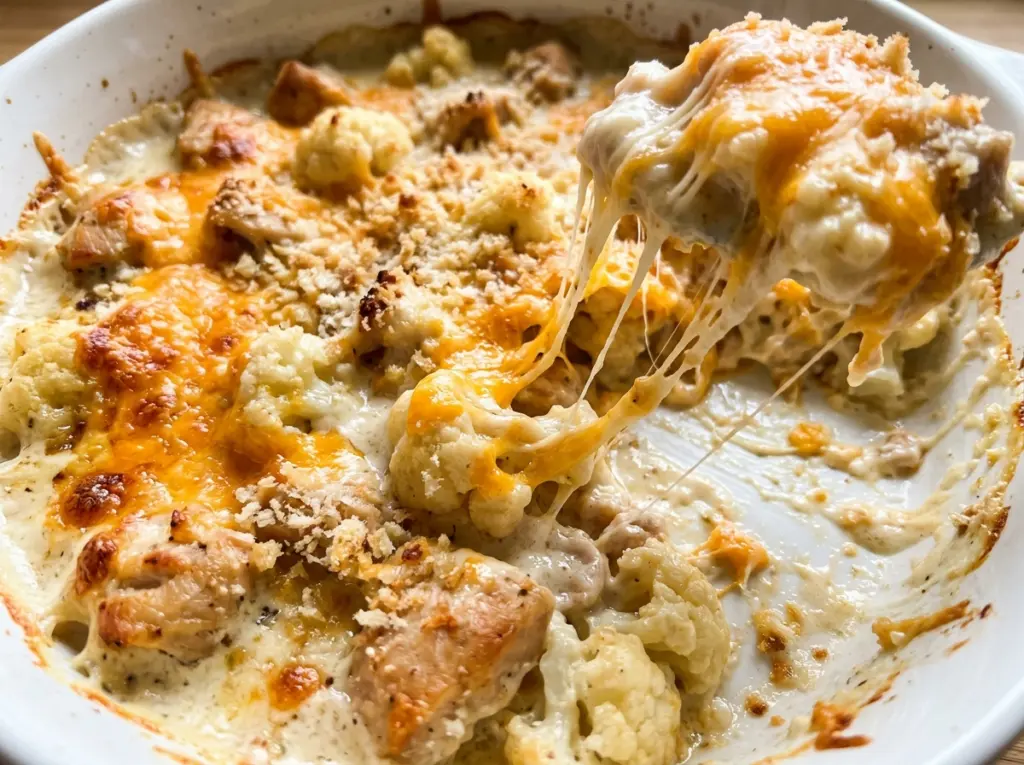
At 425°F, cauliflower florets pick up browned edges before they ever meet the cheese sauce. That small bit of color gives this Cheddar Chicken and Cauliflower Casserole more character than a pan of steamed vegetables, and it helps keep the finished dish from feeling watery. The first time I made it, I expected the panko topping to be the star; what I kept coming back to was the contrast between those toasted crumbs and the creamy cheddar underneath.
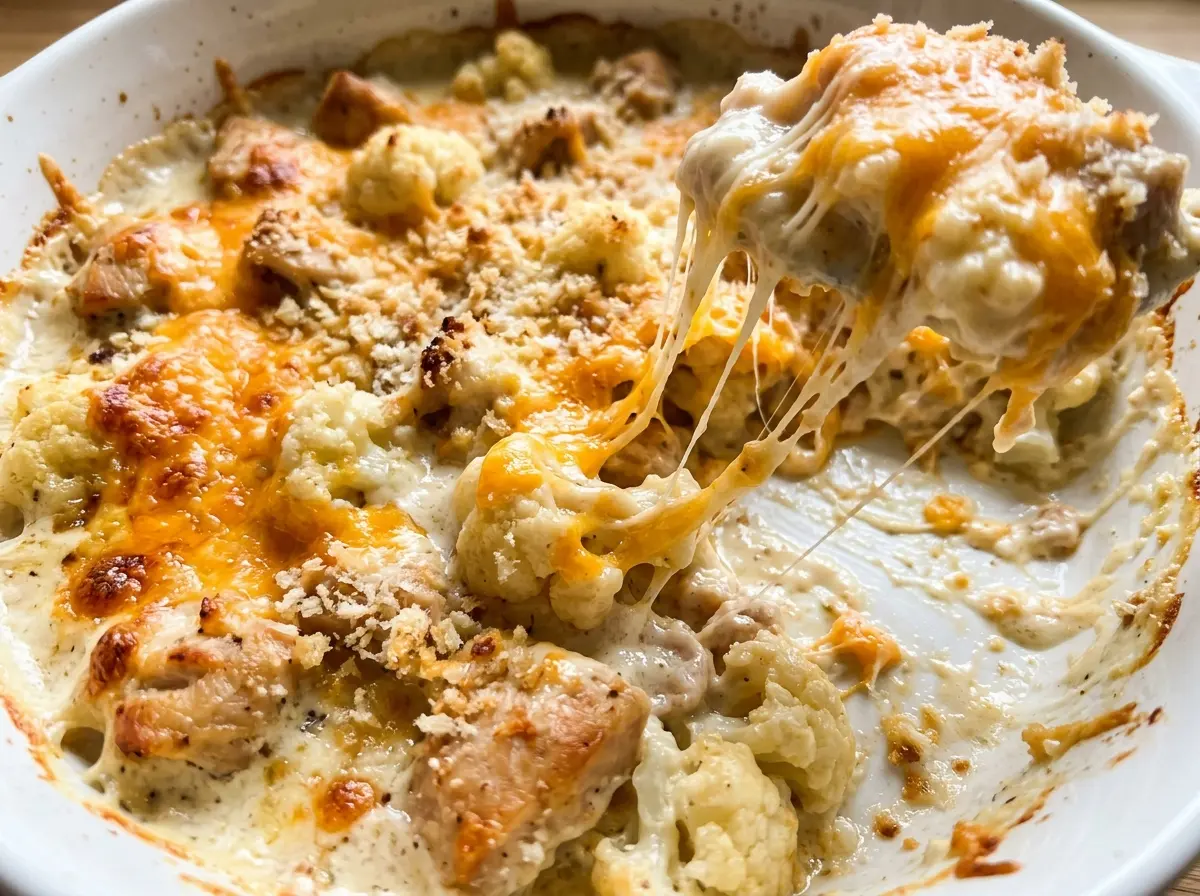
This is a cozy, substantial bake without pasta or rice, and the chicken makes it a complete dinner in one dish. I like the sauce with sharp cheddar because its tang comes through against the mild cauliflower, while a little Dijon keeps the richness from tasting flat. Once the casserole is baked, the topping turns golden and the cheese sauce bubbles up around the edges. Give it a few minutes to settle, then scoop through the crisp top to the tender cauliflower below.
Kitchen Note
Have the chicken cooked and shredded before you start assembling. The oven time here is for heating the casserole through and browning the topping, not for cooking raw chicken from scratch.
Save this Cheddar Chicken and Cauliflower Casserole for its browned cauliflower, creamy cheddar sauce, and crisp panko top.
Roast the Cauliflower First, or the Cheese Sauce Gets Watery
Cauliflower holds plenty of moisture, and that water has to go somewhere once the florets are covered in sauce. If you start with raw or steamed cauliflower, it keeps releasing moisture in the baking dish. The cheddar sauce gets diluted, and the bottom of the casserole can turn loose instead of staying creamy.
Roasting the florets on their own gives that moisture a chance to escape before the sauce goes on. The dry heat also browns the outside, adding a deeper, toasted flavor that balances the mild vegetable and rich cheese. Spread the pieces in one layer rather than piling them up; crowded florets trap steam and soften instead of browning. You want cauliflower that’s just tender before it goes into the casserole, since it will spend more time in the oven while the topping turns golden.
That separate roast is what gives this bake its structure: tender vegetables, a sauce that clings, and a topping that stays distinct. It takes one extra pan, but it saves the casserole from becoming soupy.
Why Sharp Cheddar and Panko Matter in This Casserole

- Cauliflower — Choose firm florets without damp or browned cut surfaces. Cutting them to a similar size helps them roast at the same pace, and fresh cauliflower gives you the best chance of browned edges rather than a soft, wet result.
- Cooked shredded chicken — Plain cooked chicken lets the cheddar and Dijon come through without competing seasoning. Rotisserie chicken is a handy option; shred it into bite-size strands so it distributes well instead of leaving large chunks in each serving.
- Sharp cheddar — Its stronger flavor stands up to the cauliflower and milk-based sauce. A block of cheddar that you shred yourself melts more smoothly than pre-shredded cheese, which is often coated to keep the shreds separate.
- Whole milk, broth, and flour — Butter and flour make the roux that thickens the sauce, while whole milk gives it body and chicken broth adds savory depth. Lower-fat milk can make the sauce thinner, so whole milk is the more dependable choice here.
- Dijon and garlic powder — Dijon adds a gentle tang that cuts through the cheese, and garlic powder seasons the sauce evenly without adding moisture. The small amount of mustard supports the cheddar rather than making the casserole taste mustardy.
- Panko and Parmesan — Panko stays lighter and crunchier than fine breadcrumbs, while finely grated Parmesan adds a salty, browned finish. Finely grated cheese blends into the crumbs more evenly than large shreds.
Roasting, Roux, and the Golden Finish
Roast Until the Edges Take on Color
Heat the oven to 425°F. Toss the cauliflower with olive oil and half of the salt on a rimmed 18×13-inch baking sheet, then spread it in an even layer. Roast for 18–22 minutes, until the florets are just tender and lightly browned. If the pieces are packed tightly together, they steam, so give them room across the pan.
Cook the Roux Before Adding the Liquids
Melt 4 tablespoons of butter in a 2-quart saucepan over medium heat, whisk in the flour, and cook for 1 minute while whisking. The mixture should look smooth and smell lightly toasted, not browned. Gradually whisk in the milk and chicken broth, then cook for 4–6 minutes, whisking often. Stop when the sauce coats the back of a spoon; it will thicken further once the cheddar melts.
Melt the Cheddar Off the Heat
Take the saucepan off the heat before stirring in the Dijon, garlic powder, black pepper, remaining salt, and 1 1/2 cups of cheddar. Stir until the cheese has melted into the sauce. Keeping the pan off the burner helps the cheddar melt smoothly rather than turning grainy. The sauce should look cohesive and glossy before it goes over the chicken and cauliflower.
Top and Bake Until the Center Is Hot
Lower the oven to 375°F and lightly coat a 9×13-inch baking dish with nonstick spray. Add the roasted cauliflower and cooked chicken, pour the sauce over them, and toss gently; scatter the remaining cheddar across the top. Melt the remaining butter, stir it with the panko and Parmesan, and sprinkle the mixture evenly over the casserole. Bake for 20–25 minutes, until the topping is golden, the casserole bubbles, and the center reaches 165°F; let it rest for 10 minutes before serving.
Three Swaps That Keep This Casserole in Good Shape
Make It Gluten-Free with Two Direct Swaps
Use a 1:1 gluten-free baking flour in place of the all-purpose flour and gluten-free panko in place of regular panko, keeping the same quantities. The sauce may have a slightly different finish depending on the flour blend, but it still thickens into a creamy base for the casserole.
Use Cooked Turkey Instead of Chicken
Swap in the same volume of cooked, shredded turkey for the chicken. It keeps the casserole hearty and works especially well with leftover roast turkey; the cheddar sauce and crisp topping stay the same.
Trade Some Sharpness for Smoked Cheddar
Replace the cheddar with smoked cheddar in the same quantity for a deeper, smoky cheese flavor. It melts into the sauce, but the smoked taste is more pronounced, so this version is less tangy and more savory.
Storage and Reheating
- Refrigerator: Store leftovers covered for 3–4 days. The cauliflower softens a little, and the panko loses some of its crunch.
- Freezer: Freeze cooled portions in airtight containers for up to 2 months. The cauliflower will be softer after thawing, and the cheese sauce may look slightly less smooth, but the casserole reheats well.
- Reheating: Warm covered in a 350°F oven until hot throughout, then uncover for the last few minutes to crisp the topping. Leaving it uncovered the whole time can dry out the chicken before the center is warm.
Questions That Come Up with Cheddar Chicken and Cauliflower Casserole
Cheddar Chicken and Cauliflower Casserole
Ingredients
Equipment
Method
- Heat the oven to 425°F.
- Toss the cauliflower with the olive oil and 1/2 teaspoon of the salt on a rimmed 18x13-inch baking sheet.
- Spread the cauliflower in an even layer and roast for 18–22 minutes, until just tender and lightly browned.
- Melt 4 tablespoons of the butter in a 2-quart saucepan over medium heat.
- Whisk in the flour and cook, whisking, for 1 minute.
- Gradually whisk in the milk and chicken broth.
- Cook for 4–6 minutes, whisking often, until the sauce thickens enough to coat the back of a spoon.
- Remove the sauce from the heat and stir in the Dijon, garlic powder, black pepper, remaining 1/2 teaspoon salt, and 1 1/2 cups of the cheddar until melted.
- Reduce the oven temperature to 375°F.
- Lightly coat a 9x13-inch baking dish with nonstick cooking spray.
- Add the roasted cauliflower and chicken to the dish.
- Pour the cheese sauce over them and gently toss to combine.
- Scatter the remaining 1/2 cup cheddar over the top.
- Melt the remaining 2 tablespoons butter.
- Stir the panko and Parmesan together with the melted butter.
- Sprinkle the mixture evenly over the casserole.
- Bake for 20–25 minutes, until the topping is golden, the casserole is bubbling, and the center reaches 165°F.
- Let the casserole rest for 10 minutes before serving.