
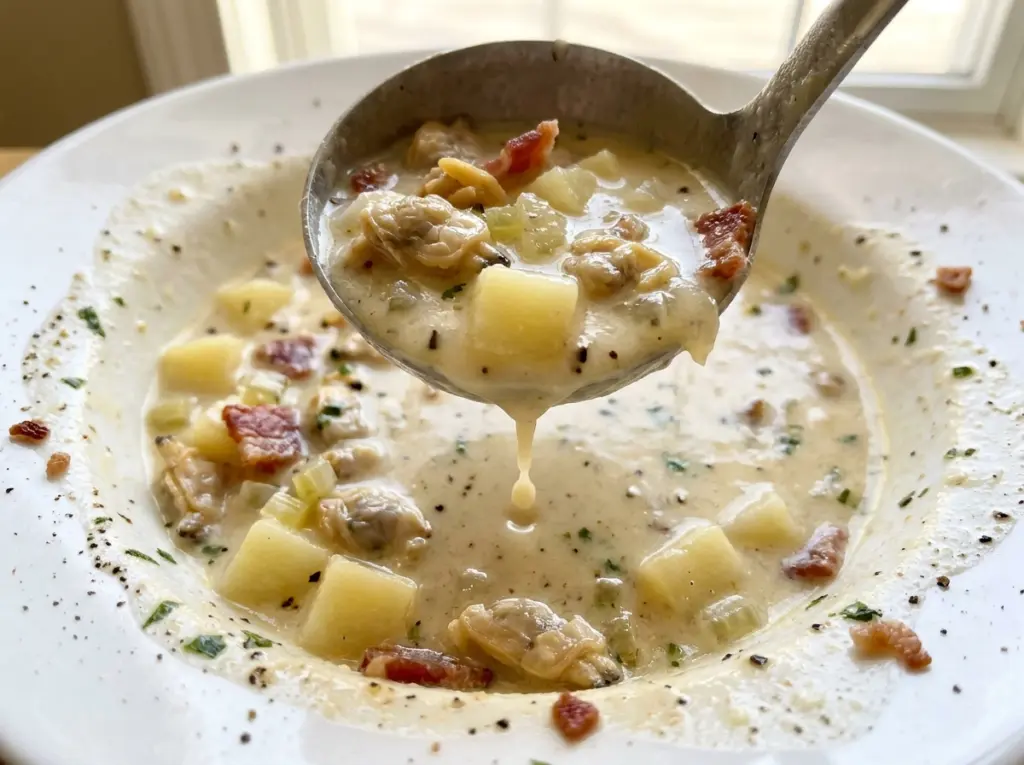
The bacon should sizzle slowly enough to render its fat before it turns crisp; rush it, and you miss the savory base that makes a bowl taste like more than potatoes in cream. I keep the heat at medium and stir now and then while it cooks. That first pot of classic New England clam chowder with bacon taught me to hold back some of the crisp bacon for the bowls instead of stirring every bit into the pot.
The other detail that gives this chowder its steady, creamy texture is building the broth before the potatoes go in. Flour cooks briefly with the softened onion and celery, then the clam juice and water go in gradually, so the base turns smooth instead of lumpy. Yukon Gold potatoes soften without disappearing, and the clams only need a short, gentle finish. The result is rich but still tastes unmistakably of clams, with crisp bacon on top.
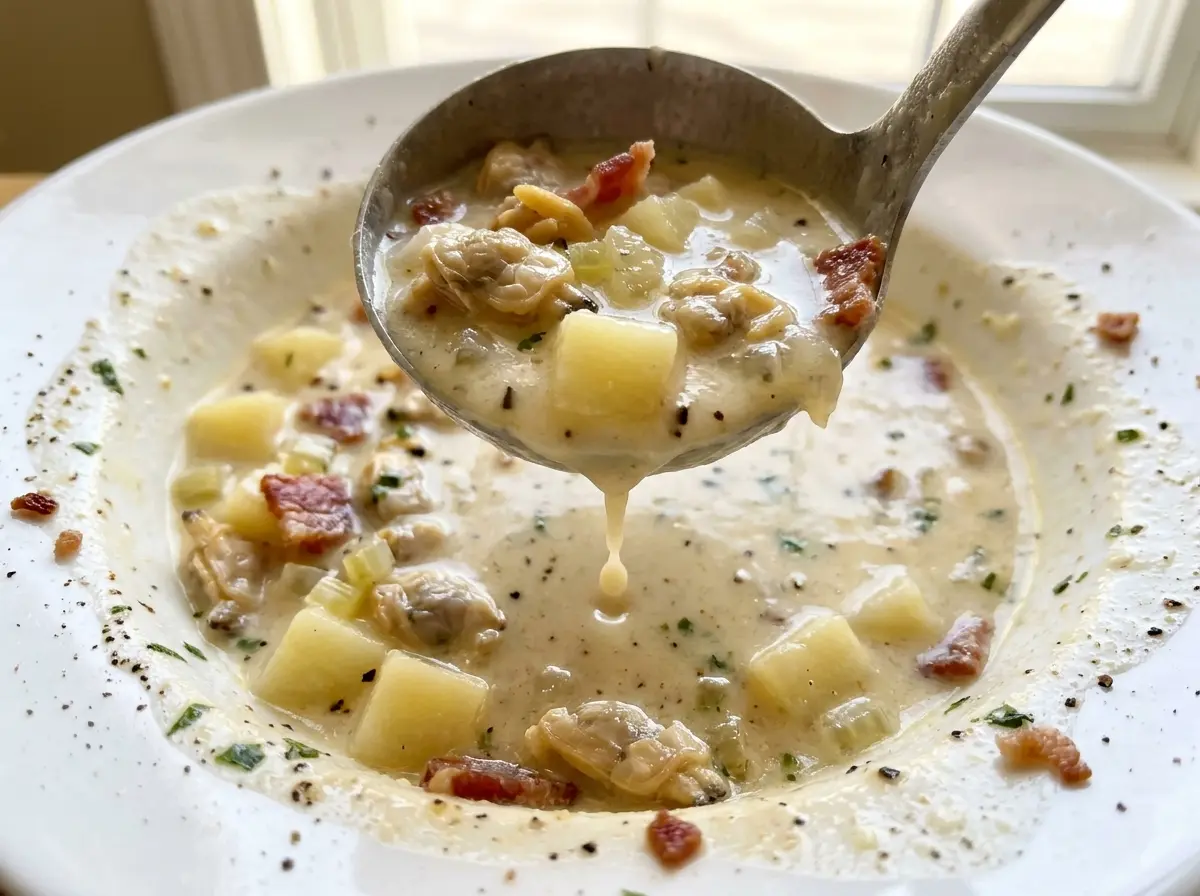
Kitchen Note
Cut the Yukon Gold potatoes into even 1/2-inch cubes. Keeping them close in size helps them turn tender together, so you’re not waiting on a few stubborn pieces while the smaller ones start to break down.
Save this classic New England clam chowder with bacon for a chilly night when you want a creamy, clam-rich bowl with crisp bacon on top.
Why the Clams Go In After the Potatoes
Canned chopped clams are already cooked, so they don’t need the long simmer that potatoes do. Leave them bubbling away while the potatoes soften and they can turn firm and chewy. Instead, I let the potatoes cook in the clam broth first, then add the clams near the end, once the milk and cream have warmed through.
That order also makes it easier to control the finish. The clam juice has time to season the broth, while the clams themselves spend just a few minutes heating gently. Keep the pot below a boil once the dairy is in; a rolling boil can make the creamy base less smooth. When the clams are hot, the chowder is ready to rest. The short pause lets the broth settle without cooking the clams for another long stretch.
What Gives This Chowder Its Clam Flavor and Creamy Body

- Bacon — Thick-cut pieces give you both rendered drippings for the base and crisp bits for the topping. If you’re choosing between packages, look for evenly cut slices; very thin bacon tends to crisp before it has rendered as much fat.
- Clams and clam juice — The bottled clam juice and the reserved juice from the cans build a layered seafood flavor without needing a separate stock. Drain the clams into a bowl so you can keep their liquid; pouring it down the sink takes a useful part of the chowder with it. Canned chopped clams are convenient here because their size is ready for spoonfuls of soup.
- Yukon Gold potatoes — Their creamy, waxy texture holds up well in a simmering broth. Red potatoes are the closest swap if you can’t find Yukon Golds; cut them to the same size and use the fork-tender cue rather than relying only on the clock.
- Flour, whole milk, and heavy cream — Flour helps give the broth body, while whole milk and cream make the finish rich and mellow. Whole milk matters more than a particular brand; choose fresh dairy, and avoid substituting a low-fat milk if you want the same creamy texture. The cream is what makes the final bowl feel velvety rather than simply milky.
- Onion, celery, and thyme — These form a quiet savory base beneath the clam flavor. Dice the onion and celery small enough to soften evenly; large pieces stay noticeably firm in a spoonful of chowder.
Building the Chowder in the Right Order
Render the Bacon Without Scorching It
Set a 5-quart Dutch oven over medium heat and cook the chopped bacon for 8–10 minutes, stirring occasionally. It should be crisp and browned, not dark or bitter. Transfer it to a paper-towel-lined plate and leave about 1 tablespoon of drippings in the pot. That measured layer gives the vegetables a savory start without leaving the broth greasy.
Soften the Vegetables and Cook the Flour
Add the butter, onion, and celery, then cook over medium heat for 5–7 minutes, stirring often. The vegetables should soften without taking on much color. Stir in the flour and cook it for 1 minute; it will coat the vegetables and look pasty. Whisk in the bottled clam juice, water, and reserved clam juice gradually, rather than pouring everything in at once, and keep whisking until the broth looks smooth.
Simmer Until the Potatoes Give Easily
Add the potatoes, bay leaf, thyme, pepper, and salt, then bring the pot to a simmer. Partially cover it and cook over medium-low heat for 12–15 minutes. A fork should pierce a potato cube easily, with no hard center, but the pieces should still hold their shape. If they’re not tender yet, give them a little more time before moving on to the dairy.
Warm the Dairy, Then Finish with Clams
Stir in the whole milk and heavy cream and heat gently for 3–5 minutes; don’t let the chowder boil. Add the drained clams and about three-quarters of the cooked bacon, then cook gently for 3–5 minutes, just until the clams are hot. Taste and adjust the salt if needed, keeping in mind that the bacon and clam juices already season the broth. Remove the bay leaf, let the chowder rest for 5 minutes, and top each serving with the remaining bacon.
Two Useful Ways to Adapt This Chowder
Make It Without Pork
Leave out the bacon and its drippings, and use the listed butter to cook the onion and celery. The chowder will still have its clam-and-cream character, but it won’t have the smoky base or crisp bacon topping.
Make the Finish Less Rich
Use whole milk in place of the heavy cream for a lighter, less velvety broth. Keep the heat gentle after adding the dairy; the finished chowder will be less rich, but still carry the flavor of the clams, potatoes, and thyme.
Storage and Reheating
- Refrigerator: Store leftovers in a covered container for 3–4 days. The potatoes will absorb some broth as they sit, so the chowder may be thicker the next day.
- Freezer: Freezing isn’t ideal. The potatoes can turn mealy and the dairy-based broth may separate as it thaws, changing the texture.
- Reheating: Warm leftovers gently in a saucepan over low heat, stirring often, until hot throughout. Don’t bring the chowder to a boil; high heat can make the creamy broth less smooth.
Questions That Come Up While Making Clam Chowder
Classic New England Clam Chowder with Bacon
Ingredients
Equipment
Method
- In a 5-quart Dutch oven over medium heat, cook the bacon for 8–10 minutes, stirring occasionally, until crisp.
- Transfer the bacon to a paper-towel-lined plate and leave about 1 tablespoon of bacon drippings in the pot.
- Add the butter, onion, and celery to the pot and cook over medium heat for 5–7 minutes, stirring often, until softened.
- Stir in the flour and cook for 1 minute.
- Gradually whisk in the bottled clam juice, water, and reserved clam juice until smooth.
- Add the potatoes, bay leaf, thyme, pepper, and salt, and bring to a simmer.
- Cover partially and cook over medium-low heat for 12–15 minutes, until the potatoes are tender when pierced with a fork.
- Stir in the milk and heavy cream and heat gently for 3–5 minutes, without letting the chowder boil.
- Stir in the drained clams and about three-quarters of the cooked bacon, then cook gently for 3–5 minutes, until the clams are hot.
- Taste and adjust the salt if needed.
- Remove the bay leaf and let the chowder rest for 5 minutes.
- Serve topped with the remaining bacon.