
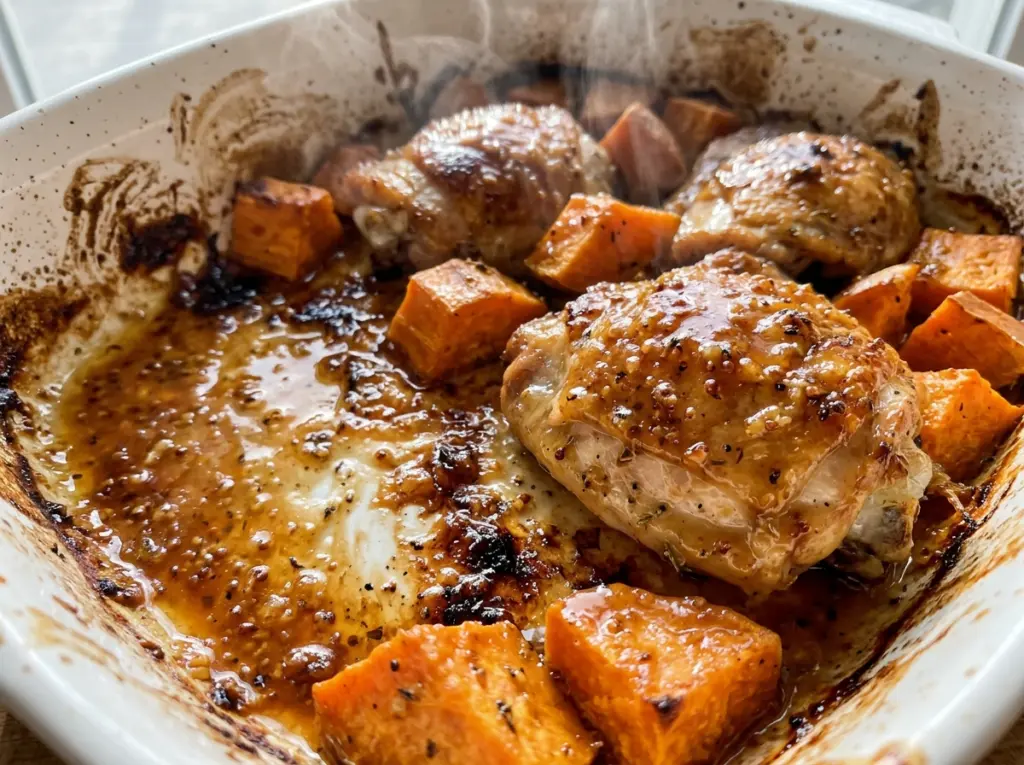
When the sweet potatoes come out of the oven, their edges have started to soften but the centers still hold their shape. That head start matters: the chicken needs less time than those cubes do, and putting everything in at once can leave you choosing between firm potatoes and overcooked meat. In this chicken and sweet potato bake, each ingredient gets the time it needs in the same 9×13-inch dish.
I like the maple Dijon glaze because it takes a minute to whisk together while the potatoes roast. Pure maple syrup brings sweetness, Dijon and apple cider vinegar keep it from tasting flat, and minced garlic gives the pan a savory edge. The glaze goes over the chicken and potatoes before the final bake, so everything picks up its flavor as it cooks.
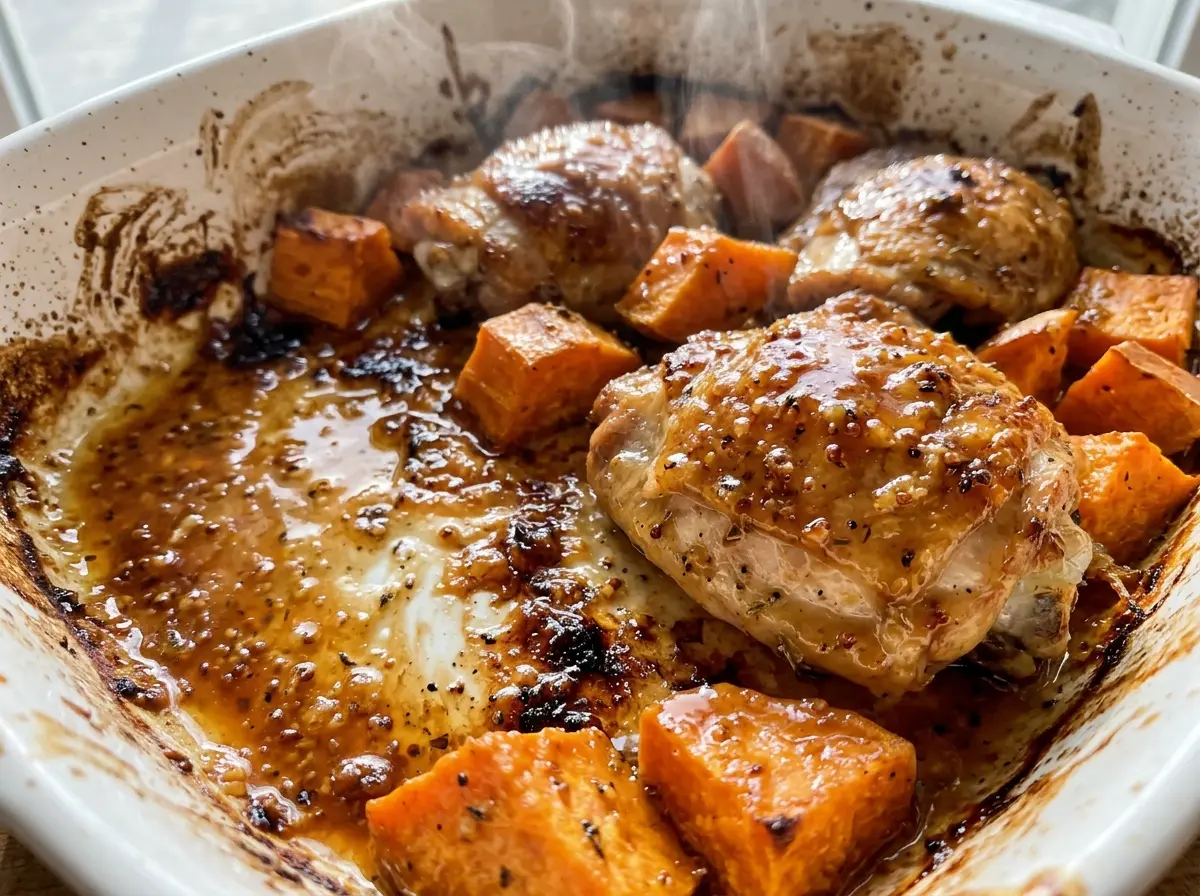
The finished dish is cozy without being heavy, with tender chicken, soft sweet potatoes, and a sweet-tangy glaze pooled around the edges. It serves six straight from the baking dish.
Kitchen Note
Keep the chicken pieces close to the same 1 1/2-inch size. When they’re similar in size, they finish at about the same time instead of leaving a few small pieces dry while larger ones catch up.
Save this chicken and sweet potato bake for its maple Dijon glaze and tender, golden-edged potatoes.
Why This Maple Dijon Glaze Starts Thin
The glaze is whisked together in a bowl, not simmered down in a saucepan, so it should be pourable before it goes into the oven. That’s useful here: a thick, sticky glaze would be harder to spread evenly over the chicken and potatoes. The maple syrup provides sweetness, while Dijon mustard and apple cider vinegar bring enough sharpness to balance it.
As the bake cooks, the glaze meets the moisture released by the chicken and sweet potatoes. Expect a glossy coating and some liquid in the bottom of the dish rather than a firm candy-like crust. Don’t add a thickener or try to reduce the glaze before baking; the simple pourable mixture is meant to cook right alongside the rest of the ingredients. Whisk until the mustard is incorporated and the garlic is spread through the bowl, then pour it over the whole dish.
What Each Ingredient Does in This Maple Dijon Bake

- Sweet potatoes — Their natural sweetness fits the glaze, and the 1-inch cubes give the centers time to turn tender without the outside falling apart. Choose firm potatoes without soft spots. Cutting them to a consistent size matters more than finding unusually large or small ones.
- Boneless, skinless chicken thighs — Thigh meat stays more forgiving through the oven time than leaner cuts, and cutting it into 1 1/2-inch pieces helps it cook alongside the potatoes. Use boneless, skinless thighs for this timing; bone-in pieces won’t match the same schedule.
- Pure maple syrup — Pure syrup gives the glaze its clean maple sweetness. Pancake syrup isn’t an equal swap; it has a different flavor and texture. This is one place where the ingredient named in the recipe makes a noticeable difference.
- Dijon mustard — Dijon supplies a mellow tang and helps the glaze taste savory rather than simply sweet. A smooth Dijon is easy to whisk through the syrup. Yellow mustard has a sharper, more vinegary flavor, so it changes the balance instead of standing in seamlessly.
- Apple cider vinegar — Its acidity brightens the maple and mustard. Measure it carefully so the glaze stays balanced; leaving it out would make the sweet notes more dominant. There isn’t a direct swap among the other listed ingredients.
- Garlic — Minced garlic disperses through the glaze and seasons the dish as it bakes. Mince it finely so you don’t get a large raw-tasting chunk in one bite. Fresh garlic has the clearest flavor here.
- Olive oil — The small amount brushed on the baking dish helps prevent sticking, while the rest coats the potatoes for their first bake. Divide it as written: the dish gets the teaspoon, and the potatoes get the remaining oil.
How to Time the Potatoes and Chicken in One Dish
Start the sweet potatoes on their own
Heat the oven to 400°F and brush a 9×13-inch baking dish with 1 teaspoon olive oil. Toss the peeled, 1-inch sweet potato cubes right in the dish with the remaining 2 tablespoons olive oil, 1/2 teaspoon kosher salt, and 1/4 teaspoon black pepper. Spread them across the bottom and bake for 20 minutes. If the cubes are cut unevenly, the smaller ones will soften sooner than the larger ones.
Whisk the glaze while the potatoes bake
In a small bowl, whisk together the pure maple syrup, Dijon mustard, apple cider vinegar, and minced garlic. Keep whisking until the mustard no longer sits in streaks and the garlic is distributed through the mixture. The glaze will still be loose and easy to pour; it doesn’t need to be heated or reduced first. This short overlap keeps the assembly moving while the potatoes get their head start.
Nestle in the chicken and pour evenly
Take the dish out after the potatoes’ first bake and stir them so the cubes shift position. Nestle the chicken pieces among the potatoes rather than piling them on top, then season the chicken with the remaining 1/2 teaspoon salt and 1/4 teaspoon pepper. Pour the glaze evenly over the chicken and potatoes. If the glaze lands in one spot, spread it across the dish with the back of a spoon so the ingredients get a more even coating.
Turn halfway through, then rest
Bake for 20–25 minutes, turning the chicken and stirring the sweet potatoes halfway through. The chicken is ready when it reaches 165°F, and the potatoes should be fork-tender; if either is not there yet, continue baking until both cues are met. Let the dish rest for 5 minutes before serving. That brief pause gives the hot pieces time to settle after baking.
Simple Ways to Adapt the Maple Dijon Bake
Make the glaze more mustard-forward
For a sharper, less sweet finish, use a little less maple syrup and a little more Dijon than the base proportions. Keep the apple cider vinegar and garlic in the glaze so its tangy, savory character stays intact. The result will taste more like a mustard glaze and less like maple.
Use a gluten-free Dijon
For a gluten-free version, choose Dijon mustard made without gluten-containing ingredients and use it in the same amount. The rest of the ingredient list is naturally free of wheat-based ingredients, and the glaze keeps its familiar sweet-tangy balance.
Storage and Reheating
- Refrigerator: Store leftovers in a covered container for 3–4 days. The sweet potatoes soften a little more after chilling.
- Freezer: Freeze cooled portions in airtight containers for up to 2–3 months. The chicken freezes well, though the potatoes may be softer after thawing.
- Reheating: Warm a portion covered in the microwave, stirring the potatoes once, or reheat the covered baking dish in a moderate oven until hot throughout. Avoid prolonged high heat, which can dry out the chicken.
Questions That Come Up With This One-Dish Bake
Chicken and Sweet Potato Bake with Maple Dijon Glaze
Ingredients
Equipment
Method
- Heat the oven to 400°F.
- Brush a 9x13-inch baking dish with 1 teaspoon of the olive oil.
- Toss the sweet potatoes with the remaining 2 tablespoons olive oil, 1/2 teaspoon salt, and 1/4 teaspoon pepper in the baking dish.
- Bake for 20 minutes.
- While the sweet potatoes bake, whisk the maple syrup, Dijon mustard, apple cider vinegar, and garlic in a small bowl.
- Remove the dish from the oven and stir the sweet potatoes.
- Nestle the chicken pieces among the sweet potatoes.
- Season the chicken with the remaining 1/2 teaspoon salt and 1/4 teaspoon pepper.
- Pour the glaze evenly over everything.
- Bake for 20–25 minutes, turning the chicken and stirring the sweet potatoes halfway through, until the chicken reaches 165°F and the sweet potatoes are fork-tender.
- Rest the bake for 5 minutes before serving.