
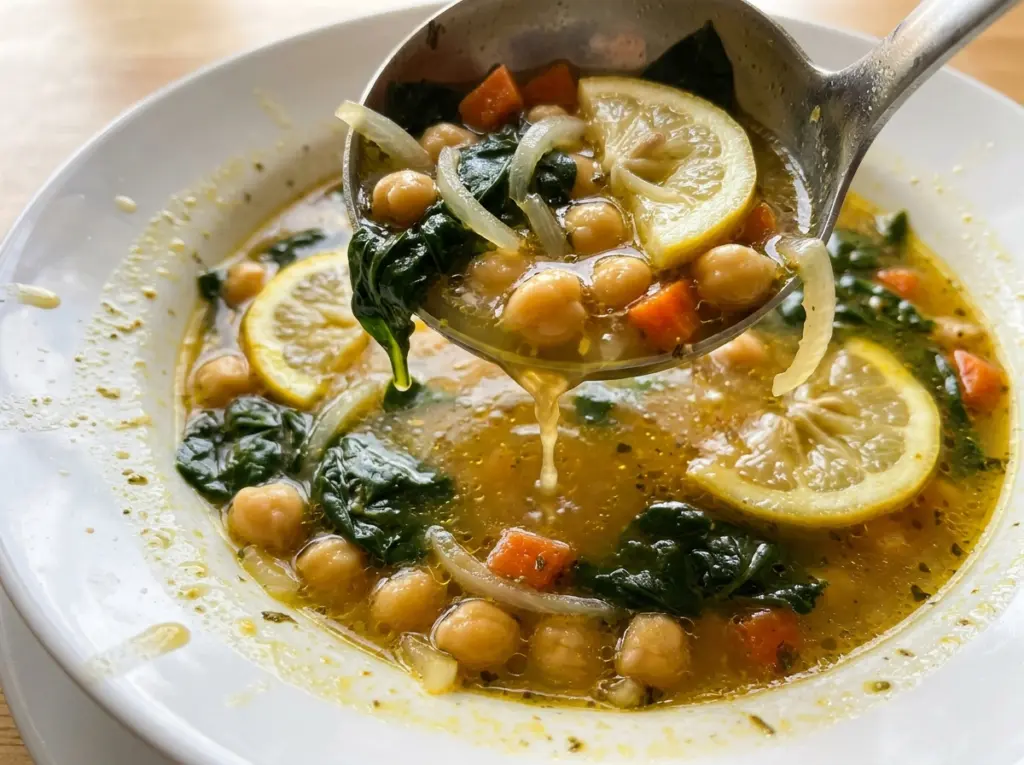
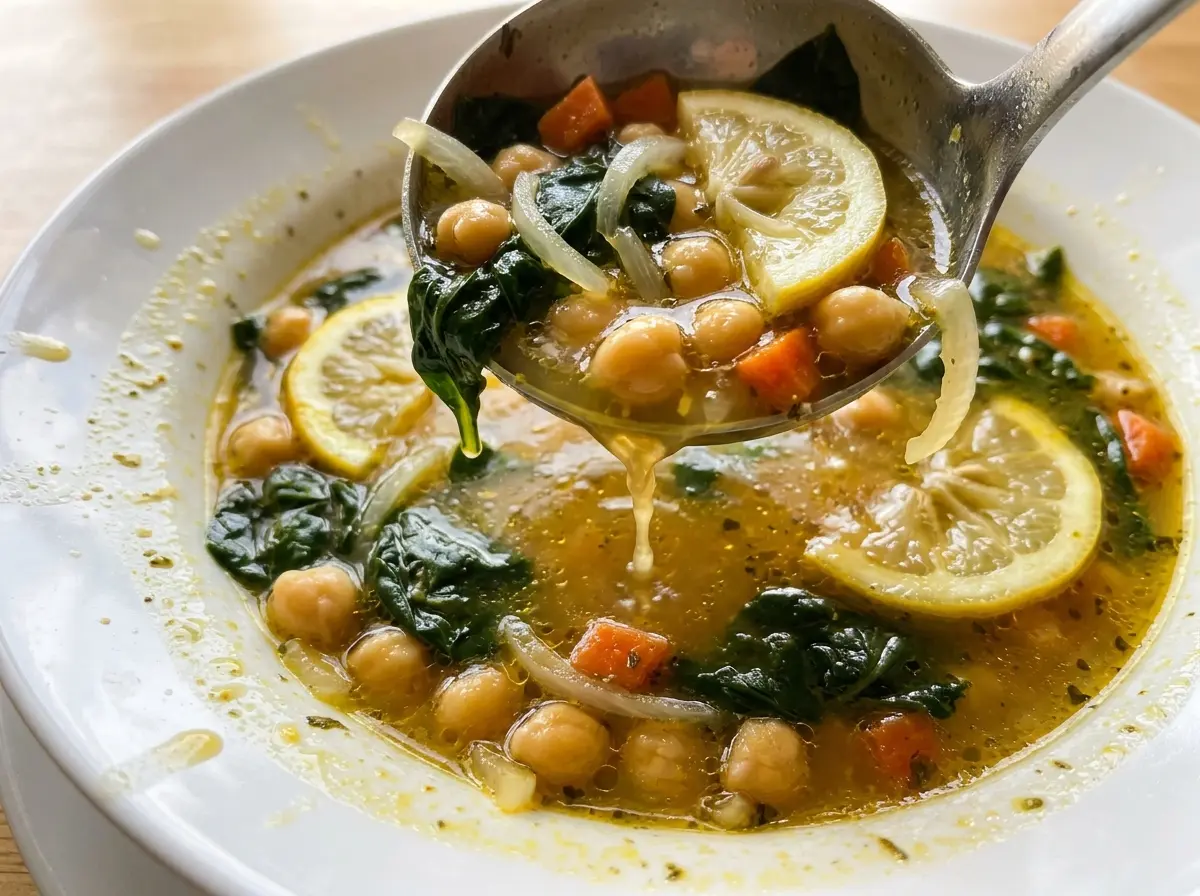
When the potatoes are fork-tender, the broth in this pot has already picked up sweetness from the carrots and onion, warmth from cumin, and a little smoky depth from paprika. Chickpeas make it hearty, but the potatoes give each spoonful a softer, more comforting feel. I like this hearty chickpea and spinach soup with lemon because it eats like a full meal without needing cream or a long list of extras.
The texture comes together in the pot, not in a blender. I mash some of the chickpeas and potatoes against the side, leaving plenty whole so the soup stays substantial instead of turning smooth. Baby spinach wilts in just a minute or two, and fresh lemon juice goes in at the finish to lift the earthy flavors. You get a thick, savory bowl with bright lemon in the last bite.
Kitchen Note
Cut the Yukon Gold potatoes into even half-inch pieces before they go into the pot. That size lets them turn fork-tender during the simmer without leaving you with a mix of firm centers and falling-apart edges.
Save this hearty chickpea and spinach soup with lemon for a weeknight bowl with tender potatoes, warming cumin, and a bright finish from fresh lemon.
Why This Soup Thickens Without Cream
A pot of broth, vegetables, and chickpeas can taste good but still feel thin. Here, the potatoes simmer directly in the broth, and a few of them break down when mashed. Chickpeas add their own body, too. Together, those little bits give the liquid a satisfying thickness without turning the soup into a puree.
Leaving most of the chickpeas and potatoes whole matters just as much as mashing some. You keep distinct bites of vegetables and beans, with enough thickened broth to coat them. If you mash everything, the soup loses that hearty, spoonable contrast. If you skip the mash entirely, it stays looser. The balance is easy to adjust in the pot: press a little more against the side for a thicker bowl, or stop once the broth has gained some body. This is a useful approach for bean soups when you want a cozy texture but don’t want to add dairy or reach for a blender.
Why Yukon Golds, Chickpeas, and Baby Spinach Belong Together

- Yukon Gold potatoes — Their creamy texture softens the broth while still holding recognizable pieces. Keep the cut even so they cook at the same pace. Red potatoes can stand in if that’s what you have; they hold their shape more firmly and won’t soften the broth quite as much.
- Canned chickpeas — Draining and rinsing removes the canning liquid and gives you clean, ready-to-simmer beans. Canned chickpeas are convenient and consistent here. Fully cooked chickpeas can replace them, but don’t add dried chickpeas straight to this soup; the simmer isn’t long enough to cook them through.
- Baby spinach — Its tender leaves wilt quickly and keep a fresh, soft texture. Frozen spinach works as a substitute: thaw it and squeeze out excess water before stirring it in, so it doesn’t dilute the broth.
- Fresh lemon juice — Fresh juice tastes brighter than bottled lemon juice, which matters in a soup with earthy chickpeas and potatoes. Squeeze it shortly before using; the clean citrus finish is part of what keeps the bowl from tasting heavy.
- Ground cumin and smoked paprika — Cumin brings an earthy warmth, while smoked paprika gives the broth a gentle smoky note. Ordinary paprika can replace smoked paprika, but the soup will lose that smoky edge. A basic grocery-store spice is fine; freshness matters more than an expensive brand.
- Low-sodium vegetable broth — Starting with low-sodium broth leaves room for the salt in the pot to season the vegetables without making the finished soup hard to adjust. A standard, inexpensive vegetable broth works well; a strongly seasoned one can make the result saltier than expected.
- Diced tomatoes — Canned tomatoes add acidity and a little sweetness to the broth. A regular store brand is suitable; the vegetables, spices, and lemon bring plenty of character without specialty tomatoes.
Building the Broth Before the Potatoes Go Tender
Soften the onion, carrots, and celery
Warm the olive oil in a 6-quart pot over medium heat, then add the diced onion, carrots, celery, kosher salt, and black pepper. Cook for 7 to 9 minutes, stirring occasionally. The vegetables should begin to soften, and the onion will look less opaque around the edges. If they still feel crisp, give them the full cooking window rather than rushing to the garlic.
Wake up the garlic and spices
Stir in the minced garlic, cumin, and smoked paprika. Cook for 30 seconds, stirring so the garlic and spices coat the vegetables. You’ll smell the cumin and paprika as they warm. Keep the heat at medium and don’t let the garlic brown, which can make its flavor taste bitter.
Simmer until the potatoes are tender
Add the vegetable broth, drained and rinsed chickpeas, diced tomatoes, potatoes, and bay leaf. Bring the pot to a boil over medium-high heat, then lower the heat and simmer uncovered for 18 to 22 minutes. Check a potato with a fork near the end of the simmer; it should give easily all the way through. If the center is still firm, keep the soup at a gentle simmer until the potatoes are tender.
Give the broth body, then finish with greens
Remove and discard the bay leaf, then press some of the chickpeas and potatoes against the side of the pot with a spoon or masher. Stir in the baby spinach and fresh lemon juice. Cook for 1 to 2 minutes, just until the leaves have wilted. The spinach should look soft and vivid, not cooked down to a dark, stringy tangle.
Simple Changes for a Different Bowl
Swap the chickpeas for cannellini beans
Use the same amount of drained and rinsed cannellini beans in place of the chickpeas. They have a milder taste and a softer texture, so the soup will feel creamier when you mash some against the pot.
Make the lemon more pronounced
For a sharper finish, stir in a little more fresh lemon juice at the end, tasting as you go. The extra acidity makes the soup taste brighter, though too much can cover the gentle sweetness of the carrots and onion.
Lower the sodium
Omit the kosher salt and choose no-salt-added diced tomatoes while keeping the low-sodium vegetable broth. The soup will taste less seasoned, so add lemon gradually at the end to keep the flavors lively without relying on extra salt.
Storage and Reheating
- Refrigerator: Store in a covered container for 3 to 4 days. The potatoes will absorb some broth, so the soup may be thicker after chilling.
- Freezer: Freeze in airtight containers for up to 3 months. The potatoes and spinach may soften after thawing, but the soup still freezes well.
- Reheating: Warm it gently in a saucepan, stirring now and then, until it reaches 165°F. Add a splash of vegetable broth if it has thickened; a hard boil can break up the potatoes and make the texture less pleasant.
Questions That Come Up While This Soup Simmer
Hearty Chickpea and Spinach Soup with Lemon
Ingredients
Equipment
Method
- Heat the olive oil in a 6-quart pot over medium heat.
- Add the onion, carrots, celery, kosher salt, and black pepper, and cook for 7 to 9 minutes, stirring occasionally, until the vegetables begin to soften.
- Stir in the garlic, cumin, and smoked paprika and cook for 30 seconds, until fragrant.
- Add the vegetable broth, chickpeas, tomatoes, potatoes, and bay leaf.
- Bring to a boil over medium-high heat, then reduce the heat and simmer uncovered for 18 to 22 minutes, until the potatoes are fork-tender.
- Remove and discard the bay leaf.
- Mash some of the chickpeas and potatoes against the side of the pot to thicken the soup.
- Stir in the spinach and lemon juice and cook for 1 to 2 minutes, until the spinach is wilted.