
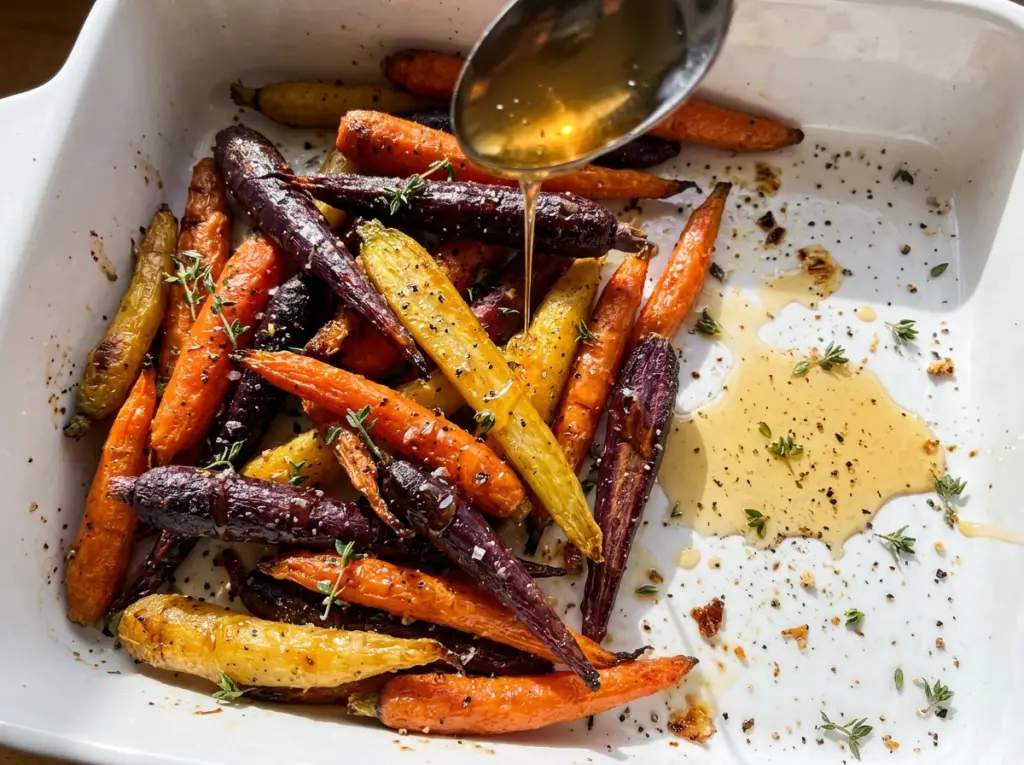
The carrots come out of the oven with browned edges and soft centers, but adding honey at the wrong point can turn that golden finish dark and sticky before the carrots are tender. I roast these rainbow carrots in olive oil first, then toss them with honey for the final stretch. That timing lets their natural sweetness deepen without giving the honey the whole roasting time to scorch.
Cutting the carrots into evenly sized sticks matters more than getting every piece perfectly straight. I aim for sticks about 1/2 inch thick, so the thinner ends don’t collapse while the thicker pieces are still firm. The different colors look lovely on the tray, but the real payoff is a side dish with browned edges, tender centers, and a light honey coating.
Kitchen Note
Keep the sticks close to the same thickness, even if their lengths vary a little. Pieces around 1/2 inch thick finish at a similar pace, so you’re less likely to have a tray of soft tips and stubbornly firm middles.
Save these honey roasted rainbow carrots for a side dish with tender centers, browned edges, and a glossy honey finish.
Why the Honey Goes on After the First Roast
Honey is mostly sugar, and sugar darkens quickly in a hot oven. If it coats the carrots from the start, it spends the entire roasting time exposed to the heat; the glaze can get too dark before the carrot centers have softened. Roasting the carrots first gives them a head start, then the honey has just enough oven time to warm, cling to the surfaces, and lightly brown.
That order also makes the coating easier to control. After the initial roast, toss the carrots with the honey so the pieces get coated rather than sitting in a puddle of sweetener on the pan. A few glossy spots are what you’re after, not a thick layer of syrup. Once the carrots go back into the oven, keep an eye on their color near the end of the finish time. The fork test matters more than chasing a deeply browned glaze: the carrots should be tender when pierced and lightly browned.
This is a small timing choice, but it gives the carrots room to taste like carrots. Their own sweetness comes through first, with honey rounding it out instead of overwhelming the tray.
What Rainbow Carrots, Olive Oil, and Honey Each Bring

- Rainbow carrots — The mix gives the tray its range of colors, while the carrot itself brings enough natural sweetness to balance the honey. Choose firm carrots without limp tops or soft spots. Peeling and cutting them into sticks of a similar thickness helps the whole pan cook evenly.
- Olive oil — A thin coating helps the carrots roast rather than dry out against the pan. A regular everyday olive oil works well here; a strongly flavored finishing oil would compete with the honey rather than improve the roasting.
- Honey — Honey provides the glossy, lightly sweet finish, and its sugars brown during the final minutes. A mild, familiar honey keeps the carrot flavor in front; there’s no need to use a specialty variety.
- Kosher salt and black pepper — Salt sharpens the carrots’ sweetness, while pepper keeps the finish from tasting one-note. Freshly ground black pepper gives a more noticeable aroma, though ordinary ground pepper works too.
Roast the Carrots First, Then Glaze Them
Heat the oven and prepare the pan
Heat the oven to 425°F and line a large rimmed baking sheet with parchment paper. The rim helps keep the carrots on the pan as you toss them, and parchment gives the honeyed pieces a less troublesome surface to release from later. Use a sheet large enough to hold the carrots in one layer. If they have to sit in a pile, their surfaces won’t roast as evenly.
Coat the carrots and start roasting
Toss the peeled carrot sticks with the olive oil, kosher salt, and black pepper until the pieces look lightly coated. Spread them across the prepared sheet in a single layer, then roast for 18 to 20 minutes. The carrots should begin to soften, and you may see a little browning at the edges. Don’t add the honey yet; this first stretch is for roasting the carrots before the glaze goes on.
Toss with honey and finish
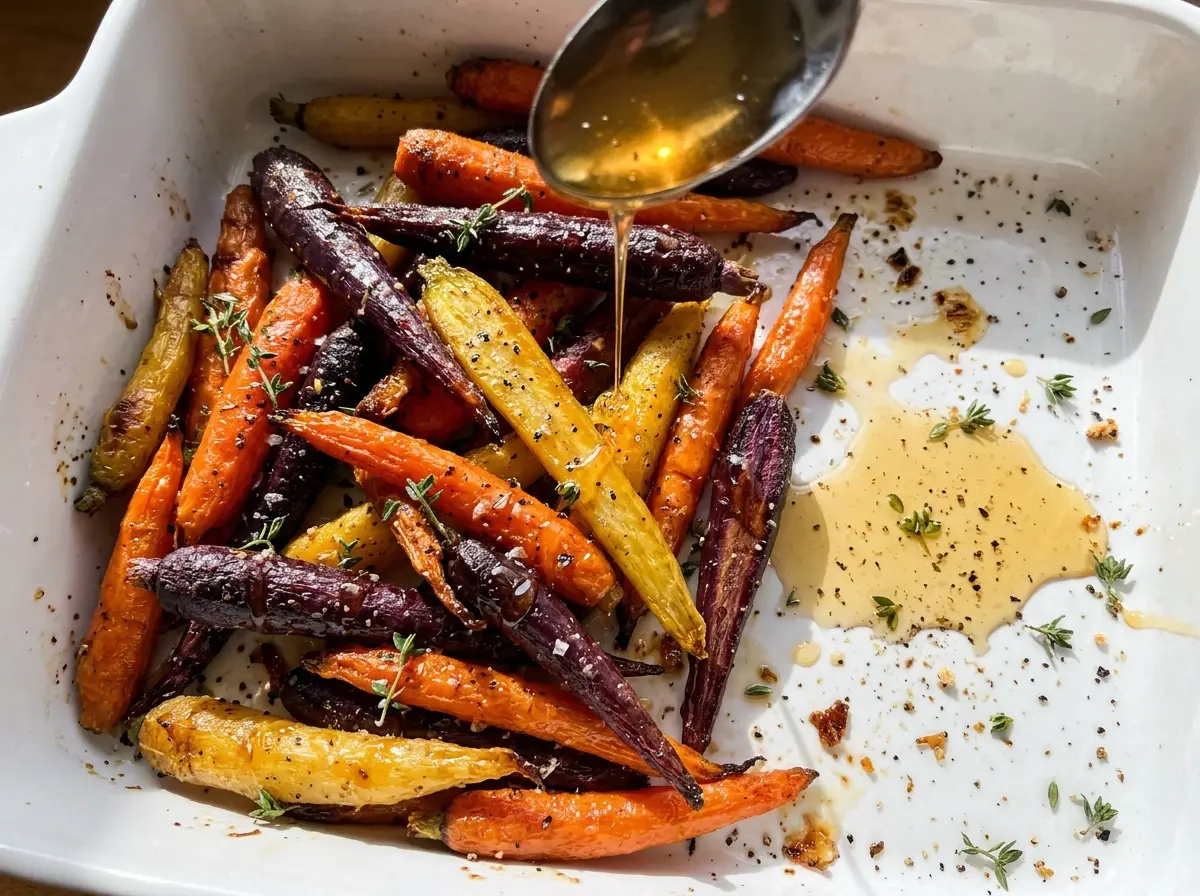
Take the pan out and toss the carrots with the honey, working it over the pieces so it isn’t all concentrated in one spot. Return the pan to the oven for 6 to 8 minutes. Start checking at the shorter end: pierce a thicker carrot with a fork, looking for tenderness rather than resistance in the center. The finished carrots should be lightly browned, with a thin, shiny coating rather than a heavy pool of honey.
Two Easy Ways to Adapt the Carrots
Make the glaze vegan with maple syrup
Replace the honey with the same amount of maple syrup and add it at the same point, after the first roast. Maple syrup gives the carrots a slightly different, woodsy sweetness and still coats them for the short finishing roast. Watch the color as they finish, since the glaze can darken quickly.
Cut the carrots into thick coins
For a rounder shape, cut the carrots into coins about 1/2 inch thick instead of sticks. Keep the thickness consistent, follow the same two-stage roasting method, and use the fork test to judge tenderness; the different shape may not finish at precisely the same moment as the sticks.
Storage and Reheating
- Refrigerator: Refrigerate leftovers in a covered container for 3 to 4 days. The carrots soften as they sit, and the glaze may become less glossy.
- Freezer: They can be frozen in an airtight container for up to 2 months, but thawed carrots will be softer than freshly roasted ones.
- Reheating: Warm a portion in the microwave in short intervals until heated through. Avoid heating them for a long stretch; that can make the already-tender carrots softer.
Questions That Come Up Before the Carrots Go in the Oven
Honey Roasted Rainbow Carrots
Ingredients
Equipment
Method
- Heat the oven to 425°F.
- Line a large rimmed baking sheet with parchment paper.
- Toss the carrots with the olive oil, salt, and pepper.
- Spread the carrots in a single layer on the baking sheet.
- Roast for 18 to 20 minutes.
- Toss the carrots with the honey.
- Return them to the oven and roast for 6 to 8 minutes, until tender when pierced with a fork and lightly browned.