
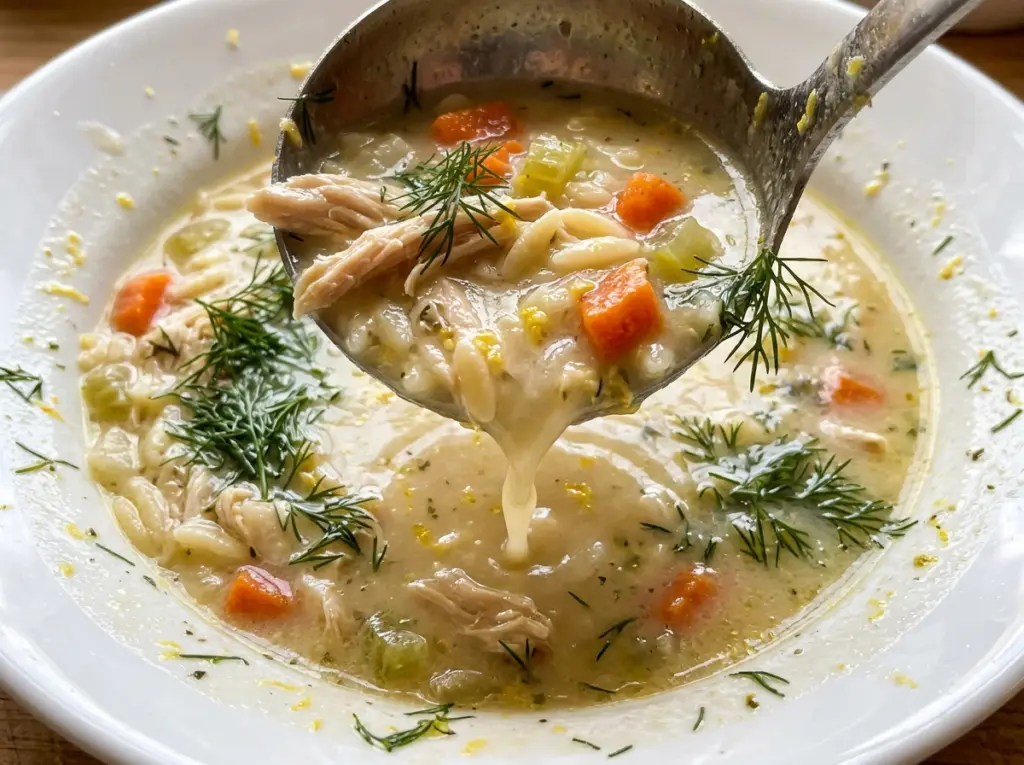
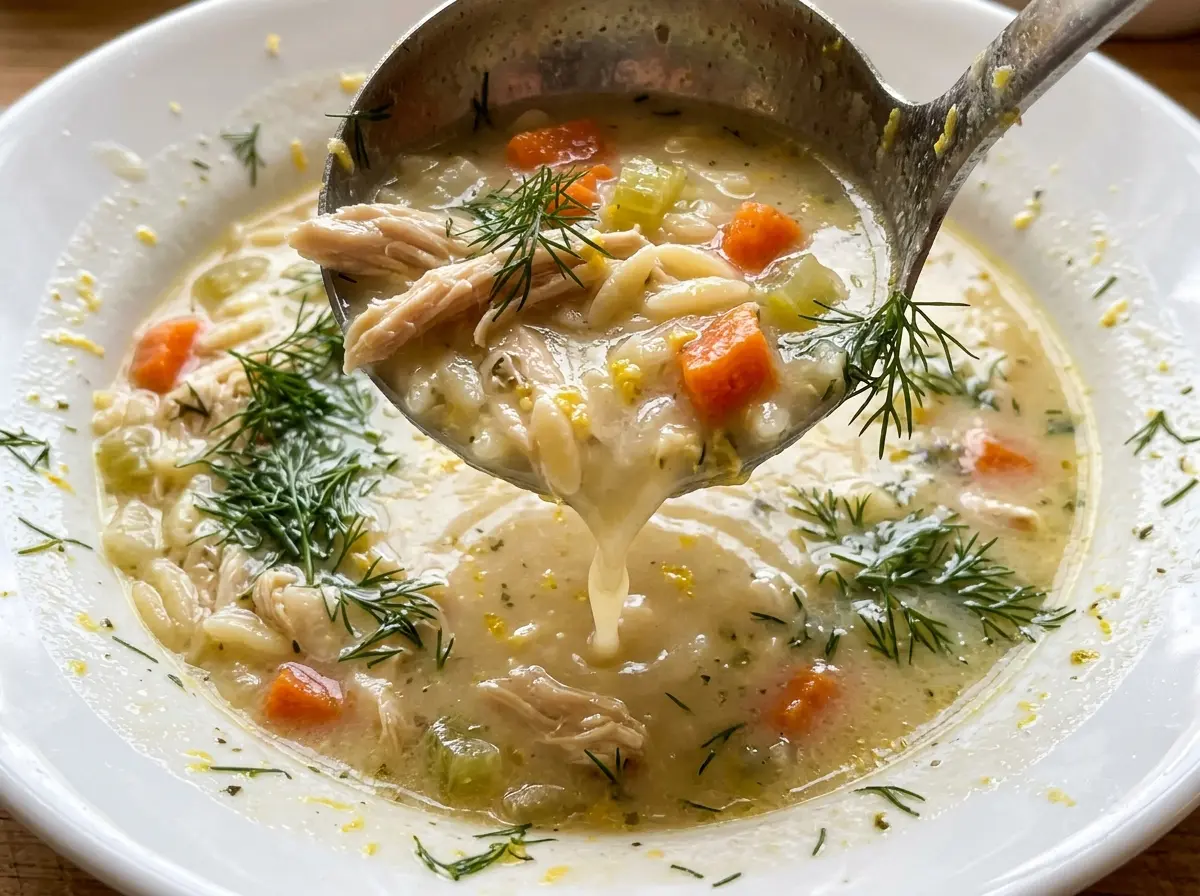
When the flour disappears into the butter-softened vegetables, the broth turns from clear to softly opaque. That little change is the start of a soup with body, not a thin broth with cream stirred in at the end. I make this creamy lemon chicken soup with orzo and dill when I want a pot that feels cozy but still tastes bright. Lemon keeps each spoonful lively, while the orzo makes it substantial enough to stand on its own. The chicken cooks right in the pot, so there’s no separate pan to wash and the broth picks up its savory flavor as it simmers.
Keeping the chicken breasts whole while they cook gives me a clear doneness check before I shred them, and adding the orzo afterward keeps the pasta from cooking too long. At the end, cream softens the lemon’s edge without muting it, and fresh dill makes the whole pot smell green and fragrant. The bowl is silky, lemony, and full of tender chicken and little pasta bites.
Kitchen Note
Zest the lemon while it’s still whole, then cut and juice it. It’s easier to reach the yellow peel that way without scraping into the bitter white pith.
Save this creamy lemon chicken soup with orzo and dill for a cozy, bright bowl with tender chicken and a fresh herb finish.
Why the Chicken Poaches Whole Before the Orzo Goes In
Cooking the breasts whole gives you a more reliable way to check the chicken than dropping small pieces into the pot and trying to judge them by eye. You can check the thickest part of each breast, then shred the meat once it’s cooked. That’s especially helpful with lean chicken breast, which can turn dry if it spends too long simmering.
The pasta needs a different amount of time than the chicken. If orzo went in at the beginning, it would keep softening while the chicken poached and could lose its shape before the meat was ready. Giving the orzo its own stretch in the broth lets you stop when it’s tender, while the chicken rests on a plate. Shredding it with two forks is easier out of the pot, too, and returning it at the end keeps those soft strands intact instead of letting them break down as the soup cooks.
This order also makes the soup easier to adjust as you go: the chicken is cooked and set aside before the pasta goes in, so you can focus on the orzo’s texture without worrying about overcooking the meat.
What Gives This Soup Its Creamy Body Without Hiding the Lemon

- Butter and flour — Butter carries the flavor of the softened vegetables, and flour gives the broth a little structure before cream goes in. Ordinary unsalted butter and all-purpose flour work well; salted butter is also fine, but taste the soup before adding all the salt.
- Onion, carrots, celery, and garlic — These build the savory base, so cut the vegetables into similarly sized pieces for even softening. Standard grocery-store produce is all you need here; there’s no advantage to specialty varieties.
- Low-sodium chicken broth — A low-sodium broth gives you room to season the finished soup without it tasting too salty as it reduces. A good-quality carton is convenient, and a store brand works just as well.
- Chicken breasts — Boneless, skinless breasts cook directly in the broth and shred into tender pieces. Pick breasts that are similar in size so they cook at a similar pace; the meat doesn’t need to be an expensive brand.
- Orzo — This small pasta cooks quickly and gives each spoonful a little substance without overwhelming the chicken and vegetables. Choose regular orzo for the classic texture; gluten-free pasta options are covered below.
- Heavy cream — Heavy cream gives the soup its silky finish and holds up better than a thinner dairy product. A basic carton is fine; the gentle mixing method matters more than buying a premium brand.
- Fresh lemon and dill — Fresh lemon brings both aromatic zest and clean acidity, while dill gives the soup its distinct herbal finish. Bottled lemon juice won’t provide the zest, and fresh dill has a brighter taste than dried.
Building the Broth Before the Orzo Hits the Pot
Soften the vegetables and coat them with flour
Melt the butter in a 6-quart Dutch oven over medium heat, then add the onion, carrots, and celery. Cook for 5-7 minutes, stirring now and then, until the vegetables have softened; they shouldn’t brown deeply. Stir in the garlic for 30 seconds, then sprinkle in the flour and stir for 1 minute. Keep the flour moving so it coats the vegetables without sticking to the bottom.
Simmer the chicken gently in the broth
Whisk in the chicken broth gradually, working out any floury clumps before adding more liquid. Add the chicken breasts, kosher salt, and black pepper, then bring the pot to a gentle simmer over medium-high heat. Lower the heat to maintain that simmer, cover, and cook for 15-20 minutes, until the thickest part of each breast reaches 165°F. A rolling boil isn’t needed; keep the bubbles calm and steady.
Cook the orzo, then shred the chicken
Transfer the chicken to a plate and stir the uncooked orzo into the soup. Simmer uncovered for 8-10 minutes, stirring occasionally, until the pasta is tender when you bite into it. While it cooks, shred the chicken with two forks; if a breast resists, give it another moment to rest rather than forcing it apart. Return the shredded chicken to the Dutch oven once the orzo is ready.
Temper the cream and finish with lemon and dill
Take the pot off the heat. Stir the heavy cream into 1/2 cup of hot soup in a small bowl, then stir that mixture back into the Dutch oven; this gradual warming helps the cream blend smoothly. Stir in the lemon zest, lemon juice, and chopped fresh dill. Let the soup rest for 2 minutes before serving so the flavors settle together.
Two Simple Ways to Change This Bowl
Make it gluten-free with orzo that fits the diet
Use a cup-for-cup gluten-free flour blend in place of the all-purpose flour, and choose gluten-free orzo in the same amount. The soup keeps its creamy base, though different gluten-free pastas soften at different rates, so begin checking for tenderness before the full simmering time has passed.
Keep some dill for a fresh finish
For a greener, more pronounced dill aroma, reserve a little of the chopped dill and scatter it over the bowls just before serving instead of stirring every bit into the pot. The soup still gets dill throughout, with a fresher herbal note on top.
Storage and Reheating
- Refrigerator: Refrigerate leftovers in a covered container within 2 hours and use within 3-4 days. The orzo absorbs broth as it sits, so the soup thickens.
- Freezer: For the best texture, freeze the chicken-and-broth base before adding the orzo, cream, lemon, or dill. Thaw it overnight in the refrigerator, bring it to a simmer, cook the orzo, then finish with the cream, lemon, and dill.
- Reheating: Warm leftovers gently on the stovetop, stirring until steaming hot throughout. Avoid a hard boil, which can make the orzo too soft and cause the creamy broth to separate.
Questions That Come Up While the Soup Simmer
Creamy Lemon Chicken Soup with Orzo and Dill
Ingredients
Equipment
Method
- Melt the butter in a 6-quart Dutch oven over medium heat.
- Add the onion, carrots, and celery and cook for 5-7 minutes, stirring occasionally, until softened.
- Stir in the garlic and cook for 30 seconds.
- Sprinkle in the flour and stir for 1 minute.
- Gradually whisk in the chicken broth until smooth.
- Add the chicken breasts, salt, and pepper.
- Bring to a gentle simmer over medium-high heat, then reduce the heat to maintain the simmer, cover, and cook for 15-20 minutes, until the thickest part of each breast reaches 165°F.
- Transfer the chicken to a plate.
- Stir the orzo into the soup and simmer uncovered for 8-10 minutes, stirring occasionally, until the orzo is tender.
- While the orzo cooks, shred the chicken with two forks.
- Return the shredded chicken to the Dutch oven.
- Remove the soup from the heat.
- Stir the heavy cream into 1/2 cup of hot soup in a small bowl, then stir that mixture back into the pot.
- Stir in the lemon zest, lemon juice, and dill, and let the soup rest for 2 minutes before serving.