
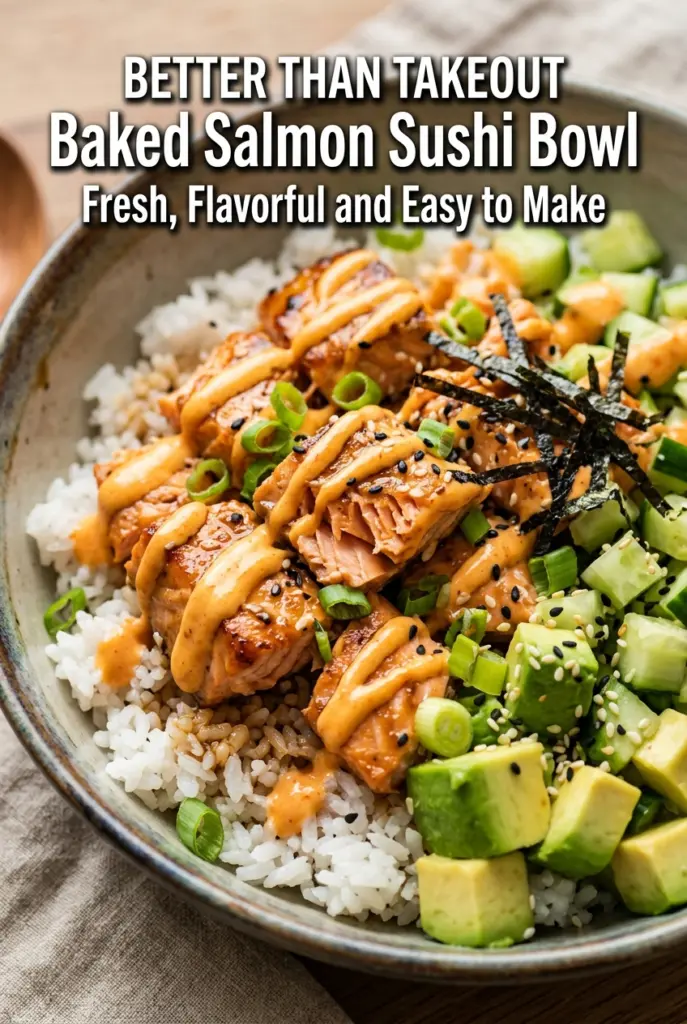
All the sushi-roll flavors land in one bowl here: tender salmon, warm rice, cool cucumber, creamy avocado, and that sharp hit of nori on top. What makes this version worth keeping is the way the salmon gets baked separately, then folded with spicy sauce after cooking, so it stays juicy instead of turning dry and chalky. You get the same satisfying contrast you want from a sushi roll without any rolling, slicing, or fuss.
The key is treating each part like it has a job. The salmon only needs a light seasoning before it goes into the oven, because the mayo-sriracha sauce carries the bigger flavor and clings better once the fish is flaked. Sushi rice matters here too: a little sticky, still warm, and seasoned enough to stand up to the toppings without tasting bland.
Below, I’ve included the small details that keep the salmon tender, plus a few easy swaps if you want to adjust the heat, make it dairy-free, or use what you already have in the fridge.
The salmon stayed flaky and moist, and mixing half the spicy mayo into the fish before assembling made every bite taste like a real sushi roll. Even the rice held up well under all the toppings.
Like the creamy spicy salmon and crisp sushi bowl toppings? Save this one for nights when you want sushi-roll flavor without the rolling mat.
The Trick to Keeping the Salmon Juicy Instead of Dry
Salmon dries out fast when it gets baked too long or blasted with sauce before it has a chance to cook. The fish here goes into the oven with just soy sauce, sesame oil, garlic powder, and pepper, which gives it a savory base without burying the surface. Once it flakes easily and still looks glossy in the center, it’s done. If you wait until every bit looks opaque and firm in the pan, it’s already past the point where it tastes best.
The other mistake is tossing the salmon with all the spicy mayo too early. Mayo-based sauces can separate a little if they sit in direct high heat, and they don’t need to cook anyway. Mixing half of the sauce into the warm flaked salmon gives you flavor in every bite, then the rest on top keeps the bowl creamy and fresh.
What Each Ingredient Is Actually Doing in This Bowl
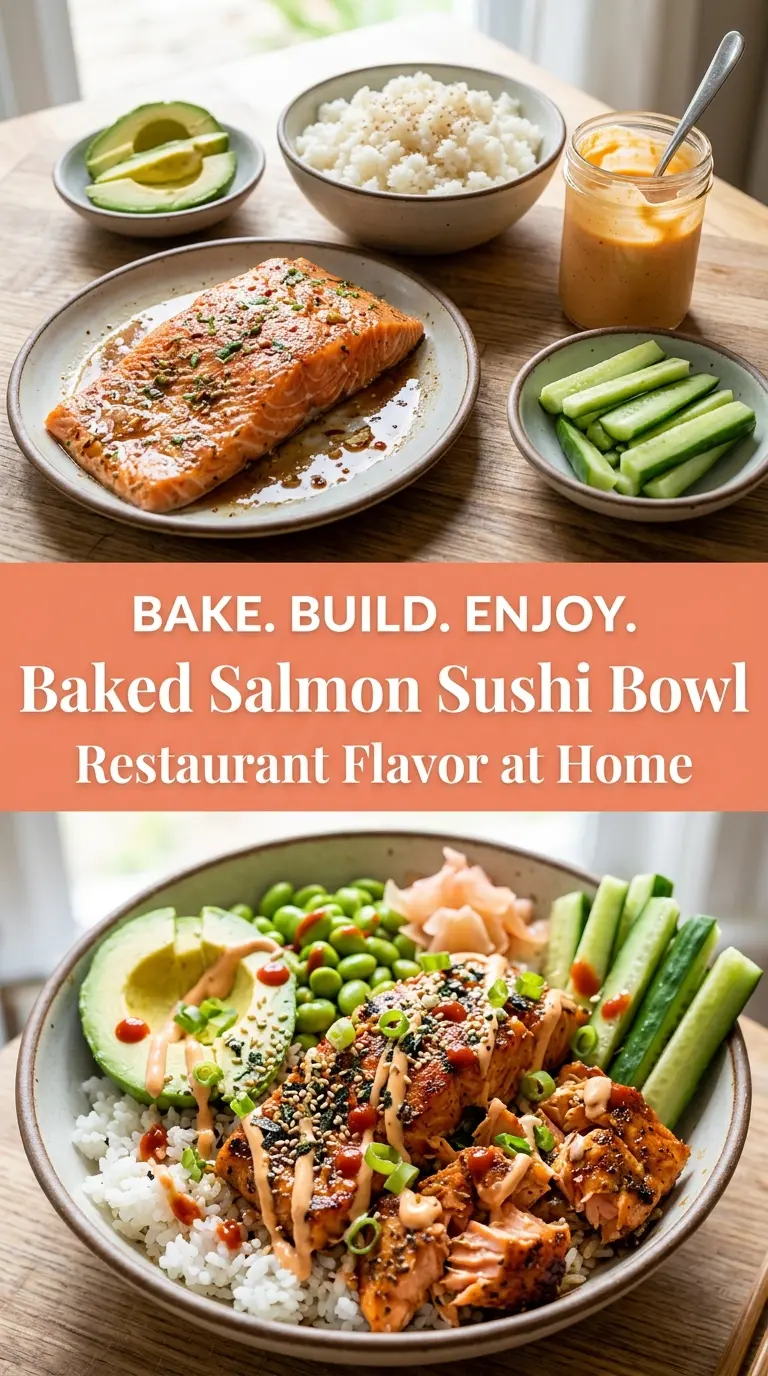
- Salmon — Rich salmon is the backbone of the bowl, and it’s worth using fillets that look fresh and evenly thick so they cook at the same pace. Skinless fillets are easiest here because you’ll flake the fish after baking. If you only have skin-on salmon, bake it skin-side down and lift the flesh away from the skin before mixing.
- Sushi rice — This is what gives the bowl its sushi-roll feel. Regular long-grain rice works in a pinch, but it won’t have that soft, sticky texture that helps the toppings cling. If you can, season the rice lightly with rice vinegar, sugar, and salt after cooking for a more authentic base.
- Mayonnaise and sriracha — This combo builds the creamy spicy sauce that ties everything together. Use full-fat mayo for the best body; light mayo can taste thinner and less cohesive. If you want less heat, cut the sriracha back and add a little more rice vinegar for brightness instead.
- Nori — The nori strips are small, but they matter. They bring that unmistakable ocean note that makes the bowl taste like sushi instead of just salmon and rice. Toasted nori sheets are best, and cutting them right before serving keeps them from softening too quickly.
- Avocado and cucumber — These are the cold, fresh counterpoint to the warm rice and salmon. Choose an avocado that yields slightly to pressure but still holds its shape when diced. For the cucumber, a crisp English cucumber works especially well because it adds crunch without watery seeds getting in the way.
Building the Bowl in the Right Order
Baking the Salmon Just Until It Flakes
Set the oven to 400°F and bake the seasoned salmon until it flakes easily with a fork and the center is just opaque. That usually takes 12 to 15 minutes, depending on thickness. If the top starts looking dry or the edges curl hard, it’s gone too far. Pull it early if you’re unsure, because the fish keeps cooking a little after it comes out of the oven.
Mixing the Spicy Sauce Separately
Stir the mayonnaise, sriracha, and rice vinegar together in a small bowl before the salmon is ready. The sauce should look smooth and glossy, with no streaks of mayo left behind. Rice vinegar keeps it from feeling heavy, so don’t skip it unless you’re replacing it with another acid. If the sauce tastes flat, it usually needs a pinch more salt or a touch more vinegar, not more sriracha.
Flaking, Sauce-Coating, and Assembling
Break the baked salmon into bite-size pieces while it’s still warm, then fold in about half of the sauce. Warm salmon absorbs the flavor better than cold salmon, and the sauce coats it more evenly before it has time to firm up. Divide the rice into bowls first, then add the salmon, avocado, cucumber, and green onions so the toppings stay distinct. Finish with sesame seeds, nori, and the remaining sauce just before serving.
Three Ways to Make This Sushi Bowl Fit Your Table
Dairy-Free by Default
This bowl already works for a dairy-free meal as long as your mayonnaise is dairy-free, which most standard brands are. That makes it an easy win if you’re cooking for a mixed group, since the creamy texture stays intact without needing any special ingredients.
Lower the Heat Without Losing the Creamy Sauce
Cut the sriracha back to 1 teaspoon if you want a gentler bowl, then add a few drops of sesame oil or a splash more rice vinegar to keep the sauce lively. The sauce will still taste rich and balanced, just less sharp on the finish.
Swap the Rice for a Lower-Carb Base
Cauliflower rice works if you want a lighter bowl, but it won’t soak up the sauce the way sushi rice does. Cook it until the moisture cooks off, then season it well so the bowl still tastes complete instead of like salmon sitting on vegetables.
Use Leftover Cooked Salmon
If you already have cooked salmon, flake it and warm it very gently before tossing it with the sauce. The bowl still works, but you’ll want to keep the heat low so the fish stays moist and doesn’t turn stringy.
Storage and Reheating
- Refrigerator: Store the salmon, rice, and toppings separately for up to 3 days. The avocado will brown, so cut that fresh if you can.
- Freezer: The salmon and rice can be frozen, but the fresh toppings and sauce don’t freeze well. Freeze the fish and rice in airtight containers for up to 2 months, then thaw in the fridge overnight.
- Reheating: Warm the rice and salmon gently in the microwave or in a skillet with a splash of water. The common mistake is overheating the fish, which makes it dry and firm instead of tender. Add the avocado, cucumber, nori, and sauce after reheating.
The Questions People Ask Before Making This Bowl
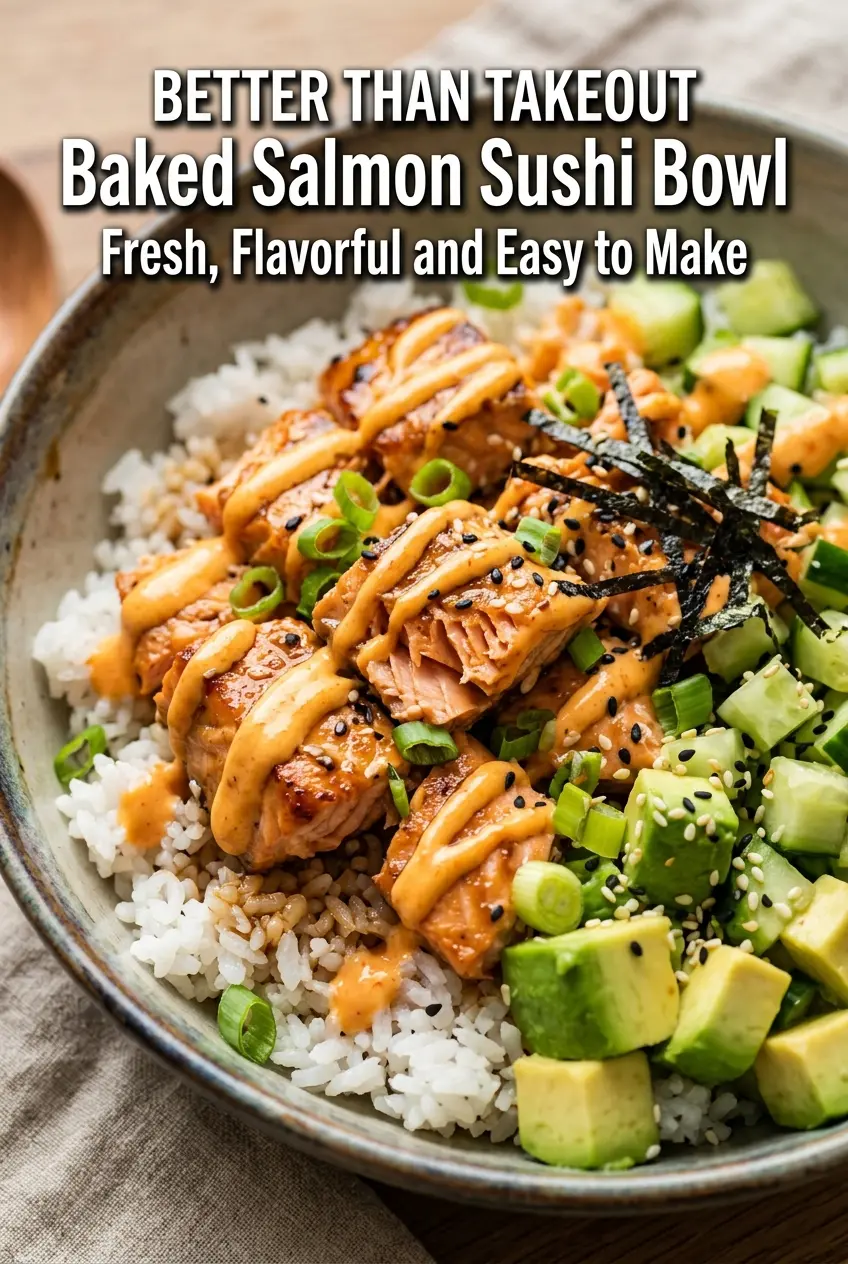
Baked Salmon Sushi Bowl
Ingredients
Equipment
Method
- Preheat oven to 400°F (200°C).
- Place salmon in a baking dish.
- Brush salmon with soy sauce and sesame oil.
- Season with garlic powder and black pepper.
- Bake for 12–15 minutes, until cooked through, then remove from the oven (visual cue: salmon flakes easily).
- Flake the salmon into bite-sized pieces.
- Mix mayonnaise, sriracha, and rice vinegar in a bowl until smooth.
- Toss the salmon with half of the spicy sauce.
- Divide rice among serving bowls.
- Top with salmon, avocado, cucumber, and green onions.
- Drizzle with remaining spicy sauce.
- Sprinkle with sesame seeds and nori strips.
- Serve immediately, with soy sauce for serving on the side.