
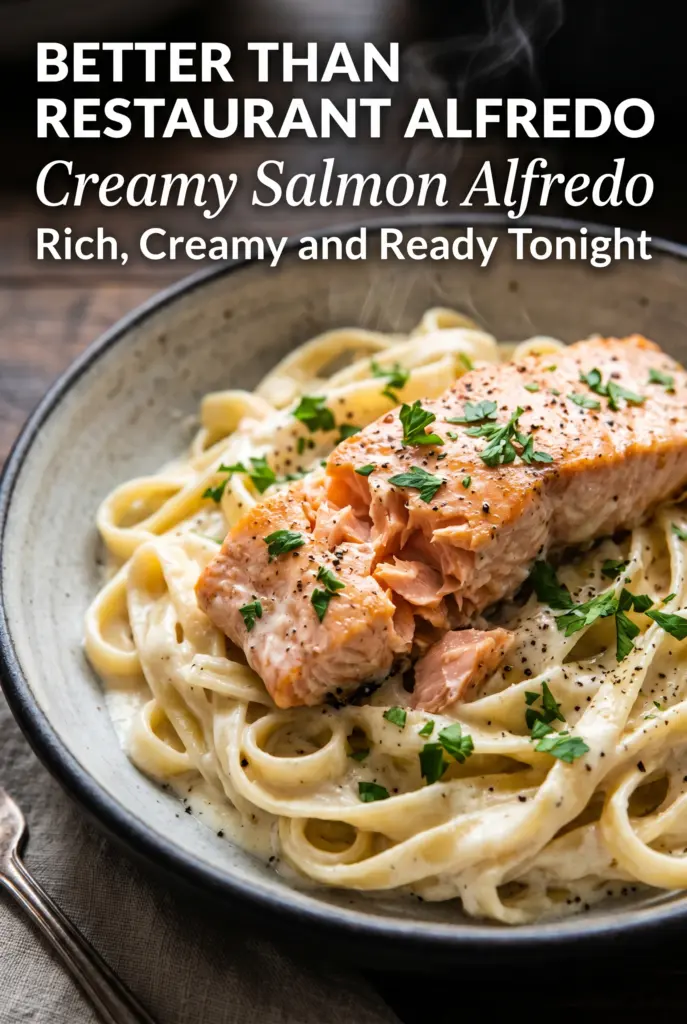
Creamy Salmon Alfredo lands on the table with that rare combination of comfort and polish: silky Parmesan sauce, tender flakes of salmon, and fettuccine that holds onto every bit of cream. It tastes rich, but it doesn’t eat heavy if you keep the sauce balanced and give the salmon just enough heat to stay moist. The whole dish feels like something you’d order out, only it comes together in your own kitchen with a short ingredient list and one good skillet.
What makes this version work is the way each part is handled on its own before they come together. The salmon gets seasoned and baked separately so it stays clean-tasting and flaky instead of getting lost in the sauce, and the Alfredo starts with butter and garlic before the cream goes in, which builds a deeper base. Freshly grated Parmesan matters here because pre-shredded cheese can turn grainy and clumpy once it hits hot cream. A little reserved pasta water gives you control at the end, which is the difference between a sauce that clings and one that turns thick and pasty.
Below you’ll find the exact moments that matter most, from keeping the sauce smooth to folding the salmon in without breaking it apart. If Alfredo has ever seized up on you or salmon has dried out in the oven, this is the version that fixes both problems.
The sauce stayed silky all the way through and the salmon flaked into big pieces without drying out. I added a splash of pasta water at the end and it coated the fettuccine perfectly.
Creamy Salmon Alfredo with flaky salmon and that silky Parmesan sauce is one to pin for nights when you want dinner to feel special without extra work.
The Reason the Sauce Stays Smooth Instead of Going Grainy
Alfredo breaks for two reasons: the heat is too high, or the cheese goes in too fast. Parmesan melts into cream best when the pan is at a gentle simmer, not a hard boil. If the sauce gets too hot, the fat separates and the cheese turns sandy instead of glossy.
The other thing that matters is timing. The pasta should already be cooked and waiting, because once the cheese is in, the sauce wants to come together quickly. You’re aiming for a sauce that looks a little loose in the pan; it tightens as it sits on the pasta. If it seems perfect while bubbling hard, it usually ends up too thick by the time it reaches the plate.
What Each Ingredient Is Doing in This Dish
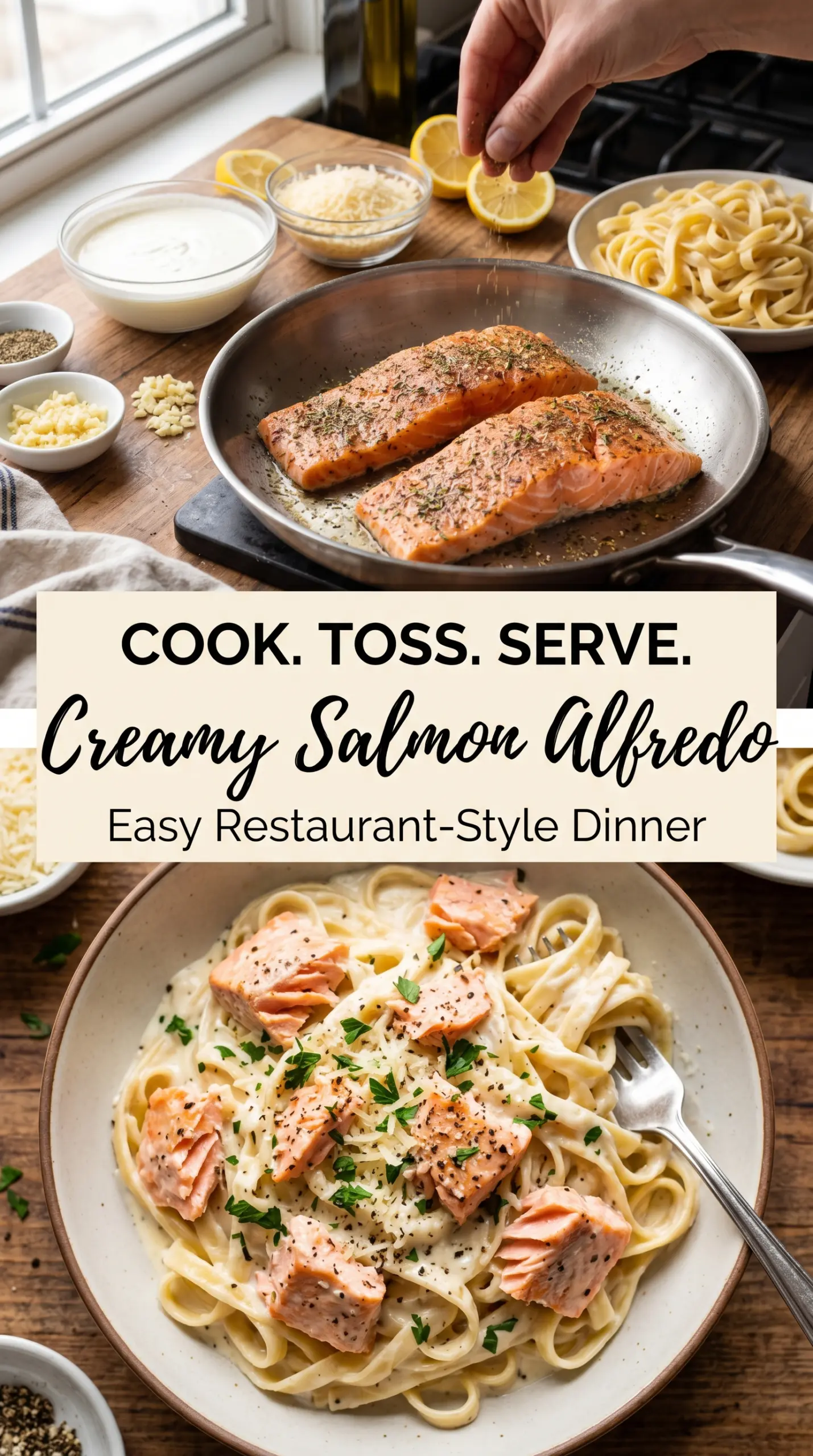
- Salmon fillets — Use skinless fillets if you want easy flaking into the pasta. Salmon with a bit of thickness holds up better in the oven and stays moist when it gets folded into the sauce. If yours are very thin, shorten the bake time so they don’t dry out.
- Heavy cream — This is what gives the sauce its body and keeps it from turning thin when the pasta goes in. Half-and-half can work in a pinch, but the sauce will be lighter and less stable. If you use it, keep the heat low and don’t let it boil.
- Freshly grated Parmesan — This is worth the extra minute of grating. Pre-shredded Parmesan often has anti-caking starches that can make the sauce gritty. Grate it fine so it melts evenly into the cream.
- Fettuccine — The wide noodles give the sauce something to cling to. Any sturdy pasta works, but thin pasta won’t carry the Alfredo as well. Save some pasta water before draining so you can loosen the sauce without watering it down.
- Butter and garlic — These build the base before the cream goes in. Let the garlic soften for just 30 seconds; if it browns, it turns bitter and takes over the whole pan.
Building the Sauce and Folding in the Salmon at the Right Time
Baking the Salmon First
Brush the salmon with olive oil, then season it evenly so every bite has a little salt and spice. Bake it at 400°F until it flakes at the thickest point and still looks juicy in the center. If you leave it in until it looks completely opaque and firm all the way through, it will dry out once it gets mixed with the hot pasta and sauce.
Starting the Alfredo Base
Melt the butter over medium heat, then add the garlic and let it turn fragrant for about 30 seconds. Pour in the cream and bring it to a gentle simmer, not a boil. You want small bubbles around the edge of the pan and steady steam; if the cream is boiling hard, it can take on a broken, oily look later.
Melting in the Parmesan
Stir the Parmesan in gradually and keep the heat low. The sauce should turn smooth and glossy as the cheese disappears. If it turns stringy or grainy, the pan is too hot; pull it off the burner for a minute and stir until it comes back together. This is the point where patience pays off.
Bringing Everything Together
Add the cooked pasta and toss until every ribbon is coated. If the sauce feels too thick, use a splash of the reserved pasta water and stir until it loosens and clings again. Fold in the salmon very gently at the end so the chunks stay large instead of breaking down into shreds.
How to Adapt This for a Different Table
Gluten-Free Version
Use a sturdy gluten-free fettuccine and cook it just shy of fully tender. Gluten-free pasta softens fast once it hits hot sauce, so pulling it a minute early keeps it from turning mushy by the time dinner is served.
Dairy-Light Swap
You can use half-and-half instead of heavy cream, but the sauce will be a little thinner and needs extra attention over low heat. The Parmesan still carries the flavor, but the finished dish won’t feel as plush or stable as the original.
Shrimp Instead of Salmon
Cook peeled shrimp in a skillet until just pink, then fold them in at the end. Shrimp need much less time than salmon, so they work best when you want a faster version with a sweeter, lighter seafood flavor.
Storage and Reheating
- Refrigerator: Store leftovers in an airtight container for up to 3 days. The sauce will thicken as it chills.
- Freezer: I don’t recommend freezing this one. Cream sauces can separate after thawing, and the salmon texture gets soft.
- Reheating: Warm it slowly in a skillet over low heat with a splash of milk or cream. Microwaving on high tends to make the sauce break and the salmon overcook.
Answers to the Questions Worth Asking
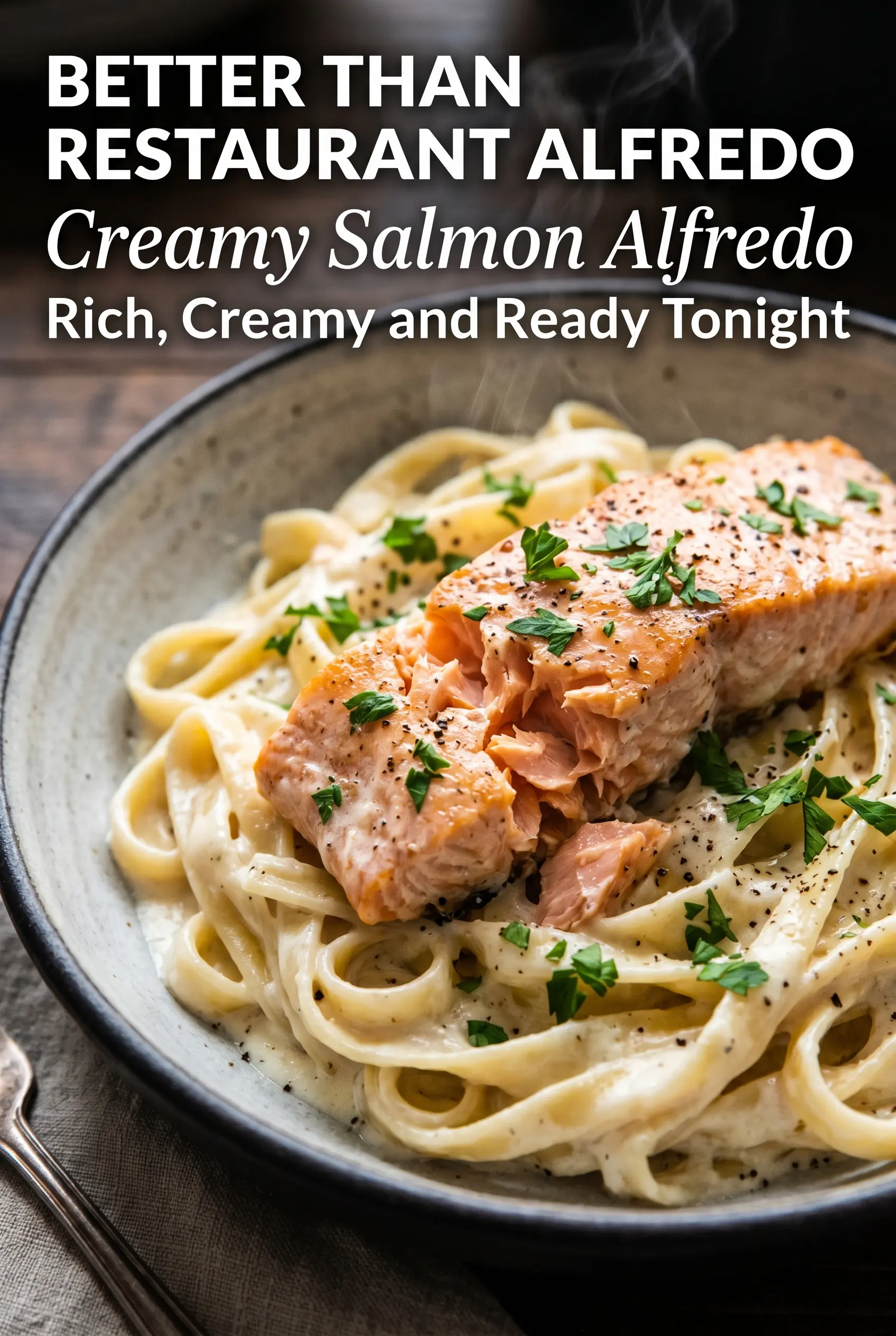
Creamy Salmon Alfredo
Ingredients
Equipment
Method
- Cook the fettuccine according to package directions until al dente, then reserve 1/2 cup pasta water for the sauce.
- Brush the salmon fillets with olive oil so they’re lightly coated before seasoning.
- Season the salmon with garlic powder, paprika, salt, and black pepper to evenly coat the surface.
- Bake at 400°F (200°C) for 12–15 minutes, until the salmon flakes easily.
- Remove the salmon and break it into large chunks so it can fold through the pasta evenly.
- Melt the butter in a large skillet over medium heat until fully melted and lightly foaming.
- Add the garlic and cook for 30 seconds until fragrant without browning.
- Pour in the heavy cream and bring it to a gentle simmer, keeping bubbles soft and controlled.
- Stir in the Parmesan cheese and Italian seasoning until melted into a smooth, creamy sauce.
- Cook until the sauce is smooth and creamy, stirring as needed for even consistency.
- Add the cooked pasta and toss to coat completely in the Alfredo sauce.
- Add the reserved pasta water if needed to loosen the sauce to a glossy, clingy texture.
- Gently fold in the salmon pieces so they stay tender and intact.
- Garnish with chopped fresh parsley and serve immediately for best texture.