
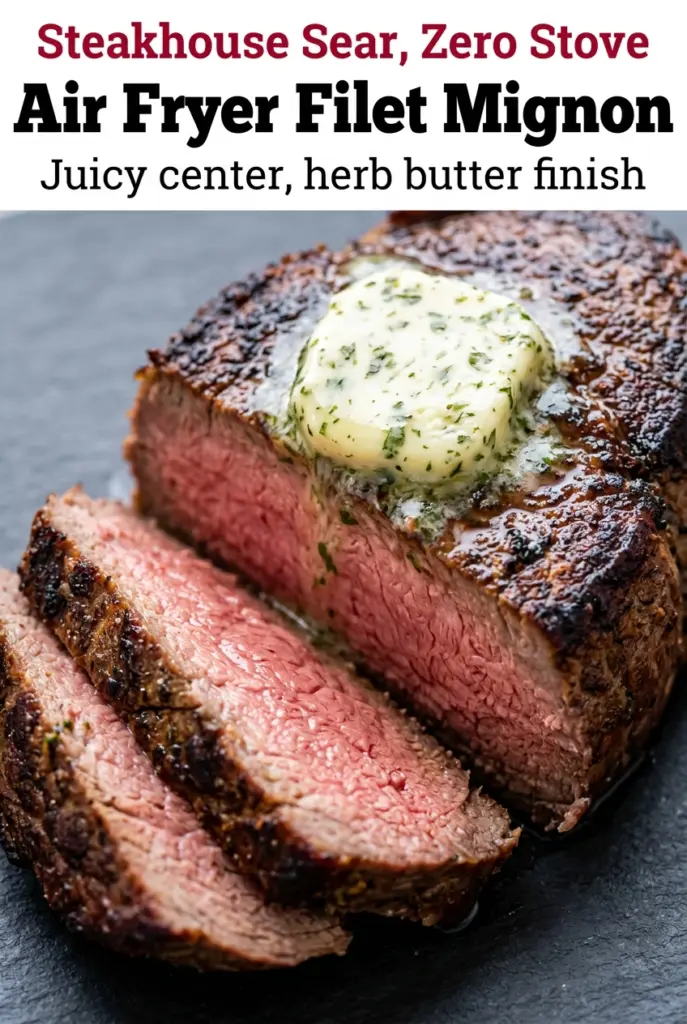
Air fryer filet mignon gives you that deep, steakhouse-style crust without firing up a skillet or heating the whole kitchen. The outside picks up a seasoned, savory edge while the center stays pink, buttery, and tender if you pull it at the right moment. The herb butter melts over the top and turns every slice into something that tastes a lot more deliberate than the effort it takes.
What makes this version work is simple: a dry surface, a hot air fryer, and a short cook time on a thick filet. Filet mignon doesn’t need a long sear to taste good, but it does need steady heat and a little restraint. Overcooking is the only real way to ruin it, which is why the timing here is built around temperature, not guesswork.
Below, I’ll walk through the small details that matter most, including how to season a filet so the crust actually clings, why the herb butter should be added right after resting, and how to adjust the cook if your steaks run thinner or thicker than average.
The herb butter melted into the steak and the center stayed perfectly pink at 11 minutes. I usually ruin filet by overcooking it, but this came out tender and juicy.
Save this air fryer filet mignon for the nights when you want a perfect pink center and a buttery herb finish without pan-searing.
The One Thing That Keeps Filet Mignon Juicy in the Air Fryer
Filet mignon is lean, which is why it goes from perfect to dry faster than a ribeye. The air fryer can work beautifully here, but only if you treat the steak like a quick-cook cut and not something that needs lots of time to develop color. The hot circulating air gives you browning, but the real goal is a fast rise in temperature before the center loses its softness.
The biggest mistake is starting with a damp steak. Moisture on the surface creates steam, and steam keeps the crust from forming. Pat the filets dry, season them evenly, and let them sit long enough to lose the fridge chill. That short rest helps the steak cook more evenly from edge to center, which is what keeps the middle pink instead of turning gray around the outside.
- Room-temperature filets — Cold steak cooks unevenly. Thirty minutes on the counter is enough for a 1.5-inch filet to take the edge off the chill without turning the process into food safety theater.
- Olive oil — This helps the seasoning cling and encourages browning. You only need a thin coating; too much oil can make the surface slick instead of searing cleanly.
- Coarse salt and cracked pepper — The coarser grind gives the filet that steakhouse crust. Fine pepper can scorch faster and turn bitter in the air fryer, so stick with cracked if you have it.
- Garlic powder — Fresh garlic on the steak itself would burn before the filet finishes. Powder gives you that savory note without risking scorched bits in the basket.
What the Steak, Butter, and Herbs Are Each Doing Here
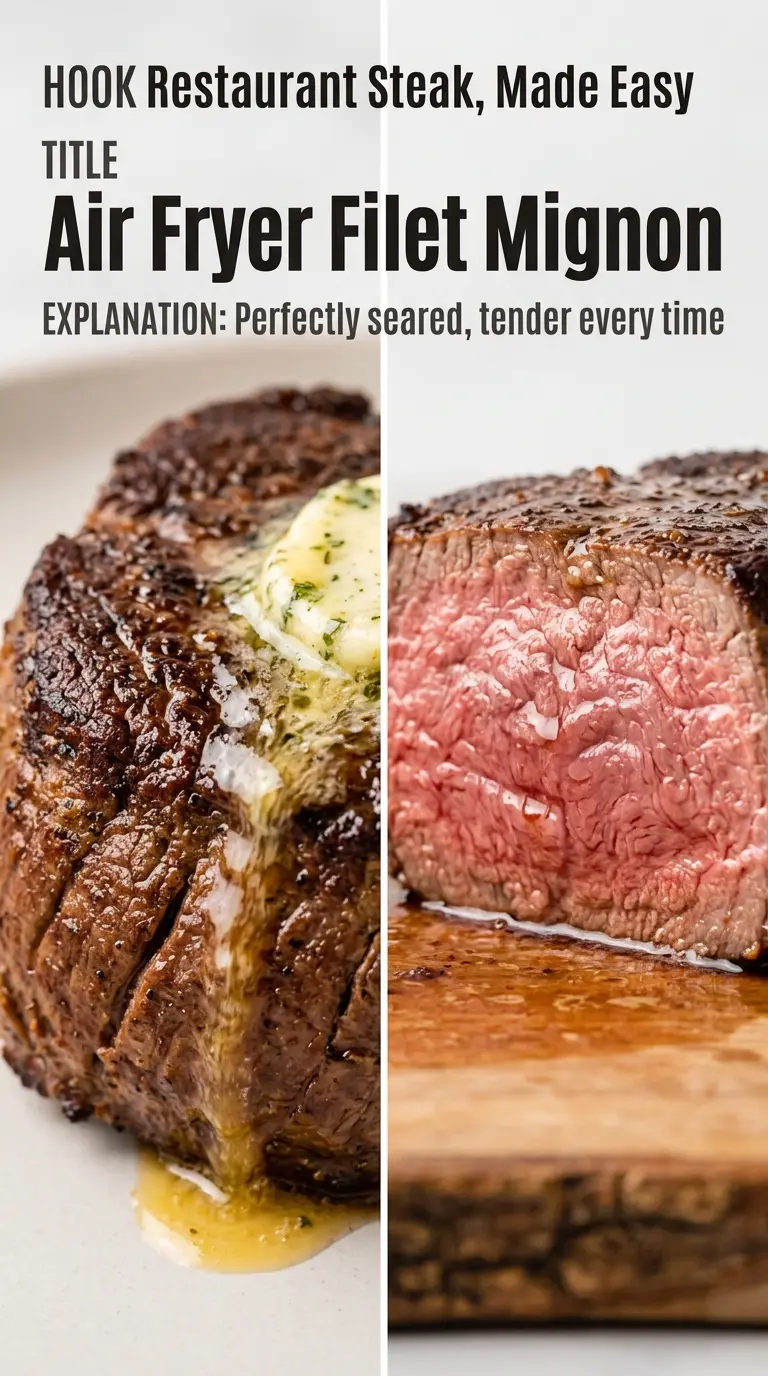
The filet does the heavy lifting, so quality matters here more than in a heavily sauced recipe. Look for steaks that are thick and even in shape, because a skinny tail or lopsided cut will overcook before the center is right. If all you can find are slightly thinner filets, shorten the cook and check early with a thermometer.
The butter mixture is there for finish, not cooking. Softened butter blends with garlic, rosemary, and thyme into something that melts across the hot steak and picks up the pan-free, roasted flavor filets can miss on their own. Fresh herbs matter more than dried here; dried rosemary can feel woody, and dried thyme loses the clean aroma that makes the butter taste polished.
If you need a substitution, use ghee in place of butter if you want a dairy-free option with a similar rich finish. It won’t taste exactly the same, but it still melts well and carries the garlic and herbs. For the herbs, dried versions can work in a pinch, but use a little less because their flavor is more concentrated and easier to overdo.
The 10 Minutes That Decide the Whole Steak
Drying and seasoning the surface
Pat the steaks dry until the paper towel comes away clean, then rub them with oil and seasoning on all sides. The surface should look coated, not wet. If the steak still feels slick or damp, the crust will lag and the seasoning can slide around instead of setting into the meat.
Preheating the air fryer
Preheat to 400°F for a full 5 minutes before the steaks go in. That hot basket is what gives you an immediate start on browning. If you skip preheating, the filet spends too much time warming up and not enough time searing.
Cooking to temperature, not just time
Air fry the filets in a single layer and flip them halfway through. For medium-rare, start checking at 10 minutes, then use 1 to 2 minutes more if needed. The best cue is an internal temperature of about 130°F for medium-rare, because carryover heat will bring it up a few degrees while it rests.
Finishing with herb butter
As soon as the steaks come out, top them with a spoonful of herb butter and let them rest for 5 minutes under loose foil. The butter melts into the surface and mixes with the steak juices, which is where the glossy finish comes from. If you slice too soon, those juices run out onto the plate instead of staying in the meat.
How to Change This Without Losing the Steakhouse Feel
Dairy-Free Herb Finish
Swap the butter for ghee if you tolerate dairy proteins, or use a good dairy-free butter alternative if you don’t. The texture stays rich and spoonable, though the flavor will be a little less rounded than classic butter. Add the herbs after the steaks finish cooking so the finish still tastes fresh and not cooked down.
Using Thicker or Thinner Filets
A thicker filet may need a couple more minutes, while a thinner one can go over fast. Use the same temperature and the same flip, then start checking earlier instead of changing the method. The shape of the steak matters more than the exact clock time.
Garlic and Herb Variations
Rosemary and thyme give the butter a classic steakhouse edge, but parsley or chives can soften the flavor if you want something lighter. Keep the garlic amount modest so it doesn’t overwhelm the filet. This is one of those recipes where the steak should still taste like steak first.
How to Store Leftovers
Refrigerator: Store leftover filet in an airtight container for up to 3 days. The texture stays good, but it will firm up a little as it chills. Freezer: You can freeze cooked filet, but the texture takes a hit when reheated, so I only do it if I know I’ll use it sliced in another dish. Reheating: Warm it gently in a low oven or air fryer until just heated through, because high heat will push the center past medium-rare before the outside comes back to life.
Answers to the Questions Worth Asking
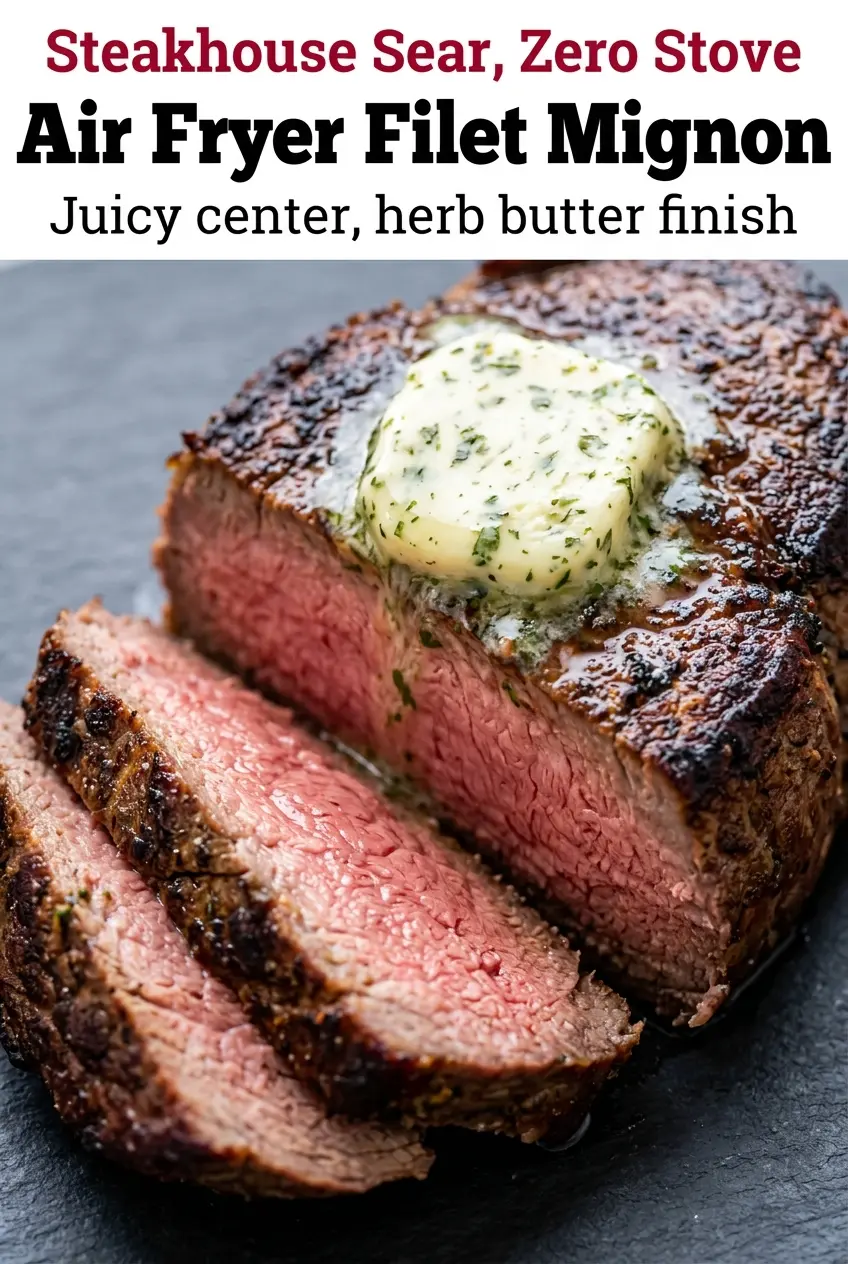
Air Fryer Filet Mignon
Ingredients
Equipment
Method
- Remove the filet mignon steaks from the fridge and let them sit at room temperature for 30 minutes, then pat completely dry with paper towels.
- Rub the steaks with olive oil, then evenly season with coarse sea salt, cracked black pepper, and garlic powder, pressing the seasoning into the surface.
- Preheat the air fryer to 400°F for 5 minutes so the steaks get a hot sear on contact.
- Place the steaks in a single layer (not touching) and air fry for 10–12 minutes total, flipping halfway, until medium-rare registers 130°F internal temperature.
- While the steaks cook, mash together unsalted butter, garlic clove, fresh rosemary, fresh thyme leaves, and salt until fully combined.
- Transfer the steaks to a plate and immediately top each with a spoonful of herb butter.
- Tent loosely with foil and rest for 5 minutes to let the butter melt into a glossy sauce.
- Slice and serve whole or against the grain, spooning any melted herb butter over the top.