
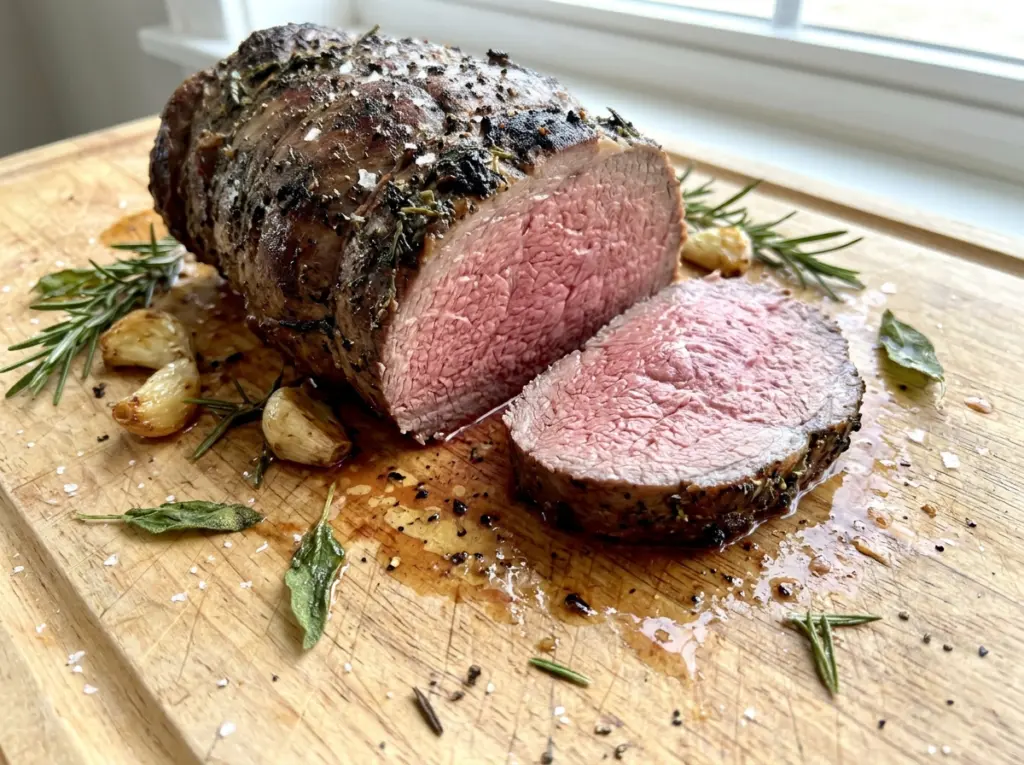
The narrow tail of a beef tenderloin cooks faster than the thick center. Leaving it loose can mean a dry, overdone end while the middle is still roasting, so I tuck the tail underneath and tie the roast before it goes in the oven. That small bit of shaping gives this Christmas Roast Beef Tenderloin a more even thickness from end to end.
For a centerpiece that serves eight, the seasoning stays simple: olive oil, garlic, rosemary, thyme, salt, and pepper. The herbs and garlic cling to the outside without covering up the beef, and the oven does the rest. I rely on an instant-read thermometer rather than guessing from the clock; the roast comes out when its thickest part reaches 145°F, then rests before I slice it into neat pieces.
Kitchen Note
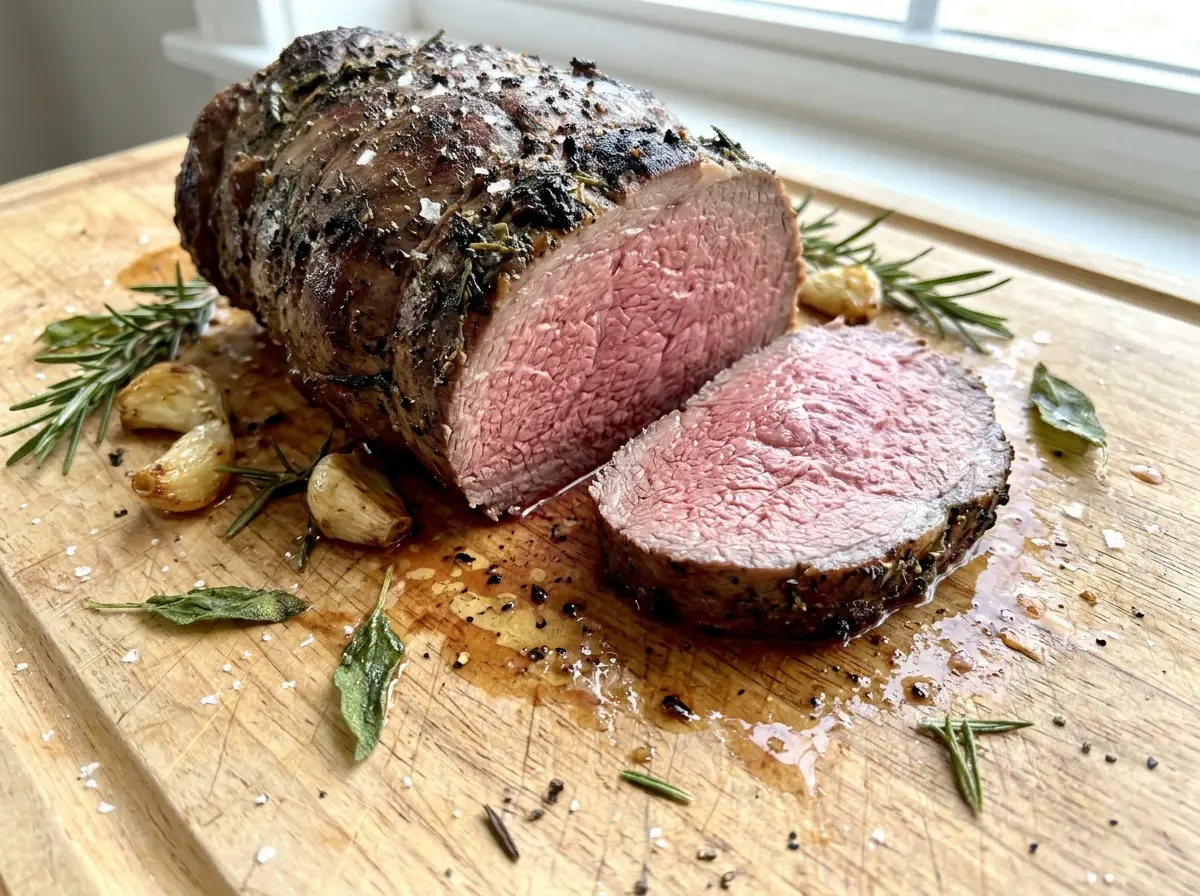
Finely grated garlic spreads through the olive oil instead of sitting in big pieces on the roast. I grate it right before seasoning so it blends into the rosemary and thyme and coats the beef evenly.
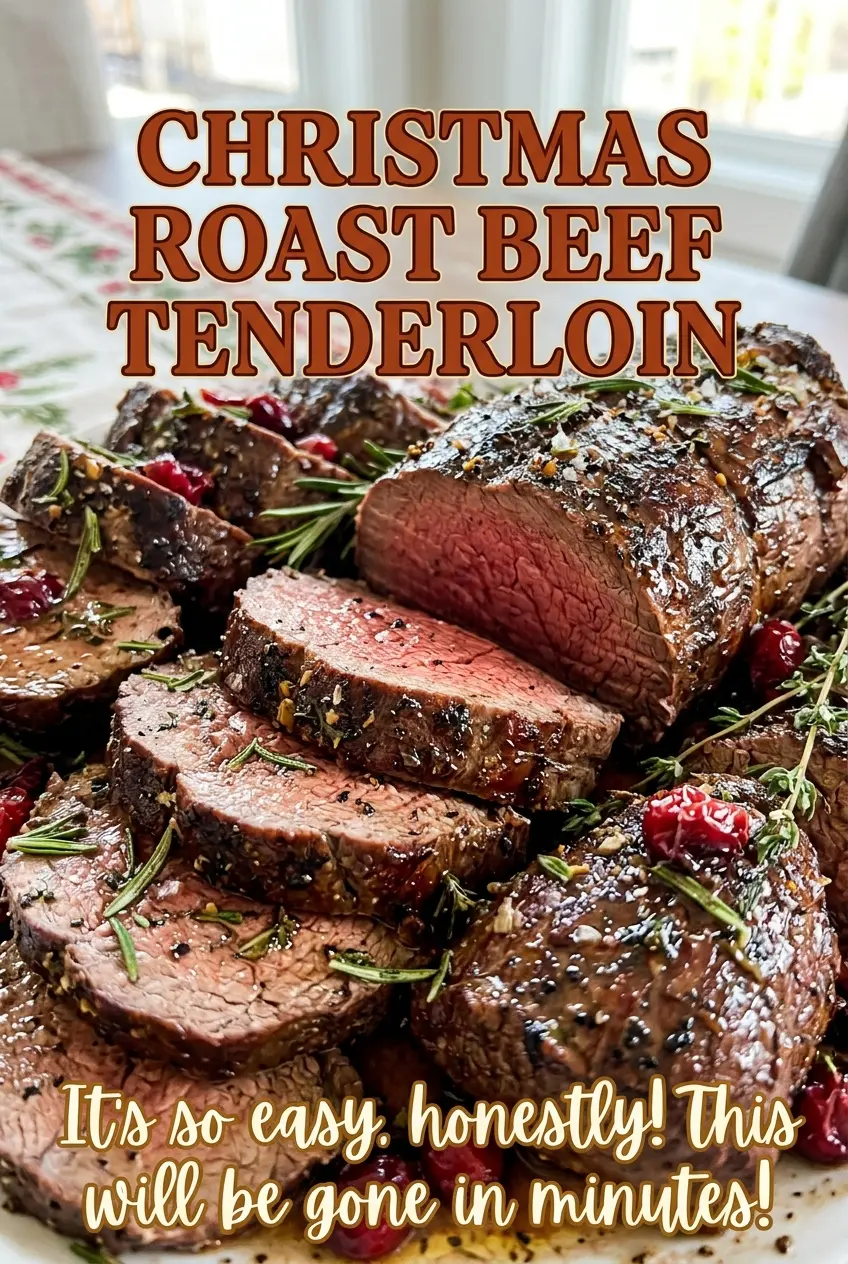
Save this Christmas Roast Beef Tenderloin for a holiday table centerpiece, with a simple garlic, rosemary, and thyme coating.
Why the Tenderloin’s Thin Tail Needs to Disappear Under the Roast
A whole tenderloin naturally tapers, which means its thin end has less room for error than the thick center. If the roast keeps that tapered shape in the oven, the narrow section can cook through sooner. Folding the tail underneath brings it closer to the thickness of the rest of the cut, so the roast cooks more evenly instead of leaving one end far ahead of the other.
The twine holds that shape in place as the beef roasts. Tying at regular intervals also keeps the tenderloin from loosening or rolling on the rack. It’s not about making the roast perfectly cylindrical; it’s about taking the sharpest difference in thickness out of the equation. That gives you a more consistent result when you check the thickest part with a thermometer and when you carve across the grain. With a pricey, naturally tender cut, a little attention to its shape is more useful than piling on extra seasoning.
What the Fresh Herbs and Garlic Add to Tenderloin
- Beef tenderloin — Since the cut is naturally tender and fairly lean, look for a trimmed whole tenderloin with a reasonably even shape. A well-trimmed roast saves prep work, but the tail still needs to be tucked and tied to even out the taper.
- Olive oil — The oil helps the garlic and herbs cling to the outside of the beef. A standard olive oil works well here; there’s no need to use a particularly expensive bottle for a roast that’s seasoned and cooked in the oven.
- Kosher salt and black pepper — Season the surface evenly so the roast doesn’t have bland patches beside heavily seasoned ones. The source of the pepper matters less than distributing it well; use ground black pepper as listed.
- Garlic — Finely grated cloves blend into the oil and spread across the tenderloin. Large chopped pieces are more likely to sit unevenly on the surface, so keep the garlic fine.
- Fresh rosemary and thyme — These herbs give the outside a fragrant, savory finish without taking over the beef. Fresh leaves and finely chopped rosemary disperse well over the roast; if thyme isn’t available, leaving it out is a better fit than adding a different herb, though the seasoning will taste less layered.
Shape It Before the Seasoning Goes On
Set Up the Roasting Pan
Heat the oven to 425°F and set a rack in a rimmed baking sheet. Getting the rack in place first means you can transfer the seasoned tenderloin straight onto it without handling the beef again. The rack keeps the roast raised above the bottom of the pan as it cooks.
Pat Dry, Tuck, and Tie
Pat the tenderloin dry, then fold the thin tail underneath the roast. Tie it with kitchen twine at 1-inch intervals so the shape stays even along its length. If the tail slips back out while you’re tying, tuck it under again before adding the seasoning.
Coat the Beef Evenly
Rub olive oil over the entire tenderloin, then season all sides with kosher salt, black pepper, finely grated garlic, rosemary, and thyme leaves. Turn the roast as you work so the underside and tapered end don’t miss out. The garlic and herbs should cling to the oiled surface rather than collect in one spot.
Roast, Rest, and Slice
Set the tenderloin on the rack and roast for 35–50 minutes, checking the thickest part with an instant-read thermometer until it reaches 145°F. Oven timing varies with the shape of the roast, so use the thermometer reading rather than relying on the clock alone. Transfer the beef to a cutting board and let it rest for 10 minutes before removing the twine. Slice across the grain for serving.
Ways to Shift the Garlic-and-Herb Balance
A Rosemary-Forward Roast
Leave out the thyme and keep the rosemary, garlic, olive oil, salt, and pepper. The seasoning will taste more direct and woodsy, with less of the softer herbal note that thyme brings.
A Garlic-Free Version
Omit the garlic and season with the olive oil, salt, pepper, rosemary, and thyme. You’ll lose the savory edge of the grated garlic, but the fresh herbs still give the tenderloin a fragrant coating.
A Lower-Sodium Roast
For a lower-sodium version, leave out the kosher salt and keep the remaining seasoning the same. The beef will taste less fully seasoned, but the garlic, rosemary, and thyme still add plenty of aroma.
Storage and Reheating
- Refrigerator: Store leftover beef in a covered container for 3–4 days. Sliced tenderloin may lose some juiciness as it sits.
- Freezer: Freeze tightly wrapped portions for up to 2–3 months. Thaw them in the refrigerator before reheating; the texture may be a little less tender after freezing.
- Reheating: Warm slices covered in a low oven until they reach 165°F. Avoid leaving them in the oven longer than needed, since reheated tenderloin can dry out.
Questions That Come Up While Roasting Tenderloin
Christmas Roast Beef Tenderloin
Ingredients
Equipment
Method
- Heat the oven to 425°F.
- Set a rack in a rimmed baking sheet.
- Pat the tenderloin dry.
- Tuck the thin tail under.
- Tie the tenderloin with kitchen twine at 1-inch intervals so the roast is even in thickness.
- Rub the beef all over with olive oil.
- Season evenly with salt, pepper, garlic, rosemary, and thyme.
- Set the tenderloin on the rack and roast for 35–50 minutes, checking the thickest part with an instant-read thermometer until it reaches 145°F.
- Transfer the roast to a cutting board and rest for 10 minutes.
- Remove the twine.
- Slice across the grain.