
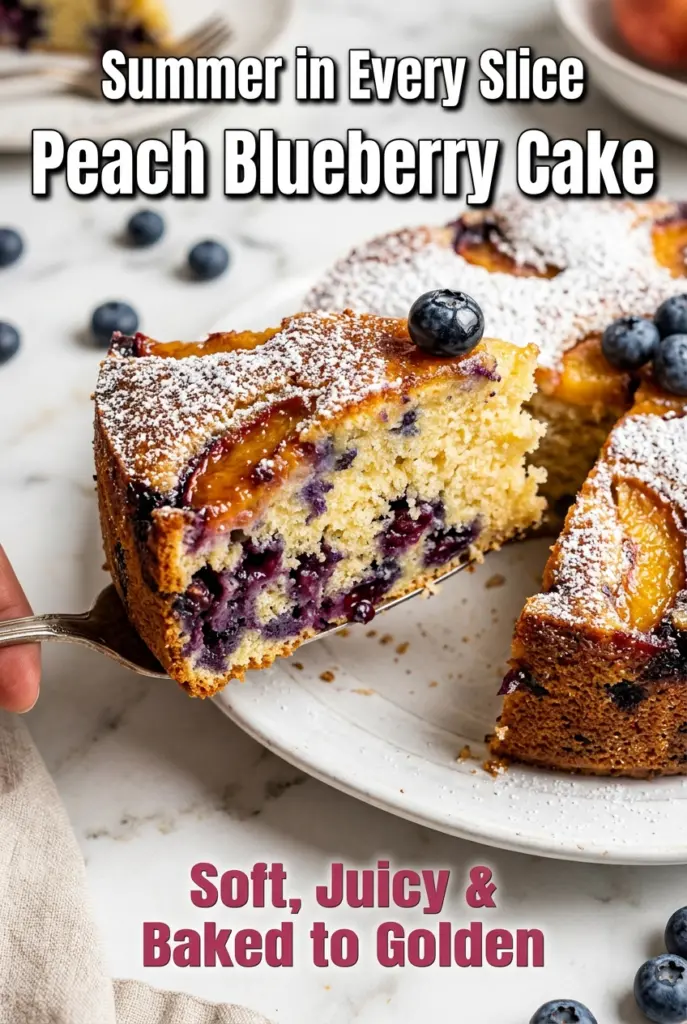
Peach blueberry cake bakes into one of those desserts that disappears slice by slice because the texture keeps pulling you back in. The crumb stays tender and buttery, the peaches turn jammy at the edges, and the blueberries burst just enough to leave little pockets of purple juice through the cake. It tastes homemade in the best way: straightforward, generous, and fragrant with fruit.
What makes this version work is the balance of moisture and structure. Sour cream adds richness and keeps the crumb soft, while a small amount of milk loosens the batter just enough to spread evenly in the pan. Tossing the fruit with flour before folding it in helps keep the peaches and blueberries from sinking, and the cinnamon-sugar topping gives the top a light crunch that plays nicely against the soft fruit underneath.
Below, you’ll find the small details that matter most: how to keep the batter from turning dense, how to layer the fruit so the top looks as good as it tastes, and how to store leftovers without losing that tender crumb.
The cake stayed soft for two days, and the peaches on top caramelized in the oven instead of disappearing into the batter. I also liked that the blueberries didn’t bleed everywhere because the flour coating actually worked.
Save this peach blueberry cake for the day you want a buttery fruit dessert with caramelized edges and a soft, tender crumb.
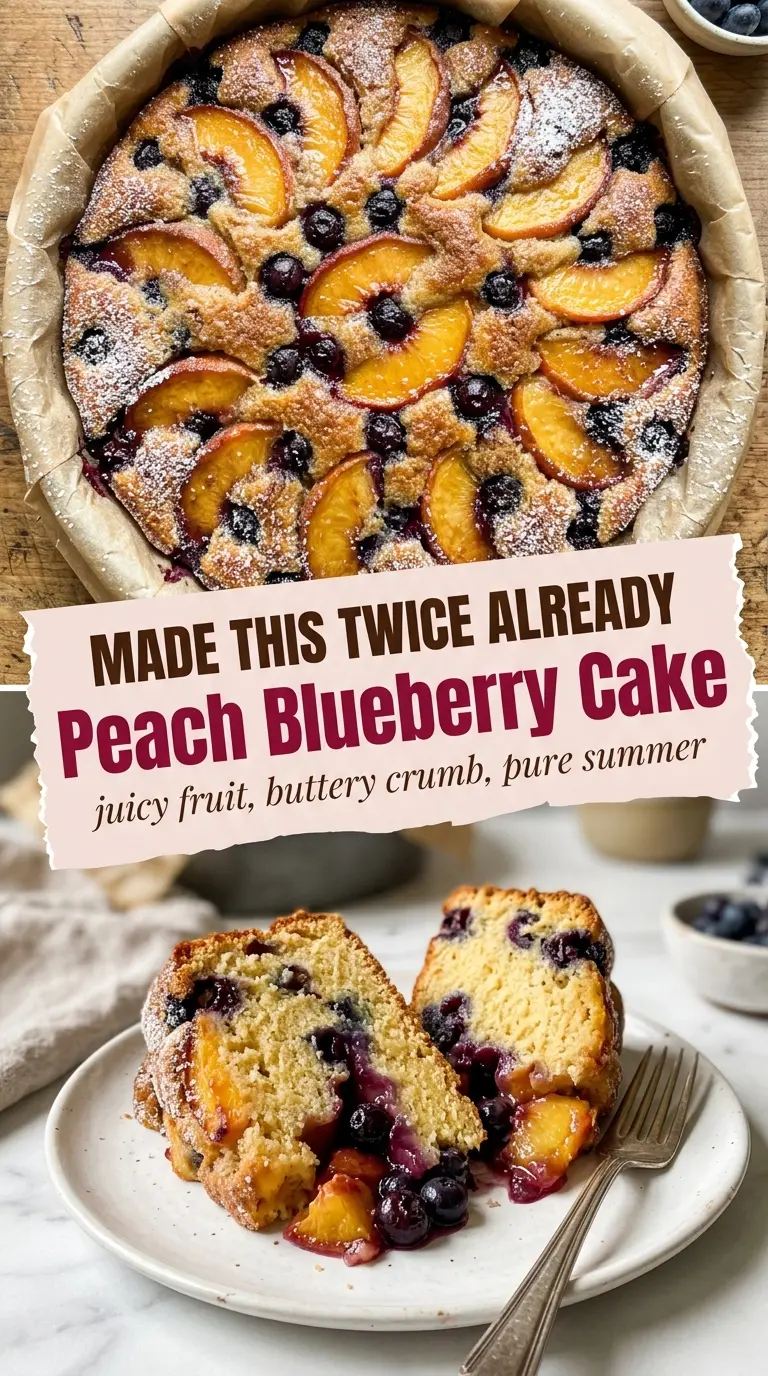
The Reason This Cake Stays Tender Instead of Turning Heavy
The biggest mistake with fruit cakes is mixing them like a quick bread and ending up with a tight, rubbery crumb. This batter needs a gentle hand once the dry ingredients go in. The butter and sugar should be beaten until pale and fluffy first, because that step traps air and gives the cake its lift before the fruit ever enters the picture.
Fruit changes the texture of cake fast. Too much stirring after the flour goes in develops gluten, and the batter turns dense. Too much flour on the fruit and it can clump into little pockets instead of spreading through the crumb. The thin coating here is enough to keep the peaches and blueberries from sinking without making the cake dry.
- Butter: Softened butter is what gives this cake its plush, bakery-style crumb. Cold butter won’t cream properly, and melted butter makes the cake flatter and less airy.
- Sour cream: This is the ingredient that keeps the cake moist without making it wet. Full-fat sour cream gives the best texture, but plain full-fat Greek yogurt works in the same amount if that’s what you have.
- Peaches: Ripe peaches matter here because they soften into sweet, fragrant pockets as they bake. If yours are a little firm, slice them thin so they cook through before the cake sets.
- Blueberries: Fresh blueberries hold their shape better than frozen in this batter. If you use frozen, add them straight from the freezer and expect a little more purple streaking through the cake.
- Cinnamon: The small amount in the batter and topping doesn’t make the cake taste spiced; it just warms up the fruit and makes the peaches taste even more peachy.
Building the Batter Without Overworking It
Creaming the Butter and Sugar
Beat the butter and sugar until the mixture looks pale, fluffy, and a little increased in volume. That usually takes 3 to 4 minutes with a mixer, and it matters because this is where the cake gets its structure. If the mixture still looks sandy and dense, keep going. A properly creamed base feels light when you scrape it with a spatula.
Adding the Eggs and Dairy
Add the eggs one at a time so the batter stays smooth and emulsified. Once the vanilla, sour cream, and milk go in, the mixture may look slightly curdled. That’s normal. The dry ingredients will pull everything back together, and trying to beat it smooth at this stage usually just makes the batter tougher.
Folding in the Fruit
Stir the flour into the peaches and blueberries first, then fold them in gently with a spatula. The goal is to distribute the fruit without crushing the blueberries or streaking the batter purple. Reserve a few peach slices for the top so the cake bakes with a visible fruit layer that turns glossy and caramelized.
Baking Until the Center Sets
The cake is done when the top is deep golden, the fruit looks jammy, and a toothpick in the center comes out with moist crumbs instead of wet batter. Don’t trust the color alone if your oven runs hot; the fruit can brown before the middle finishes. Let it cool in the pan for 15 minutes before turning it out, or it can break while the crumb is still fragile.
Three Ways to Make This Peach Blueberry Cake Fit What You Have
Dairy-Free Version
Use a good dairy-free butter substitute in place of the unsalted butter and swap the sour cream for plain dairy-free yogurt with some thickness to it. The cake will still bake up tender, though it may brown a little faster and taste slightly less rich than the original.
Frozen Fruit Shortcut
Frozen peaches and blueberries work if fresh fruit isn’t available. Keep them frozen until the last minute, toss them lightly in flour, and expect the bake time to stretch a few minutes because the batter starts colder and wetter.
Make It More Dessert-Like
Serve each slice with whipped cream or vanilla ice cream if you want a more plated dessert feel. The cake already has enough sweetness on its own, so the topping should stay simple and cool rather than heavy.
Storage and Reheating
- Refrigerator: Store covered for up to 4 days. The crumb stays soft, though the fruit layer softens a bit more each day.
- Freezer: Freeze individual slices wrapped tightly and then placed in a freezer bag for up to 2 months. The texture holds up better than you’d expect if the cake is cooled completely first.
- Reheating: Warm slices in a 300°F oven for about 10 minutes or microwave briefly until just warmed through. Don’t blast it on high heat or the fruit turns syrupy and the crumb dries out around the edges.
Answers to the Questions Worth Asking
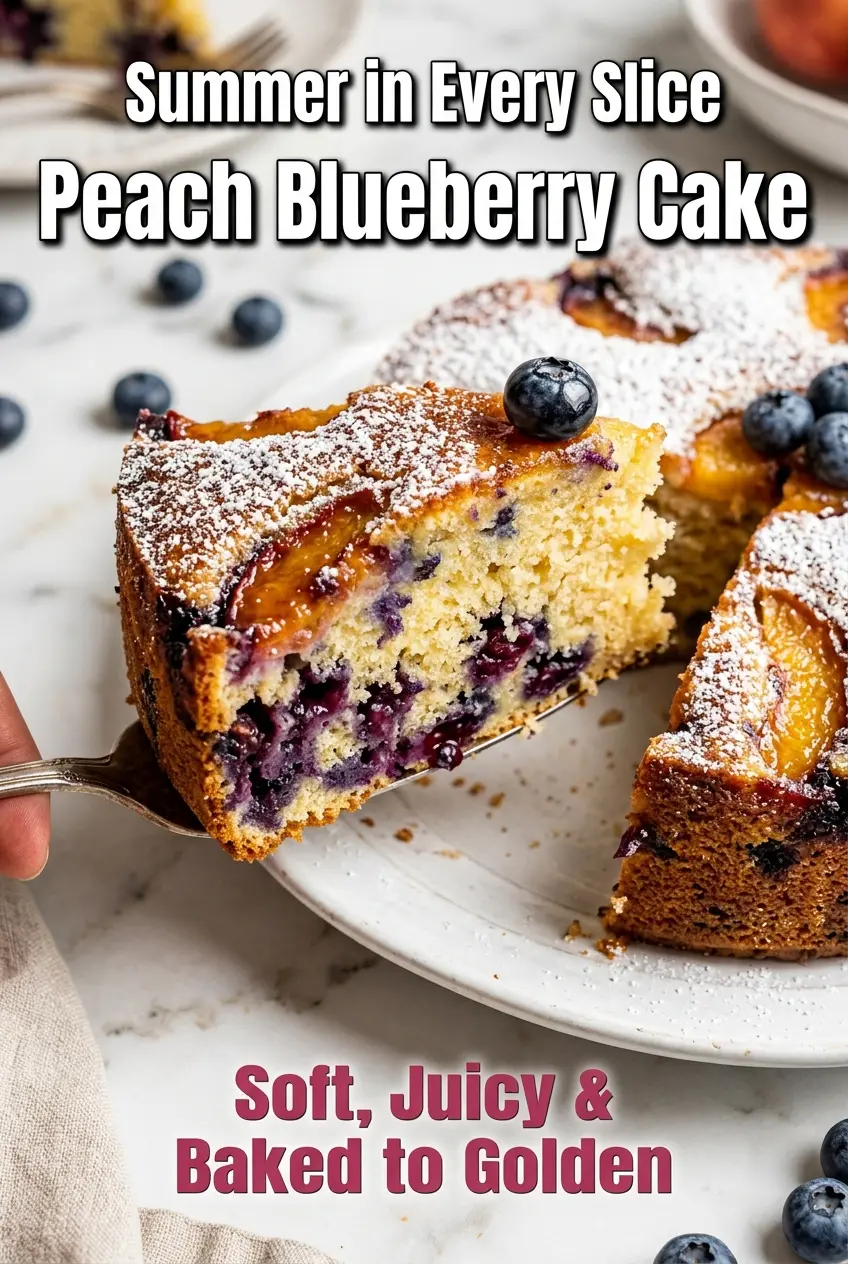
Peach Blueberry Cake
Ingredients
Equipment
Method
- Preheat your oven to 350°F (175°C). Grease a 9-inch round cake pan and line the bottom with parchment paper.
- In a medium bowl, whisk together all-purpose flour, baking powder, baking soda, salt, and cinnamon. Set aside.
- Beat the softened unsalted butter and granulated sugar on medium-high speed for 3–4 minutes until pale and fluffy. Use a hand or stand mixer.
- Add the eggs one at a time, beating well after each addition. Mix in vanilla extract.
- Stir in sour cream and whole milk just to combine, even if the batter looks slightly curdled. Stop as soon as it comes together.
- Add the dry ingredients to the wet ingredients and fold gently until no dry streaks remain. Do not overmix.
- Toss the peaches and fresh blueberries with 1 tablespoon all-purpose flour to coat lightly. This helps prevent them from sinking.
- Fold the fruit into the batter, reserving about 1/4 of the peach slices for the top. Keep the folding gentle to avoid crushing berries.
- Pour the batter into the prepared pan and smooth the top. Arrange the reserved peach slices decoratively over the surface and scatter any remaining blueberries over the top.
- Mix 2 tablespoons granulated sugar with 1/2 tsp cinnamon and sprinkle evenly over the top. Make sure the fruit and batter are lightly covered.
- Bake at 350°F (175°C) for 45–55 minutes until the top is deep golden and the fruit is caramelized. A toothpick in the center should come out clean with moist crumbs.
- Cool in the pan for 15 minutes. Turn out onto a wire rack.
- Serve warm or at room temperature. Dust with powdered sugar if desired.