
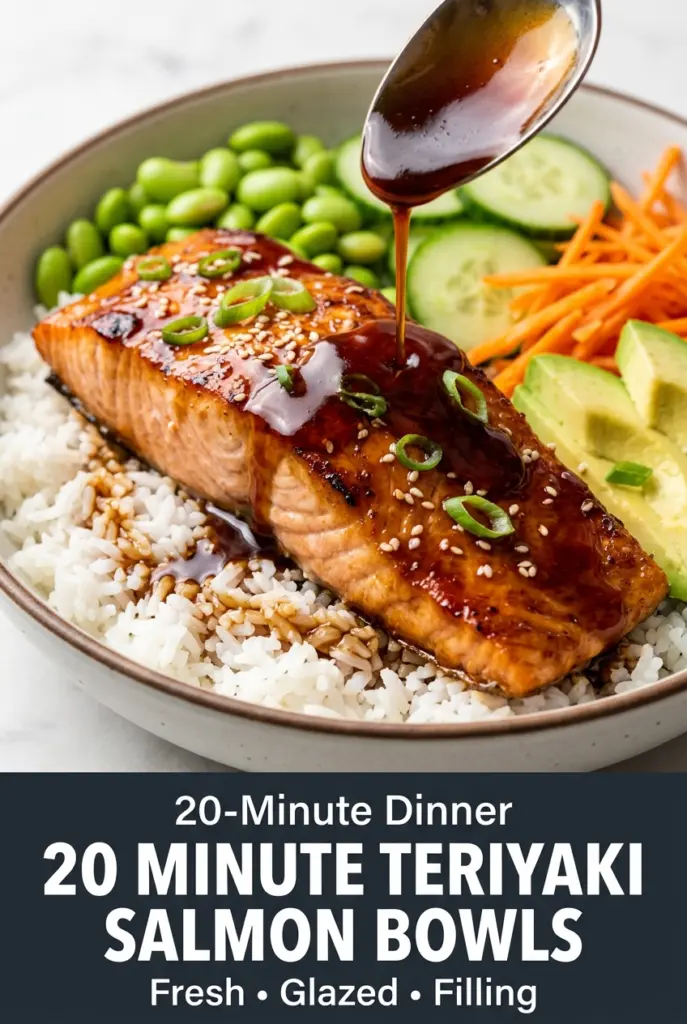
Flaky salmon, glossy teriyaki glaze, and crisp vegetables piled over fluffy rice make these bowls the kind of dinner that disappears fast. The salmon stays tender, the sauce clings instead of running all over the bowl, and every bite gets a mix of sweet, salty, fresh, and a little nutty from the sesame finish.
What makes this version work is the balance of timing and heat. The salmon gets a quick sear first so the outside picks up color, then the teriyaki mixture finishes in the same pan and thickens just enough to coat the fish without turning sticky or burnt. The cornstarch slurry keeps the sauce glossy, and adding the avocado and cucumber at the end gives the bowl the cool contrast it needs.
Below, I’ve included the small details that matter most: how to keep the salmon from overcooking, why the sauce should simmer only briefly, and a few smart swaps if you want to change up the bowl without losing the texture that makes it work.
The glaze thickened up beautifully in the pan and coated the salmon instead of pooling at the bottom. I also loved how the cucumber and avocado kept the bowls from feeling heavy.
Save these teriyaki salmon bowls for a fast dinner with glossy glaze, crisp vegetables, and no complicated cleanup.
The Trick to Glazed Salmon That Stays Tender Instead of Dry
Salmon goes from silky to chalky fast once it spends too long in the pan. The mistake is usually cooking the fish until it looks fully done before the sauce even goes in. By the time the teriyaki thickens, the salmon has already taken on too much heat. This version avoids that by giving the fillets a short sear, then letting the sauce finish them in the pan for just a couple of minutes.
The other thing that matters here is the glaze itself. Teriyaki sauce needs enough time to thicken and enough heat to coat the fish, but not so much that the honey scorches. A gentle simmer is all it takes. Once the sauce turns glossy and starts clinging to the back of a spoon, it’s ready.
- Salmon fillets — Choose fillets that are similar in size so they finish cooking at the same time. Skin-on works well because it helps protect the fish from direct heat, but skinless is fine if that’s what you have.
- Low-sodium soy sauce — This gives the bowl its salty backbone without pushing the glaze into overly salty territory. Regular soy sauce works too, but the finished sauce will taste a little stronger, so taste before adding extra seasoning.
- Honey — Honey brings the shine and the sticky body that makes the teriyaki cling to the salmon. Maple syrup can stand in, though the flavor will be less classic and a little more earthy.
- Rice vinegar — This keeps the glaze from tasting flat. If you don’t have it, use apple cider vinegar in a smaller amount; it’s sharper, so you don’t want a full one-to-one swap.
- Cornstarch slurry — This is what turns the sauce from thin and salty to spoonable and glossy. Stir it smooth with cold water first so it disperses evenly instead of clumping in the pan.
- Jasmine rice and fresh vegetables — The rice soaks up extra glaze, while cucumber, carrot, and avocado keep the bowl balanced. Warm rice matters here because cold rice makes the sauce feel heavier and less cohesive.
The 10 Minutes of Cooking That Matter Most
Mixing the Glaze First
Whisk the soy sauce, honey, rice vinegar, garlic, ginger, and sesame oil together before the salmon hits the pan. That keeps the cooking moving and gives the flavors a chance to blend while the fish sears. Add the cornstarch slurry last, right before you need it, so the mixture stays smooth. If the cornstarch sits too long, it can settle and leave you with an uneven sauce.
Getting Color on the Salmon
Pat the salmon dry and season it lightly. Dry fish sears better; wet fish steams and leaves you with pale, soft skinless fillets that never quite get a proper crust. Heat the oil until it shimmers, then lay the salmon in and let it sit undisturbed for the first few minutes. If you move it too early, it sticks and tears.
Finishing in the Pan
Flip the salmon carefully and cook just until the second side picks up a little color. Then pour in the teriyaki mixture and let it simmer briefly, spooning the sauce over the fillets as it thickens. The fish should flake at the edges but still look moist in the center when you take it off the heat. If the sauce starts to get too thick before the salmon is done, add a splash of water and keep the heat moderate.
Building the Bowls
Divide the rice into bowls first, then layer on the edamame, cucumber, carrot, and avocado. This order keeps the warm rice at the base where it can catch the extra glaze, while the vegetables stay fresh and crisp on top. Finish with salmon, spoon over more sauce, and add the green onions and sesame seeds last so they stay bright and fragrant.
How to Adapt These Salmon Bowls for Different Nights and Different Eatters
Gluten-Free Bowls
Swap the soy sauce for tamari or a certified gluten-free soy sauce. The rest of the recipe stays the same, and you still get that deep savory glaze without changing the texture of the sauce.
Lower-Sugar Version
Use a little less honey and lean on the rice vinegar and ginger for balance. The glaze will be less sticky and a touch lighter, but it still coats the salmon well if you let it simmer until it turns shiny.
No-Salmon Swap
This glaze also works with cubed tofu or shrimp. Tofu needs a little more time in the pan to get edges that hold up to the sauce, while shrimp cooks much faster and should go in only until just opaque.
Meal Prep Bowls
Pack the rice, salmon, and vegetables in separate containers if you want the best texture later. Avocado is the one ingredient I’d slice fresh, since it browns and softens quickly once it’s cut.
Storage and Reheating
- Refrigerator: Store the salmon, rice, and vegetables separately for up to 3 days. The cucumber and avocado are best fresh, but the salmon and rice hold up well.
- Freezer: The cooked salmon and rice freeze reasonably well for up to 2 months, though the avocado and cucumber should not be frozen. Freeze the sauce with the salmon or separately in a small container.
- Reheating: Warm the rice and salmon gently in the microwave at medium power or in a covered skillet over low heat. High heat dries the salmon out and makes the glaze tighten too much before the fish is warm.
Answers to the Questions Worth Asking
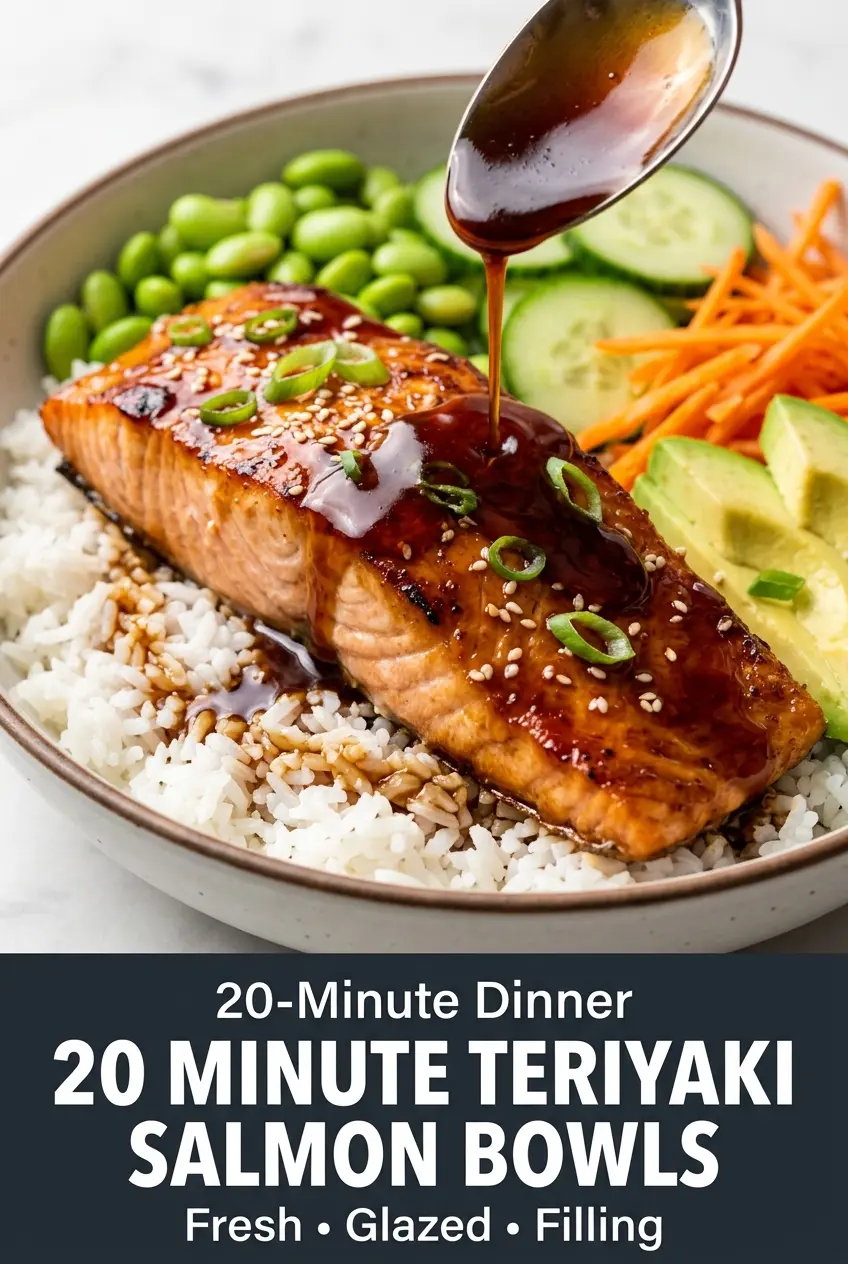
20 Minute Teriyaki Salmon Bowls
Ingredients
Equipment
Method
- Whisk low-sodium soy sauce, honey, rice vinegar, garlic, grated fresh ginger, and sesame oil in a small bowl until smooth.
- Mix cornstarch with 1 tbsp water until smooth, then stir it into the teriyaki mixture.
- Pat salmon fillets dry and season lightly with salt and black pepper.
- Heat olive oil in a large skillet over medium-high heat.
- Add salmon and cook for 3–4 minutes, until the bottoms are browned and the flesh is beginning to set.
- Flip salmon carefully and cook for another 2 minutes.
- Pour teriyaki mixture into the skillet and simmer for 2–3 minutes, spooning the thickening glaze over the salmon until glossy and fully cooked.
- Divide cooked jasmine rice among four bowls.
- Add shelled edamame, cucumber, shredded carrot, and avocado to each bowl.
- Place one teriyaki salmon fillet over each bowl and spoon extra glaze over the salmon.
- Finish with sliced green onions and sesame seeds, then serve immediately.