
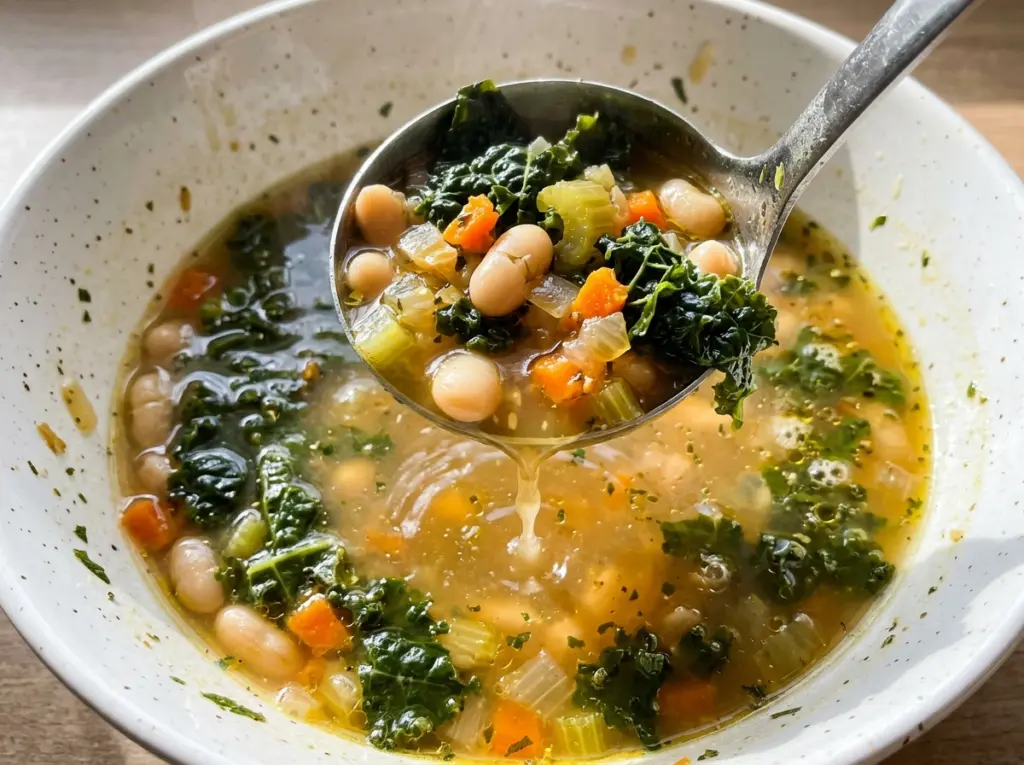
When the onion, carrots, and celery start to soften in the pot, the kitchen smells like the beginning of a good soup. I used to let the beans simmer much longer, thinking more time would make the broth taste richer. With White Bean and Kale Soup, that extra simmer isn’t needed: the vegetables soften first, then the canned beans have just enough time in the broth to share their flavor.
Mashing a few beans against the side of the pot gives the soup a little body without adding a separate thickener. The rest stay whole, so you get creamy bites alongside the tender vegetables and kale. A little lemon juice at the end brightens the broth, and the finished soup is hearty without feeling heavy.
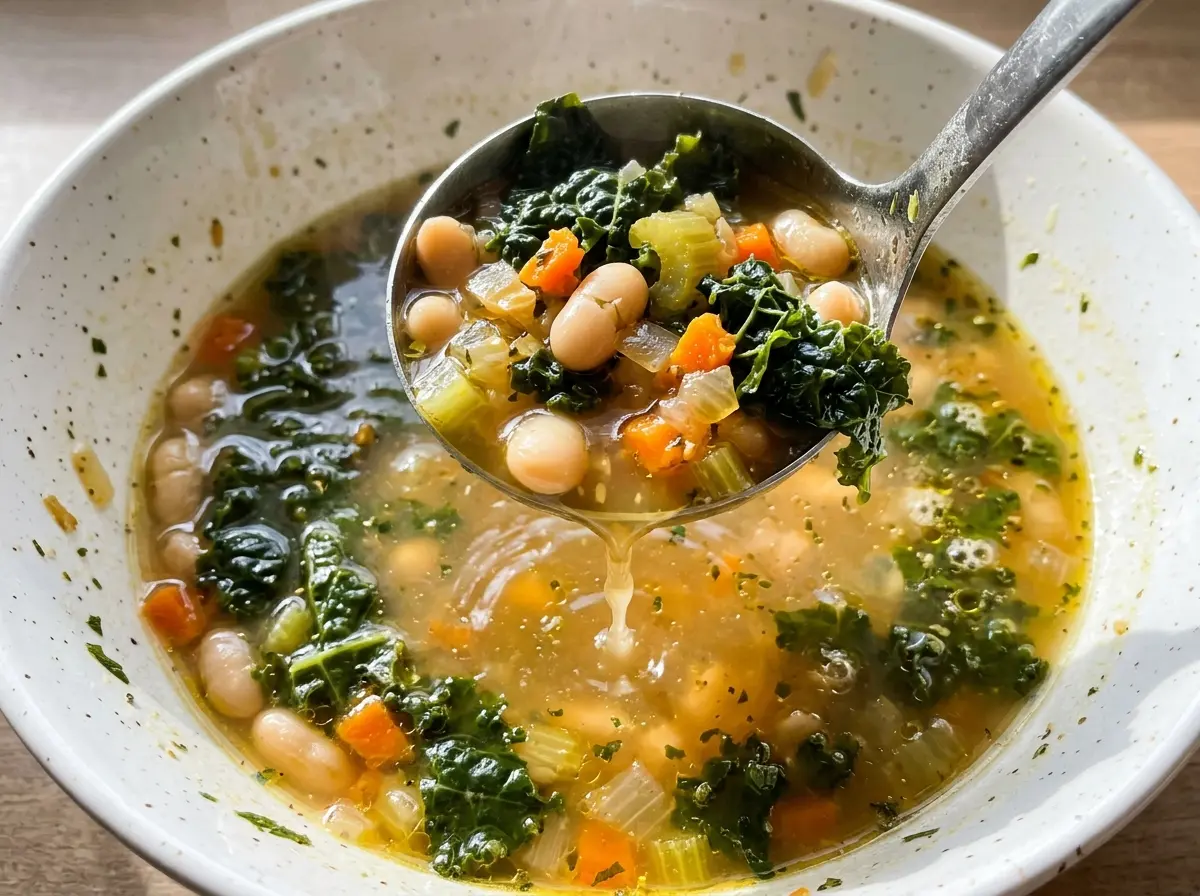
Kitchen Note
Curly kale stems stay much tougher than the leaves in this quick simmer. Strip out the ribs before chopping so every bite turns tender at about the same time.
Save this White Bean and Kale Soup for a cozy bowl with creamy beans, tender greens, and a bright lemon finish.
Why the Beans Thicken the Broth Without a Separate Thickener
White bean soup can turn watery when the beans stay whole and the broth has nothing to give it a little body. Here, the cannellini beans do both jobs: some stay intact for hearty bites, while a few are mashed against the pot to release their soft interiors into the liquid. That small change makes the broth feel fuller without flour, cream, or a blender.
The timing matters because canned beans are already cooked and tender. The uncovered simmer gives the broth time to pick up flavor from the vegetables, thyme, and bay leaf, but it doesn’t need to cook the beans from scratch. After that, mash only some of them. If you mash every bean, you lose the contrast between a lightly thickened broth and whole, creamy beans. The result should still look like soup, not a smooth puree.
What Each Ingredient Brings to This Bean-and-Kale Soup

- Olive oil, onion, carrots, and celery — The oil helps the diced vegetables soften evenly, and the three vegetables make a savory, gently sweet base. Standard olive oil works well here; the vegetables need to soften, not brown, so there’s no need to use a specialty oil.
- Garlic, dried thyme, and red pepper flakes — Garlic and thyme give the broth its savory aroma, while the flakes add a mild warmth. Dried thyme is convenient and distributes easily through the pot. Keep the flakes if you like a little heat, or leave them out for a milder soup.
- Cannellini beans — Their creamy texture is what makes them especially useful here: whole beans feel substantial, and mashed beans help thicken the broth. Canned beans are a practical choice for this short-cooking soup; drain and rinse them before they go into the pot.
- Low-sodium vegetable broth — It supplies the main liquid and lets the salt in the pot season the soup without starting with a heavily salted base. A familiar, affordable vegetable broth is fine; the low-sodium choice gives you more control over the finished taste.
- Bay leaf, kosher salt, and black pepper — The bay leaf adds a quiet herbal note as the broth simmers, while salt and pepper season the whole pot. Remove the bay leaf before serving; it’s there to flavor the liquid, not to be eaten.
- Curly kale — Its sturdy leaves hold up in the hot broth and bring a pleasantly hearty texture. Choose leaves that look fresh rather than wilted, remove the stems, and chop the leaves so they’re easy to eat by the spoonful.
- Fresh lemon juice — This gives the finished soup a brighter edge that balances the beans and vegetables. Add it after cooking rather than simmering it with the broth, so its fresh, tart character stays noticeable.
From Soft Vegetables to Tender Kale in One Pot
Soften the vegetables without browning them
Heat the olive oil in a 6-quart pot over medium heat, then add the diced onion, carrots, and celery. Cook for 6 to 8 minutes, stirring occasionally, until the vegetables have softened. They should look glossy and yielding, not deeply browned or stuck to the bottom. If the pot looks dry, keep stirring so the vegetables cook evenly in the oil.
Wake up the garlic and dried seasonings
Stir in the minced garlic, dried thyme, and red pepper flakes. Cook for 30 seconds, just until fragrant; garlic can turn bitter if it sits too long over the heat. Keep the mixture moving around the pot so the garlic warms in the oil instead of scorching in one spot. You’ll smell the thyme and garlic before the next ingredients go in.
Simmer the beans in the seasoned broth
Add the drained and rinsed beans, vegetable broth, bay leaf, kosher salt, and black pepper. Bring everything to a boil over medium-high heat, then reduce the heat and simmer uncovered for 15 minutes. The broth should bubble gently rather than boil hard. Keep the pot uncovered so the soup simmers steadily and the flavors have room to come together.
Mash a few beans, then cook the kale
Press some of the beans against the side of the pot with a spoon, then stir them back into the broth. This thickens the liquid while leaving plenty of whole beans. Stir in the chopped kale and simmer for 5 to 8 minutes, until the leaves have softened and are tender to the bite. If the kale still feels firm, give it a little more time in the simmering soup.
Finish with lemon after removing the bay leaf
Lift out and discard the bay leaf, then stir in the fresh lemon juice. Give the broth a quick stir so the lemon is distributed instead of pooling in one spoonful. The soup is ready when the greens are tender and the broth tastes bright, savory, and well seasoned. Ladle it into bowls while hot.
Two Simple Changes for a Different Bowl
Make the broth thicker and more bean-forward
Mash a larger share of the cannellini beans against the side of the pot before adding the kale. The broth will become thicker and creamier, though you’ll have fewer whole beans in each spoonful. This keeps the same ingredients and gives the soup a more substantial texture.
Keep the soup mild
Leave out the red pepper flakes for a gentler bowl. The thyme, garlic, and black pepper still give the broth savory flavor, but you’ll lose the extra warmth from the flakes.
Storage and Reheating
- Refrigerator: Store in a covered container for 3 to 4 days. The beans may continue to thicken the broth, and the kale will soften more as it sits. Refrigerate within 2 hours of cooking.
- Freezer: Freeze in airtight containers for up to 3 months, leaving a little space at the top. Thaw overnight in the refrigerator; the kale will be softer after thawing, but the soup still freezes well.
- Reheating: Warm gently in a saucepan over medium-low heat, stirring occasionally, until it reaches 165°F. Avoid a hard boil, which can make the kale overly soft; if the broth has thickened, stir in a splash of vegetable broth as it warms.
Questions That Come Up While This Soup Simmer
White Bean and Kale Soup
Ingredients
Method
- Heat the olive oil in a 6-quart pot over medium heat.
- Add the onion, carrots, and celery and cook for 6 to 8 minutes, stirring occasionally, until softened.
- Stir in the garlic, thyme, and red pepper flakes and cook for 30 seconds, until fragrant.
- Add the beans, broth, bay leaf, salt, and black pepper.
- Bring the soup to a boil over medium-high heat.
- Reduce the heat and simmer uncovered for 15 minutes.
- Mash some of the beans against the side of the pot to thicken the soup.
- Stir in the kale and simmer for 5 to 8 minutes, until tender.
- Remove the bay leaf.
- Stir in the lemon juice and serve.