

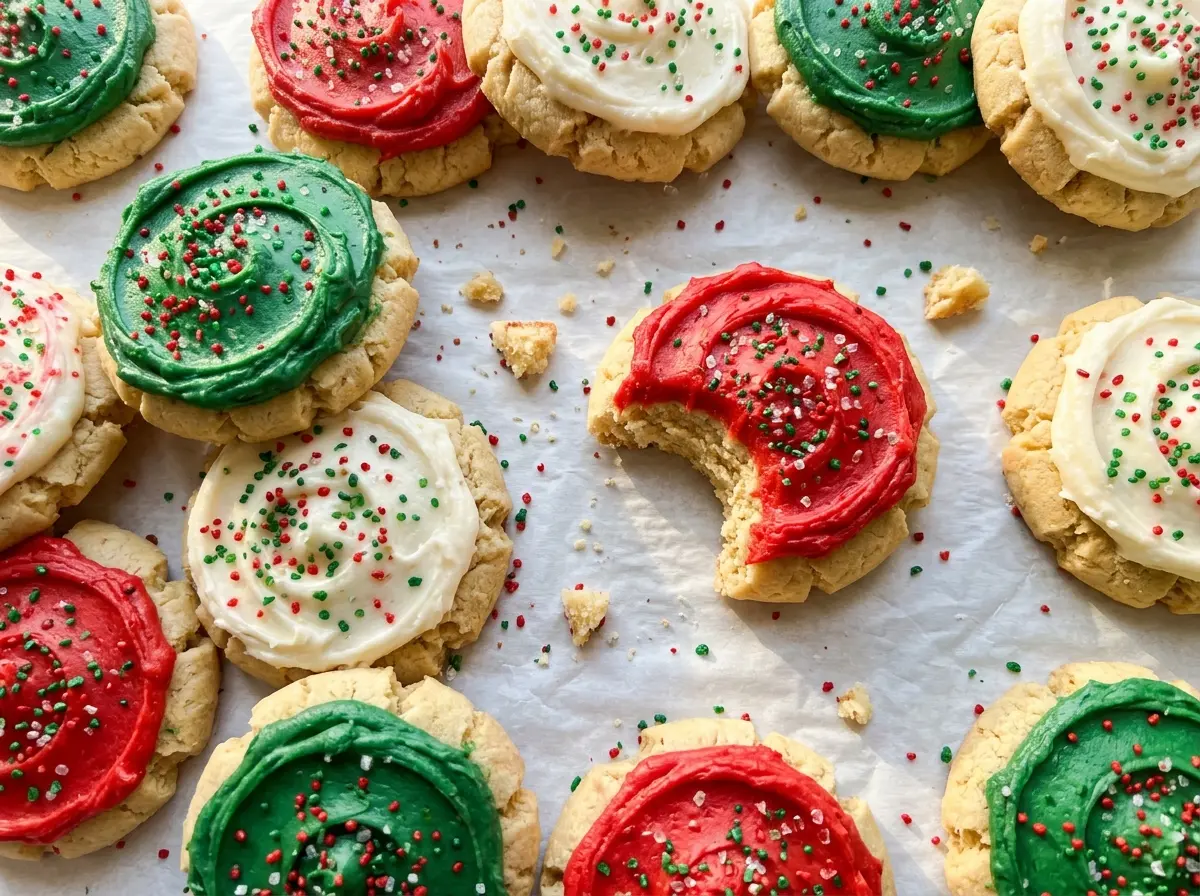
The sugared bottom of a glass leaves a thin, sparkling pattern across each round of dough, and that little detail is part of what makes these Christmas Swig Cookies feel special. I like that the cookies bake up thick and sturdy enough for frosting, rather than turning into thin, crisp sugar cookies. The edges set while the tops stay pale, giving you a soft bite underneath the colored frosting.
The dough combines softened butter with vegetable oil, so it starts out softer than a classic all-butter cookie dough. A short rest in the refrigerator firms it up before shaping, which makes the portions easier to press into even rounds. The glass gets dipped in sugar as you work, so it releases cleanly and leaves a delicate sweet finish on top.
Once the cookies are cool, the frosting comes together in two bowls for red and green swirls of holiday color. A scatter of sprinkles finishes each one with a cheerful crunch.
Kitchen Note
When you bake in batches, let the baking sheet cool completely before adding more dough. A warm pan starts softening the next portions before they even reach the oven.
Save these Christmas Swig Cookies for a festive bake: soft pressed sugar cookies, two-color frosting, and a sprinkle finish.
Why These Cookies Need a Chill Before the Glass Press
The 30-minute rest gives this soft, butter-and-oil dough time to firm up before you portion and press it. Without that pause, the dough is harder to handle neatly, and the glass can push a soft mound outward instead of making a tidy, even round. Chilling also makes it easier to keep the portions consistent across the whole batch.
The glass press is part of the cookie’s shape, not a way to flatten it paper-thin. Each portion should finish about 1/2 inch thick, which leaves enough dough for a tender center while the edge sets. If a pressed cookie looks uneven, adjust it gently before baking; once it’s in the oven, the dough will keep its shape rather than smoothing itself into a perfect circle. The sugar on the glass helps it lift away without dragging the dough along.
Keep the chill time and the thickness in balance. The dough should be cool enough to shape cleanly, but the glass still needs only a firm, steady press to make an even round. That gives you the recognizable pressed-cookie look and a soft, substantial bite.
What Butter, Oil, and Cream of Tartar Each Bring to Christmas Swig Cookies

- Unsalted butter — It gives the dough its familiar buttery taste and helps the frosting whip smoothly. Softened butter should yield to a gentle press without looking shiny or melted; regular grocery-store butter works well here.
- Vegetable oil — Oil contributes to the softer, tender texture that sets these cookies apart from a firmer all-butter sugar cookie. Choose a neutral oil so it doesn’t bring a noticeable flavor of its own; canola oil is an easy swap, explained below.
- Granulated sugar — Sugar sweetens the dough and also coats the glass for pressing. Keep granulated sugar for both jobs; brown sugar brings extra moisture and a deeper flavor that would change the dough.
- All-purpose flour, baking soda, and cream of tartar — Flour gives the cookies enough structure to hold their pressed shape. Baking soda and cream of tartar work together to support the dough’s lift and gentle tang, so don’t treat the cream of tartar as an optional garnish.
- Sour cream — A little sour cream gives the frosting a subtle tang that balances the powdered sugar. Use a thick, plain sour cream rather than a flavored or low-fat product, which can make the frosting looser.
- Powdered sugar — Its fine texture makes a smooth, spreadable frosting. Granulated sugar won’t dissolve the same way, so powdered sugar is the right choice for the topping.
- Vanilla and Christmas sprinkles — Vanilla rounds out the cookie dough, while the sprinkles add the familiar festive finish. Since the frosting and dough have straightforward flavors, ordinary vanilla extract and the sprinkles you enjoy are both fine.
From Soft Dough to Frosted Tops: The Stages That Matter
Creaming the Butter, Oil, and Sugar
Beat the softened butter, vegetable oil, and the dough’s portion of granulated sugar in a large bowl until creamy, about 2 minutes. Scrape down the bowl if a thick layer sticks to the sides, so the mixture stays even. Beat in the eggs one at a time, then mix in the vanilla. The mixture should look cohesive before the flour goes in.
Mixing and Chilling the Dough
Whisk the flour, baking soda, cream of tartar, and salt together in a separate bowl. Add the dry mixture to the butter mixture in two additions, mixing just until combined; a few seconds too long can make the cookies tougher. Cover the bowl and refrigerate the dough for 30 minutes. It should feel firmer and less sticky when you scoop it.
Pressing Even Rounds
Heat the oven to 350°F and line an 18×13-inch baking sheet with parchment paper. Put the reserved granulated sugar in a shallow dish, then scoop the dough into 3-tablespoon portions and arrange 12 portions about 3 inches apart. Dip the flat bottom of a glass in the sugar and press each portion until it’s about 1/2 inch thick. Re-dip the glass as needed so it releases cleanly.
Baking Until the Edges Set
Bake the cookies for 8–10 minutes, watching for set edges and bottoms just beginning to turn golden while the tops remain pale. Take them out at that point rather than waiting for browned tops. Let them cool on the baking sheet for 5 minutes, then transfer them to a wire rack. Cool the cookies completely before frosting.
Making and Spreading the Frosting
Beat the softened butter and sour cream until smooth. Gradually add the powdered sugar and salt, then beat in the milk until the frosting is spreadable. Divide it between two bowls and mix red gel coloring into one and green into the other. Spread the frosting over the cooled cookies and finish with the Christmas sprinkles.
Three Useful Ways to Adapt This Pressed Cookie Dough
Use Canola Oil Instead
Swap the vegetable oil for the same amount of canola oil. It’s neutral enough to keep the butter and vanilla in front, with no change to the mixing or shaping method.
Make a Gluten-Free Batch
Replace the all-purpose flour with an equal amount of a cup-for-cup gluten-free baking flour that includes xanthan gum. The texture may be a little more delicate, so keep the dough chilled and move the baked cookies to the rack gently after their short rest on the pan.
Bake a Half Batch
Halve every ingredient, using one egg, and keep the same 3-tablespoon portions for a batch of 18 cookies. The dough still gets its 30-minute chill, and the cookies bake at the same temperature for the same 8–10-minute window; begin checking at the early end of that range.
Storage and Reheating
- Refrigerator: Keep the frosted cookies in an airtight container for up to 4 days. The frosting firms when cold, so let the cookies sit briefly before serving.
- Freezer: Freeze unfrosted cookies in an airtight container with parchment between layers for up to 2 months. Thaw them completely before frosting.
- Reheating: These cookies don’t need reheating. Let refrigerated cookies soften briefly at room temperature; microwaving can melt the frosting.
Questions That Come Up While Frosting Christmas Swig Cookies
Christmas Swig Cookies
Ingredients
Equipment
Method
- In a large bowl, beat the softened butter, vegetable oil, and 1 1/2 cups granulated sugar with a mixer until creamy, about 2 minutes.
- Beat in the eggs one at a time.
- Mix in the vanilla extract.
- In a separate bowl, whisk together the flour, baking soda, cream of tartar, and fine salt.
- Add the dry ingredients to the butter mixture in two additions and mix just until combined.
- Cover and refrigerate for 30 minutes.
- Heat the oven to 350°F.
- Line an 18x13-inch baking sheet with parchment paper.
- Put the remaining 1/4 cup granulated sugar in a shallow dish.
- Scoop the dough into 3-tablespoon portions.
- Place 12 portions about 3 inches apart on the baking sheet.
- Dip the flat bottom of a glass in the sugar and press each portion until about 1/2 inch thick.
- Bake for 8–10 minutes, until the edges are set and the bottoms are just beginning to turn golden while the tops remain pale.
- Cool the cookies on the baking sheet for 5 minutes.
- Transfer the cookies to a wire rack and let the sheet cool completely before baking the remaining dough in batches.
- Cool the cookies completely before frosting.
- Beat the softened butter and sour cream until smooth.
- Gradually beat in the powdered sugar and fine salt.
- Add the milk and beat until spreadable.
- Divide the frosting between two bowls.
- Mix the red coloring into one bowl and the green coloring into the other.
- Spread the colored frostings over the cooled cookies.
- Finish with the Christmas sprinkles.