
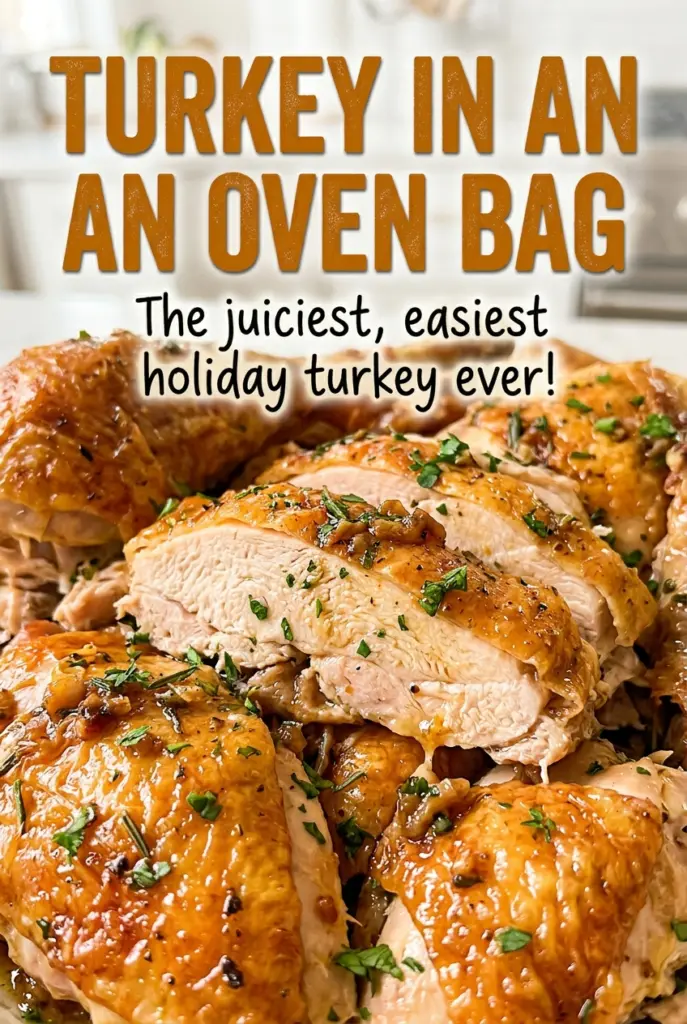
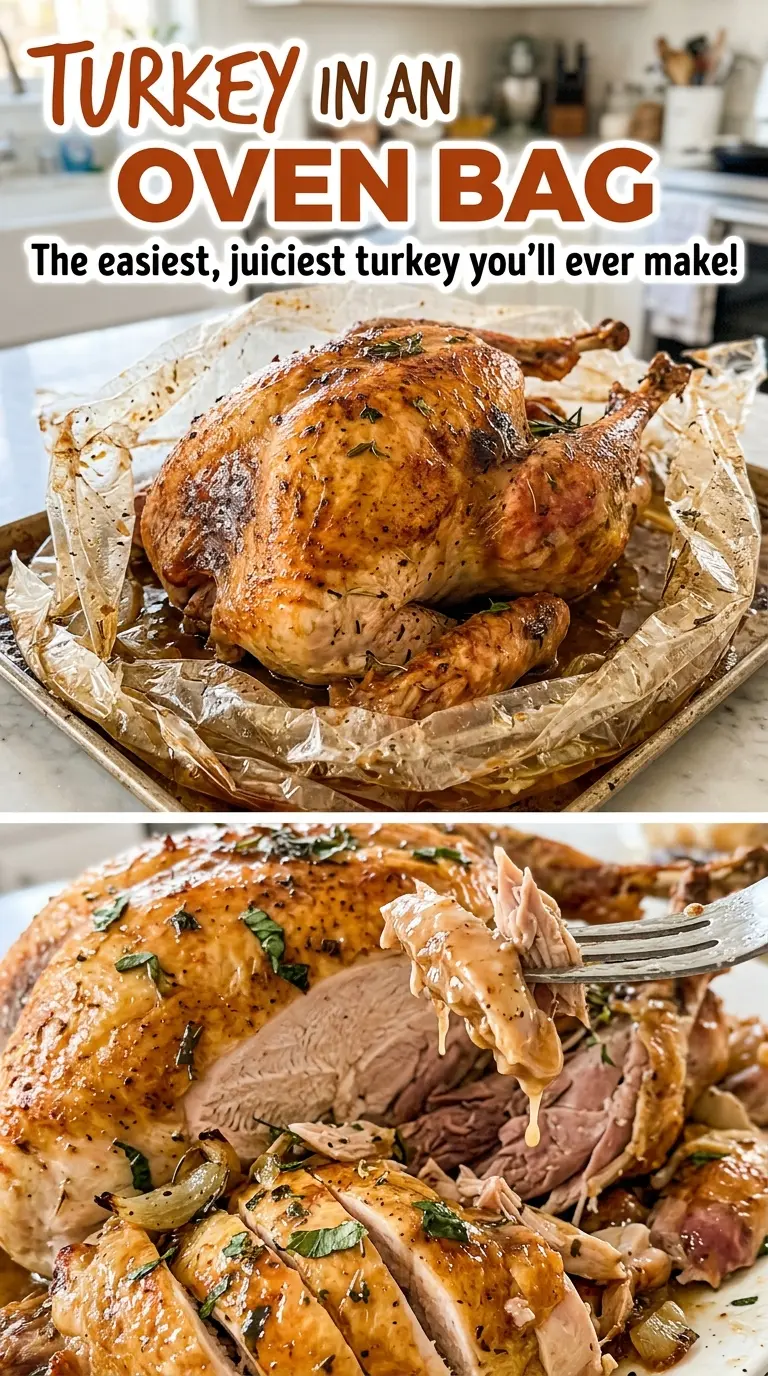
As the oven bag swells in the heat, the vegetables settle beneath the turkey and the kitchen starts to smell like a roast dinner. The bag keeps the bird enclosed while it cooks, so you don’t have to hover over an open pan. Turkey in an Oven Bag is a straightforward way to roast a whole turkey while keeping the process contained and the meat tender.
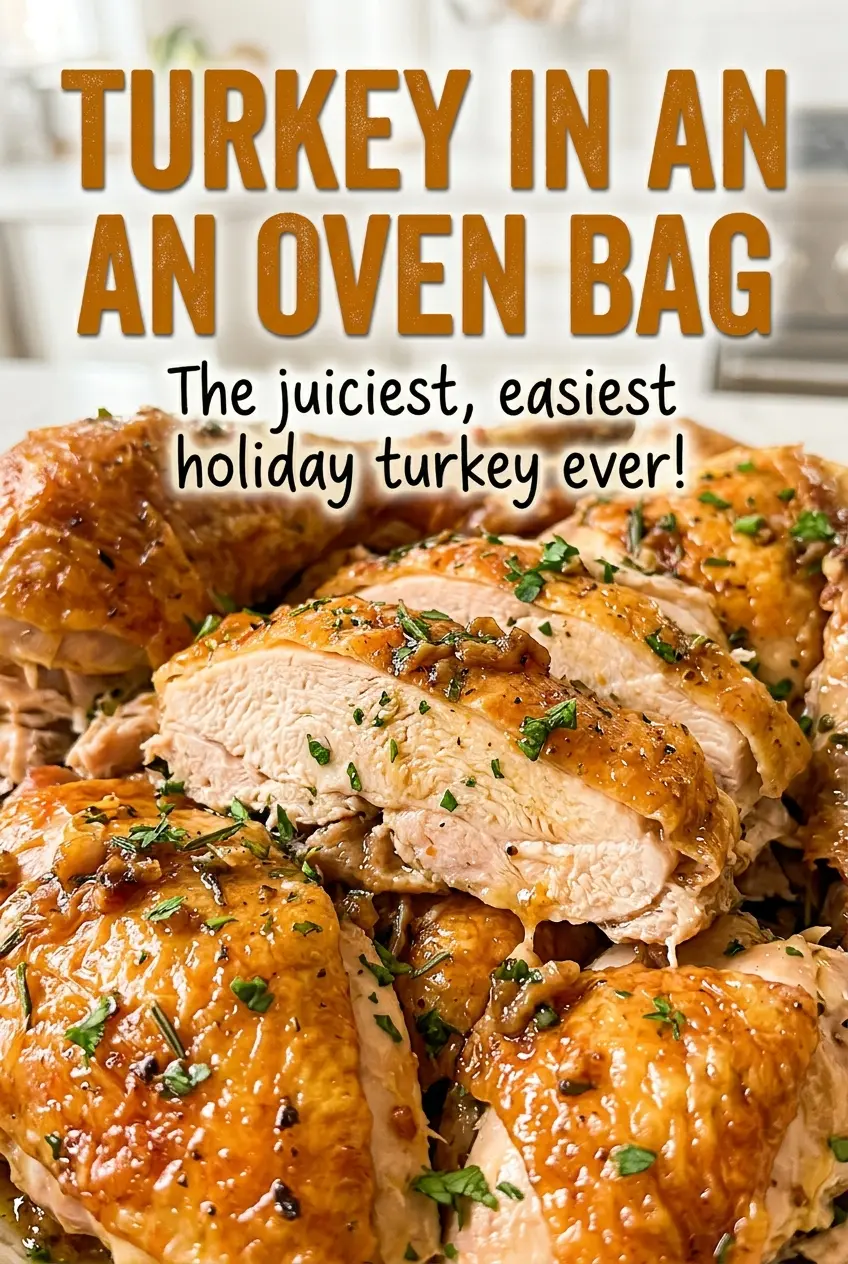
I pat the turkey dry before rubbing on softened butter and seasoning it, because the seasonings spread more evenly over a dry surface. Then the bird goes breast-side up over onion, carrots, and celery in a floured oven bag. The thermometer—not the color of the skin—is what tells me when it’s ready. Once it’s rested, the turkey is easy to transfer to the board and carve into generous slices.
Kitchen Note
Give the turkey its full 10-minute rest inside the bag before opening it. When you cut the bag, keep the opening pointed away from your face; the trapped steam escapes fast.
Save this oven-bag turkey for a tender roast with savory vegetables underneath and a clear thermometer cue for doneness.
Why the Turkey’s Skin Isn’t the Doneness Test in an Oven Bag
An oven bag creates a different roasting environment from an uncovered pan. The turkey sits inside the bag with vent slits at the top, so the outside may not develop the deep, dry-browned look people expect from an open roast. Waiting for that kind of color can leave the bird in the oven longer than it needs to be.
Use the thermometer readings instead. Check the thickest part of the breast and the innermost part of the thigh, placing the probe so it doesn’t touch bone. Those two spots help you assess the breast and the darker meat separately. The vegetables beneath the turkey add aroma as the bag cooks, but their softness or color won’t tell you whether the center of the bird is ready. Once both readings reach the target, take the pan out and let the turkey rest.
What the Butter, Flour, and Vegetables Each Bring to the Bag
- Whole turkey — Start with a fully thawed bird with the neck and giblets removed. The specified size fits the turkey-size bag and roasting pan used here; a larger bird changes both the fit and the cooking time.
- Unsalted butter — Softened butter is easy to rub over the surface, where it helps the seasonings cling and adds richness. Unsalted butter lets the measured kosher salt do the seasoning work without the salt level varying by brand.
- Kosher salt, black pepper, and paprika — These season the outside simply, without competing with the turkey or vegetables. Paprika adds a mild peppery note and color, though the bag-roasting method won’t give the skin the same dry finish as an uncovered roast.
- All-purpose flour — Shake it around inside the oven bag before adding anything else so the inside is coated. It’s part of preparing the bag for roasting, not an ingredient for thickening a sauce.
- Onion, carrots, and celery — These sit under the bird and lend savory aroma to the cooking juices. Cut them into the specified pieces so they’re ready to arrange in the bag without extra prep during assembly.
How to Set Up the Bag, Roast the Turkey, and Rest It
Heat the oven and season the bird
Position a rack in the lower third of the oven and preheat to 350°F. Pat the fully thawed turkey dry with paper towels, including around the outside where the butter and seasoning will go. Rub softened butter over the turkey, then season all over with kosher salt, black pepper, and paprika. A dry surface helps the butter spread instead of sliding around in wet patches.
Build the vegetable bed in the bag
Shake the flour inside a turkey-size oven bag until the inside is coated. Set the bag in a 16×13-inch roasting pan that’s at least 2 inches deep, then arrange the onion, carrots, and celery inside. Place the turkey breast-side up on top of the vegetables. Use the included tie to close the bag, leaving room for it to expand, then cut six 1/2-inch slits in the top.
Check the bag’s clearance before roasting
Before the pan goes into the oven, check that the bag won’t touch the oven walls or heating elements as it expands. This is easier to judge while the pan is still outside the oven than after the bag has puffed up. If the bag is pressed against an oven surface, reposition the pan so it has room. Keep the pan on the lower rack for the roast.
Roast to temperature, then give it two rests
Roast for 2 to 2 1/2 hours, checking the thickest part of the breast and the innermost part of the thigh without touching bone. The turkey is ready when both thermometer readings reach 165°F; use the temperature rather than the skin color to judge it. Let it stand in the bag for 10 minutes, then carefully cut the bag open away from your face and transfer the turkey to a carving board. Rest it on the board for 20 minutes before carving.
Two Small Changes for a Different Oven-Bag Turkey
Make it dairy-free by leaving out the butter
Omit the butter and apply the salt, pepper, and paprika directly over the turkey’s surface, pressing the seasonings lightly so they stay in place. The turkey will lose the butter’s richness, but the oven-bag method still gives you a contained roast with the same vegetable bed.
Leave out the paprika for a simpler seasoning
Skip the paprika and keep the butter, salt, and black pepper. The result has a plainer, less peppery seasoning and a little less color on the surface, with no change to the roasting method.
Storage and Reheating
- Refrigerator: Refrigerate leftover turkey within 2 hours and use it within 3 to 4 days. The meat may firm up as it chills.
- Freezer: Carved turkey freezes well. Pack it airtight, ideally with a little of the cooking juices, and use it within 2 to 6 months for best quality.
- Reheating: Warm only the amount you plan to serve in a covered dish with a little of the turkey’s cooking juices, until hot throughout. Avoid heating it uncovered for too long, which dries the slices.
Questions That Come Up Before the Bag Goes in the Oven
Turkey in an Oven Bag
Ingredients
Equipment
Method
- Position a rack in the lower third of the oven.
- Preheat the oven to 350°F.
- Pat the turkey dry with paper towels.
- Rub the softened butter over the turkey.
- Season the turkey all over with the salt, pepper, and paprika.
- Shake the flour inside a turkey-size oven bag to coat it.
- Place the bag in a 16x13-inch roasting pan at least 2 inches deep.
- Arrange the onion, carrots, and celery in the bag.
- Place the turkey breast-side up on top of the vegetables.
- Close the bag with its included tie, leaving room for the bag to expand.
- Cut six 1/2-inch slits in the top.
- Make sure the bag does not touch the oven walls or heating elements.
- Roast for 2 to 2 1/2 hours, until a thermometer inserted into the thickest part of the breast and the innermost part of the thigh, without touching bone, reads 165°F.
- Let the turkey stand in the bag for 10 minutes.
- Carefully cut the bag open away from your face.
- Transfer the turkey to a carving board.
- Rest for 20 minutes before carving.