
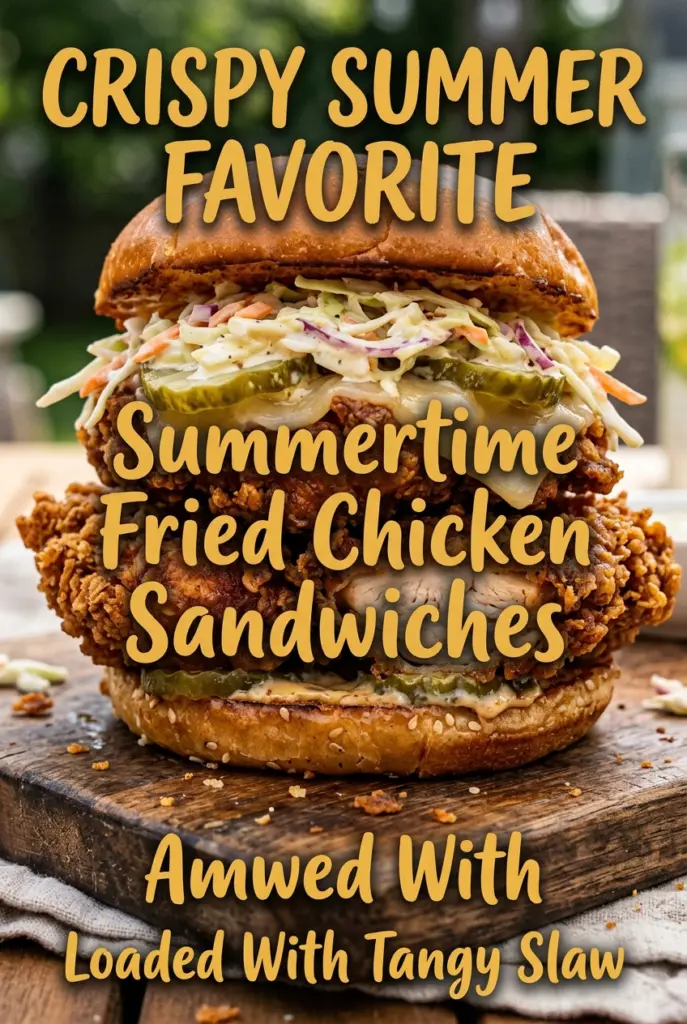
Crispy fried chicken, a cool tangy slaw, and a toasted brioche bun are one of those combinations that never lasts long once it hits the table. What makes these sandwiches stand out is the contrast: the chicken stays juicy under a shattering crust, while the slaw cuts through the richness with just enough vinegar and sweetness to keep every bite lively. Put them together and you get a sandwich that tastes like it came from a cook who knows texture matters as much as seasoning.
The chicken gets its best flavor and tenderness from a buttermilk soak with a little hot sauce, which does more than add heat. It helps season the meat all the way through and gives the flour something to cling to, so the crust fries up rough and craggy instead of slipping off in one piece. The slaw is intentionally simple, because the sandwich needs crunch and brightness more than it needs a heavy dressing.
Below, I’ve included the timing and technique that keep the coating crisp, plus a few ways to adjust the slaw and breading without losing the balance that makes the sandwich work.
The chicken stayed crunchy even after I added the slaw, and the brioche toasted up just enough that the bun didn’t get soggy. I also liked that the hot sauce in the buttermilk gave the coating a little extra flavor without making it spicy.
Save these fried chicken sandwiches for the day you want a shatter-crisp crust, tangy slaw, and a bun that can hold up to both.
The Crunch Stays Put If You Fry at the Right Temperature
The fastest way to ruin fried chicken is to let the oil drift too low. If the temperature falls, the coating drinks up oil before it sets, and you end up with a greasy crust instead of a crisp one. At 350°F, the flour coating tightens around the chicken quickly and browns before the meat has a chance to dry out.
Pound the chicken to an even thickness before it goes into the buttermilk. Uneven pieces cook unevenly, which means one end finishes before the other and the thinner parts start to get dry while you wait for the thick parts to catch up. Even thickness is what gives you a juicy center and a crust that finishes at the same time across the whole piece.
What Each Ingredient Is Actually Doing in This Sandwich
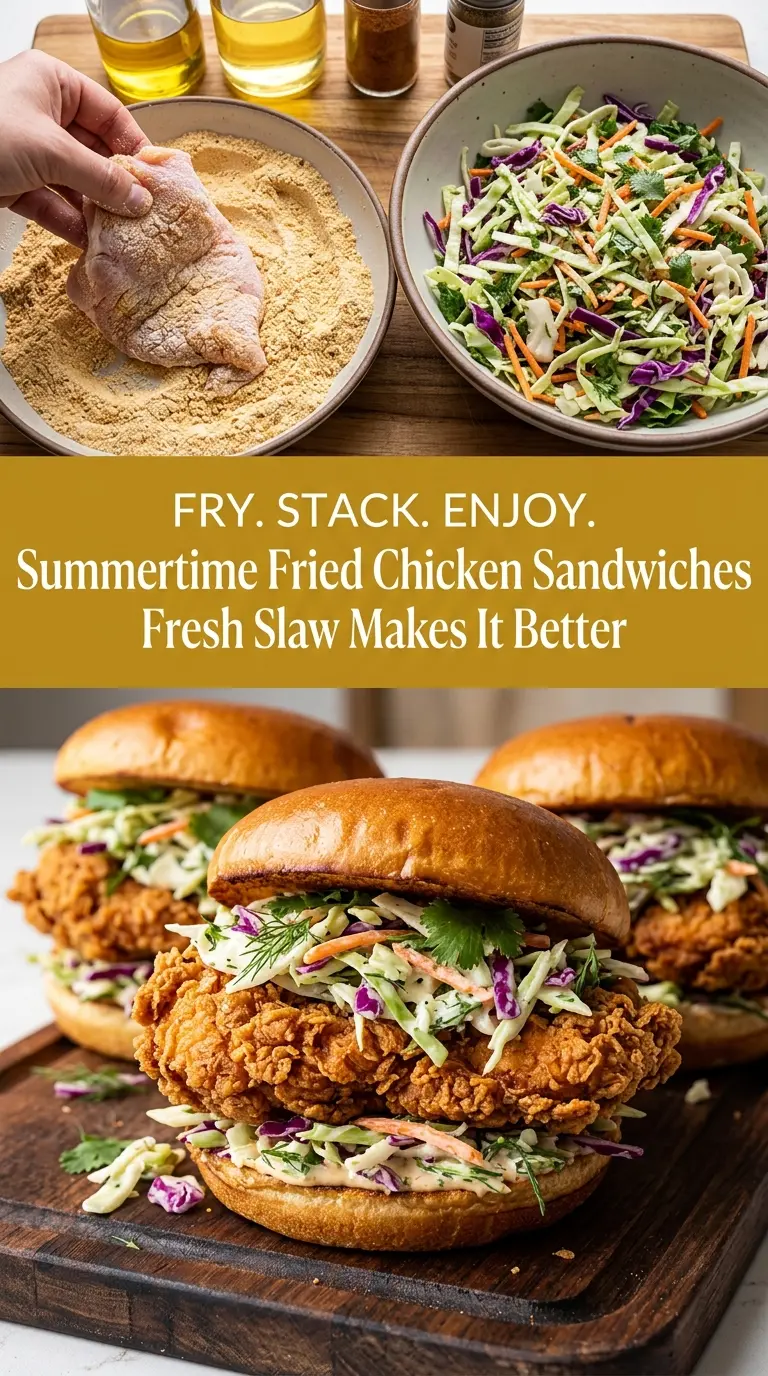
Buttermilk — This is what gives the chicken tenderness and helps the flour cling in craggy bits. If you don’t have buttermilk, use milk mixed with a tablespoon of vinegar or lemon juice and let it sit for a few minutes, but the real thing gives the best texture.
Hot sauce — It adds a little background heat and sharpness without making the chicken taste spicy. Any vinegar-based hot sauce works here.
All-purpose flour — Plain flour makes the cleanest, most reliable crust. You can add a little cornstarch if you want an extra shattery finish, but don’t replace all the flour with it or the coating gets fragile.
Brioche buns — The soft, slightly rich bun balances the crunch and stands up well to the slaw. Toast them lightly so they stay sturdy instead of turning soggy on contact.
Cabbage and carrot — These bring the crunch the sandwich needs. Pre-shredded coleslaw mix works fine, and it saves time without changing the result much.
From Marinade to Crunchy Sandwich
Soaking the Chicken
Stir the buttermilk and hot sauce together, then submerge the chicken and let it sit long enough to season and soften the surface. An hour works, and longer is fine if you need it. If the chicken is still cold and dry going into the flour, the coating won’t grab as evenly, so give the marinade time to do its work.
Building the Flour Coat
Mix the flour with paprika, garlic powder, onion powder, salt, and pepper until the seasoning is spread evenly through the bowl. Lift each piece of chicken out of the buttermilk and let the excess drip off before dredging; too much liquid turns the flour gummy. Press the flour on lightly, then set the coated chicken aside for a few minutes so the crust has time to hydrate and cling.
Frying Until Deep Golden
Heat the oil to 350°F before the chicken goes in. The surface should sizzle immediately but not rage; if it spits violently, the oil is too hot, and if it barely bubbles, the crust will absorb too much oil. Fry in batches so the temperature doesn’t crash, and move the chicken to a wire rack when it’s done so the bottom stays crisp instead of steaming on a plate.
Mixing the Tangy Slaw
Combine the cabbage, carrot, mayonnaise, vinegar, honey, salt, and pepper just before serving if you want the crunchiest result. The slaw should look lightly coated, not drenched. If it sits too long, the cabbage softens and the sandwich loses the bright snap that balances the fried chicken.
Make It Spicier Without Changing the Structure
Add a little cayenne to the flour or use a hotter sauce in the buttermilk. That changes the heat level without touching the frying method, so the crust still cooks the same way and the slaw still has enough coolness to balance it.
Dairy-Free Version
Use unsweetened non-dairy milk with a spoonful of vinegar in place of the buttermilk, and swap the mayonnaise for a dairy-free mayo. The chicken will still crisp up, though the marinade won’t tenderize quite as deeply as real buttermilk.
Gluten-Free Breading
Use a cup-for-cup gluten-free flour blend in place of the all-purpose flour and choose gluten-free buns. The coating may brown a touch faster, so watch the color instead of relying on the clock alone.
Make the Slaw Creamier
Add another spoonful of mayonnaise and a little more honey if you want a softer, richer slaw. The sandwich will feel less sharp and more rounded, which works well if you’re serving it with extra pickles or a heavier side dish.
Storage and Reheating
- Refrigerator: Store the fried chicken and slaw separately for up to 3 days. The coating softens a little in the fridge, and the slaw loosens as it sits.
- Freezer: The fried chicken freezes well. Cool it completely, wrap it tightly, and freeze for up to 2 months; freeze the slaw ingredients separately, not already dressed.
- Reheating: Reheat the chicken in a 375°F oven or air fryer until hot and crisp again. Skip the microwave if you want the crust to stay intact, because steam is what turns fried coating limp.
Answers to the Questions Worth Asking
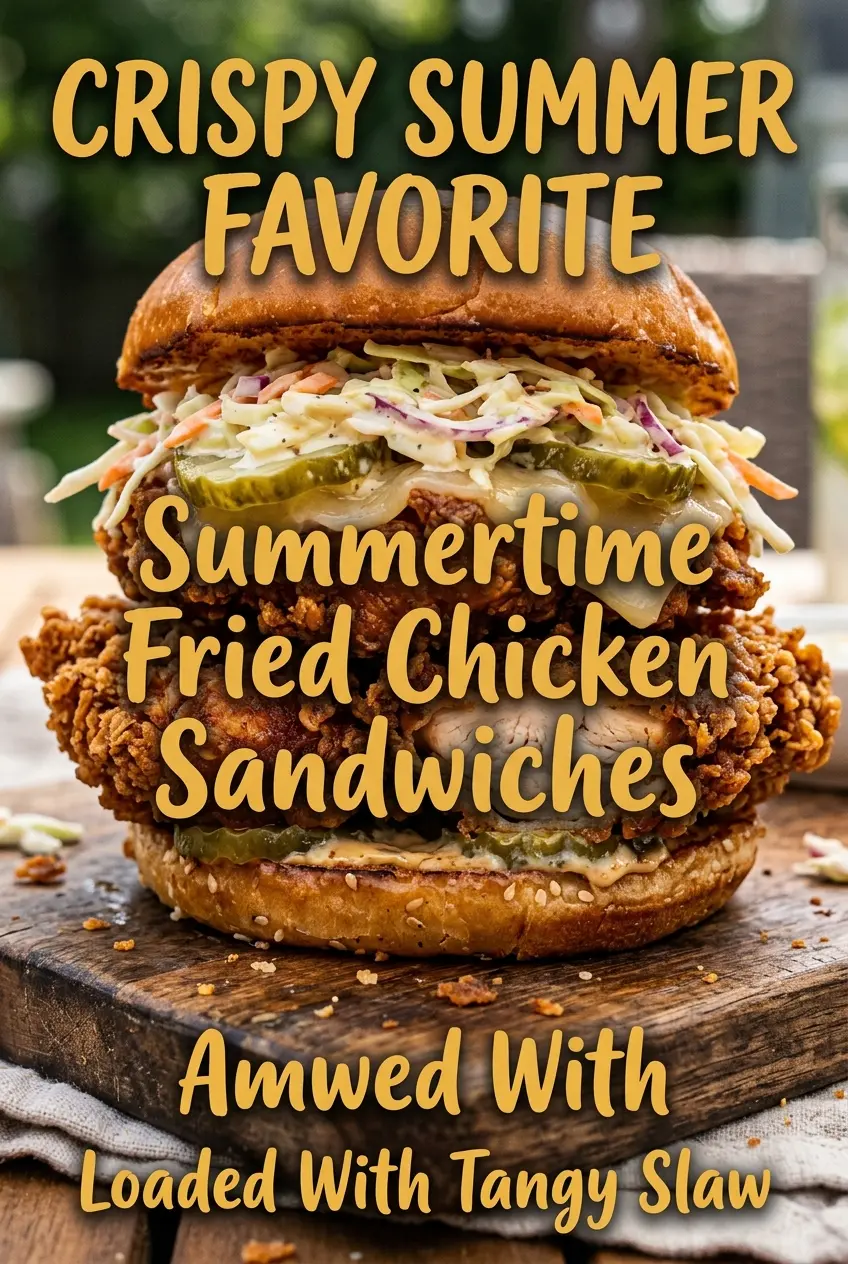
Summertime Fried Chicken Sandwiches With Tangy Slaw
Ingredients
Equipment
Method
- Pound the chicken breasts to an even thickness for consistent cooking. Aim for uniform thickness so the coating crisps evenly.
- Combine the buttermilk and hot sauce in a bowl until evenly mixed. The marinade should look smooth and creamy.
- Marinate the chicken for at least 1 hour in the buttermilk mixture. Cover and refrigerate until ready to fry.
- In a separate bowl, mix the flour, paprika, garlic powder, onion powder, salt, and black pepper. Stir until the spices are evenly distributed through the flour.
- Remove the chicken from the marinade and dredge it in the flour mixture. Press lightly so the coating adheres closely.
- Heat the oil to 350°F (175°C). Look for steady sizzling when you add a small bit of coating as a visual cue.
- Fry the chicken for 5–6 minutes per side until golden and cooked through. Turn once for a crisp crust and fry until the centers are no longer pink.
- Transfer the fried chicken to a wire rack. This keeps the coating crisp instead of steaming from trapped heat.
- Mix the cabbage, carrot, mayonnaise, apple cider vinegar, honey, salt, and black pepper in a bowl. Stir until the slaw is creamy and lightly glossy.
- Toast the brioche buns lightly. They should turn warm and slightly golden at the edges.
- Place the fried chicken on the bottom buns. Add the chicken while it’s hot so the bread doesn’t get soggy.
- Top the chicken generously with the tangy slaw and pickle slices. Pile high so each bite has crunch, creaminess, and tang.
- Add the top buns and serve immediately. Serve right away for the crispiest texture contrast.