
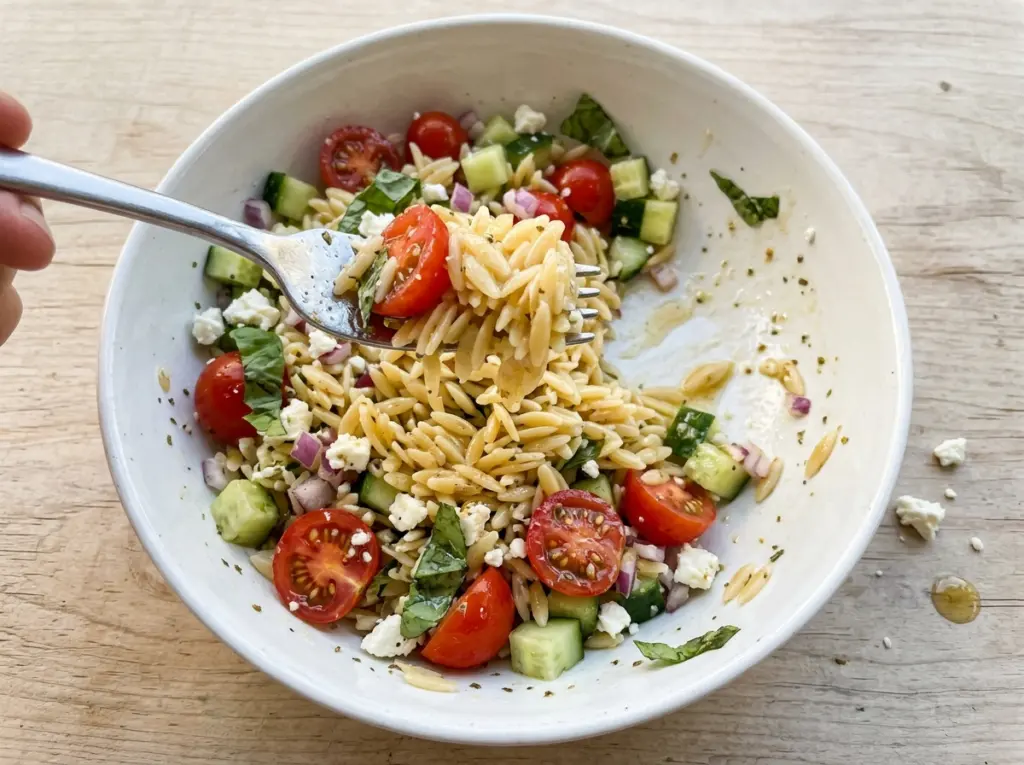
The orzo comes off the stove hot and a little sticky, while the cucumber and tomatoes are waiting in the serving bowl. Let those two meet too soon and the feta starts to soften before the salad has even had a chance to chill. I cool the orzo first, then bring it together with crisp vegetables, briny Kalamata olives, parsley, and a lemony dressing. This Summer Orzo Pasta Salad makes eight servings and works as a substantial side for a summer meal.
I whisk the dressing in its own bowl before pouring it over the salad. That gives the Dijon a chance to help the oil, lemon juice, and vinegar come together, so the orzo and vegetables get an even coating instead of ending up with a pool of dressing at the bottom. After a short rest in the refrigerator, the chilled pasta carries the tangy dressing in every bite.
Kitchen Note
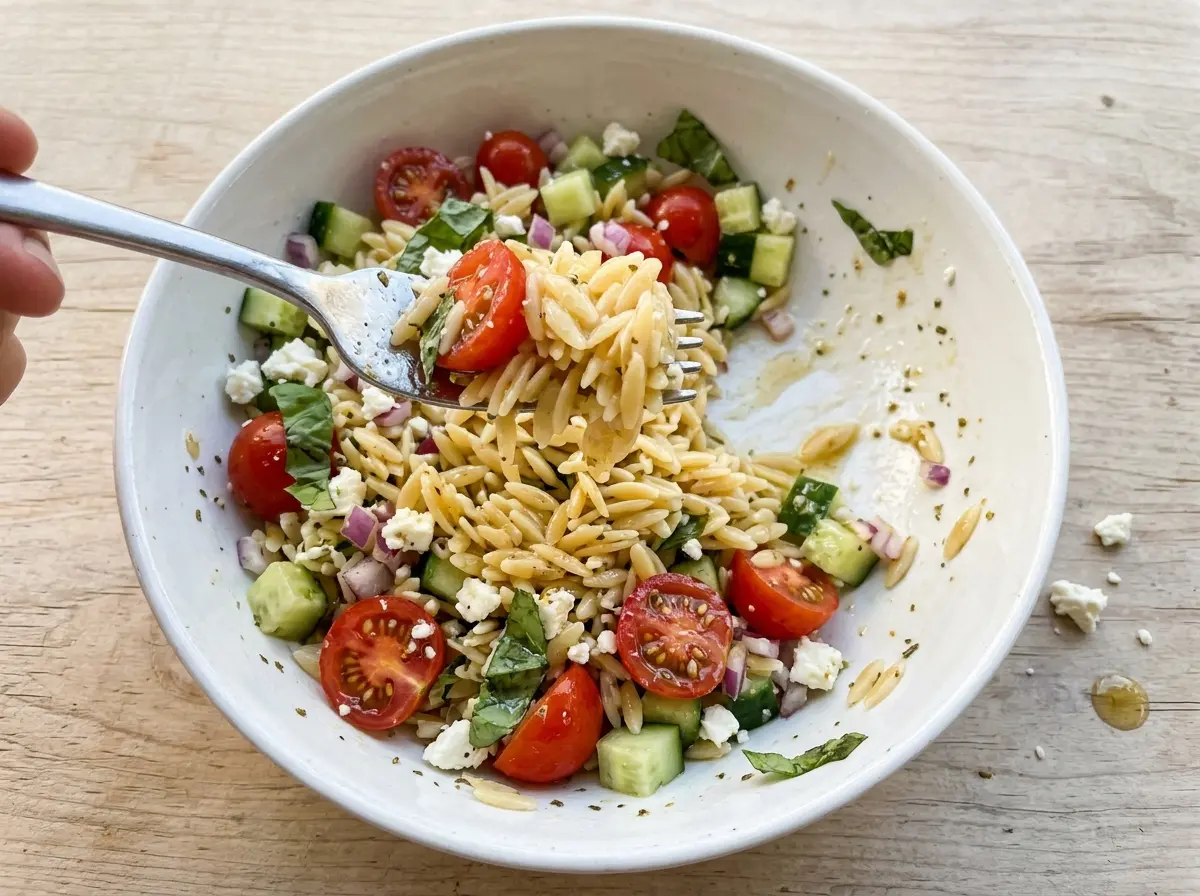
Finely diced red onion spreads its sharpness through the salad instead of taking over one forkful. Keep the pieces small, and the onion adds a little bite without overpowering the cucumber and feta.
Save this Summer Orzo Pasta Salad for a bright, briny side with crisp vegetables, feta, and a lemony dressing.
Why Hot Orzo Softens the Feta in This Summer Salad
Orzo keeps cooking for a little while after it leaves the boiling water. If it goes straight into a bowl with cool vegetables, its warmth can soften the feta and take the crisp edge off the cucumber. Rinsing the drained pasta under cold water until cool brings its temperature down before the ingredients are tossed together.
That rinse does more than make the salad cold enough to serve. It also gives you a clean starting point for the dressing: the pasta won’t carry cooking heat into the bowl, and the feta stays in distinct crumbles rather than smearing through the vegetables. Drain the rinsed orzo thoroughly, too. Water clinging to the pasta dilutes the dressing and makes the finished salad taste less lively. These small details let the vegetables keep their texture while the orzo takes on the lemon, vinegar, and herbs.
Why Kalamata Olives and Feta Matter More Than Fancy Orzo
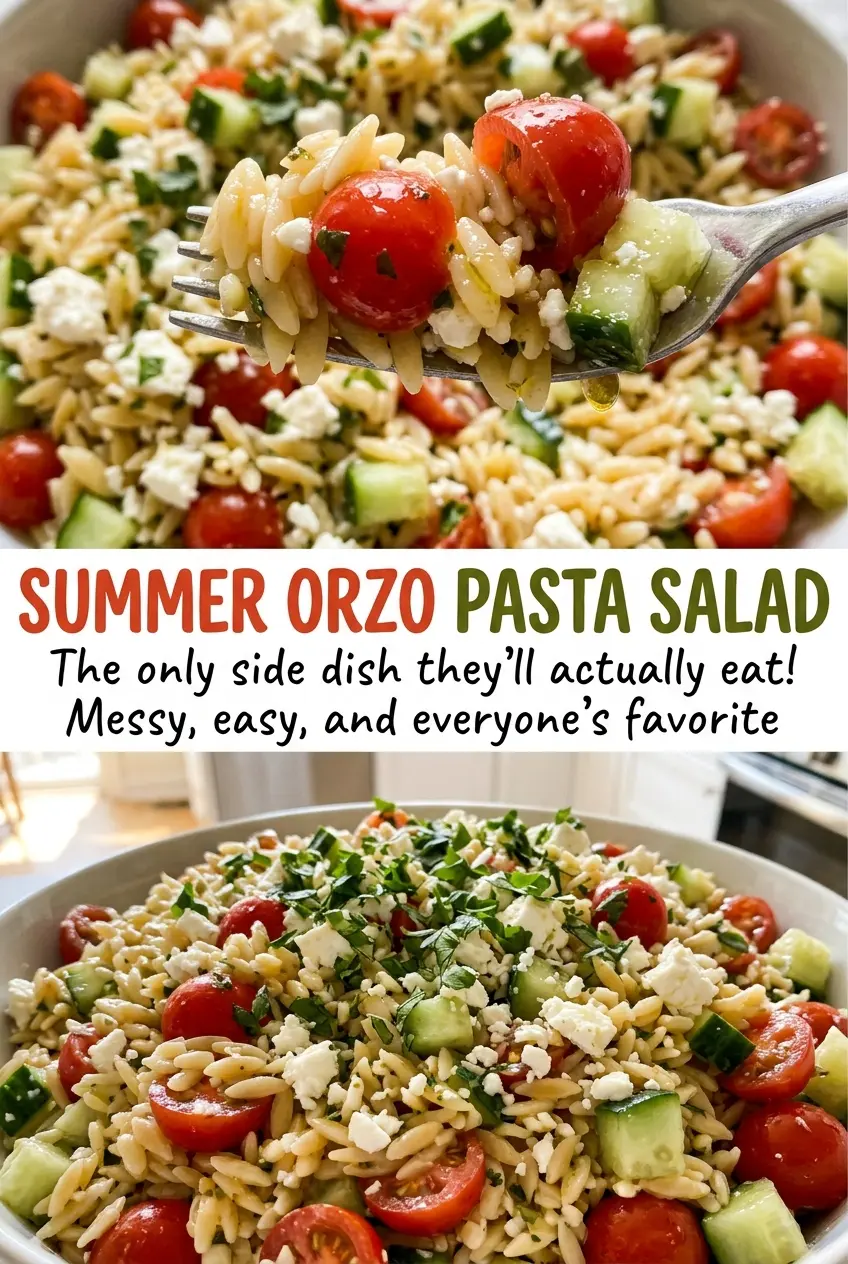
- Orzo — Its small, rice-like shape makes each forkful easy to scoop with the vegetables. A standard grocery-store orzo works well; there’s no need to seek out a specialty brand. Cook it just to al dente so the pasta holds its shape in the chilled salad.
- English cucumber, cherry tomatoes, and red bell pepper — Together they bring cool crunch, juicy sweetness, and a fresh, crisp bite. Choose firm cucumber and tomatoes that smell ripe; the produce matters more here than a particular brand. If you only have a regular cucumber, remove its watery seed core before dicing.
- Red onion — Its sharper flavor cuts through the mellow pasta and cheese. A fresh, firm onion has the clearest bite; there’s no benefit to buying a specialty variety for this salad beyond choosing red onion for its color and flavor.
- Kalamata olives and feta — The olives bring a fruity, briny note, and feta adds a salty, creamy contrast. Pitted olives save prep time. Feta sold in a block is easy to crumble yourself and tends to give you larger, softer pieces; pre-crumbled feta is convenient and works, though its pieces are smaller.
- Fresh parsley — Chopped parsley keeps the salad tasting green and fresh against the olives and cheese. Look for perky leaves rather than wilted bunches. Dried parsley won’t give the same fresh lift, so it isn’t a like-for-like swap.
- Olive oil, lemon juice, red wine vinegar, Dijon, and oregano — Extra-virgin olive oil contributes much of the dressing’s flavor, so use one you like the taste of; a basic bottle is fine. Fresh lemon juice tastes brighter than bottled, though bottled juice works in a pinch. Dijon helps the oil and acidic ingredients stay blended while the dried oregano and black pepper season the dressing.
The Order That Keeps the Orzo Separate and the Dressing Even
Cook the Orzo Just to Al Dente
Bring a large pot of water to a boil, add the kosher salt, then add the orzo. Cook it according to the package directions until al dente. Start checking near the end of the package’s suggested time; the pasta should be tender but still have a little firmness when bitten. Overcooked orzo is more likely to lose its shape when tossed and chilled.
Cool and Drain the Pasta
Drain the orzo, then rinse it under cold water until it feels cool throughout. Give the colander a few good shakes so water isn’t collecting between the small pasta shapes. A thorough drain helps the dressing coat the orzo instead of sliding off with excess water.
Combine the Vegetables and Feta
In a large serving bowl, combine the diced cucumber and red bell pepper with the halved cherry tomatoes and Kalamata olives. Add the crumbled feta and chopped parsley. Use a bowl with enough room to toss everything later; a crowded bowl makes it harder to coat the pasta evenly without crushing the softer ingredients.
Whisk, Toss, and Chill
In a small bowl, whisk together the olive oil, lemon juice, red wine vinegar, Dijon mustard, dried oregano, and black pepper. Add the cooled orzo and dressing to the vegetables, then toss until everything is evenly combined. Cover the bowl and refrigerate for at least 30 minutes before serving. The dressing should cling to the pasta and vegetables, not sit in a separate layer at the bottom.
Three Simple Ways to Change the Bowl
Make It Gluten-Free
Replace the orzo with an equal amount of gluten-free orzo and cook it according to its package directions. The salad keeps its small-pasta feel, though gluten-free varieties can have a slightly different bite, so check the texture as the pasta cooks.
Make It Dairy-Free
Swap the feta for a dairy-free feta-style crumble. It gives you a similar salty, tangy contrast, although the texture and flavor vary by brand; the salad will still be fresh and briny from the vegetables and olives.
Give the Herbs a Different Direction
Replace the chopped parsley with chopped fresh mint for a cooler, more aromatic finish. Mint has a stronger personality than parsley, so use it when you want the herb to stand out rather than blend quietly into the salad.
Storage and Reheating
- Refrigerator: Store leftovers covered in an airtight container for 3 to 4 days. The cucumber and tomatoes soften and release some moisture as they sit.
- Freezer: This salad doesn’t freeze well. The vegetables turn watery after thawing, and the feta’s texture changes.
- Reheating: Serve it cold; reheating softens the vegetables and feta. If the dressing looks settled after storage, toss the salad again before serving.
Questions That Come Up With This Orzo Salad
Summer Orzo Pasta Salad
Ingredients
Method
- Bring a large pot of water to a boil.
- Add the kosher salt and orzo, and cook according to the package directions until al dente.
- Drain the orzo.
- Rinse it under cold water until cool.
- Drain thoroughly.
- In a large serving bowl, combine the cucumber, tomatoes, bell pepper, red onion, olives, feta, and parsley.
- In a small bowl, whisk together the olive oil, lemon juice, red wine vinegar, Dijon mustard, oregano, and black pepper.
- Add the cooled orzo and dressing to the vegetables and toss until evenly combined.
- Cover and refrigerate for at least 30 minutes before serving.