
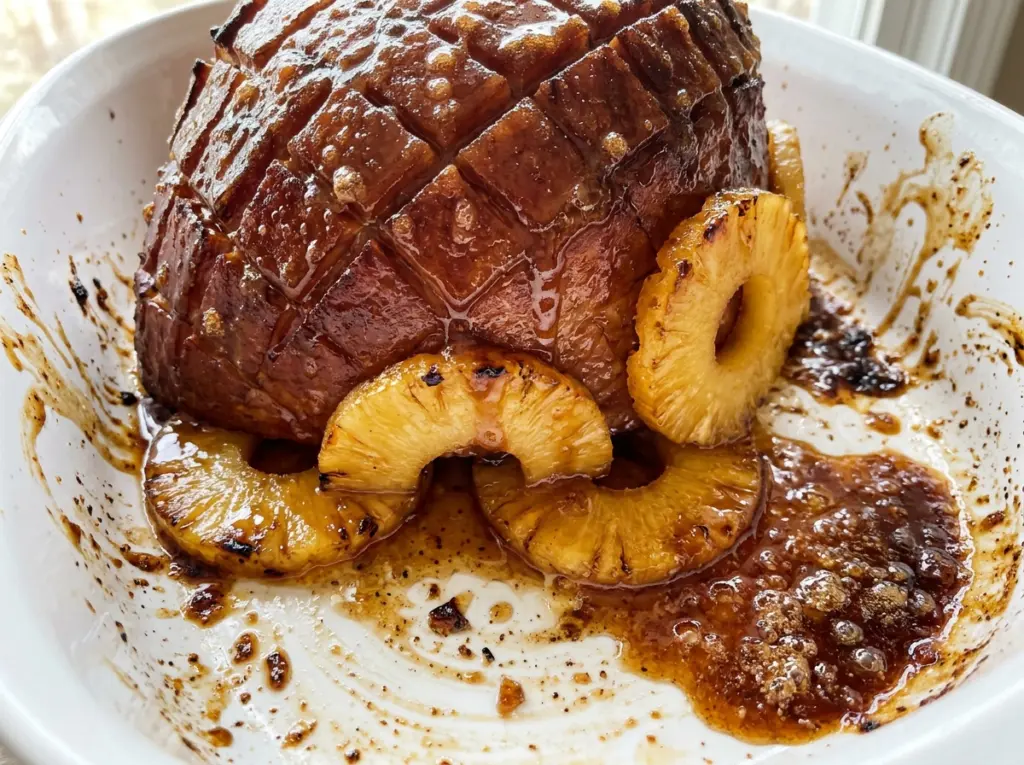
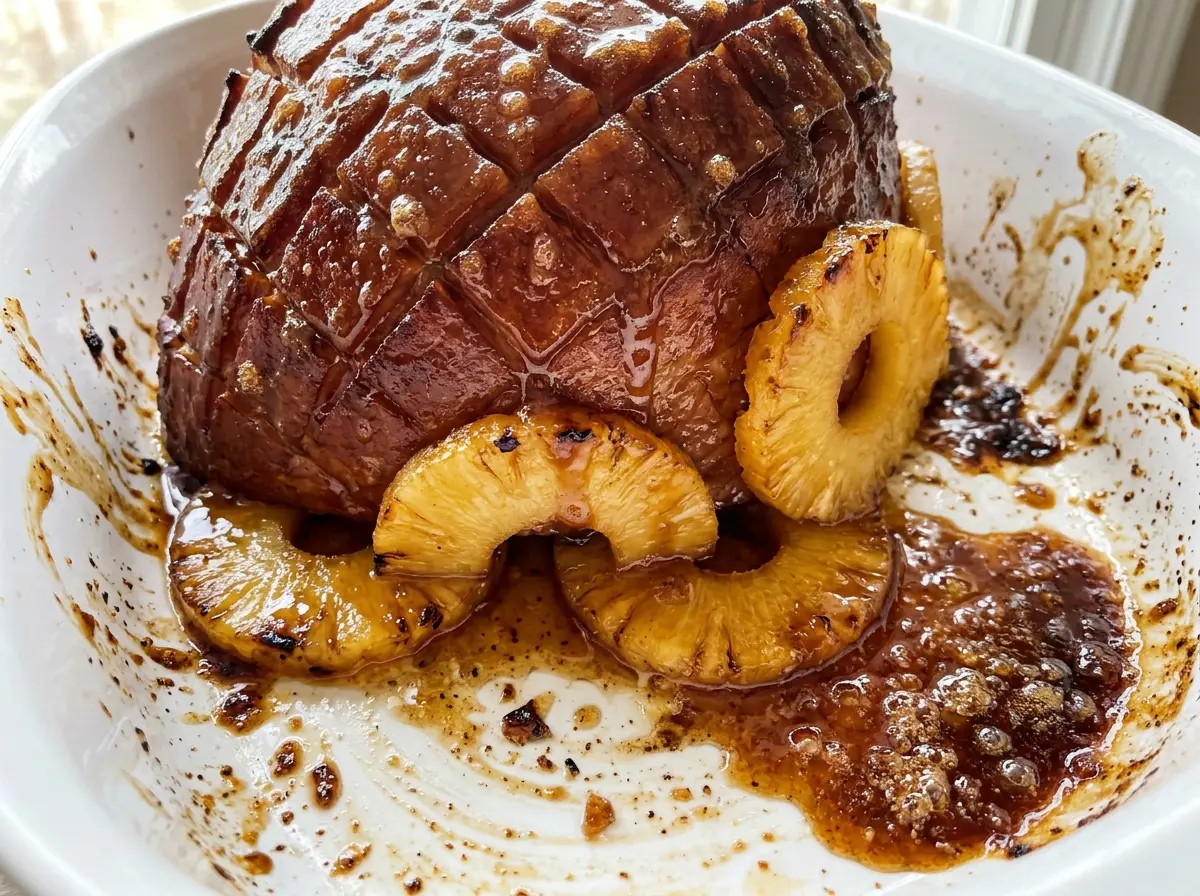
When the foil comes off, the ham is warm and tender, but it hasn’t picked up that glossy, sweet finish yet. That’s when the pineapple rings go around the pan and the first layer of maple-brown sugar glaze goes on. I like this order for Maple Brown Sugar Glazed Ham with Pineapple because the ham warms gently before the glaze gets its chance to shine.
The ham is fully cooked, so this isn’t about cooking it from raw; it’s about heating it through without drying it out and building a lacquered finish in the final stretch. Keeping it covered with water in the roasting pan gives the meat a gentler start, while two rounds of glaze create a shiny coating instead of one thick, sticky layer. The pineapple brings a bright, fruity contrast to the brown sugar and maple, and the bone-in ham makes a generous centerpiece for 14.
Kitchen Note
Drain the pineapple into a measuring cup and set aside the reserved juice before you start the glaze. It’s easy to pour it all away with the can, and that juice gives the glaze its pineapple note without needing anything extra.
Save this maple brown sugar ham with pineapple for a centerpiece that gets a glossy, fruit-bright finish from two coats of glaze.
Why a Whole Ham Takes the Glaze Better Than a Spiral-Cut One
A spiral-cut ham is convenient to serve, but its many cut surfaces are exposed during heating. This method starts with a fully cooked ham that hasn’t been sliced, so the outside stays more intact while the covered ham warms in the pan. That gives you a broad surface to brush with glaze near the end, rather than trying to coat all the spaces between slices.
The timing follows the same idea. The ham heats covered first, with water in the pan, and doesn’t get its first glaze until the center is about 115°F. That means the sugary coating spends only the final part of the oven time exposed to direct heat. Add the glaze too early and it has a longer time to darken before the ham is ready.
Keep the ham cut side down in the roasting pan and seal the foil tightly. Once the foil comes off, the two glaze applications are separated by a short bake, giving each layer time to cling before the next one goes on. You’ll know the finish is ready when the ham reaches 140°F in the thickest part and the glaze looks shiny.
The Pineapple Juice Is Doing More Than Flavoring the Glaze
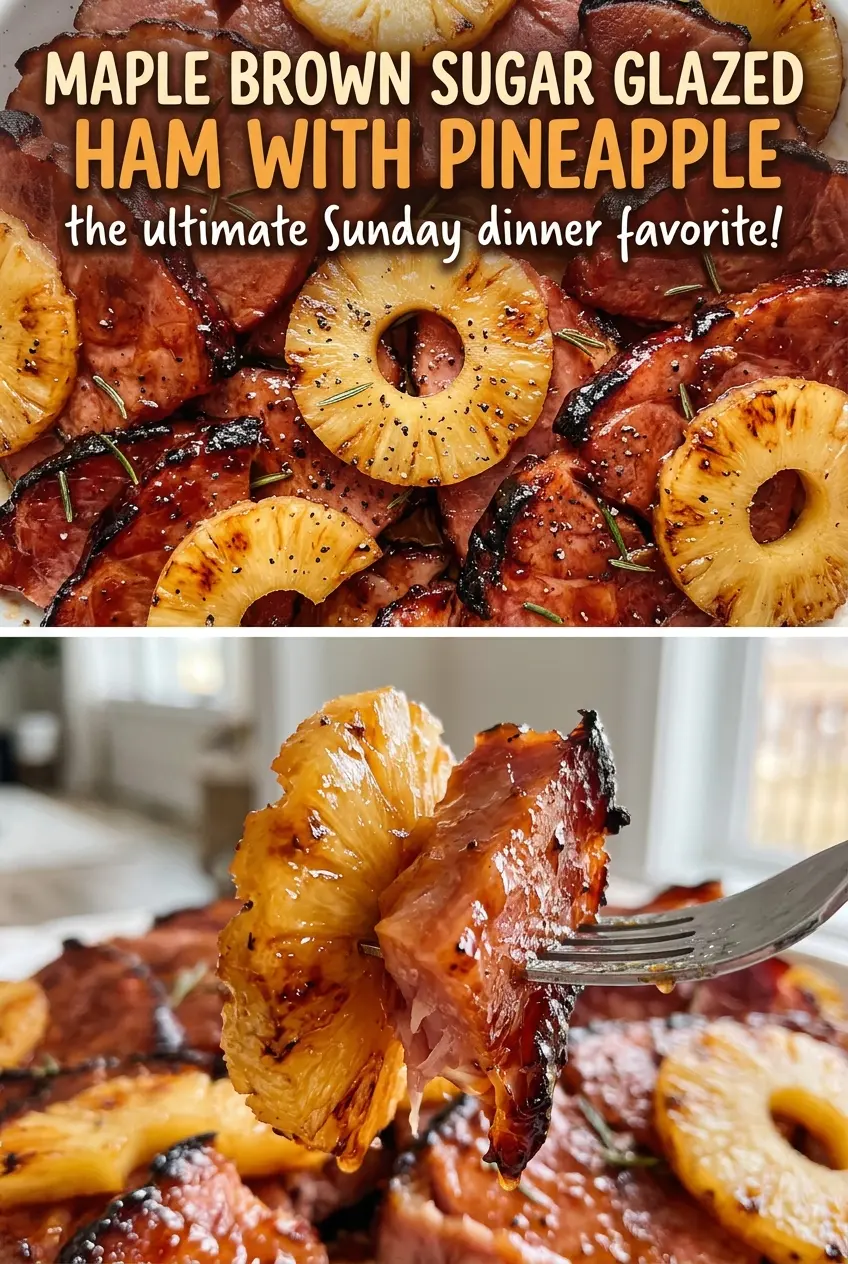
- Bone-in ham: Use a fully cooked, bone-in ham that isn’t spiral-sliced. The intact outside suits the covered warming and late glazing in this method. Choose a ham in the 8- to 10-pound range; a spiral-cut ham won’t give you the same surface to glaze.
- Pineapple rings and juice: Canned rings in juice provide both the fruit for the pan and the reserved liquid for the glaze. A standard grocery-store can is fine; the important detail is that it’s packed in juice, not syrup. Fresh pineapple won’t supply the measured canned juice this glaze uses.
- Pure maple syrup: Pure maple syrup brings a distinctive maple flavor that pancake syrup won’t fully match. Use the real syrup here; the brown sugar already supplies the glaze’s deeper sweetness.
- Light brown sugar: Packed brown sugar dissolves into the simmering glaze and gives it a rounded, caramel-like sweetness. A fresh, soft bag from the regular baking aisle works well; break up any hard lumps before they go into the saucepan.
- Dijon mustard: Dijon adds a little sharpness to balance the sweet glaze. A standard jar is perfectly suitable, and it should be stirred in with the other glaze ingredients so its flavor distributes evenly.
- Ground cloves: The small amount of cloves gives the glaze a warm, recognizable spice note without taking over the maple and pineapple. Measure it rather than shaking it directly over the saucepan, where a heavy pour can make the spice dominate.
Warm the Ham First, Then Build the Glaze in Two Coats
Set the ham up for gentle heating
Heat the oven to 325°F and set the ham cut side down in a 16×13-inch roasting pan. Pour the water around the ham, not over it, then cover the pan tightly with foil. A loose foil seal lets steam escape, so press the foil firmly around the pan’s edges. The ham should stay covered during its first stretch in the oven.
Simmer the maple-pineapple glaze
Combine the brown sugar, maple syrup, reserved pineapple juice, Dijon mustard, and ground cloves in a small saucepan. Bring the mixture to a simmer over medium heat, stirring until the sugar dissolves. Let it simmer for 5 to 7 minutes, until it looks slightly thickened; it should still be brushable, not set like candy. Take the pan off the heat once it reaches that texture.
Heat the center before glazing
Bake the covered ham for 1 hour 20 minutes to 2 hours, checking after 1 hour 20 minutes. Use an instant-read thermometer to check the center, aiming for about 115°F before uncovering. If it hasn’t reached that point at the first check, cover it again and continue baking. The range accounts for the ham’s size and how quickly it heats in your oven.
Brush twice, then rest before carving
Remove the foil and arrange the pineapple rings around the ham. Brush half the glaze over the ham and pineapple, then bake uncovered for 15 minutes. Brush on the remaining glaze and bake for another 10 to 15 minutes, until the thickest part reaches 140°F without the thermometer touching the bone and the glaze is shiny. Rest the ham for 15 minutes before carving, and serve it with the pineapple.
Three Small Changes That Suit Different Tables
A Milder, Maple-Forward Glaze
Leave out the ground cloves and keep the other glaze ingredients and amounts the same. The finish will still be sweet and tangy, with the maple and pineapple more noticeable and no warm clove note.
A Deeper Brown-Sugar Finish
Replace the packed light brown sugar with the same amount of packed dark brown sugar. It adds a stronger molasses note, which makes the glaze taste deeper and less delicate alongside the maple.
A Gluten-Free Table
Choose a fully cooked ham and Dijon mustard labeled gluten-free, keeping the same amounts and method. The glaze and pineapple remain unchanged, so this adjustment doesn’t alter the sweet-tangy finish.
Storage and Reheating
- Refrigerator: Refrigerate leftover ham and pineapple in a covered container for 3 to 4 days. The glaze will firm up when cold, and the ham may be less juicy after chilling.
- Freezer: Freeze carved ham in airtight portions for up to 2 months for best quality. Thaw it in the refrigerator before reheating; the pineapple’s texture will soften after freezing.
- Reheating: Put slices in a covered baking dish with a splash of water and warm them at 325°F until they reach 165°F. Keep the dish covered so the meat doesn’t dry out before it’s hot through.
Questions That Come Up Before Carving This Ham
Maple Brown Sugar Glazed Ham with Pineapple
Ingredients
Equipment
Method
- Heat the oven to 325°F.
- Set the ham cut side down in a 16x13-inch roasting pan.
- Pour the water around the ham and cover the pan tightly with foil.
- Drain the pineapple rings, reserving 1/2 cup juice.
- Combine the brown sugar, maple syrup, pineapple juice, Dijon mustard, and cloves in a small saucepan and bring to a simmer over medium heat, stirring until the sugar dissolves.
- Simmer for 5 to 7 minutes, until slightly thickened, then remove from the heat.
- Bake the covered ham for 1 hour 20 minutes to 2 hours, checking after 1 hour 20 minutes, until the center reaches about 115°F on an instant-read thermometer.
- Remove the foil and arrange the pineapple rings around the ham.
- Brush half the glaze over the ham and pineapple.
- Bake uncovered for 15 minutes.
- Brush with the remaining glaze.
- Bake for 10 to 15 minutes more, until the ham reaches 140°F in the thickest part without touching the bone and the glaze is shiny.
- Rest the ham for 15 minutes before carving.
- Carve and serve with the pineapple.