
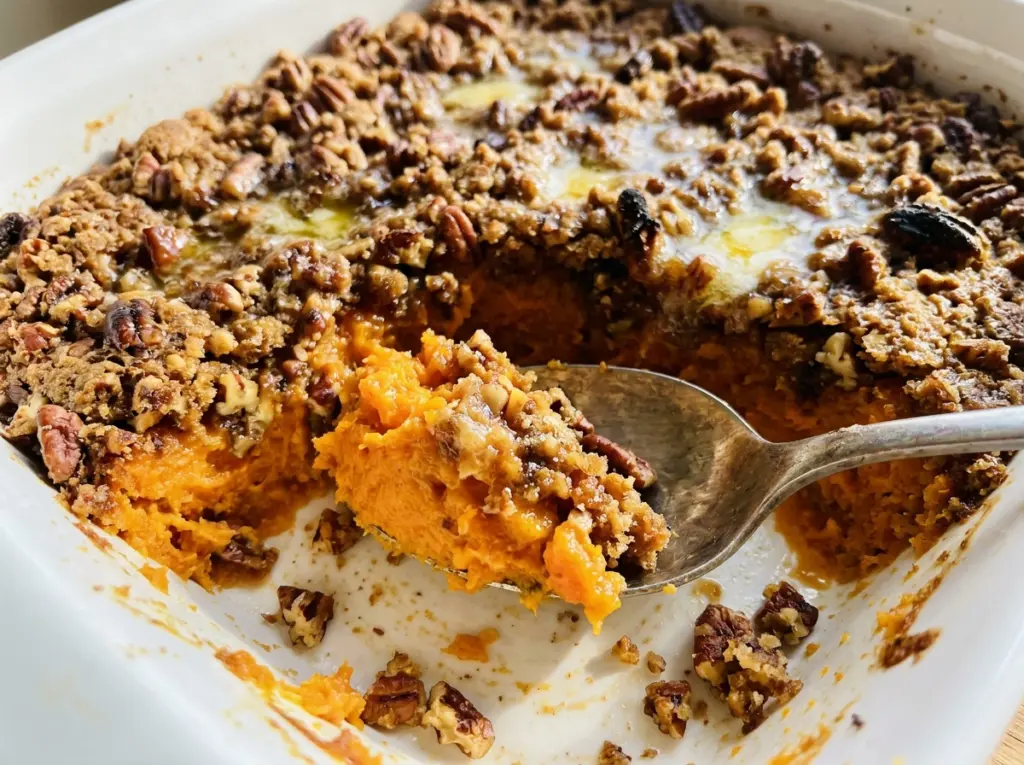
The sweet potatoes mash easily, but the casserole still needs to hold together when you scoop into it. I learned to treat this as more than mashed sweet potatoes with a crunchy top: the eggs turn the filling into a soft, set bake, while the pecan topping gives each serving a buttery crunch. This Southern sweet potato casserole fills a 9×13-inch baking dish and serves 10, so it fits neatly on a holiday table without taking over the oven for the whole afternoon.
Cook the potatoes until a fork slips through them, then drain them well before mashing. Extra water left in the pot can make the filling loose, and the eggs can’t fix that. I whisk the eggs with the milk and flavorings before stirring them into the mash, which helps the filling come together evenly.
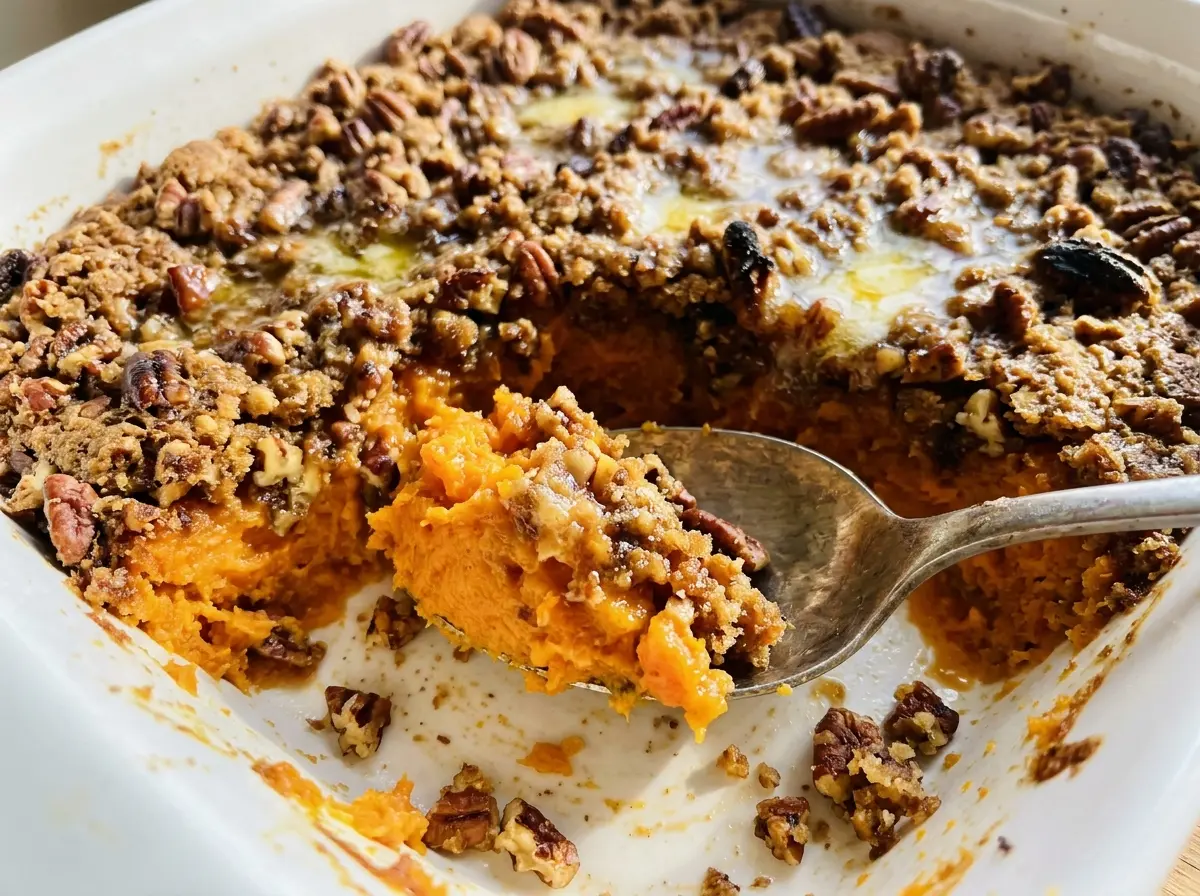
The topping should look clumpy after the melted butter goes in, not like dry flour or a smooth paste. Scatter it over the filling, bake until golden, and give the casserole its full rest before serving. Under that crisp pecan layer, the sweet potato center is tender, gently spiced, and just set.
Kitchen Note
Let the melted butter sit for a moment if it’s piping hot before stirring it into the pecan mixture. You want damp, uneven clumps that scatter easily, not a greasy paste.
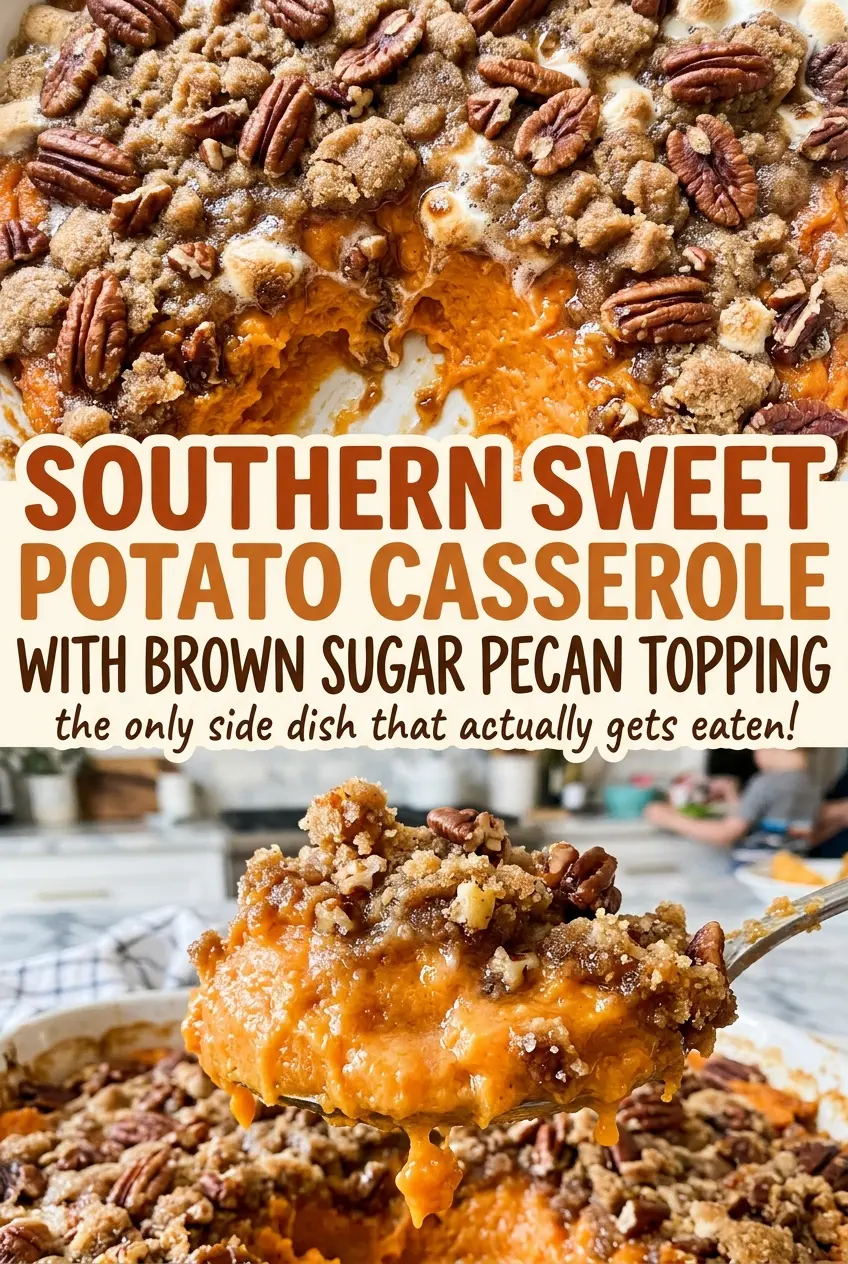
Save this Southern sweet potato casserole for a holiday meal with a smooth, gently spiced center and a golden brown sugar pecan topping.
Why This Sweet Potato Casserole Sets Like a Custard, Not a Bowl of Mash
Mashed sweet potatoes are already soft, so it’s easy to assume the casserole is ready as soon as the topping turns golden. The eggs change what’s happening underneath. Once they’re whisked with the milk and stirred through the mash, they help the filling set as it bakes, giving it enough structure to serve from a spoon without turning it dry or firm.
That’s also why the center temperature matters more than the color of the pecans. A browned topping tells you the surface has baked; it doesn’t tell you whether the egg-containing center has reached 160°F. Check the middle with an instant-read thermometer, then let the casserole rest for 10 minutes. The filling settles during that pause, so the first scoop is soft and cohesive rather than runny around the edges.
This is a different texture from a bowl of mashed sweet potatoes, and it’s meant to be. The goal is a tender, lightly set center beneath a crisp, craggy top—not a sliceable cake or a loose puree.
What the Sweet Potato Filling and Pecan Crumble Each Need
- Sweet potatoes — Choose firm potatoes without soft spots, and cut them into even 1-inch chunks so they cook at a similar pace. Orange-fleshed sweet potatoes give the filling its familiar color. Fresh potatoes are the right choice here; their moisture is easier to control than that of canned sweet potatoes.
- Eggs and whole milk — The eggs help the filling set, while whole milk loosens the mash enough to make it smooth and spoonable. Use large eggs and whole milk for the intended texture; reducing the eggs or using a thinner milk changes how firmly the center sets.
- Light brown sugar — It sweetens both the filling and topping, with a mild molasses note that suits the sweet potatoes. Keep the two portions separate as you prepare the dish so the filling and crumble each get their share.
- Unsalted butter — Butter adds richness to the filling and helps the topping form clumps. Unsalted butter gives you control over the salt already in the filling; a standard store-brand butter works well.
- Pecans and all-purpose flour — Chopped pecans bring the topping’s nutty crunch, and the flour helps hold the brown sugar and butter in a crumbly layer. Fresh-tasting pecans matter more than an expensive brand because stale nuts can taste flat. The flour is part of the topping’s structure, not a garnish.
- Cinnamon and vanilla — Cinnamon gives the filling its warm spice, while vanilla rounds out the sweetness. Ground cinnamon from a fresh, fragrant jar is plenty; there’s no need for a specialty variety.
From Fork-Tender Potatoes to a Golden Pecan Top
Cook the Potatoes Until a Fork Slides In
Heat the oven to 350°F and grease a 9×13-inch baking dish. Put the peeled, 1-inch sweet potato chunks in a 6-quart pot and cover them with cold water before bringing the pot to a boil. Lower the heat and simmer for 15–20 minutes, checking for pieces a fork can pierce easily. If the centers still feel firm, give them more time rather than hoping the oven will finish cooking them evenly.
Drain Thoroughly Before Mashing
Drain the sweet potatoes well, then return them to the pot and mash until smooth. Water clinging to the chunks can thin the filling, so let the potatoes drain rather than rushing straight to the masher. Smooth mash gives the milk and eggs a consistent base. If a few pieces remain, press them against the side of the pot as you continue mashing.
Mix the Filling Without Leaving Egg Streaks
Melt 4 tablespoons of butter and stir it into the sweet potatoes with 1/2 cup of the packed light brown sugar. In a separate bowl, whisk together the milk, eggs, vanilla, cinnamon, and salt, then stir that mixture into the mash until evenly combined. Pour the filling into the prepared baking dish and spread it into an even layer. Uneven thickness can leave the center lagging behind the edges, so level the surface before adding the topping.
Scatter the Crumble and Bake to the Center Temperature
Mix the pecans, flour, and remaining brown sugar, then stir in the remaining melted butter until the mixture forms clumps. Scatter the topping over the filling instead of pressing it down; a loose layer bakes up with more distinct crunchy bits. Bake for 35–40 minutes, until the topping is golden and the center reaches 160°F. Rest the casserole for 10 minutes before serving so the warm filling can settle.
Two Small Changes for a Different Topping or a Gluten-Free Table
Leave the Pecans in Larger Chunks
Keep the same amount of pecans, but chop them more coarsely. The topping will have more pronounced nutty bites and a less even crumble, while the brown sugar and butter still make a crisp layer.
Make a Gluten-Free Version Without the Topping
The filling uses no wheat ingredient, so you can bake it without the pecan topping for a gluten-free version. The casserole will have a soft, plain top instead of the crunchy brown sugar crumble; leave off the whole topping, since the flour is mixed through it.
Storage and Reheating
- Refrigerator: Cover leftovers and refrigerate them for 3–4 days. The topping softens as it sits, but the filling stays tender.
- Freezer: Freeze the fully cooled casserole, covered tightly, for up to 2 months. The topping may lose some crunch after thawing.
- Reheating: Warm individual portions in the microwave in short bursts until hot throughout. Long, continuous heating can dry the edges before the middle warms through.
Questions That Come Up While Making Sweet Potato Casserole
Southern Sweet Potato Casserole With Brown Sugar Pecan Topping – Holiday Side Dish Recipe
Ingredients
Equipment
Method
- Heat the oven to 350°F.
- Grease a 9x13-inch baking dish.
- Put the sweet potatoes in a 6-quart pot and cover with cold water.
- Bring the sweet potatoes to a boil, then simmer for 15–20 minutes until fork-tender.
- Drain the sweet potatoes well and return them to the pot.
- Mash the sweet potatoes until smooth.
- Melt 4 tablespoons of the butter.
- Stir the melted butter and 1/2 cup of the brown sugar into the sweet potatoes.
- Whisk the milk, eggs, vanilla, cinnamon, and salt together.
- Stir the milk mixture into the sweet potatoes and spread the mixture in the prepared dish.
- Mix the pecans, flour, and remaining 1/2 cup brown sugar.
- Melt the remaining 4 tablespoons butter and stir it into the topping until clumpy.
- Scatter the topping over the filling.
- Bake for 35–40 minutes, until the topping is golden and the center reaches 160°F.
- Let the casserole rest for 10 minutes before serving.