
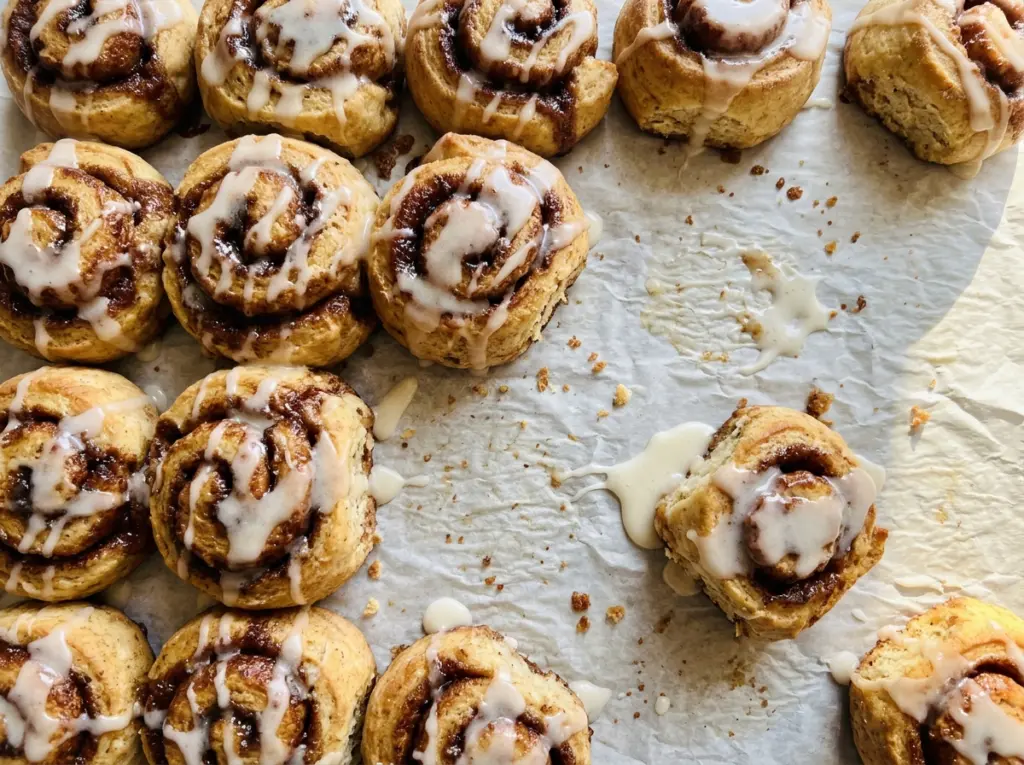
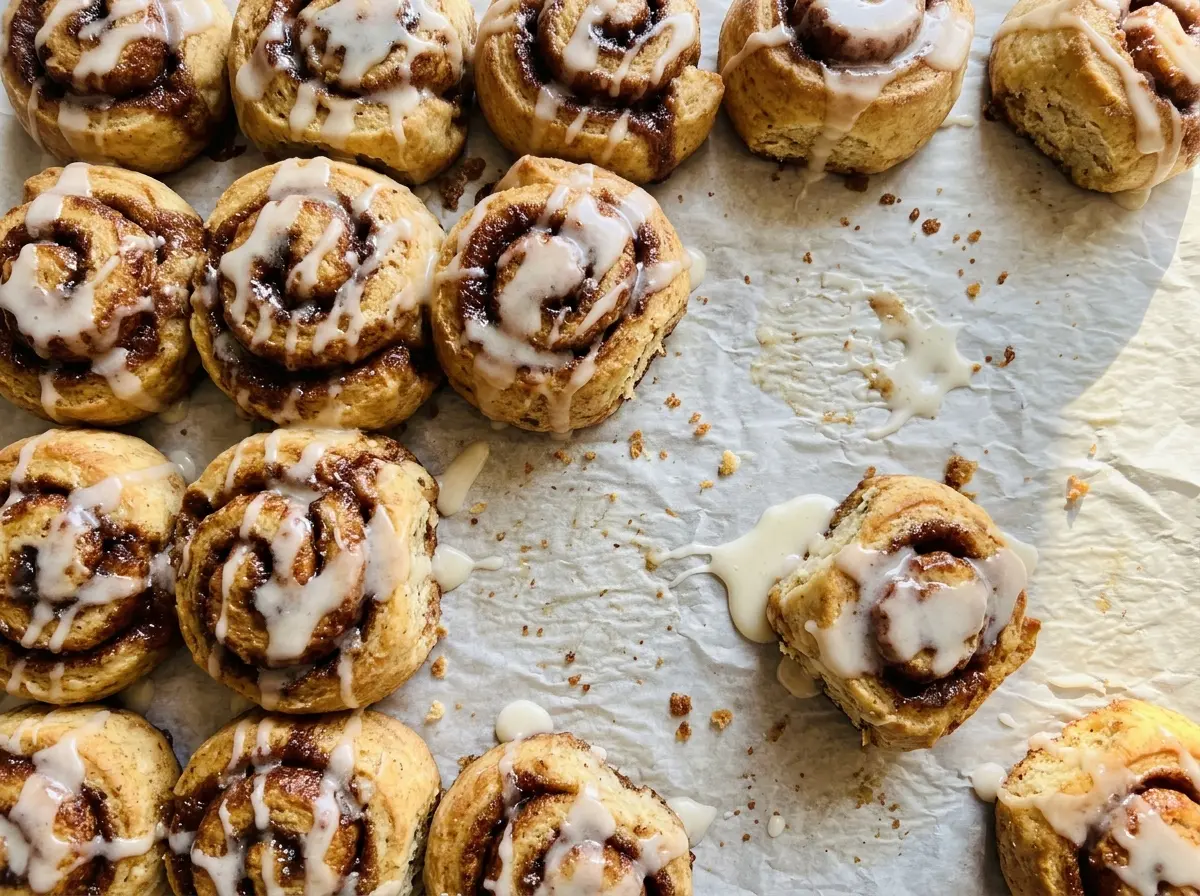
When the milk, sugar, and yeast turn foamy, the dough already has a head start on becoming soft and tender. These sourdough discard cinnamon roll bites bake in a muffin pan, so each slice gets its own little well and comes out easy to portion. The discard adds a gentle tang, while cinnamon and brown sugar make a familiar, warmly spiced swirl.
I like this dough because it doesn’t ask the discard to do all the leavening. Active dry yeast gives the dough its rise, and the discard works right alongside it. Once the dough is rolled, filled, and cut into 12 pieces, the muffin pan keeps the bites neat as they puff and bake. A quick vanilla glaze goes over while they’re still warm, settling into the cinnamon spirals.
Kitchen Note
After you spread the filling butter, press the cinnamon sugar lightly into it. That small touch helps the filling stay in an even layer instead of shifting as you roll the dough.
Save these sourdough discard cinnamon roll bites for a cozy bake: soft yeast dough, cinnamon-brown sugar swirls, and a simple vanilla glaze.
Why the Discard Isn’t Responsible for the Rise
Sourdough discard can make a dough taste pleasantly tangy, but its strength and activity vary from one jar to another. This dough uses active dry yeast for dependable lift, so it doesn’t rely on a particular feeding schedule or on bubbles in the discard. That’s useful when your discard has been sitting in the refrigerator and you want cinnamon roll bites with a predictable rise.
The yeast gets its own brief start in warm milk with granulated sugar. Once it’s foamy, it joins the discard and egg, then the flour and salt. Butter goes in during kneading, which gives it time to work into the dough rather than making the first mix greasy. Together, those choices make a dough that can be rolled thin, filled, and cut without needing the discard to behave like a fully active starter.
There’s another practical difference from a full-size cinnamon roll: each piece sits in a muffin cup. The pan supports the sides as the dough rises, and the finished portions are already divided. You still get the cinnamon spiral, but you don’t have to slice a large baked roll at the table.
What Each Ingredient Contributes to the Soft Dough and Cinnamon Swirl

- Whole milk and active dry yeast — The milk gives the dough richness, and the yeast supplies its rise. Use a thermometer for the milk if you have one; too-hot milk can keep the yeast from working. The remaining milk is for the glaze, so keep it separate from the portion used with the yeast.
- Sourdough discard — Room-temperature discard blends more easily into the yeast mixture than a cold, firm scoop. Its age and activity can affect how tangy it tastes, but the active dry yeast is still doing the leavening work.
- Egg — The egg adds richness and helps give the dough a tender, cohesive crumb. Let it come to room temperature so it doesn’t chill the yeast mixture when you stir it in.
- All-purpose flour and kosher salt — All-purpose flour gives the bites a soft structure that’s easy to roll. Measure it carefully; packing extra flour into the dough can make the baked centers dense. The salt balances the dough and filling, so don’t leave it out.
- Unsalted butter — Softened butter kneads into the dough and spreads smoothly over the rolled rectangle for the filling. It should yield when pressed but still hold its shape; melted butter would make the dough and filling harder to handle.
- Light brown sugar and ground cinnamon — Packed brown sugar gives the filling its moist, caramel-like sweetness, while cinnamon brings the defining spice. Fresh, fragrant cinnamon makes a noticeable difference here; there’s no need for a specialty brown sugar.
- Powdered sugar and vanilla extract — Powdered sugar dissolves into a smooth drizzle without a grainy texture. Vanilla rounds out the glaze, and whisking until smooth avoids dry pockets that can leave streaks on the warm bites.
From Foamy Yeast to Neat Muffin-Pan Spirals
Wake Up the Active Dry Yeast
Lightly coat the cups of a standard 12-cup muffin pan with nonstick cooking spray before you begin shaping. Warm the milk to 105–110°F, then stir in the granulated sugar and active dry yeast. Let the mixture stand for 5–10 minutes, until a foamy layer appears on top. If it stays flat, check the milk temperature and the yeast before building the dough around it.
Knead Until the Dough Turns Elastic
Stir the sourdough discard and room-temperature egg into the yeast mixture in a large bowl. Add the flour and salt and mix until the dough looks shaggy, then knead in the softened butter. Knead for 8–10 minutes, until the dough is smooth, elastic, and slightly tacky; it shouldn’t feel stiff or leave a thick coating on your hands. Cover the bowl for the first rise.
Give the Dough Time to Double
Set the covered bowl in a warm place for 60–90 minutes. Look for the dough to double in size rather than relying on the clock alone, since a cooler room can slow the rise. If it still looks compact, give it more time within that range’s spirit instead of moving ahead with under-risen dough. A full first rise makes the rectangle easier to roll and shape.
Fill, Roll, and Cut Twelve Bites
Roll the dough between two sheets of parchment into a 12×10-inch rectangle, then remove the top sheet. Spread the filling butter evenly across the dough and sprinkle over the mixture of brown sugar and cinnamon. Starting at one 12-inch edge, roll the dough tightly into a log and cut it into 12 slices about 1 inch thick. Place each piece cut side up in a prepared muffin cup, cover the pan, and let the bites rise for 30–45 minutes, until puffy.
Bake Until the Centers Set, Then Glaze
Heat the oven to 350°F and bake the bites for 18–22 minutes, until they’re golden and the centers are set. If the tops are browning but the centers still look unset, give them the time they need rather than taking them out on color alone. Let the bites cool in the pan for 5 minutes. Whisk the powdered sugar with the remaining milk and vanilla until smooth, then drizzle the glaze over the warm bites.
Three Small Changes for a Different Cinnamon Roll Bite
Make the Bites Dairy-Free
Use unsweetened oat milk in place of the whole milk, including the milk for the glaze, and use stick-style dairy-free butter in both the dough and filling. Keep the amounts the same. The dough may be a little less rich, but this keeps the cinnamon-roll texture; the egg means the bites aren’t vegan.
Keep the Finish Less Sweet
Leave off the glaze and serve the bites as they come from the pan. The cinnamon and brown sugar still make a clear filling, while the tops stay less sweet and a little less sticky. This is the easiest change if you want the dough and swirl to stand out.
Make a Cinnamon-Forward Swirl
Use a little more ground cinnamon and a little less brown sugar in the filling. You’ll get a warmer, spicier center with less syrupy sweetness, though the filling won’t be quite as moist. Keep the butter spread even so the adjusted dry filling still coats the dough.
Storage and Reheating
- Refrigerator: Store covered in an airtight container for up to 4 days. The chilled dough will feel firmer, and the glaze may soften.
- Freezer: Freeze cooled, unglazed bites in an airtight container for up to 2 months. Thaw in the refrigerator and glaze after thawing for the tidiest finish.
- Reheating: Warm a bite in the microwave for about 10 seconds, then add a few seconds if needed. Long bursts can dry the dough and make the glaze run.
Questions That Come Up When Baking These Cinnamon Roll Bites
Sourdough Discard Cinnamon Roll Bites – Homemade Recipe
Ingredients
Equipment
Method
- Lightly coat the cups of a 12-cup standard muffin pan with nonstick cooking spray.
- Warm 1/2 cup of the milk to 105–110°F.
- Stir the granulated sugar and yeast into the warm milk.
- Let the mixture stand for 5–10 minutes, until foamy.
- Stir the sourdough discard and egg into the yeast mixture in a large bowl.
- Add the flour and salt and mix until a shaggy dough forms.
- Knead in the softened butter.
- Knead for 8–10 minutes, until the dough is smooth, elastic, and slightly tacky.
- Cover the bowl and let the dough rise in a warm place for 60–90 minutes, until doubled in size.
- Roll the dough between two sheets of parchment into a 12x10-inch rectangle.
- Remove the top sheet and spread the filling butter evenly over the dough.
- Mix the brown sugar and cinnamon.
- Sprinkle the mixture evenly over the butter and press gently to help it adhere.
- Starting at one 12-inch edge, roll the dough tightly into a log.
- Cut the log into 12 slices about 1 inch thick.
- Place the slices cut side up in the muffin pan.
- Cover the pan and let the bites rise for 30–45 minutes, until puffy.
- Heat the oven to 350°F.
- Bake for 18–22 minutes, until the bites are golden and their centers are set.
- Let the bites cool in the pan for 5 minutes.
- Whisk the powdered sugar, remaining 1 tablespoon milk, and vanilla until smooth.
- Drizzle the glaze over the warm bites.