
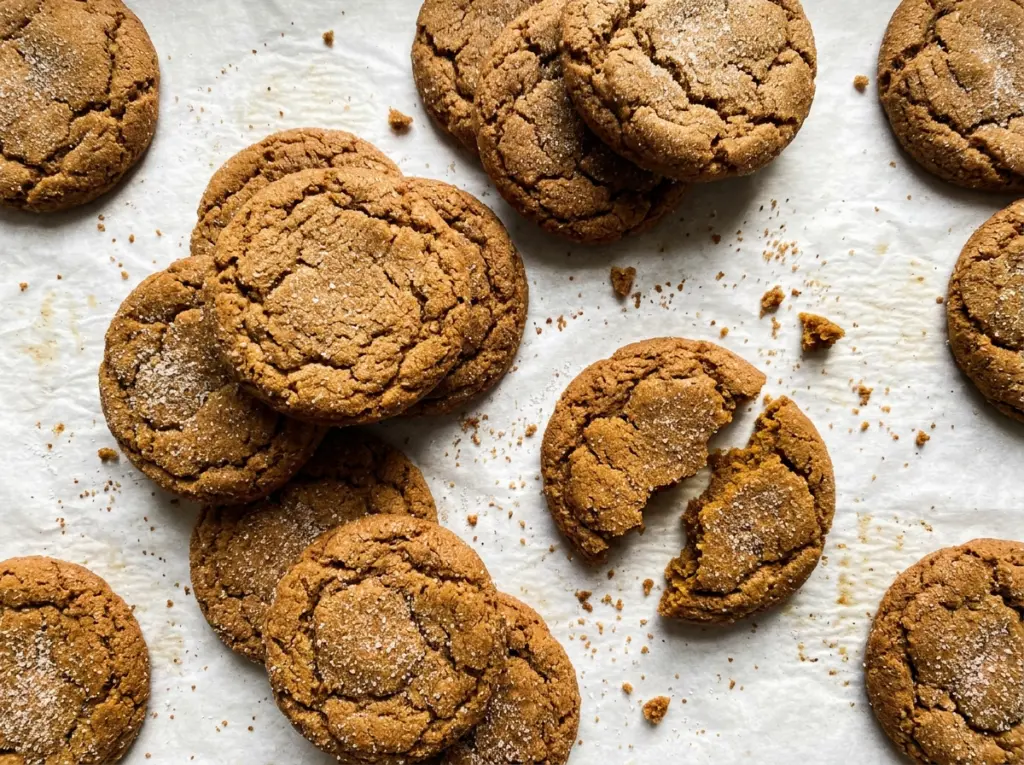
When this dough is first mixed, the molasses makes it soft and a little sticky, which can make it tempting to start scooping right away. Give it time in the refrigerator first. After an hour, the dough is much easier to roll into neat balls, and these soft gingerbread cookies with molasses bake up with puffed centers and set edges.
I use unsulphured molasses rather than blackstrap here because its smoother sweetness lets the ginger and cinnamon come through without an overly strong, bitter edge. The spice blend is warm but not sharp, and the brown sugar and softened butter keep the cookies tender.
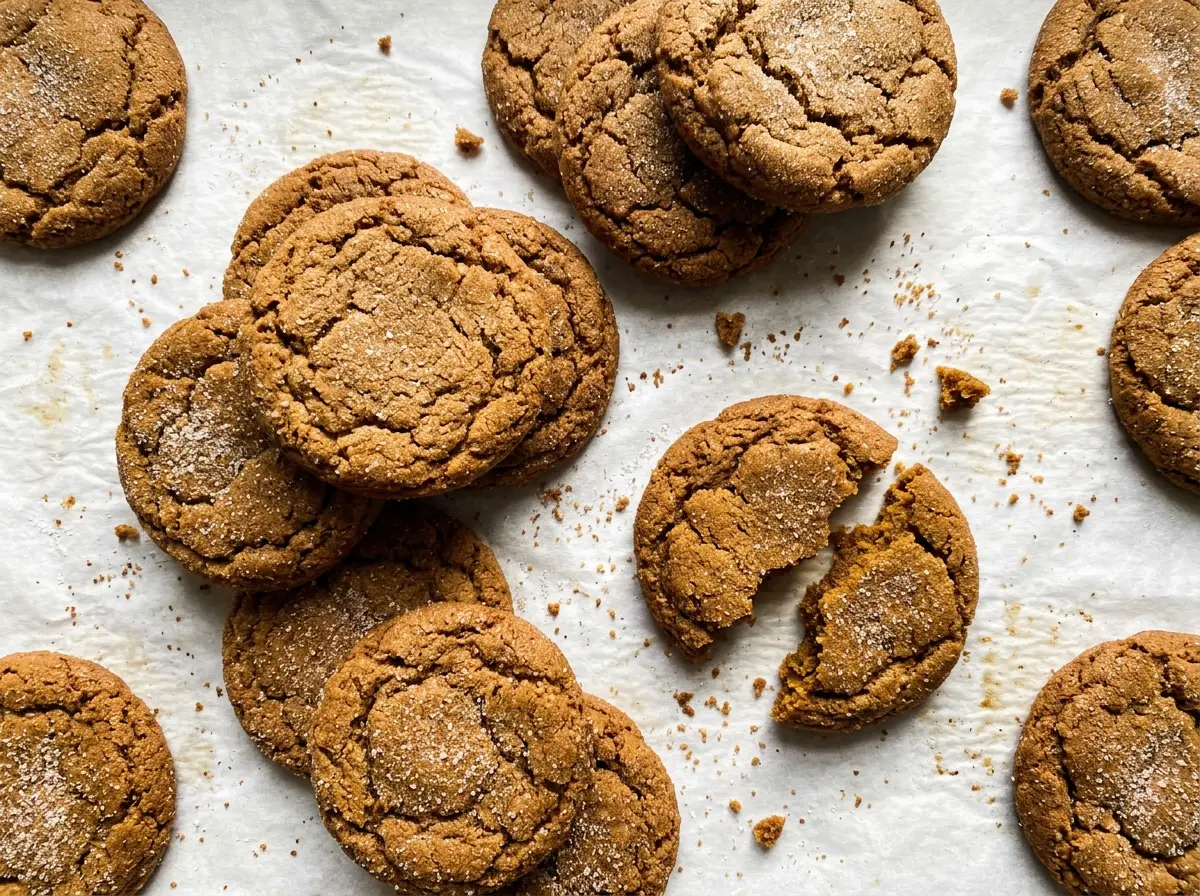
Mix the flour in only until the dry streaks disappear, then let the oven do the rest. The finished cookies are fragrant with ginger and cloves, soft in the middle, and just sturdy enough to lift from the baking sheet after a short rest.
Kitchen Note
Once the flour goes in, stop mixing as soon as you can’t see dry streaks. A few small uneven patches are easier to fix than dough that’s been worked until it turns tough.
Save these soft gingerbread cookies with molasses for a cozy bake, with warm spice and tender, puffed centers.
Why Chilling This Molasses Dough Changes the Bake
Warm, freshly mixed dough is soft enough to spread quickly once it hits the oven. Chilling gives the butter time to firm up, so the cookies hold their shape long enough to puff rather than flatten into thin rounds. It also makes the dough easier to portion without leaving a sticky coating on your scoop and hands.
That hour in the refrigerator is especially useful with molasses in the mix. The dough starts out pliable, but after chilling it rolls into smooth balls and sits neatly on the parchment. Keep the remaining dough cold while the first sheet bakes; otherwise, the next batch starts at a different temperature and may spread more.
There’s no need to wait for the dough to become hard. It should feel cool and firm enough to shape, but still give when you roll a portion between your palms. If it feels unusually stiff straight from the refrigerator, a brief rest on the counter makes scooping easier.
Why Unsulphured Molasses and Fresh Pantry Spices Matter Here

- Unsulphured molasses — It brings the characteristic dark sweetness and helps give the cookies their gingerbread depth. Choose a mild, unsulphured variety; blackstrap is much more assertive and can make this batch taste bitter. There isn’t a direct swap that keeps the same flavor.
- Ground ginger, cinnamon, and cloves — Ginger leads, cinnamon rounds it out, and cloves add a small, distinct warm note. Spices lose their punch as they sit in the pantry, so smell them before measuring; if they smell faint, the cookies will too. Keep the cloves measured carefully because their flavor takes over quickly.
- All-purpose flour and baking soda — All-purpose flour gives the dough enough structure to hold the round shape while staying tender. Baking soda helps the cookies puff in the oven. Use fresh baking soda if yours has been open for a long time; an inactive leavener can leave the cookies dense.
- Softened butter and packed light brown sugar — Softened butter creams smoothly with the sugar, while the sugar adds sweetness and moisture. The butter should yield when pressed but shouldn’t look shiny or melted. Packing the brown sugar gives a consistent measure and keeps the dough’s sweetness in balance.
- Large egg — The egg binds the dough and helps it bake into a cohesive cookie. Bring it to room temperature if it’s especially cold so it blends more readily with the butter mixture.
From Creaming the Butter to Setting the Cookie Edges
Whisk the dry ingredients evenly
Heat the oven to 350°F and line two baking sheets with parchment paper. Whisk the flour, baking soda, ginger, cinnamon, cloves, and salt in a medium bowl until the spices are distributed through the flour. A few extra seconds of whisking here prevent a pocket of baking soda or cloves from landing in one cookie. Set the bowl aside while you cream the butter and sugar.
Cream the butter and brown sugar
Beat the softened butter and packed light brown sugar in a large bowl with an electric mixer on medium speed for about 2 minutes. The mixture should look creamy and evenly combined, not greasy or separated. If butter is stuck high on the bowl, pause and scrape it down so it gets mixed with the sugar. Starting with softened rather than melted butter helps build the right texture.
Add the molasses, egg, and flour mixture
Beat in the molasses and egg until they’re combined, scraping down the bowl as needed. Add the flour mixture and mix on low just until no dry streaks remain. The dough will be soft and dark from the molasses, so check the bottom and sides of the bowl for flour before you stop. Don’t keep beating once the dough comes together.
Chill, scoop, and roll
Cover the bowl and chill the dough for 1 hour. Scoop it into 1 1/2-tablespoon portions, then roll each portion into a ball. Arrange 12 on each prepared sheet with about 2 inches between them so they have room to bake. Keep the remaining dough chilled while the first sheet is in the oven.
Bake until the edges are set
Bake one sheet at a time for 10 to 12 minutes. Look for set edges and centers that are puffed; don’t wait for the centers to look dry. Let the batch cool on its baking sheet for 5 minutes, then transfer the cookies to a wire rack. They’re delicate while hot, so that short rest helps them lift cleanly.
Small Changes for a Milder Spice or an Easier Baking Day
A gentler clove note
For a less assertive spice, reduce the ground cloves slightly while keeping the ginger and cinnamon unchanged. The cookies will still read as gingerbread, but the sharp, warming finish from the cloves won’t linger as much. Don’t remove the cloves entirely; a little gives the spice blend its rounded finish.
Mix the dough ahead
You can cover the mixed dough and chill it overnight before scooping. It will be firmer than dough chilled for an hour, so let it stand briefly at room temperature until you can scoop and roll it without forcing it. Keep it covered while it rests, then bake the cookies on parchment as usual.
Storage and Reheating
- Refrigerator: Baked cookies don’t need refrigeration; keep them airtight at room temperature for up to 5 days. Chilling baked cookies makes them firmer.
- Freezer: Freeze fully cooled cookies in an airtight container for up to 2 months, separating layers with parchment. Thaw them at room temperature while still covered to keep them from drying out.
- Reheating: Warm cookies in a 300°F oven for 3 to 4 minutes if you like them slightly warm. Don’t leave them in until they feel soft all the way through; they firm up again as they cool.
Questions That Come Up While Baking These Gingerbread Cookies
Soft Gingerbread Cookies with Molasses
Ingredients
Equipment
Method
- Heat the oven to 350°F.
- Line two baking sheets with parchment paper.
- Whisk the flour, baking soda, ginger, cinnamon, cloves, and salt together in a medium bowl.
- Beat the butter and brown sugar in a large bowl with an electric mixer on medium speed until creamy, about 2 minutes.
- Beat in the molasses and egg until combined, scraping down the bowl as needed.
- Add the flour mixture and mix on low just until no dry streaks remain.
- Cover and chill the dough for 1 hour.
- Scoop the dough into 1 1/2-tablespoon portions.
- Roll the portions into balls.
- Arrange 12 on each baking sheet, spacing them about 2 inches apart.
- Bake one sheet at a time for 10 to 12 minutes, until the edges are set and the centers are puffed.
- Keep the remaining dough chilled while the first sheet bakes.
- Let each batch cool on the baking sheet for 5 minutes.
- Transfer the cookies to a wire rack to cool.