
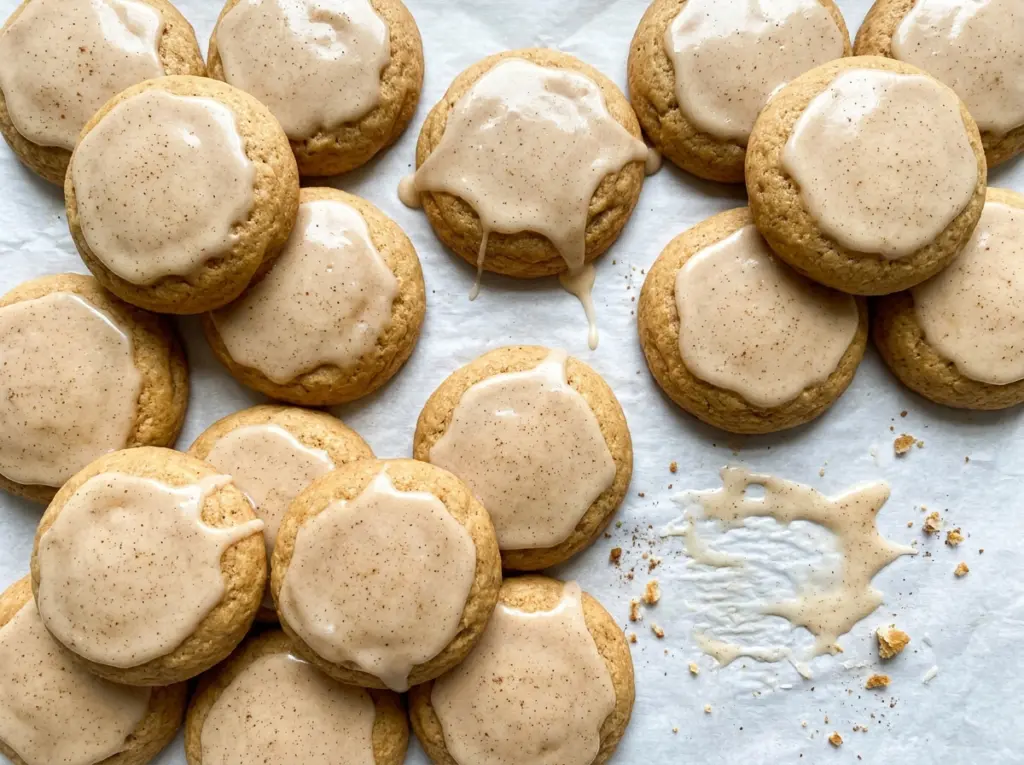
Apple cider starts out loose and fragrant in the saucepan, then turns darker and more concentrated as it simmers. That reduction is what lets these soft apple cider cookies taste unmistakably like cider without making the dough too wet. The first time I made them, I was tempted to rush that part; giving the cider time to reduce made a noticeable difference in both the apple flavor and the dough.
Brown sugar keeps the centers tender, while cinnamon and a little nutmeg give the cookies a warm, familiar spice. The dough gets a short rest in the refrigerator before baking, which makes it easier to scoop and helps the cookies hold their shape. Once they’re completely cool, a cinnamon-cider glaze adds a crisp, sweet finish.
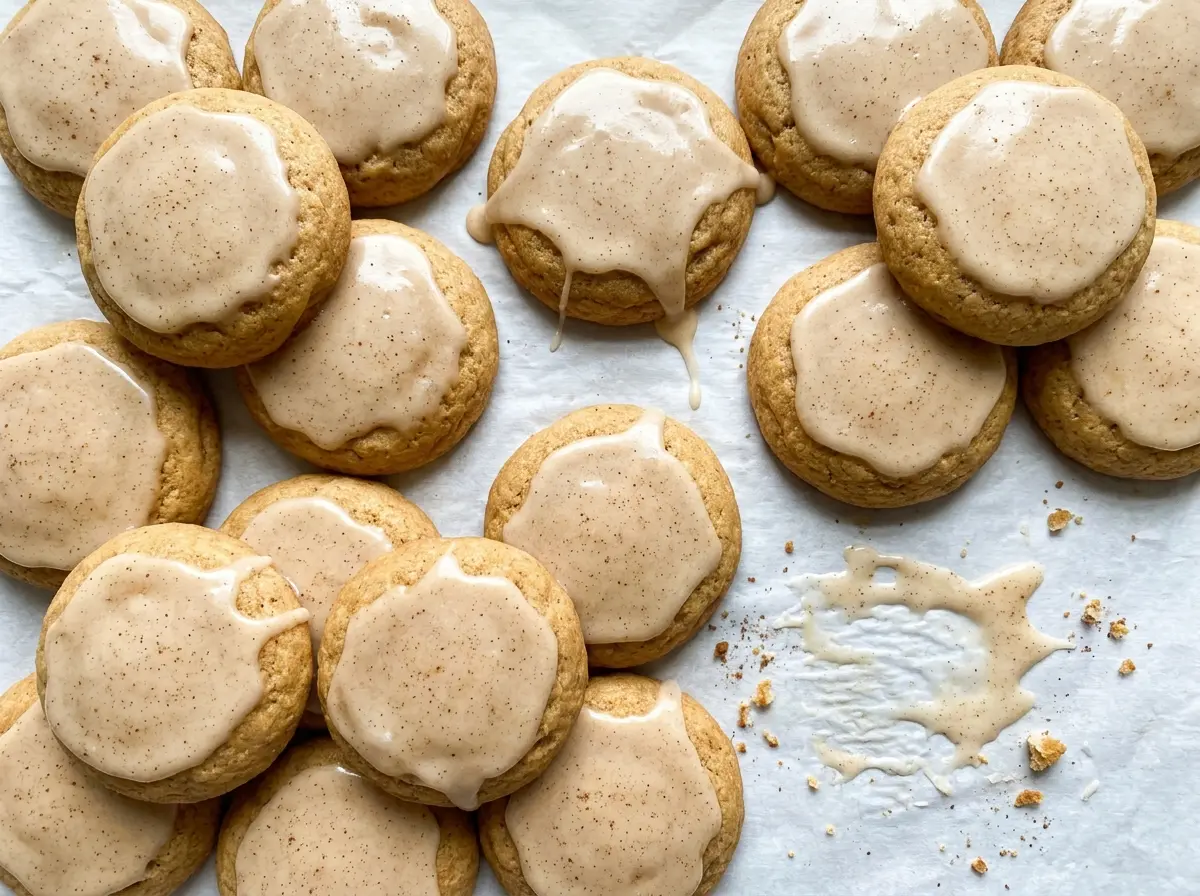
The cookies bake up soft rather than crisp, with set edges and tops that look dry. Let the glaze settle into a thin, cinnamon-flecked layer, and you’ll have a full batch of 24 ready to share—or keep close at hand.
Kitchen Note
Don’t wait for the tops to turn golden brown; they’re ready when the edges are set and the tops look dry. Five minutes on the baking sheet gives the soft cookies time to firm up before you move them.
Save these soft apple cider cookies with cinnamon glaze for a cozy bake: concentrated cider in the dough, tender centers, and a sweet cinnamon finish.
Why apple cider needs reducing before it goes anywhere near the dough
Fresh cider brings plenty of apple aroma, but it also brings a lot of liquid. Pouring it straight into cookie dough would change the balance between wet and dry ingredients, leaving you with a looser dough and cookies that don’t bake the same way. Simmering the cider concentrates its apple flavor while boiling away some of that extra water, so the dough gets a clear cider note without losing its structure.
That concentration matters even more here because the flavor has to come through a buttery, warmly spiced cookie. Cinnamon and nutmeg complement the apple, but they shouldn’t take over; the reduced cider keeps the fruit at the center. It’s a small bit of stovetop work, and it’s more useful than adding extra spice, which would make the cookies taste different rather than more like cider.
Think of the reduction as a flavor ingredient, not just a way to use cider. Its concentrated character carries into the cookie itself, while the separate splash in the glaze keeps the topping tied to the apple flavor instead of making it taste like plain cinnamon icing.
What cider, butter, and brown sugar each bring to these cookies

- Apple cider — Choose fresh cider with a clear apple aroma; this is the defining flavor, and reducing it gives the dough its concentrated taste. Apple juice isn’t a direct swap because its flavor and body differ. The cider for the dough needs to cool completely before it’s mixed in.
- All-purpose flour — It gives these cookies enough structure to stay soft without spreading into thin rounds. A standard store-brand flour works well; measure it without packing it into the cup so the dough doesn’t turn dry and stiff. A different flour won’t behave exactly the same here.
- Baking powder and baking soda — The two leaveners help the cookies rise and set with a tender texture. Check that both are fresh, since old leaveners can leave the cookies dense. They aren’t interchangeable one for one.
- Unsalted butter — Softened butter creams smoothly with the sugars and gives the dough its rich base. A regular grocery-store butter is fine; the useful detail is its softened texture, not a specialty brand. For a dairy-free variation, use unsalted plant-based baking sticks.
- Brown and granulated sugar — Brown sugar brings moisture and a gentle molasses note, while granulated sugar helps balance the sweetness and texture. Packed light brown sugar gives the intended flavor; dark brown sugar would bring a more pronounced molasses taste.
- Egg and vanilla — A room-temperature egg blends more evenly into the creamed butter and sugar, and vanilla rounds out the apple and spice. Standard vanilla extract works well; there’s no need for a premium bottle in a spiced cookie.
- Cinnamon and nutmeg — Ground cinnamon carries through both dough and glaze, while nutmeg adds a quieter warm note. Use spices that still smell fragrant when you open the jar; stale spices can make the cookies taste flat.
- Powdered sugar — This makes a smooth glaze that sets into a delicate topping. If the bag has been open for a while, break up any packed clumps as you measure so they don’t linger as lumps in the finished glaze.
From concentrated cider to a glaze that sets cleanly
Reduce the cider and let it cool
Simmer 1 1/4 cups apple cider in a small saucepan over medium-low heat for 15–20 minutes, until it has reduced to 1/3 cup. The liquid will look darker and more concentrated as it cooks; keep the heat moderate so it simmers steadily rather than boiling hard. Transfer the reduction to a heatproof measuring cup and cool it completely before it goes into the dough. Warm cider can soften the butter mixture and change the dough’s texture.
Prepare the pans and build the cookie base
Heat the oven to 350°F and line two 18×13-inch baking sheets with parchment paper. Whisk the flour, baking powder, baking soda, salt, cinnamon, and nutmeg in a medium bowl so the leaveners and spices are evenly dispersed. In a large bowl, beat the softened butter with both sugars on medium-high speed for 2–3 minutes, until creamy. Add the egg and vanilla, then beat in the cooled cider reduction until combined.
Mix gently, then chill the dough
Add the flour mixture on low speed and stop as soon as no dry streaks remain. Mixing longer than that can make the cookies tougher, so don’t wait for the dough to look perfectly smooth. Cover the bowl and chill the dough for 30 minutes; this gives it time to firm up before scooping. While it chills, keep the lined baking sheets ready.
Bake, cool, and finish with cinnamon glaze
Scoop rounded 1 1/2-tablespoon portions onto the sheets, spacing them about 2 inches apart. Bake for 10–12 minutes, switching the sheets’ positions halfway through, until the edges are set and the tops look dry. Cool the cookies on the baking sheets for 5 minutes, then move them to a wire rack and let them cool completely. Whisk the powdered sugar with the remaining cinnamon and cider until the glaze is smooth, thick, and drizzleable; drizzle it over the cooled cookies and let it set for 20–30 minutes.
How to keep the cider cookies dairy-free, unglazed, or nutmeg-free
Bake a dairy-free batch
Replace the unsalted butter with an equal measure of unsalted plant-based baking sticks, not soft tub spread. The cookies keep their buttery role in the dough, though the aroma and richness will vary by brand; the cider glaze itself contains no butter.
Skip the glaze for a less-sweet cookie
Leave off the powdered-sugar glaze and serve the cookies plain once they’ve cooled. You’ll get a softer, less-sweet finish, with the apple cider and spices in the cookie taking the lead. This also avoids waiting for a topping to set.
Leave out the nutmeg
Omit the nutmeg if you prefer a cleaner cinnamon-and-apple taste. The cookies will lose that extra warm, rounded spice note, but the cinnamon and cider still give them their characteristic flavor.
Storage and Reheating
- Room temperature: Store the cookies in an airtight container for up to 3 days. The glaze may soften as they sit.
- Refrigerator: Refrigeration isn’t needed and can dry the cookies out.
- Freezer: Freeze the cookies without glaze in an airtight container for up to 2 months. Thaw them, then glaze once they’re at room temperature.
- Reheating: They don’t need reheating; warming glazed cookies will soften or melt the topping.
Questions that come up while baking apple cider cookies
Soft Apple Cider Cookies with Cinnamon Glaze
Ingredients
Equipment
Method
- Simmer 1 1/4 cups apple cider in a small saucepan over medium-low heat for 15–20 minutes, until reduced to 1/3 cup.
- Transfer the cider reduction to a heatproof measuring cup and cool completely.
- Heat the oven to 350°F.
- Line two 18x13-inch baking sheets with parchment paper.
- Whisk the flour, baking powder, baking soda, salt, 1 teaspoon cinnamon, and nutmeg in a medium bowl.
- Beat the butter, brown sugar, and granulated sugar in a large bowl with a mixer on medium-high speed for 2–3 minutes, until creamy.
- Beat in the egg and vanilla until combined.
- Beat in the cooled cider reduction until combined.
- Mix in the flour mixture on low speed just until no dry streaks remain.
- Cover and chill the dough for 30 minutes.
- Scoop rounded 1 1/2-tablespoon portions onto the prepared sheets, spacing them about 2 inches apart.
- Bake for 10–12 minutes, switching the sheets’ positions halfway through, until the edges are set and the tops look dry.
- Cool the cookies on the baking sheets for 5 minutes.
- Transfer the cookies to a wire rack and cool completely.
- Whisk the powdered sugar, remaining 1/4 teaspoon cinnamon, and remaining 1/4 cup apple cider until smooth and thick but drizzleable.
- Drizzle the glaze over the cooled cookies.
- Let the glaze set for 20–30 minutes.