
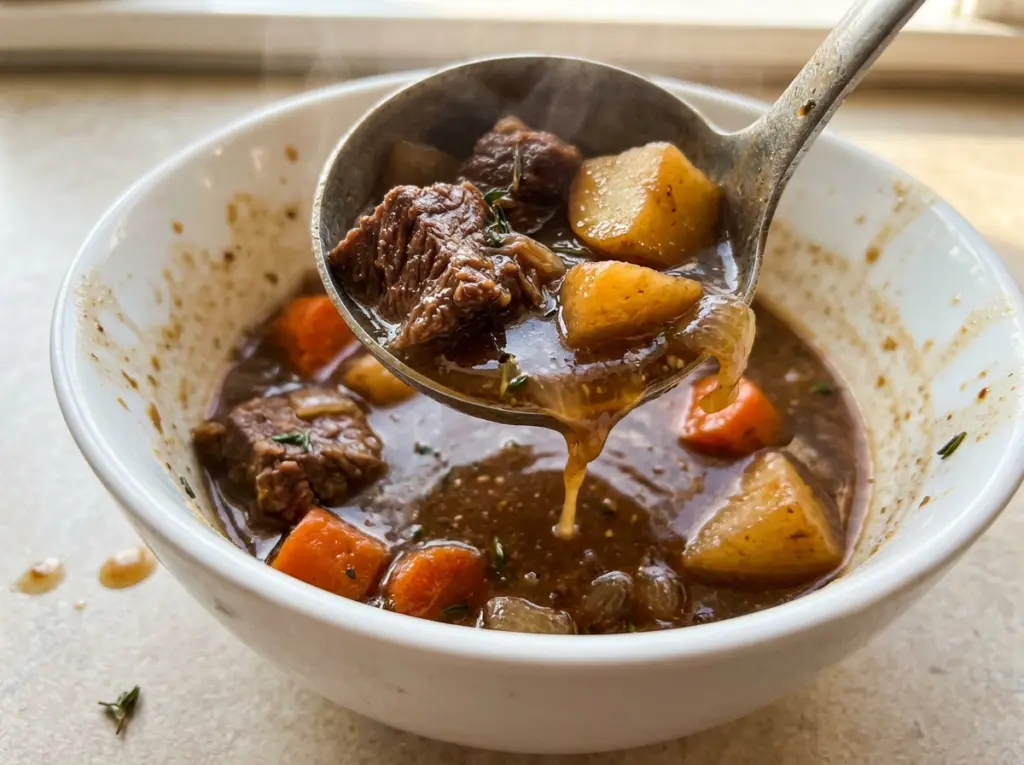
The beef gives a steady sizzle when it hits the skillet, and a few minutes later the browned bits on the bottom are worth every batch. That first sear is where this slow cooker Guinness beef stew starts building its deep, savory flavor. The slow cooker takes over after that, turning chuck, carrots, and potatoes into a hearty stew while you get on with the rest of the day.
I coat the beef with flour before browning it, so the same coating that helps the cubes brown also gives the broth a little body as everything cooks. Guinness brings a roasted, malty note, while tomato paste and the browned bits keep the stout from tasting one-dimensional. At the end, frozen peas go in just long enough to heat through and stay bright. You’ll get tender beef, soft vegetables, and a rich broth made right in the slow cooker.
Kitchen Note
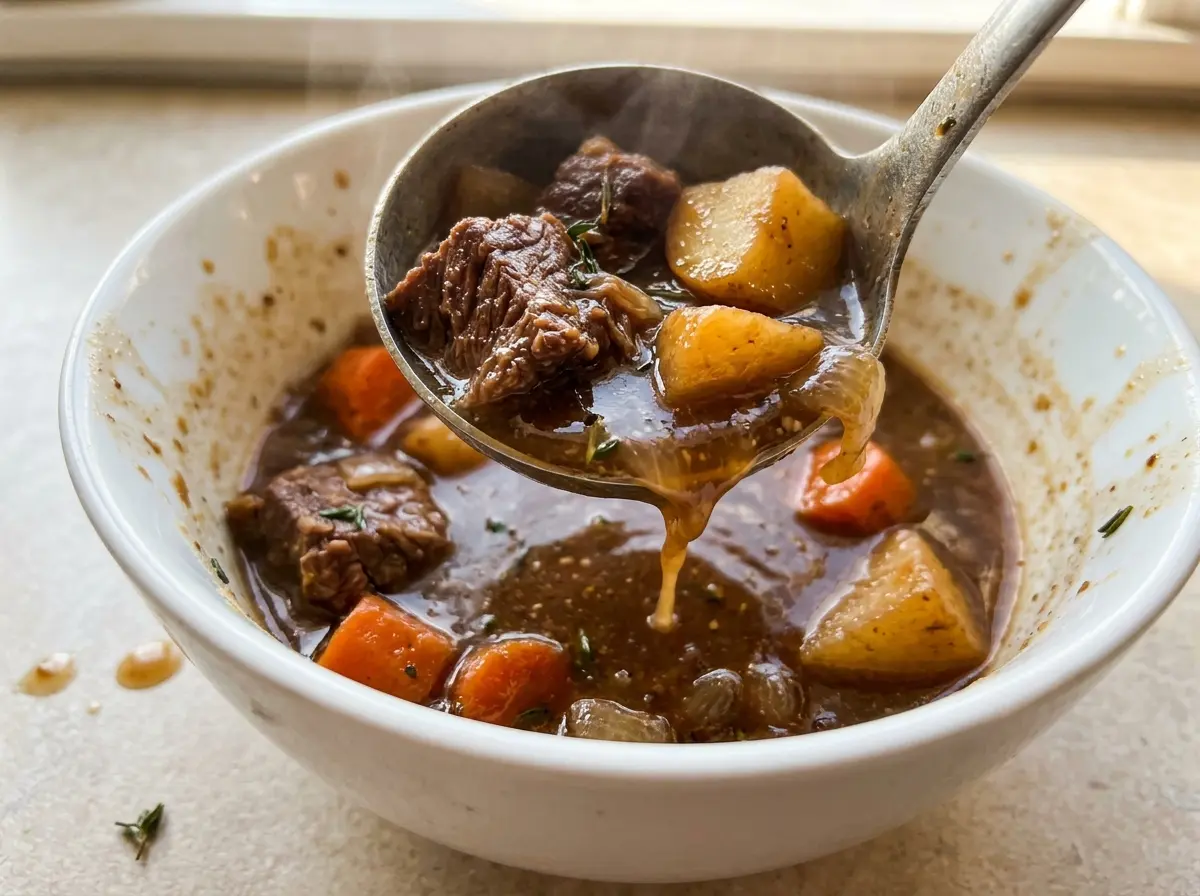
Stir the frozen peas in at the end, not at the start. They need just 15 minutes covered in the hot stew to heat through without spending the whole slow-cooking time in the pot.
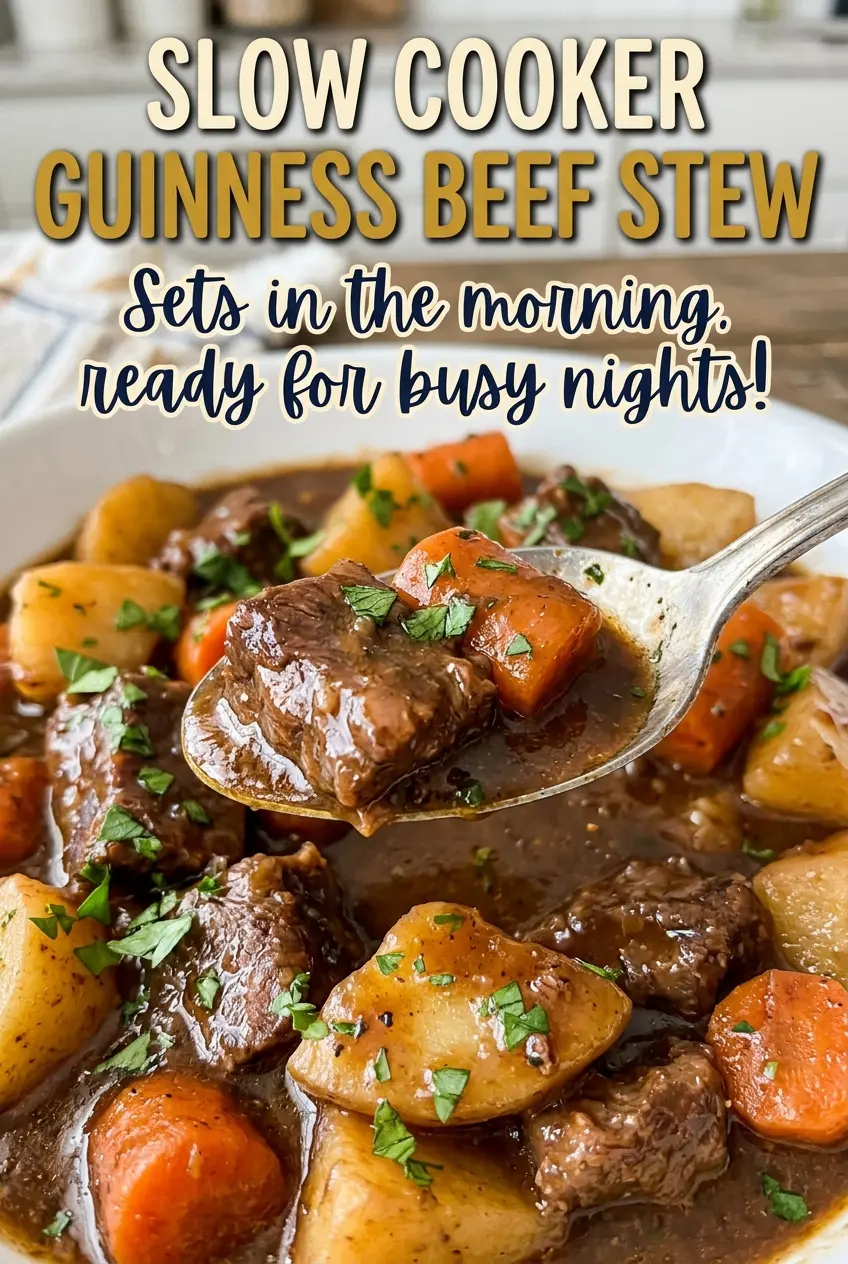
Save this slow cooker Guinness beef stew for a cozy dinner with tender chuck, hearty vegetables, and a stout-rich broth.
Why the Flour-Coated Beef Gives This Stew Its Body
Flour here has two jobs. It clings to the beef before the cubes go into the skillet, helping the surface brown, and then it travels into the slow cooker with the meat. As the broth simmers around the beef and vegetables, that coating helps give the cooking liquid more substance than plain broth would have on its own.
That’s why I toss the beef until the flour, salt, and pepper are spread across the cubes instead of leaving a thick patch in the bottom of the bowl. A heavy clump of dry flour won’t disappear evenly into the stew. An even, light coating is what you want: enough to accompany the beef into the pot without hiding the meat under a dusty layer. It’s a simple bit of prep that means the stew’s texture develops as it cooks, rather than relying on a separate thickener at the end.
The slow cooker also gives the chuck time to soften while the vegetables cook in the same savory liquid. The result should be a stew, not a thin bowl of broth and not a paste-like gravy. Keep that balance in mind when you’re coating the beef and you’ll have a better feel for what each part of the method is doing.
Why Chuck, Guinness, and Yukon Golds Belong in This Pot
- Beef chuck — Chuck has enough connective tissue to become tender during a long, moist cook. Choose pieces with some marbling rather than a very lean cut; lean beef is more likely to turn dry before it reaches the same soft texture.
- Guinness stout — Stout brings roasted, malty depth that plain broth can’t fully match. Use the Guinness called for here for that signature flavor; the beef broth is the practical swap if you need to leave the stout out, but the stew will taste milder.
- Yukon Gold potatoes — These potatoes turn creamy as they cook but still hold their shape in large pieces. Cut them evenly so they soften at about the same pace, and use potatoes that feel firm with no soft or green patches.
- Carrots and frozen peas — Carrots add sweetness and keep their shape when cut into substantial pieces. Frozen peas are convenient straight from the freezer and bring a fresh, sweet finish; there’s no need to thaw them first.
- Tomato paste, onion, and garlic — Tomato paste adds savory depth, while softened onion and briefly cooked garlic build the base around it. A standard can or tube of tomato paste works well; the most useful detail is cooking it with the aromatics before adding the stout.
- Beef broth, Worcestershire, thyme, and bay leaves — Together, these season the liquid without taking attention away from the beef and stout. Use a broth you like the taste of on its own, since it becomes the stew’s cooking liquid; remove the bay leaves before serving.
Build the Stew in the Skillet Before the Slow Cooker Takes Over
Brown the Beef in Manageable Batches
Toss the beef with the flour, kosher salt, and black pepper until the cubes are evenly coated. Heat 1 tablespoon of vegetable oil in a 12-inch skillet over medium-high heat, then brown the beef in batches, turning each piece to brown several sides for about 2 to 3 minutes per side. Give the pieces room in the skillet; crowded beef releases moisture and steams instead of browning. Transfer each batch to a 6-quart slow cooker.
Soften the Aromatics and Wake Up the Tomato Paste
Add the remaining tablespoon of oil and the chopped onion to the skillet. Cook over medium heat for about 4 minutes, stirring until the onion softens, then stir in the minced garlic and tomato paste for 1 minute. The garlic should smell fragrant, not toasted or dark. Pour in the Guinness, scrape the browned bits from the skillet, and let it simmer for 2 minutes.
Let the Slow Cooker Tenderize the Beef
Pour the skillet mixture and beef broth over the browned beef in the slow cooker. Add the Worcestershire sauce, carrots, potatoes, dried thyme, and bay leaves, then cover. Cook on LOW for 8 to 9 hours or HIGH for 4 to 5 hours, until the beef is fork-tender and the vegetables are tender. The cubes should give easily when tested with a fork; if they still feel firm, they haven’t reached that texture yet.
Finish with Peas and Remove the Bay Leaves
Stir the frozen peas into the stew, cover, and cook for 15 minutes, until the peas are hot. The stew will be full and thick with vegetables, so stir gently to avoid breaking the potatoes. Find and discard both bay leaves before serving; they’ve already done their job seasoning the broth.
Two Easy Ways to Adapt the Stout-and-Beef Pot
A gentler, Guinness-free stew
Replace the Guinness with an equal volume of the beef broth already used in the stew. The beef and vegetables still cook the same way, but you’ll lose the stout’s roasted, malty edge and the broth will taste lighter. Keep the rest of the ingredients and cooking method unchanged.
A carrot-forward version without potatoes
Leave out the Yukon Gold potatoes for a stew with fewer starchy bites and more room for the carrots to stand out. The broth will feel less creamy, and the flour-coated beef will still give it some body. Keep the carrot pieces at the same size so they can cook alongside the beef.
Storage and Reheating
- Refrigerator: Refrigerate leftovers within 2 hours and keep them covered for 3 to 4 days. The potatoes will soften a little more as they sit in the broth.
- Freezer: Freeze in airtight containers for up to 3 months. The potatoes may be softer or slightly grainy after thawing, but the beef and broth freeze well.
- Reheating: Warm on the stovetop over medium-low heat, stirring gently, until the stew reaches 165°F throughout. Avoid a hard boil, which can break up the tender beef and potatoes.
Questions That Come Up While the Stew Cooks
Slow Cooker Guinness Beef Stew
Ingredients
Equipment
Method
- Toss the beef with the flour, salt, and pepper until evenly coated.
- Heat 1 tablespoon of the oil in a 12-inch skillet over medium-high heat and brown the beef in batches, turning to brown several sides, about 2 to 3 minutes per side.
- Transfer the beef to a 6-quart slow cooker.
- Add the remaining 1 tablespoon oil and the onion to the skillet and cook over medium heat until softened, about 4 minutes.
- Stir in the garlic and tomato paste and cook for 1 minute.
- Pour in the Guinness, scrape up the browned bits, and simmer for 2 minutes.
- Pour the skillet mixture and beef broth into the slow cooker.
- Add the Worcestershire sauce, carrots, potatoes, thyme, and bay leaves.
- Cover and cook on LOW for 8 to 9 hours or HIGH for 4 to 5 hours, until the beef is fork-tender and the vegetables are tender.
- Stir in the frozen peas, cover, and cook for 15 minutes, until the peas are hot.
- Remove and discard the bay leaves before serving.