
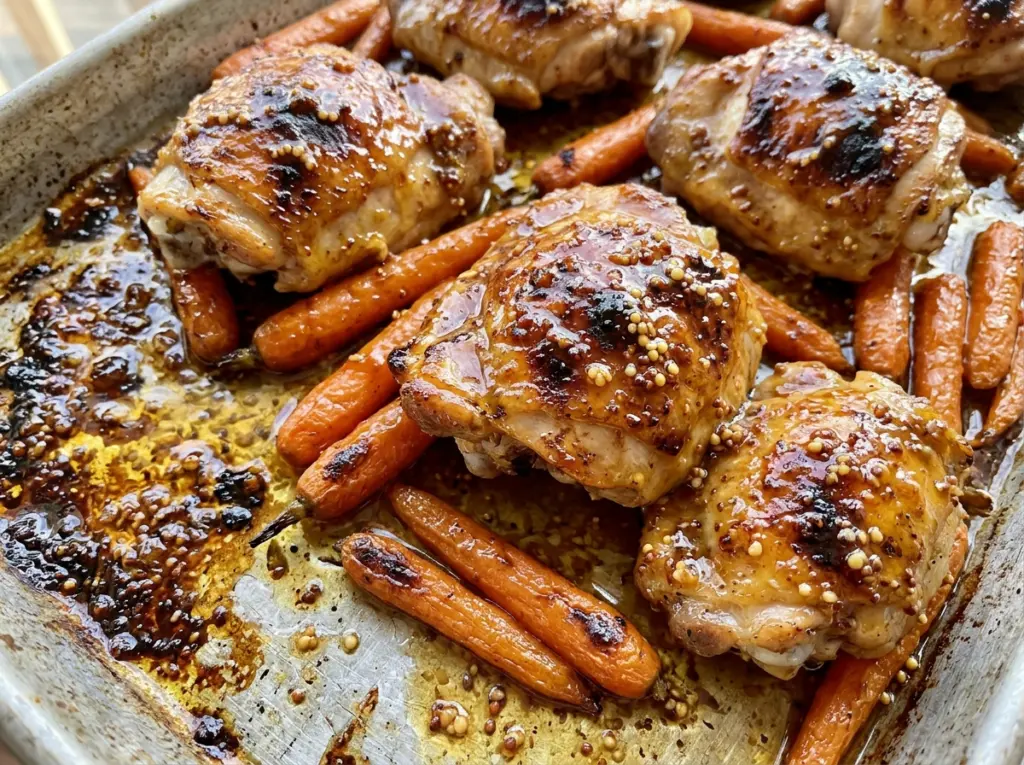
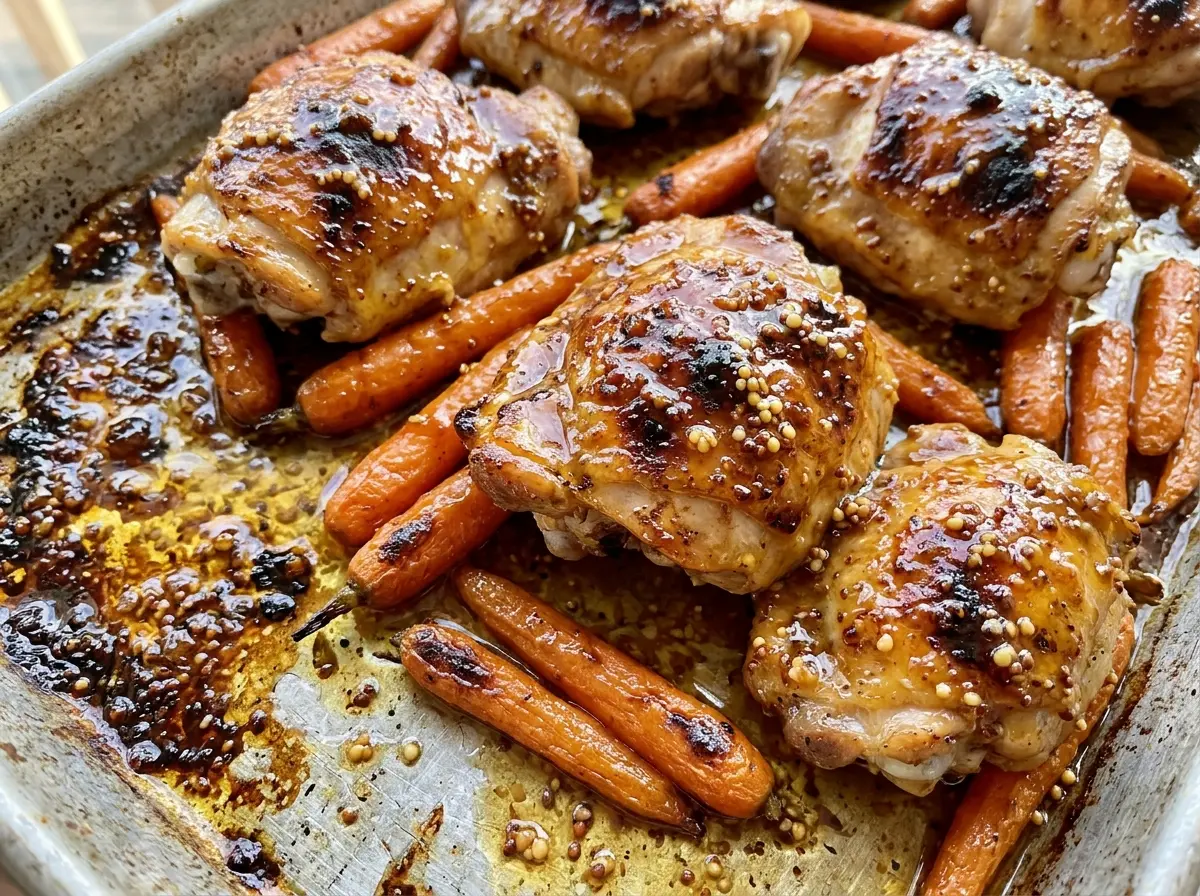
At the 25-minute mark, the chicken has already started to render and the carrots are softening around it. That’s when I brush on the honey mustard glaze. Putting it on later gives the thighs time to roast before the honey hits the heat, so the glaze turns glossy instead of getting too dark. This sheet pan honey mustard chicken with baby carrots is a straightforward dinner, but that small timing choice makes the finish much better.
I like that the carrots roast right alongside the bone-in thighs, so there’s no second pan to manage. Dijon brings a savory bite, honey rounds it out, and a little apple cider vinegar keeps the glaze from tasting heavy. Pat the chicken dry before it goes on the pan, arrange it skin-side up, and let the oven do the steady work. The chicken comes out tender beneath its glazed skin, with sweet carrots ready to serve beside it.
Kitchen Note
Grate the garlic finely so it disappears into the glaze instead of leaving sharp little pieces. I whisk until the honey and mustard look evenly blended before moving on to the pan.
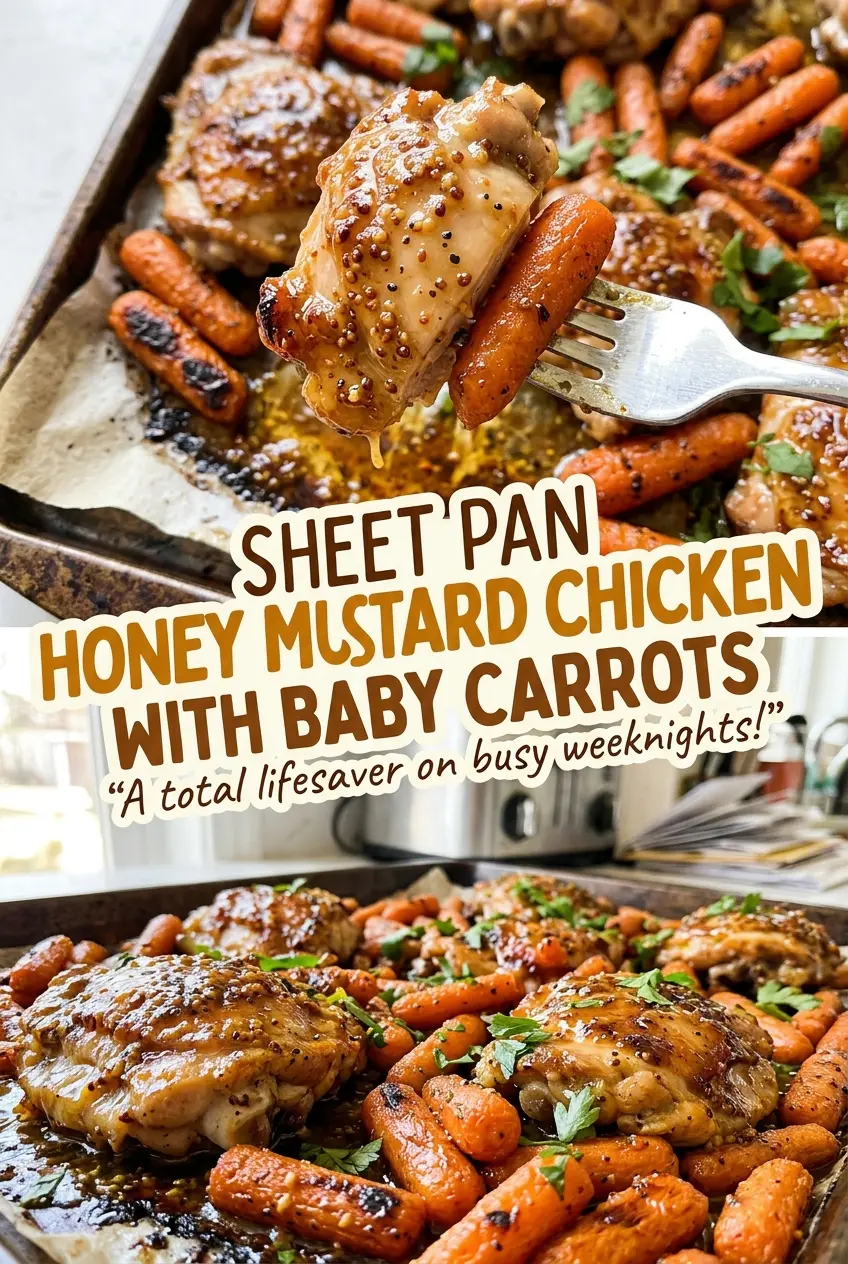
Save this Sheet Pan Honey Mustard Chicken with Baby Carrots for the sticky Dijon glaze and tender carrots, all roasted on one pan.
Why the Honey Mustard Waits Until the Chicken Has Roasted
Honey is what makes this glaze cling and shine, but it also browns quickly in a hot oven. If it goes onto the chicken at the beginning, it spends the entire roast exposed to the heat and can darken before the thighs are cooked through. Giving the chicken its first 25 minutes without glaze lets the skin start rendering and browning on its own.
Then the glaze gets a shorter turn in the oven, where it has time to coat the chicken without taking over the whole cooking process. The Dijon keeps the sweetness in check, while vinegar adds a clean, sharp edge. That balance matters on a rich, skin-on thigh: a thick layer of honey alone would taste cloying, but the mustard and vinegar keep each bite savory.
There’s another practical benefit to glazing partway through: you can see how the chicken is progressing before you brush it. The surface should look roasted, not raw and wet. Spread the glaze across the tops of the thighs, then let the oven finish the job while the carrots become tender in the same pan.
Why Dijon, Honey, and Vinegar Need Each Other in This Glaze
- Dijon mustard — It supplies the glaze’s tang and savory depth, so a standard grocery-store Dijon works well here; there’s no need for a specialty jar. Whole-grain mustard can stand in measure for measure, though the finished glaze will be coarser and its mustard flavor a little less smooth.
- Honey — Honey gives the glaze body and helps it cling to the chicken. A mild, inexpensive honey is fine because mustard and vinegar share the spotlight. Maple syrup works measure for measure as a substitute, with a more pronounced maple note and a slightly different sweetness.
- Apple cider vinegar — Its acidity cuts through the honey and chicken fat. White wine vinegar is the closest easy swap; use it measure for measure. Skip a strongly flavored vinegar, which can pull the glaze away from its balanced mustard-and-honey taste.
- Garlic — Fresh garlic grated finely blends into the glaze and gives it a sharper, fresher aroma than dried garlic. A small pinch of garlic powder works if you’re out of fresh, though the flavor won’t be quite as bright.
- Baby carrots — Their small, even shape makes them convenient to spread around the thighs without peeling or chopping. If you have regular carrots instead, peel them and cut them into pieces about the thickness of baby carrots so they soften at a similar pace.
- Olive oil — A light coating helps the carrots roast instead of drying on the pan. Use an everyday olive oil, not an expensive finishing oil; neutral cooking oil also works measure for measure without adding a noticeable flavor.
- Bone-in, skin-on chicken thighs — The bone-in thighs stay juicy through the roast, while the skin has time to render and take on color. Boneless, skinless thighs are a workable alternative at the same weight, but they cook faster and won’t give you the same browned skin, so rely on a thermometer rather than the listed roasting time.
Roast the Carrots First, Then Let the Thighs Catch Up
Whisk the Tangy Glaze
Whisk the Dijon, honey, apple cider vinegar, and finely grated garlic together in a small bowl until smooth. The mixture should look blended, with no streaks of honey sitting at the bottom. Set it aside while you get the sheet pan ready; it doesn’t need to be cooked separately.
Spread the Carrots Across the Pan
Heat the oven to 425°F. Toss the baby carrots on an 18×13-inch rimmed baking sheet with the olive oil, half the salt, and a quarter of the pepper, then spread them into an even layer. Keeping them spread out gives the heat room to reach the carrots instead of leaving a crowded pile to soften unevenly.
Season and Arrange the Thighs
Pat the chicken dry with paper towels, then nestle the thighs among the carrots with the skin facing up. Season the chicken with the remaining salt and pepper. A dry surface helps the skin roast rather than steam, and keeping the skin exposed lets it brown while the carrots cook underneath and around the meat.
Glaze, Roast, and Rest
Roast the chicken and carrots for 25 minutes before brushing the glaze over the chicken. Return the pan to the oven for another 10–20 minutes, until the thickest part of each thigh reaches 165°F and the carrots are tender. Check a few thighs individually because they can vary in size; don’t judge doneness by color alone. Let the chicken rest on the pan for 5 minutes before serving.
Three Ways to Change the Sheet Pan Without Losing Its Balance
Cut the carrots for more browned edges
Halve the baby carrots lengthwise before tossing them with the oil and seasonings. The cut sides give you more surface area for browning, and the carrots may become tender sooner, so check their texture along with the chicken rather than relying on the clock alone.
Trade the carrots for parsnips
Use an equal weight of peeled parsnips cut into pieces about the same thickness as baby carrots. They bring a more earthy, sweet flavor to the tray. Keep the pieces similar in size so they soften at roughly the same pace, and use tenderness—not color—as your cue.
Make the glaze more pepper-forward
For a little extra peppery warmth, whisk a pinch of the recipe’s already measured black pepper into the glaze instead of putting all of it on the chicken and carrots. The total amount stays the same, but the glaze tastes sharper and more savory.
Storage and Reheating
- Refrigerator: Store leftovers in an airtight container for 3–4 days. The carrots soften as they sit, and the chicken skin loses its crispness.
- Freezer: Freeze cooled chicken and carrots in an airtight freezer container for up to 2 months for best quality. Thaw overnight in the refrigerator; the carrots will be softer after freezing.
- Reheating: Reheat covered in a 325°F oven until hot throughout. The microwave works for a quick portion, but the skin won’t crisp; avoid reheating uncovered for too long, which can dry out the chicken.
Questions That Come Up While This Sheet Pan Dinner Roasts
Sheet Pan Honey Mustard Chicken with Baby Carrots
Ingredients
Equipment
Method
- Whisk the Dijon mustard, honey, apple cider vinegar, and garlic in a small bowl until smooth.
- Heat the oven to 425°F.
- Toss the carrots with the olive oil, 1/2 teaspoon salt, and 1/4 teaspoon pepper on an 18x13-inch rimmed baking sheet, then spread them in an even layer.
- Pat the chicken dry with paper towels and arrange it skin-side up among the carrots.
- Season the chicken with the remaining 1/2 teaspoon salt and 1/4 teaspoon pepper.
- Roast for 25 minutes.
- Brush the glaze over the chicken and roast for another 10–20 minutes, until the thickest part of each thigh reaches 165°F and the carrots are tender.
- Rest the chicken on the pan for 5 minutes before serving.