
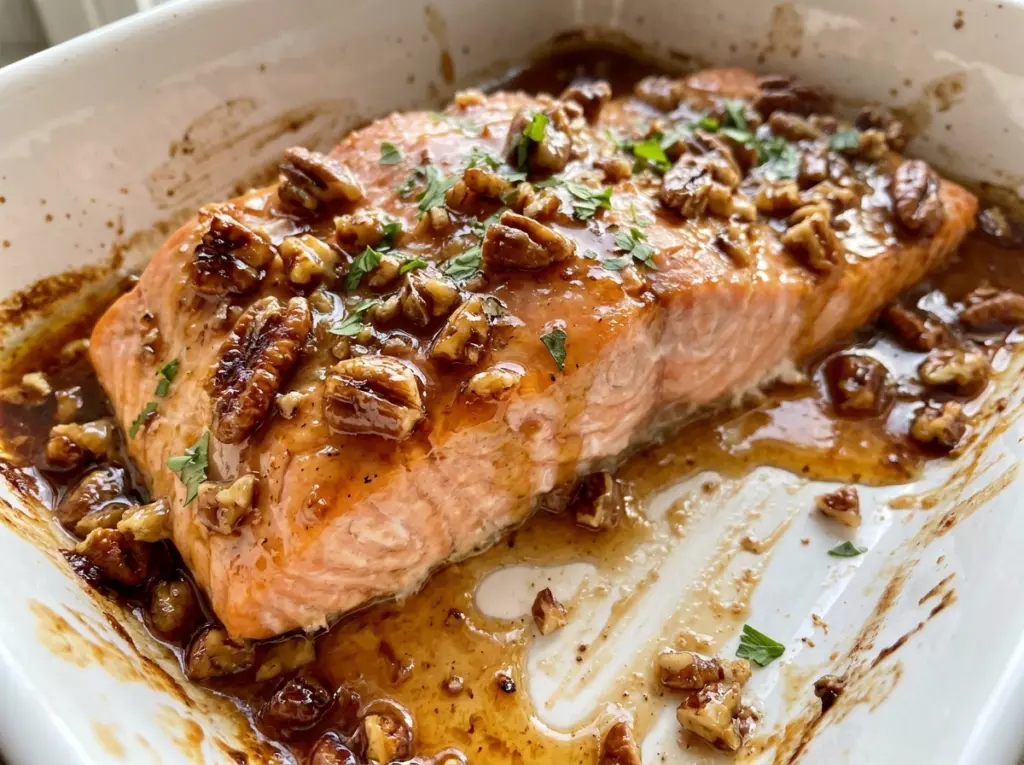
When the chopped pecans get folded into the maple mixture, the glaze turns into more than a sweet coating: every spoonful carries nuts across the top of the salmon. It’s a small detail, but it keeps the topping from ending up in one pile while bare patches bake underneath. These salmon fillets go into the oven skin-side down, with the maple, Dijon, butter, lemon, and pecans layered over the flesh.
I like this approach because the glaze comes together in one bowl, and the oven does the rest. Center-cut salmon gives you a more even piece to bake, while the mustard and lemon keep the maple from tasting one-note sweet. Watch the thickest part of the fish rather than judging by the pecans alone; salmon can go from tender to dry quickly once it’s past the point of doneness. The result is flaky fish with a glossy, nutty top and a bright edge of lemon.
Kitchen Note
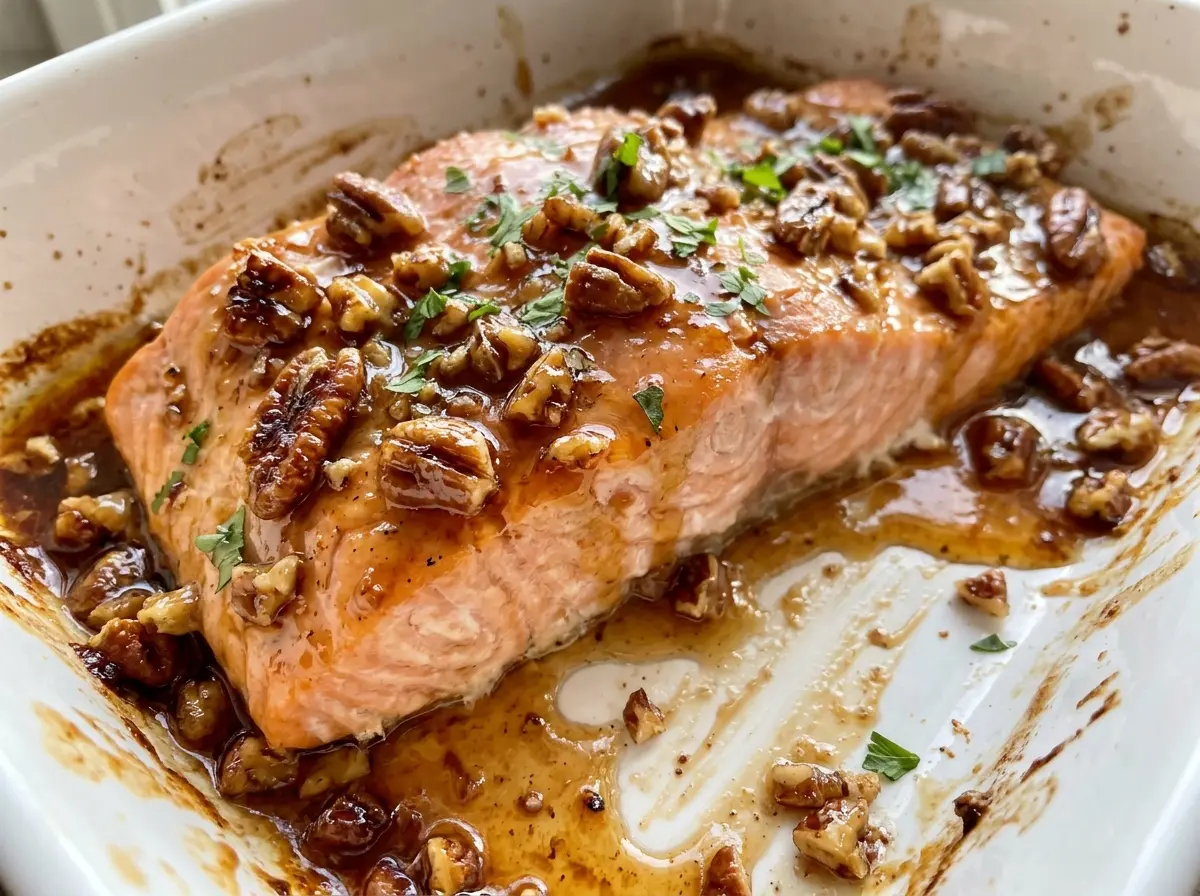
Give the glaze a thorough stir after adding the pecans. The pieces settle as you work, and you want each spoonful to carry both maple mixture and nuts onto the salmon.
Save this easy baked salmon with maple pecan glaze for a weeknight dinner with flaky fish and a sweet-tangy pecan topping.
The Skin Is Doing More Than Holding the Salmon Together
Skin-on salmon is useful here because the fillet stays in one piece while you season it, spoon on the glaze, and lift it from the baking dish. With the skin against the pan, the exposed flesh stays on top where the maple-pecan mixture can coat it. You don’t need to flip the fish, which would send some of that topping sliding into the dish.
The skin also creates a little buffer between the salmon and the hot baking dish. That helps protect the underside as the top cooks, especially with a glaze that contains maple syrup and butter. If you usually buy skinless salmon, this is one recipe where keeping the skin on makes the handling easier. At the table, the flaky fish can be served with the skin still attached or lifted away from it.
Why Pure Maple, Dijon, and Pecans Make This Glaze Work
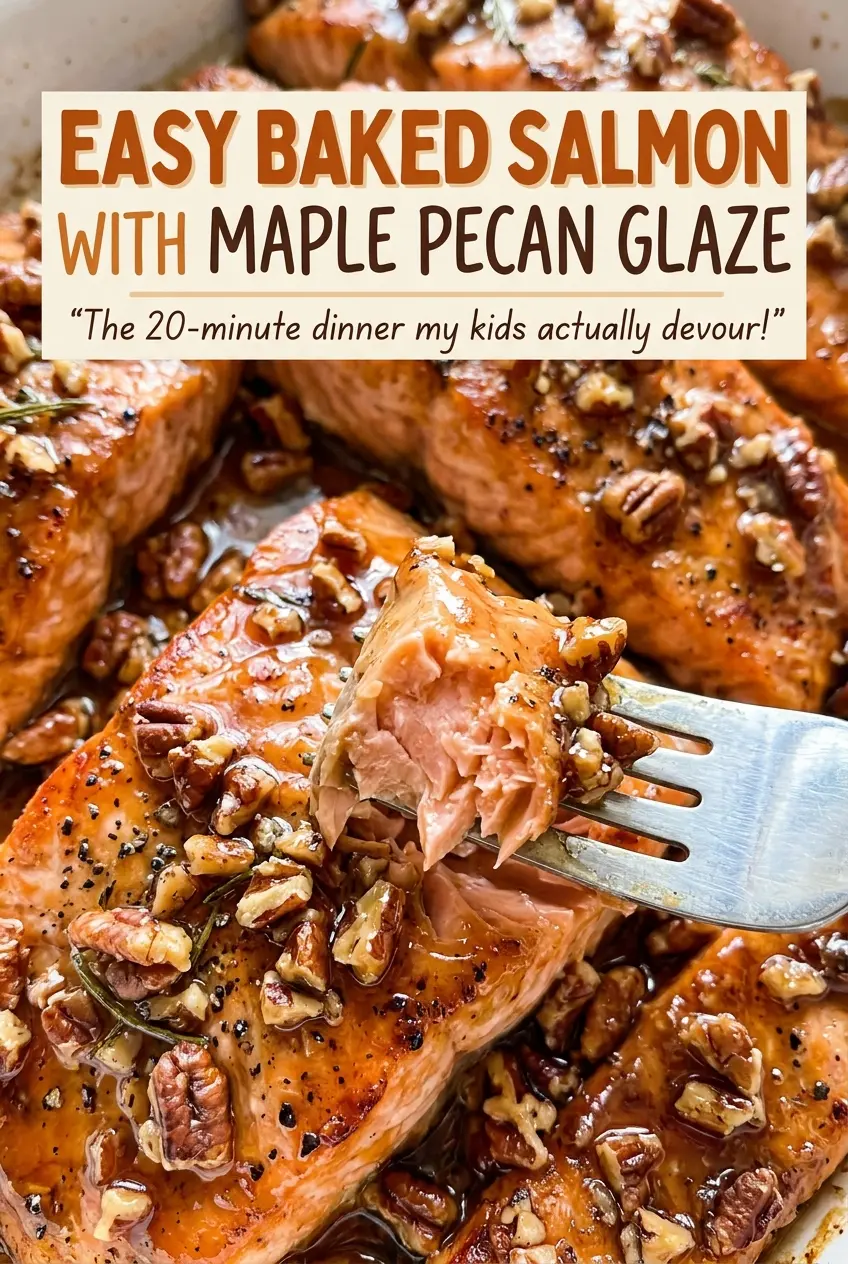
- Center-cut salmon — A thicker, more even fillet helps the fish cook at a steadier pace from end to end. Look for a fresh-smelling piece with moist flesh; the skin should be intact so it can sit against the baking dish.
- Pure maple syrup — It brings a clear maple flavor and coats the fish with a glossy sweetness. Pancake syrup won’t taste the same, so pure maple syrup is worth choosing for this glaze.
- Dijon mustard — Its sharp, savory edge balances the syrup and gives the glaze more depth. A smooth Dijon blends neatly into the liquid ingredients; a grainy mustard would leave a different texture.
- Unsalted butter and lemon juice — Melted butter rounds out the glaze, while lemon keeps it from tasting too rich. Freshly squeezed lemon juice has a bright aroma, though bottled juice works when that’s what you have.
- Pecans — Chopped pecans bring a buttery crunch that works especially well with maple. Fresh pecans taste sweeter and cleaner; if yours smell stale or bitter, replace them rather than trying to hide that flavor in the glaze.
From a Bare Fillet to a Glossy Maple-Pecan Top
Set Up the Salmon Skin-Side Down
Heat the oven to 400°F and lightly oil a 9×13-inch baking dish with the olive oil. Set the center-cut salmon in the dish skin-side down, then season the surface evenly with kosher salt and black pepper. Keep the fillet flat rather than folding a thin end underneath; an even shape bakes more predictably. The skin should sit against the dish, with the flesh facing up.
Stir the Glaze Until the Pecans Are Coated
In a bowl, stir together the maple syrup, Dijon mustard, melted butter, and lemon juice. Mix in the chopped pecans until they’re coated and spread through the glaze. If the pecans gather at the bottom, stir again before topping the fish. The mixture should be loose enough to spoon over the salmon rather than spread like a paste.
Cover the Surface Evenly
Spoon the pecan glaze across the top of the salmon, distributing the nuts instead of leaving them in a central mound. It’s fine if a little glaze runs toward the edges of the fillet. Keep the topping on the exposed flesh; there’s no need to turn the salmon or work glaze underneath it.
Bake to Flaky, Then Let It Rest
Bake for 12–16 minutes, until the thickest part reaches 145°F and the fish flakes easily with a fork. Start checking at the lower end of that range, since fillet thickness affects how quickly the center cooks. If the surface looks glossy but the middle isn’t ready, give it more oven time and check again. Let the salmon rest in the dish for 3 minutes before serving.
Small Changes That Keep the Maple-Pecan Character
Make the Glaze Dairy-Free
Replace the melted butter with the same amount of olive oil. The glaze will still coat the salmon, though it won’t have quite the same rounded, buttery taste.
Leave Out the Pecans
Skip the chopped pecans and spoon the maple-Dijon mixture over the salmon on its own. The topping will be smoother and less crunchy, but the sweet, tangy glaze still works with the fish.
Storage and Reheating
- Refrigerator: Store leftovers in an airtight container for 3–4 days. The pecan topping softens as it sits.
- Freezer: Freeze portions in an airtight container for up to 2 months. The salmon will thaw safely in the refrigerator, though the pecans won’t be as crisp.
- Reheating: Warm covered in a 275°F oven until the center reaches 165°F. Avoid reheating uncovered or at high heat, which can dry out the fish.
Questions That Come Up Before the Salmon Goes in the Oven
Easy Baked Salmon with Maple Pecan Glaze
Ingredients
Equipment
Method
- Heat the oven to 400°F.
- Lightly oil a 9x13-inch baking dish with the olive oil.
- Set the salmon skin-side down in the dish.
- Season the salmon evenly with the salt and pepper.
- Stir together the maple syrup, Dijon mustard, melted butter, and lemon juice.
- Mix in the pecans.
- Spoon the glaze evenly over the salmon.
- Bake for 12–16 minutes, until the thickest part reaches 145°F and the fish flakes easily with a fork.
- Let the salmon rest in the dish for 3 minutes before serving.