
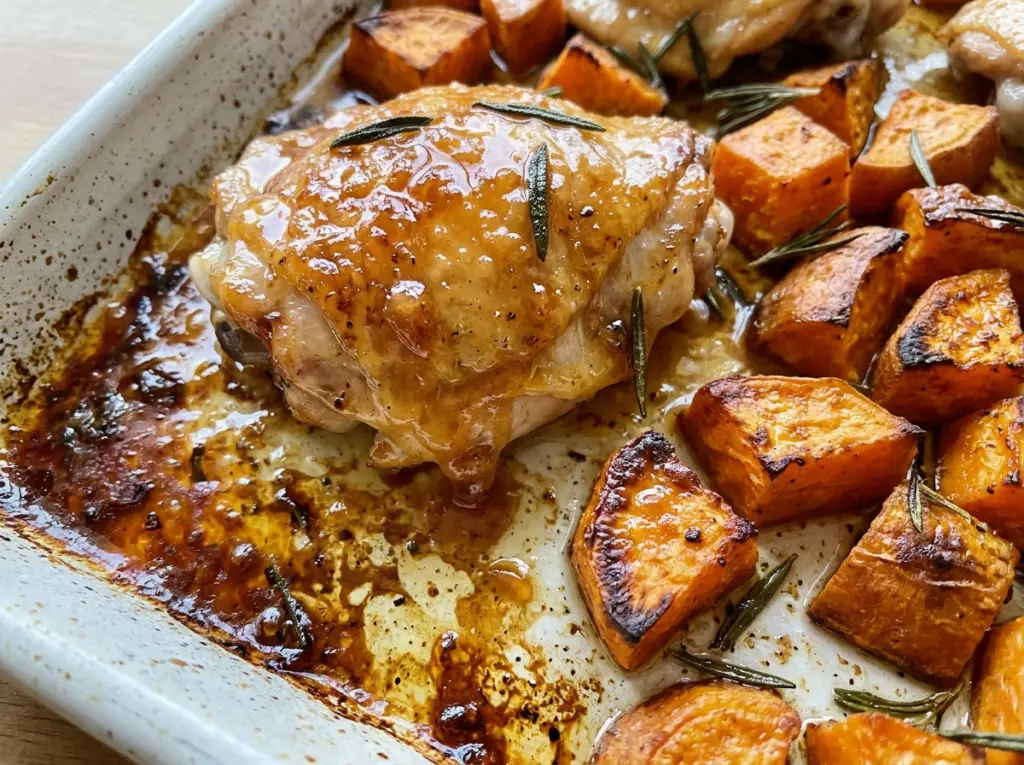
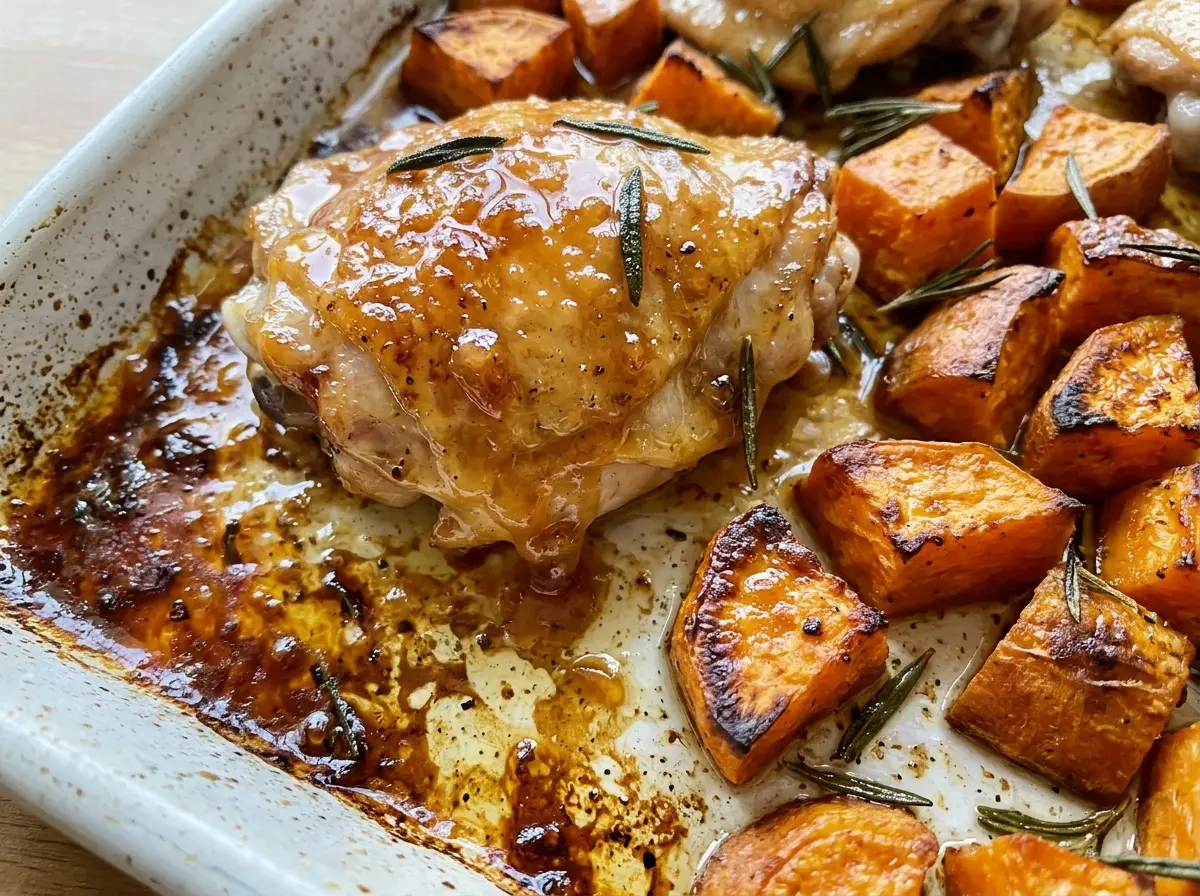
The first thing I look for when I turn the vegetables is a little color on the edges of the sweet potatoes. The chicken stays skin-side up, so it can roast while those cubes and red onion wedges soften around it. This sheet pan apple cider chicken with sweet potatoes is built for that easy, hands-off stretch in the oven.
The glaze gets its own small saucepan rather than going onto the pan with the vegetables. Simmering apple cider first concentrates its flavor, and maple syrup, Dijon, thyme, and butter turn it into something that brushes onto the chicken instead of running across the sheet pan.
I like that the sides and main dish finish together, but the last few minutes are worth staying close for. The glaze turns glossy and lightly sticky, while the sweet potatoes come out tender and the chicken gets a bright, savory-sweet finish.
Kitchen Note
I start the cider reducing once the pan goes into the oven. It simmers while the chicken roasts, so the glaze is ready to brush on without interrupting dinner prep.
Save this sheet pan apple cider chicken for a dinner with tender sweet potatoes and a glossy, savory-sweet cider glaze.
Why the Cider Glaze Needs Its Own Pan
Pouring cider over the chicken and vegetables would seem like the quickest route to apple flavor, but it would leave the sweet potatoes sitting in liquid instead of roasting on the sheet pan. They need dry, hot oven air around their surfaces to soften and pick up color. A separate saucepan gives the cider room to reduce without steaming the vegetables.
As the cider simmers, some of its water cooks away and its apple flavor becomes more concentrated. That matters because the finished glaze is brushed on only near the end: it needs enough body to cling to the chicken through a short final roast. Maple syrup brings a rounded sweetness, Dijon keeps it from tasting flat, and butter smooths everything together. The result is a light coating, not a pan sauce that floods the vegetables.
Keep the glaze off the sweet potatoes when you brush the chicken. That preserves the contrast between the savory, glossy chicken and the simply roasted vegetables, instead of making every bite taste equally sweet.
What the Chicken, Cider, and Sweet Potatoes Each Bring
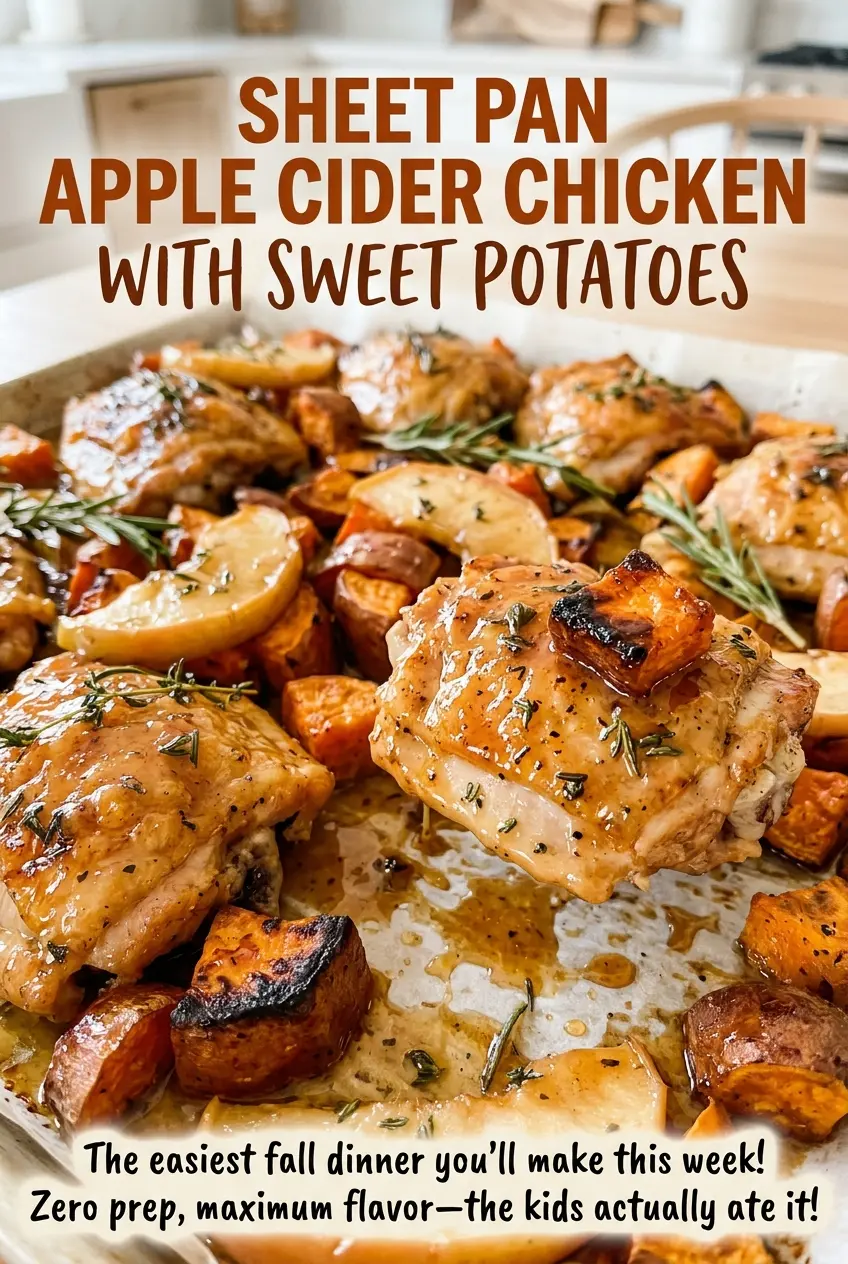
- Sweet potatoes and red onion — The sweet potatoes make a substantial side and hold their shape when cut into 1-inch cubes. Red onion wedges turn mellow as they roast; yellow onion works in the same-sized wedges if you prefer a softer, less sharp onion flavor.
- Bone-in, skin-on chicken thighs — The bone helps the meat stay juicy through the longer roast, and the skin gives the glaze a surface to cling to. Choose thighs that are close in size so they finish at a similar pace. Boneless thighs aren’t a direct timing swap.
- Apple cider — Use regular drinking cider, not apple cider vinegar; vinegar is much sharper and won’t reduce into the same mellow base. Clear apple juice can stand in, though the glaze will taste sweeter and less distinctly like cider.
- Pure maple syrup and Dijon mustard — Maple syrup adds a rounded sweetness, while Dijon brings a little tang and savory depth. Honey can replace the maple syrup in the same amount, with a more floral sweetness; pancake syrup makes the glaze taste less clean.
- Smoked paprika, thyme, and butter — Smoked paprika seasons the chicken with gentle warmth, and dried thyme gives the glaze an earthy edge. Butter makes the finished glaze smooth; for a dairy-free pan, use olive oil in its place, knowing the glaze will be less silky.
- Olive oil — It coats the vegetables so their edges roast rather than dry out. A standard everyday olive oil is fine here; save a delicate finishing oil for another use because its subtler notes won’t stand out after roasting.
Roasting the Chicken While the Cider Reduces
Set Up the Sheet Pan
Heat the oven to 425°F and set out a large, rimmed 18×13-inch sheet pan. Toss the peeled, 1-inch sweet potato cubes and onion wedges on the pan with the olive oil, 1/2 teaspoon of the kosher salt, and 1/4 teaspoon of the black pepper. Spread the vegetables in a single layer so they have room to roast. Pat the chicken thighs dry, season them with the smoked paprika and remaining salt and pepper, then arrange them skin-side up among the vegetables.
Roast Until the Vegetables Are Tender
Roast the pan for 35–45 minutes, turning the vegetables once halfway through. The sweet potatoes should be tender, and the chicken should reach 165°F in the thickest part. If your thighs vary in size, check the thickest one rather than judging by color alone. Keep the chicken skin-side up as it roasts.
Reduce the Cider Into a Brushable Glaze
While the pan roasts, simmer the apple cider in a 1-quart saucepan over medium heat for 12–18 minutes, until it has reduced to about 1/3 cup. The liquid should look visibly concentrated rather than like a full cup of juice. Take the saucepan off the heat, then whisk in the maple syrup, Dijon mustard, dried thyme, and unsalted butter until the glaze is smooth. Removing it from the heat before adding the butter helps the ingredients blend without boiling the finished glaze.
Brush, Finish, and Rest
Brush the glaze over the chicken, keeping most of it on the thighs rather than the vegetables. Return the pan to the oven for 3–5 minutes, until the glaze looks glossy and lightly sticky. The maple syrup can darken quickly at the end, so watch for that sheen instead of letting the glaze roast longer than needed. Rest the chicken for 5 minutes before serving.
Easy Swaps for a Different Table
Make the Glaze Dairy-Free
Replace the butter with olive oil when you whisk the glaze together off the heat. It keeps the glaze dairy-free and brushable, though it won’t have quite the same rounded, buttery finish.
Use Honey for a Different Sweetness
Whisk honey into the cider in place of the maple syrup. The glaze stays sweet and glossy, with a more floral note that pairs well with the thyme.
Trade Red Onion for Yellow
Cut a yellow onion into the same 1-inch wedges and roast it alongside the sweet potatoes. The result is milder and less tangy, while the wedges still soften in the oven.
Storage and Reheating
- Refrigerator: Cool and refrigerate leftovers within 2 hours; keep them covered for 3–4 days. The sweet potatoes soften a little as they sit.
- Freezer: Freeze cooled chicken and vegetables in an airtight container for up to 2–3 months. The chicken freezes well, but the sweet potatoes will be softer after thawing.
- Reheating: Warm leftovers covered in a 325°F oven until hot throughout. Keeping them covered prevents the chicken from drying out; uncovering for the whole reheating time can also make the glaze darken further.
Questions That Come Up With This Cider Chicken
Sheet Pan Apple Cider Chicken with Sweet Potatoes
Ingredients
Equipment
Method
- Heat the oven to 425°F.
- Set out a large, rimmed 18x13-inch sheet pan.
- Toss the sweet potatoes and onion on the pan with the olive oil, 1/2 teaspoon of the salt, and 1/4 teaspoon of the pepper; spread them in a single layer.
- Pat the chicken thighs dry and season them with the smoked paprika and remaining salt and pepper.
- Arrange the chicken skin-side up among the vegetables.
- Roast for 35–45 minutes, turning the vegetables once halfway through, until the chicken reaches 165°F in the thickest part and the sweet potatoes are tender.
- While the chicken roasts, simmer the apple cider in a 1-quart saucepan over medium heat for 12–18 minutes, until reduced to about 1/3 cup.
- Remove from the heat and whisk in the maple syrup, Dijon mustard, thyme, and butter until smooth.
- Brush the glaze over the chicken and roast for 3–5 minutes more, until the glaze is glossy and lightly sticky.
- Rest the chicken for 5 minutes before serving.