
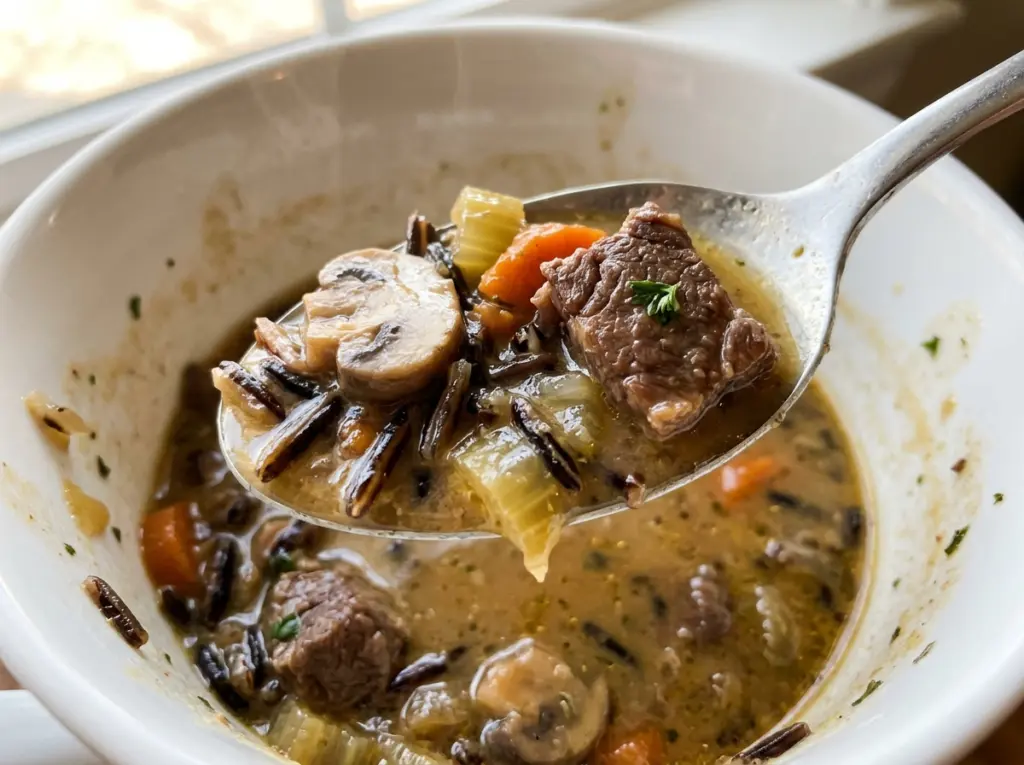
The beef starts to smell different once it has browned: the sharp sizzle settles into a deep, roasty aroma, and the bottom of the Dutch oven is streaked with browned bits. That’s the part I want to keep. For this beef and wild rice soup with mushrooms, those browned bits dissolve into the broth and give the long-simmered beef a head start on flavor.
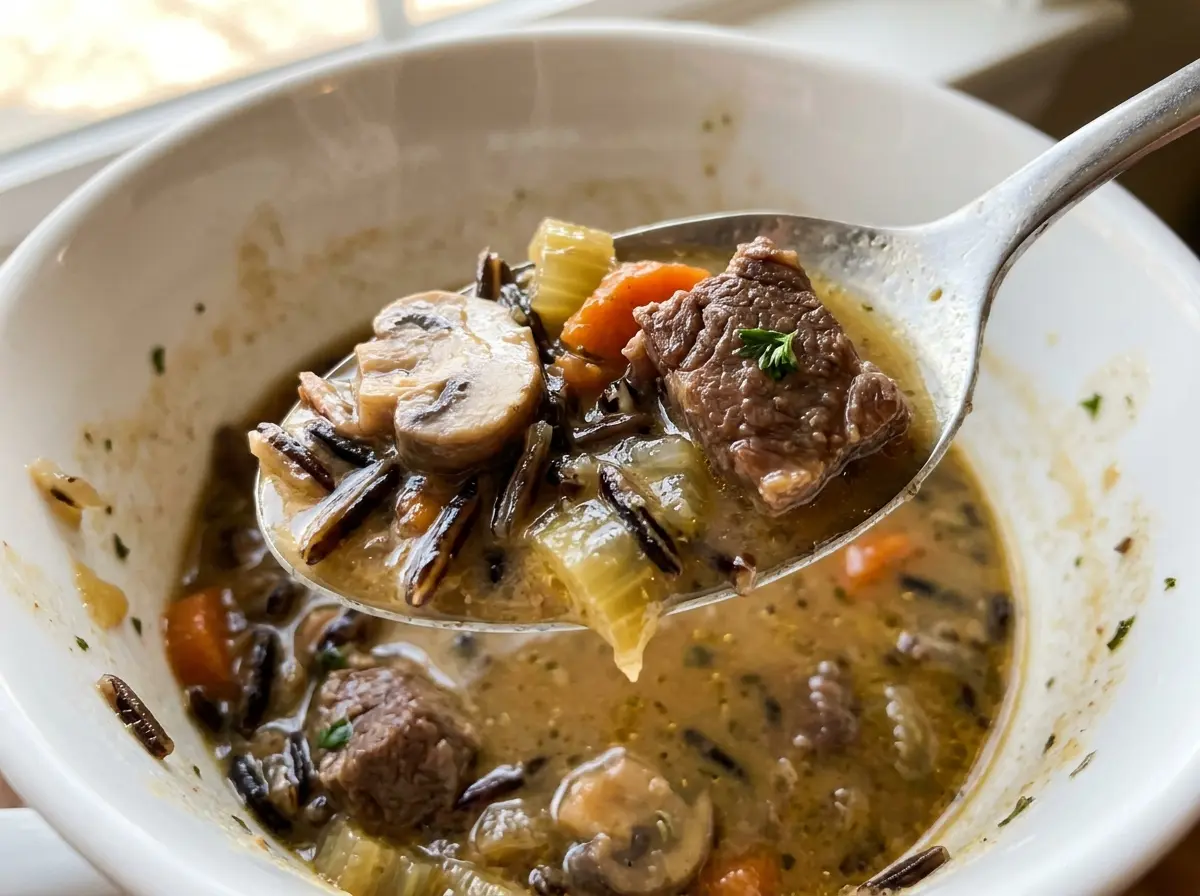
I build the soup in stages instead of adding everything at once. The beef gets time to become tender before the wild rice goes in, and the mushrooms are browned separately so they bring their own savory flavor rather than disappearing into the broth. A little flour thickens the base, while heavy cream goes in at the end for a smooth finish. The result is a hearty, spoon-coating soup with tender beef, chewy wild rice, and mushrooms in every bowl.
Kitchen Note
Pat the beef dry before it goes into the pot. Moisture on the surface gets in the way of browning, and roomy batches give each piece a chance to develop a dark, savory crust.
Save this beef and wild rice soup with mushrooms for a cozy pot of tender beef, earthy mushrooms, and chewy rice in a creamy broth.
Why the Wild Rice Waits Until the Beef Has a Head Start
Wild rice needs a long simmer to soften, but the beef needs an even longer stretch to turn fork-tender. Starting them together would leave the rice sitting in the pot while the beef finishes, and that extra cooking can push the grains past the chewy, distinct texture that makes this soup satisfying. Letting the beef simmer first gives it time to relax before the rice joins in.
The order also helps you manage the soup’s texture. Wild rice releases starch as it cooks and absorbs some of the broth, so adding it later keeps the base from thickening too early. The flour has already given the broth body, and the rice adds more as it cooks. You’re looking for tender grains that still have a little shape, not a pot where the rice has broken down into a paste.
There’s a second payoff: the mushrooms go back in with the rice rather than cooking through the entire beef simmer. They’ve already browned, so they don’t need that extra time to build flavor. Returning them later helps preserve their texture and keeps their earthy taste clear in the finished soup.
What Gives This Soup Its Deep Beef-and-Mushroom Flavor

- Beef chuck — Chuck has enough connective tissue to become tender during a covered simmer, while leaner cuts are more likely to turn dry or firm. Ask for stew meat cut into even pieces, or cut a chuck roast into 1-inch pieces yourself so it cooks at a similar pace.
- Cremini mushrooms — Their earthy flavor holds up beside the beef instead of fading into the broth. Choose firm mushrooms with dry-looking caps; store-brand cremini are a good buy here because browning does most of the work.
- Wild rice — Uncooked wild rice brings a pleasantly chewy bite and a longer cook than quick-cooking rice. Rinse and drain it before it goes into the pot. White rice isn’t a like-for-like replacement because it cooks on a different schedule and won’t give the soup the same texture.
- All-purpose flour and butter — Together, they form the thickening base before the broth is added. Cook the flour for a full minute after stirring it in; that brief step takes away its raw taste. Unsalted butter gives you control over seasoning, and an ordinary grocery-store variety works well.
- Low-sodium beef broth and heavy cream — Low-sodium broth lets the beef, mushrooms, and measured salt stay balanced as the liquid reduces. A store brand is fine. Heavy cream gives the finish its smooth, rich body; there isn’t a direct substitute among the listed ingredients that will keep that same creamy texture.
Building the Soup in Stages for Tender Beef and Distinct Rice
Brown the Beef, Then the Mushrooms
Heat the olive oil in a 6-quart Dutch oven over medium-high heat. Season the dry beef with part of the kosher salt and the black pepper, then brown it in batches for 3 to 4 minutes per side and move it to a plate. Look for deep color on the surfaces; pale gray pieces haven’t developed the same savory base. Cook the sliced mushrooms in the same pot, stirring occasionally, until browned, then transfer them to the plate too.
Cook the Vegetables and Flour
Melt the butter in the Dutch oven, then add the diced onion, carrots, and celery. Cook for 5 to 6 minutes, stirring occasionally, until the onion begins to soften and the vegetables look glossy. Add the minced garlic and cook for 30 seconds; it should smell fragrant, not toasted. Stir in the flour and cook for 1 minute, scraping the bottom so it blends with the butter and vegetables.
Simmer the Beef in Broth
Pour in the beef broth gradually while stirring and scraping up the browned bits stuck to the pot. Add the beef, the remaining salt, thyme, and bay leaf, then bring the liquid to a boil. Cover the pot, lower the heat, and simmer gently for 60 minutes. Keep the heat low enough that the broth bubbles quietly rather than boiling hard.
Cook the Rice, Then Finish with Cream
Stir in the rinsed wild rice and return the browned mushrooms to the pot. Cover and simmer for 45 to 60 minutes, until the rice is tender and the beef gives easily when pressed with a fork. If the grains are still firm, keep simmering until they reach that texture. Stir in the heavy cream and warm the soup over low heat for 2 to 3 minutes without letting it boil, then remove the bay leaf.
Simple Changes That Shift the Soup’s Texture
A Dairy-Free, Brothier Bowl
Replace the butter with olive oil when cooking the vegetables, and leave out the heavy cream. The soup will still have body from the flour and wild rice, but it won’t have the same smooth, rich finish. This change removes the dairy ingredients from the soup.
A Rice-Free Beef and Mushroom Soup
Leave out the wild rice and return the mushrooms to the pot after the beef has simmered. The soup will be thinner and more broth-forward, with the beef and vegetables taking the lead. Since there’s no rice to soften, check that the beef is fork-tender before finishing with the cream.
A Mushroom-Free Pot
Leave out the mushrooms if you want a more straightforward beef-and-rice soup. The broth will lose some of its earthy depth, but the browned beef, thyme, and vegetables still make a savory base. The rest of the cooking sequence stays the same.
Storage and Reheating
- Refrigerator: Refrigerate leftovers within 2 hours and keep them covered for 3 to 4 days. The rice will continue to absorb broth, so the soup will thicken as it sits.
- Freezer: Freeze in airtight containers for up to 2 months. The rice will soften after thawing, and the cream may separate slightly, so the texture won’t be quite as smooth.
- Reheating: Warm it gently in a saucepan, stirring often, until it reaches 165°F throughout. Avoid a hard boil, which can make the cream look grainy and break the smooth texture.
Questions I Get Asked About This Beef and Wild Rice Soup
Beef and Wild Rice Soup with Mushrooms
Ingredients
Equipment
Method
- Heat the olive oil in a 6-quart Dutch oven over medium-high heat.
- Pat the beef dry and season it with 1 teaspoon of the salt and the pepper.
- Brown the beef in batches for 3 to 4 minutes per side, then transfer it to a plate.
- Add the mushrooms to the pot and cook for 5 to 7 minutes, stirring occasionally, until browned.
- Transfer the mushrooms to the plate with the beef.
- Melt the butter in the pot.
- Add the onion, carrots, and celery and cook for 5 to 6 minutes, stirring occasionally.
- Add the garlic and cook for 30 seconds.
- Stir in the flour and cook for 1 minute.
- Gradually stir in the beef broth, scraping up any browned bits.
- Add the beef, remaining 1 teaspoon salt, thyme, and bay leaf.
- Bring the soup to a boil.
- Cover, reduce the heat to low, and simmer for 60 minutes.
- Stir in the wild rice and return the mushrooms to the pot.
- Cover and simmer for 45 to 60 minutes, until the rice is tender and the beef is fork-tender.
- Stir in the heavy cream and warm over low heat for 2 to 3 minutes without boiling.
- Remove the bay leaf before serving.