
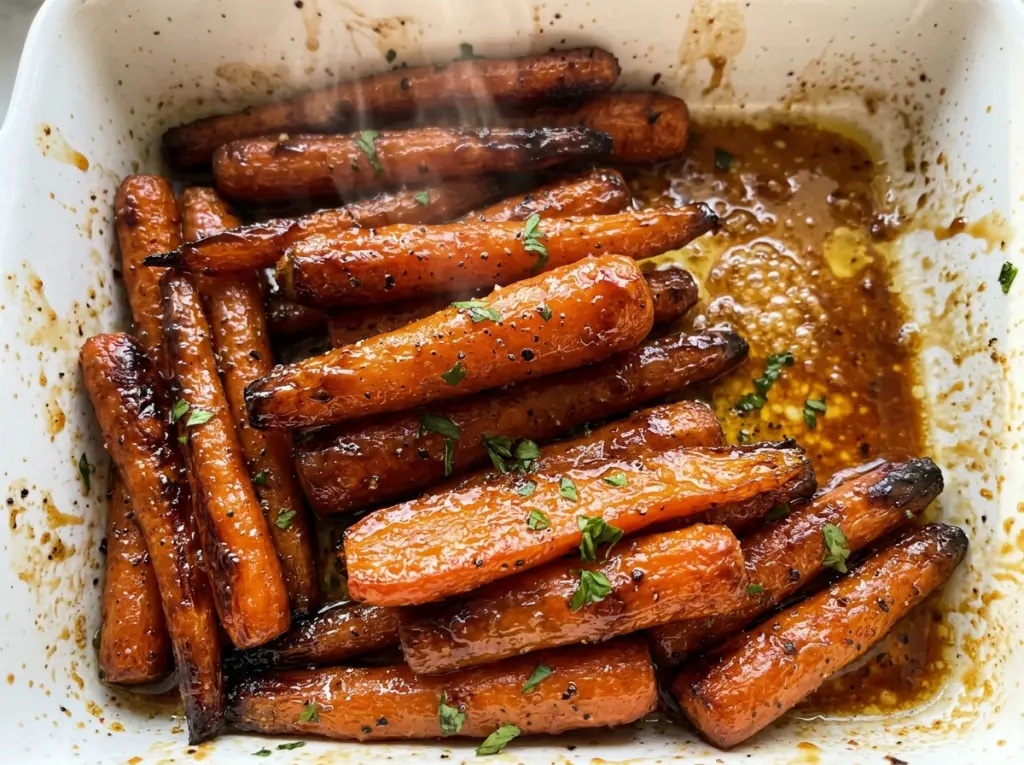
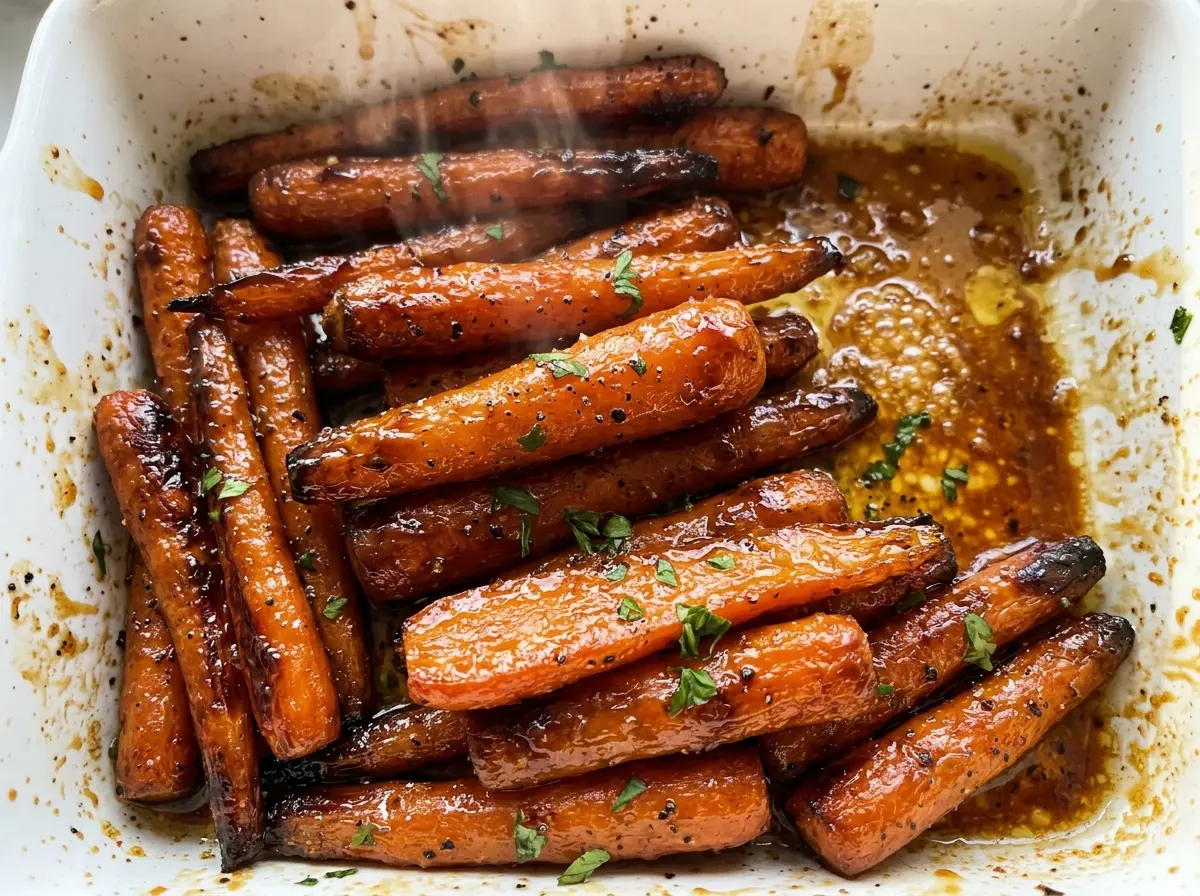
When the baking sheet comes out, the brown sugar has melted into a thin glaze, and the carrot edges are turning bronze. The centers stay tender while the browned bits add a little chew, which is exactly what I want from roasted carrots. I used to think the sugar would make them candy-sweet, but the olive oil and black pepper keep the flavor balanced.
These roasted brown sugar carrots go straight from a large bowl to a hot oven, so there’s no separate glaze to cook and no extra pan to wash. I toss everything until the coating looks even, then give the carrots room on the baking sheet. Stirring once halfway through helps them brown on more than one side, and the finished carrots come out glossy, tender, and lightly caramelized.
Kitchen Note
Keep the carrot pieces close to the same size, especially around the thick ends. Thin pieces can soften before the larger ones are tender, so a few seconds spent cutting evenly pays off in the finished pan.
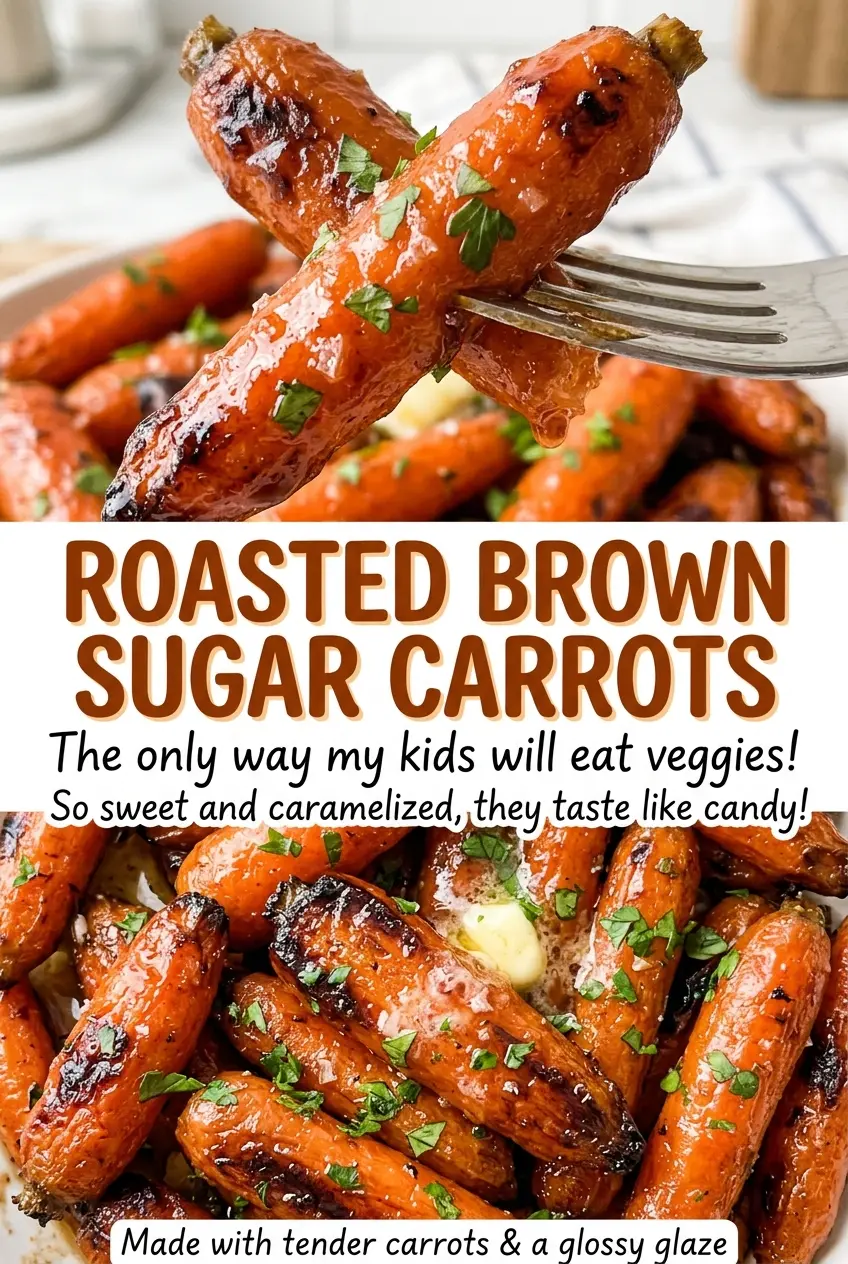
Save these roasted brown sugar carrots for an easy side with tender centers and caramelized edges.
Why Brown Sugar Works Better on the Carrots, Not in a Separate Glaze
Brown sugar can look like an odd match for a savory side, but roasting gives it a different job than it would have in a stovetop sauce. It melts over the carrots as they roast, adding a light coating and deepening the browned edges. The olive oil helps the coating spread, while salt and pepper keep each bite from tasting one-note sweet.
There’s no need to cook the sugar into a syrup first. Tossing it with the carrots before roasting lets the coating cling to their surfaces from the start. As the carrots soften, their own moisture keeps the sugar from behaving like dry candy, while the hot oven encourages the edges to brown. The balance depends on an even coating rather than a thick layer of sugar.
Room on the pan matters for that same reason. Carrots packed tightly together release moisture into a crowded space and are more likely to soften before their surfaces brown. A single layer gives the heat access to the edges, so you get tender carrots with browned spots instead of a uniformly soft, pale pile. If your sheet won’t hold them in one layer, roast them in batches.
What Carrots, Brown Sugar, and Olive Oil Each Bring to the Pan
- Carrots — Firm carrots with smooth skins give the best texture and a clean, sweet flavor. Peeling and trimming them keeps the pieces tidy, while cutting them into similar lengths helps them finish together. For a more earthy version, replace up to half the carrots with parsnips and cut them to a similar size; check for tenderness as they roast.
- Brown sugar — Packed brown sugar brings sweetness and a gentle molasses note that plain white sugar won’t match. If you’re out, maple syrup can stand in at the same volume; it gives the carrots a thinner, wetter coating and a more distinct maple flavor. Toss thoroughly so it doesn’t collect in one sticky patch on the pan.
- Olive oil — The oil carries the sugar over the carrots and helps them roast rather than dry out. A basic everyday olive oil works well here; a delicate, expensive bottle won’t make a meaningful difference once roasted. Avocado oil can replace it at the same volume for a more neutral taste.
From Even Coating to Caramelized Edges
Get the Oven Hot First
Set the oven to 425°F before you start coating the carrots. A fully heated oven gives the pan a consistent start and helps the edges brown during the roast. Use a large rimmed baking sheet so the carrots can spread out without crowding. If the oven is still warming when the pan goes in, the carrots may soften before they get much color.
Coat Every Piece in the Bowl
Put the carrots in a large bowl with the olive oil, brown sugar, kosher salt, and black pepper. Toss until the oil and sugar are distributed across the pieces, scraping any coating from the bottom of the bowl. The carrots should look lightly glossy rather than buried under a heavy clump of sugar. Uneven coating can leave some pieces sweet and browned while others stay comparatively plain.
Give the Carrots Their Own Space
Spread the coated carrots in a single layer on the rimmed baking sheet. Leave visible gaps where you can; a tight mound traps steam and limits browning. Keep the sugar-coated pieces on the pan rather than pouring in a puddle of leftover coating from the bowl. The layer should look even, not piled up at the center.
Roast, Stir, and Check the Edges
Roast for 25 to 35 minutes, stirring halfway through. The carrots are ready when they’re tender and browned at the edges, so use those cues along with the timer. If they’re still firm, give them more time and check again; oven performance and the thickness of the pieces affect how quickly they soften. Stir gently so the coating stays on the carrots instead of being left behind on the sheet.
Simple Ways to Change the Batch Without Losing the Roasted-Carrot Feel
Use a mix of colorful carrots
Swap in rainbow carrots for some or all of the orange ones, keeping the pieces similar in size. The brown sugar coating and roasting method stay the same, while the mix of colors makes the finished pan look more varied. Their flavor remains carrot-forward, with small differences from one variety to another.
Make a smaller batch for three
Halve each ingredient to make about three servings. Keep the carrots in a single layer on the baking sheet rather than stacking them in a smaller dish; the extra space still helps the edges brown. Start checking within the listed roasting window because a smaller amount may cook sooner.
Choose brown sugar suitable for a vegan diet
The ingredients are plant-based, but some people following a strict vegan diet prefer brown sugar labeled vegan because refining practices vary. Use that in place of regular brown sugar without changing the amount or method. The carrots keep the same sweet, lightly molasses-like finish.
Storage and Reheating
- Refrigerator: Store leftovers in an airtight container for 3 to 4 days. The carrots soften as they sit, and the browned edges lose some of their crispness.
- Freezer: Freeze in a sealed container for up to 2 months. Thawed carrots will be softer, so freezing is best when texture matters less than having a ready-to-use side.
- Reheating: Warm them in a 350°F oven until heated through, or microwave in short bursts. Avoid returning them to a very hot oven for too long; the sugar can darken before the centers warm.
Questions That Come Up When Roasting Brown Sugar Carrots
Roasted Brown Sugar Carrots
Ingredients
Equipment
Method
- Preheat the oven to 425°F.
- Toss the carrots with the olive oil, brown sugar, salt, and pepper in a large bowl until evenly coated.
- Spread the carrots in a single layer on a large rimmed baking sheet and roast for 25 to 35 minutes, stirring halfway through, until tender and browned at the edges.