
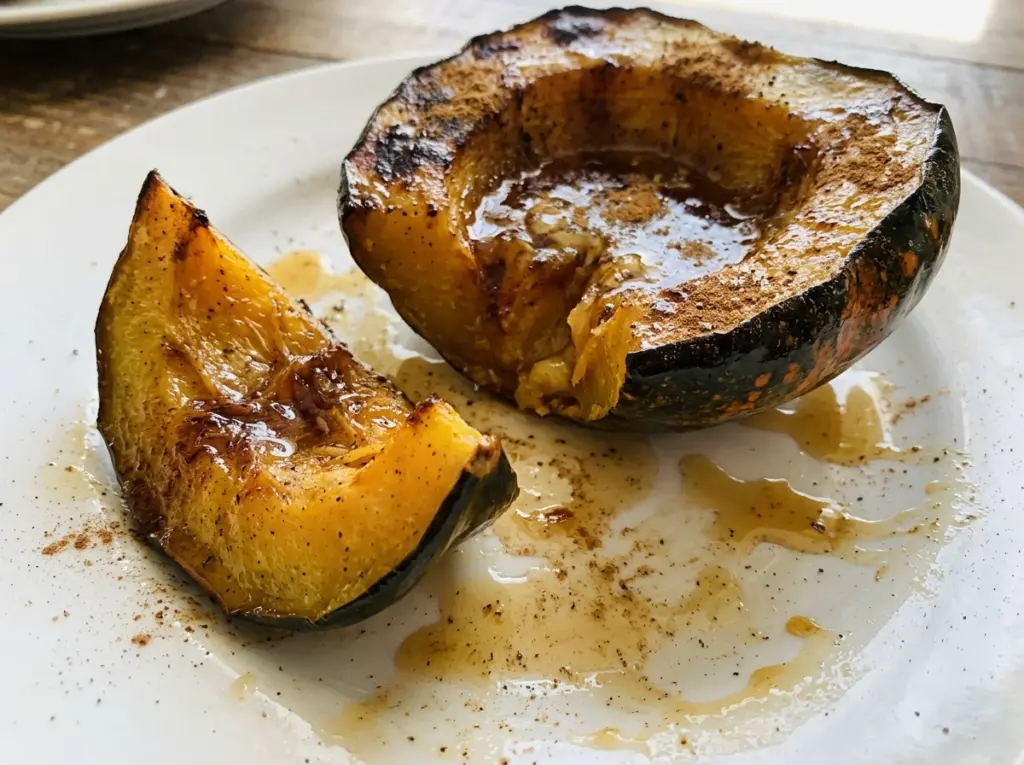
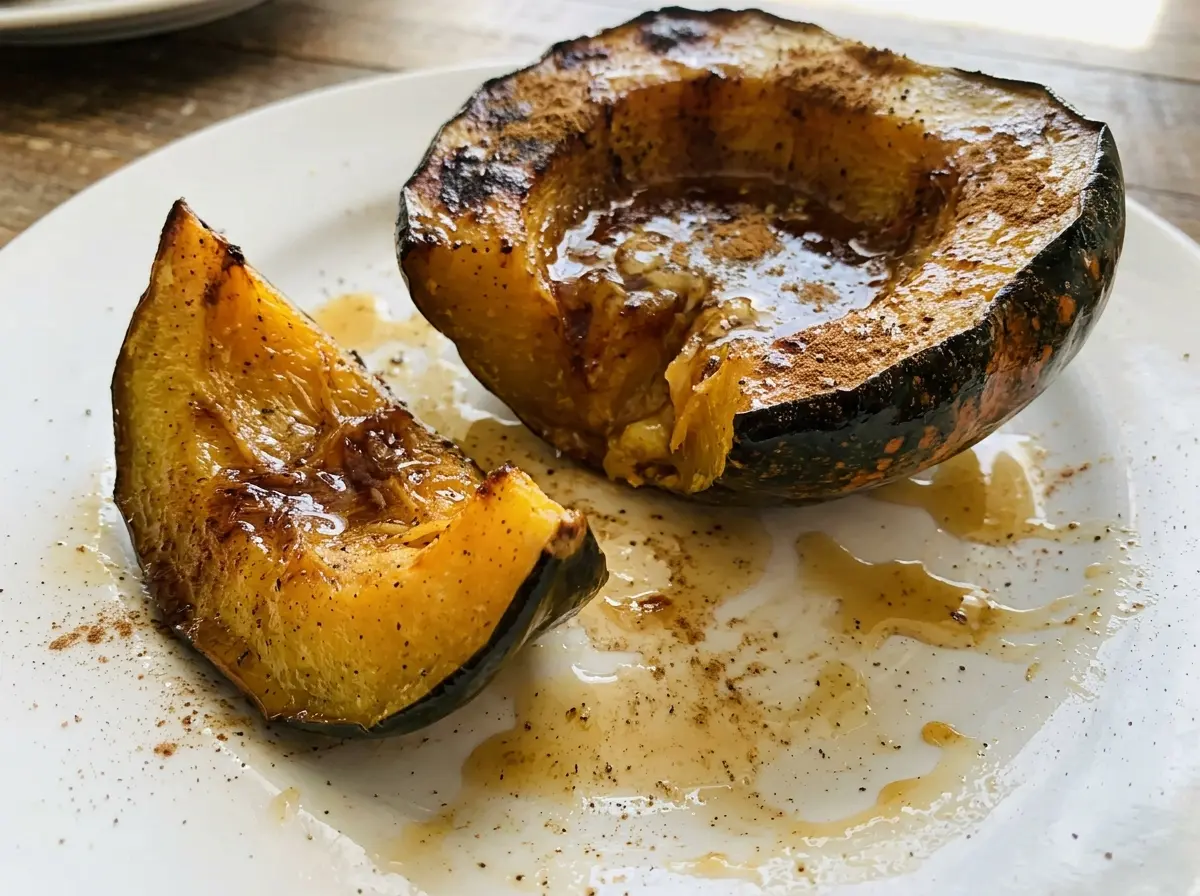
The cut faces start to shine as the maple butter warms in the oven, while the squash softens around its naturally sweet, nutty flesh. That contrast is what I want from roasted acorn squash with maple butter and cinnamon: a tender center, a little browning at the edges, and a buttery glaze that gathers in each half.
I keep the squash in halves instead of cutting it into wedges. The cavity gives the maple mixture somewhere to settle, and the wide cut surface roasts alongside it rather than getting lost in a pile of pieces. With just a few ingredients and one rimmed baking sheet, this makes a cozy side dish without a separate sauce to manage.
Kitchen Note
Give the squash its full five-minute rest before serving. The flesh is tender straight from the oven, and that short pause makes the halves easier to handle without losing the warm maple butter in the cavities.
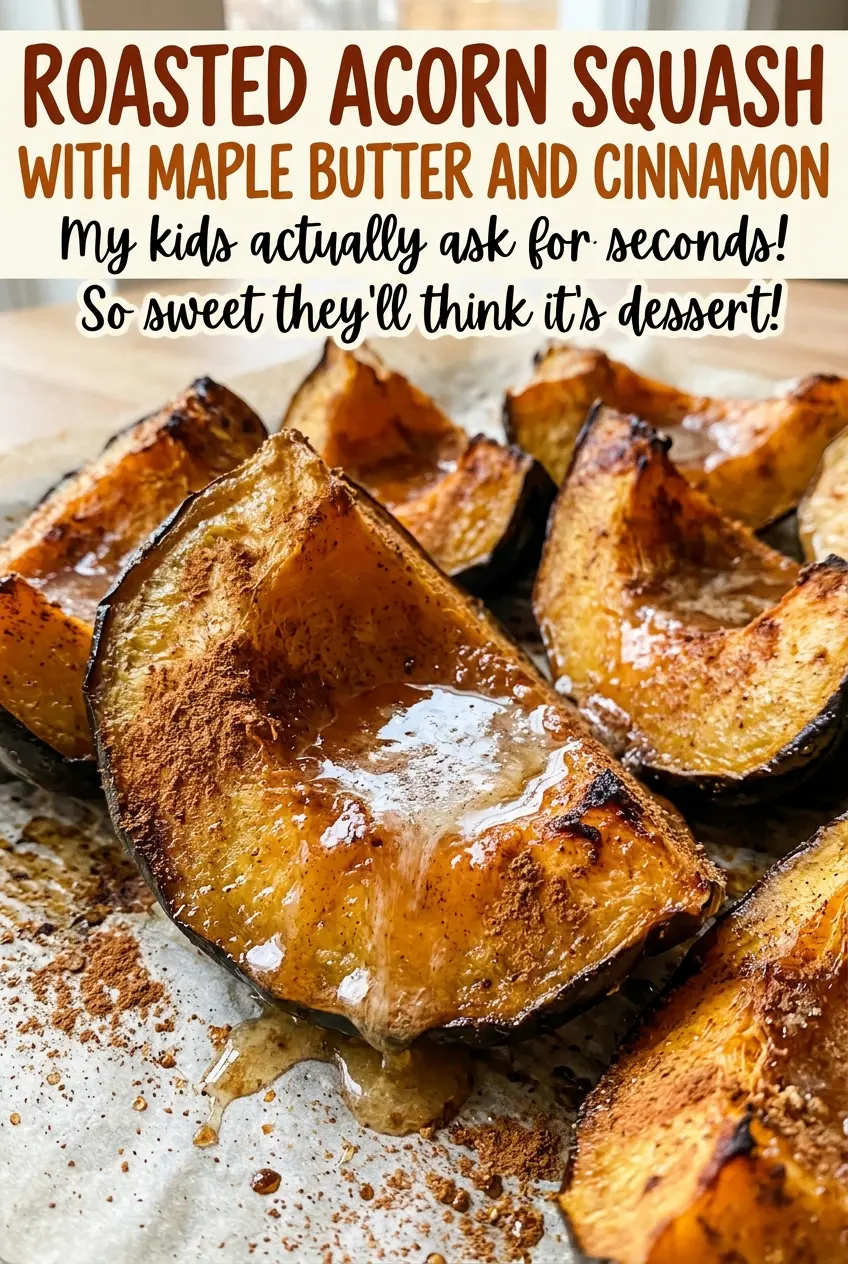
Save this roasted acorn squash with maple butter and cinnamon for a simple side with tender centers and a warm, buttery maple glaze.
Why Acorn Squash Belongs Cut-Side Up, Not in Wedges
Acorn squash has a useful little bowl built right into it. Once the seeds and strings are out, the hollow center holds some of the maple-butter mixture while the cut surface stays exposed to the oven. That gives each serving both the glazed cavity and a broad piece of tender squash, rather than letting the topping run off a narrow wedge.
Keeping the halves intact also makes the different parts of the squash easy to judge. The thinner flesh near the rim softens before the thicker shoulder, so a fork test in the thickest part tells you more than judging the color at the edge. If you cut the squash into pieces, their sizes and thicknesses vary, and they won’t all finish at the same pace. For this preparation, halves are a practical shape as well as a pretty one: they hold the cinnamon-maple butter in place and come to the table ready to serve.
Pure Maple Syrup Is What Gives This Glaze Its Character
- Acorn squash — Choose squash that feel firm and heavy for their size, without soft spots. The recipe is sized for medium squash around 1 1/2 pounds each; squash that differ a lot in size won’t necessarily become tender at the same time.
- Pure maple syrup — Its woodsy sweetness pairs naturally with squash and cinnamon. Use pure maple syrup rather than pancake syrup, which has a different flavor and doesn’t give the glaze the same maple character. Grade and price are less important than choosing a syrup you like the taste of.
- Unsalted butter — Butter carries the syrup and cinnamon across the cut flesh and gives the glaze a rounded, rich taste. Unsalted butter also leaves the seasoning in your control. A fresh stick from the refrigerator section is fine; there’s no need for a specialty butter here.
- Ground cinnamon — Cinnamon adds warmth without turning the squash into a dessert. If the jar smells faint or dusty when you open it, the finished glaze will taste muted; a recently opened jar gives a clearer aroma.
From Split Squash to Tender, Glossy Halves
Set Up the Oven and Pan
Heat the oven to 400°F and line a rimmed baking sheet with parchment paper. The rim gives you a little protection if maple butter slides over an edge, while the parchment helps keep the glaze from sticking to the pan. Let the oven finish heating before the squash goes in so the roasting time starts in a properly hot oven.
Halve and Clean the Squash
Cut each squash lengthwise into halves, then scoop out the seeds and strings. Scrape until the cavity is clean, but don’t dig into the firm flesh around it. Set the halves cut side up on the lined sheet; keeping them level helps the glaze stay where you brush it.
Stir Together the Maple Butter
Melt the butter, then stir in the pure maple syrup, ground cinnamon, and kosher salt. Stir until the cinnamon is spread through the butter rather than sitting in a dry clump. Brush the mixture over each cut surface and down into the cavities, where it will coat the squash as it roasts.
Roast Until a Fork Slides In Easily
Roast for 40 to 50 minutes, until a fork pierces the thick flesh easily. The exact point depends on the squash, so use tenderness rather than browning alone as your cue; the rims may look browned before the center is ready. Rest the halves for 5 minutes before serving, keeping them cut side up so the warm glaze stays in the cavity.
Two Simple Swaps for a Different Table
Make It Dairy-Free With Unsalted Plant-Based Butter
Replace the unsalted butter with the same amount of unsalted plant-based butter and prepare the glaze the same way. The squash stays tender and the maple-cinnamon flavor remains familiar, though the glaze may taste a little less rich depending on the brand.
Trade the Cinnamon for Ground Ginger
Use an equal amount of ground ginger in place of the cinnamon for a brighter, gently peppery warmth. The maple still complements the squash, but the result tastes less like a classic cinnamon-sweet side and more ginger-forward.
Storage and Reheating
- Refrigerator: Refrigerate leftovers within 2 hours and keep them covered for 3 to 4 days. The flesh softens a little as it chills.
- Freezer: Freeze cooled halves tightly wrapped for up to 3 months. The squash will be softer after thawing and may not hold its shape as neatly.
- Reheating: Warm a half in the microwave until hot, or heat it covered in the oven. Avoid leaving it uncovered for a long reheat; the cut surface can dry before the center warms through.
Questions That Come Up While Roasting Acorn Squash
Roasted Acorn Squash with Maple Butter and Cinnamon
Ingredients
Equipment
Method
- Heat the oven to 400°F.
- Line a rimmed baking sheet with parchment paper.
- Halve each squash lengthwise and scoop out the seeds and strings.
- Place the squash halves cut side up on the baking sheet.
- Melt the butter.
- Stir in the maple syrup, cinnamon, and salt.
- Brush the mixture over the cut surfaces and into the cavities.
- Roast for 40 to 50 minutes, until the squash is tender when pierced with a fork.
- Rest for 5 minutes before serving.