
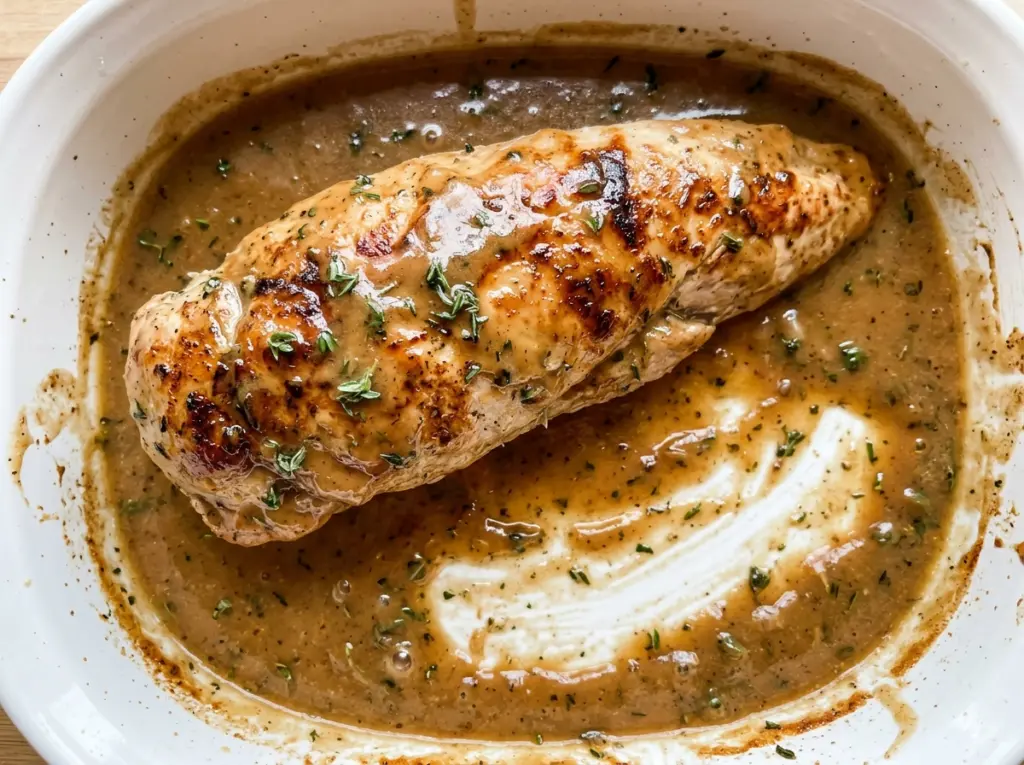
The instant-read thermometer earns its place with turkey tenderloin: the roast is lean, and a few minutes too long can take it from juicy to dry. I watch the thickest part rather than treating the clock like a promise, since tenderloins can vary in shape. This Easy Thanksgiving Turkey Tenderloin with Herb Gravy makes a smaller holiday-style centerpiece, with poultry seasoning on the meat and a smooth herb gravy beside it. The slices stay the focus; the gravy brings sage and thyme without burying the turkey.
I like that the turkey can rest while I finish the gravy, so I can serve a warm meal without carving a whole bird. The butter-and-flour base gives the broth enough body to cling to each slice, while the roasting juices bring a savory note that broth alone can’t match. It feels like a holiday dinner scaled for four: tender turkey under a spoonful of sage-and-thyme gravy.
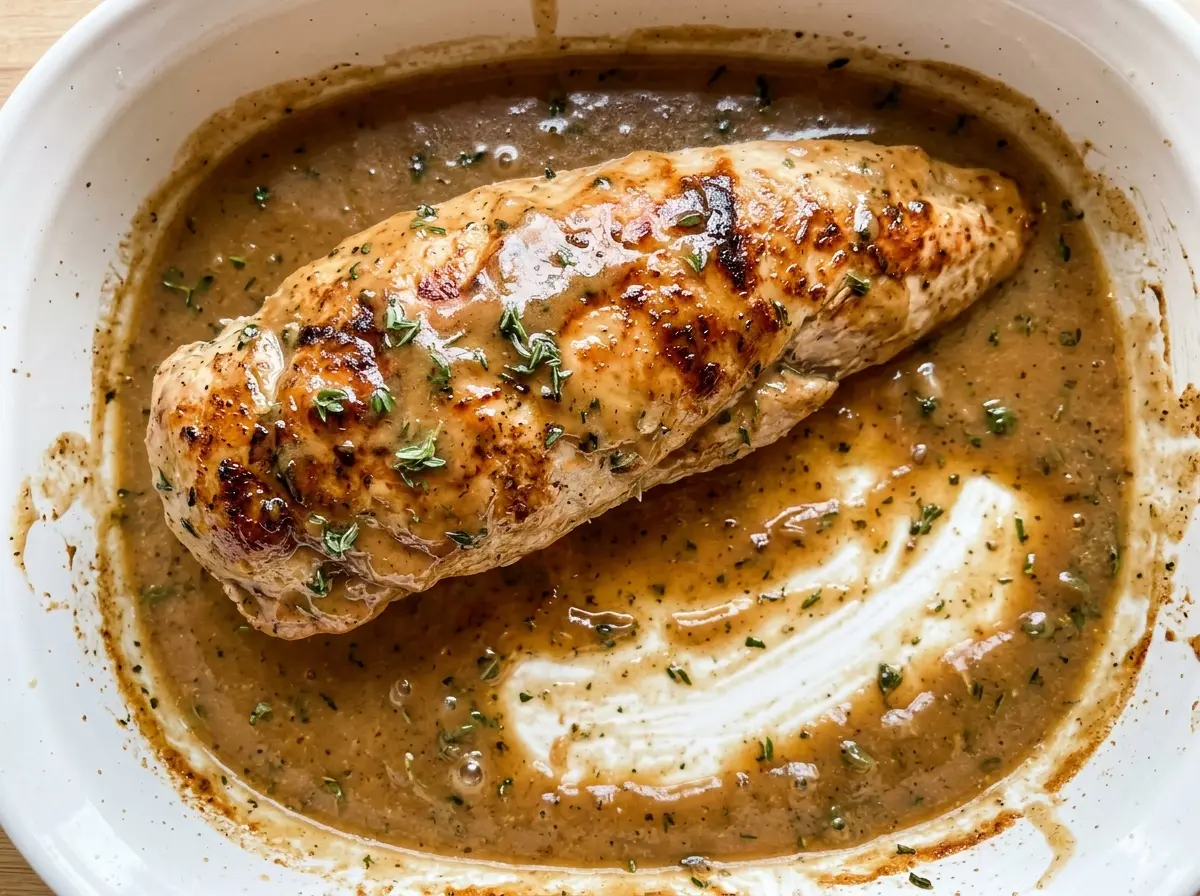
Kitchen Note
I chop the sage and have the thyme leaves ready before I start the gravy. Once the butter and flour are whisking in the saucepan, having the herbs at hand keeps the cooking calm and the timing easy.
Save this Thanksgiving turkey tenderloin with herb gravy for a smaller holiday dinner: juicy slices, sage-and-thyme gravy, and a roast that serves four.
Why poultry seasoning belongs on the turkey, while sage and thyme belong in the gravy
These seasonings do different jobs. Poultry seasoning goes on the oiled turkey before roasting, where its blended herbs cling to the surface and flavor the meat as it cooks. Fresh sage and thyme go into the broth-based gravy instead. Their aroma comes through in the sauce without asking the same dry seasoning blend to carry the whole meal.
Keeping those layers distinct also makes the final plate taste balanced. The turkey has a familiar savory seasoning, while the gravy brings a fresher herbal note and a buttery, rounded texture. I don’t add extra herbs to the turkey or try to turn the gravy into a second coating of poultry seasoning; the two parts taste more intentional when each has its own role. Since the gravy is spooned over sliced meat, you get both flavors together without either one taking over.
That division is especially useful in a smaller roast. There’s no large bird with a cavity full of aromatics or a long pan of drippings to build flavor. The seasoned tenderloins and the simple sage-and-thyme gravy bring their own clear contributions to the meal.
What the tenderloin, broth, and fresh herbs each bring

- Turkey tenderloins — These cook quickly compared with a whole turkey, which is why I rely on the thickest part’s temperature rather than borrowing a whole-bird timetable. Tenderloins that are similar in size are easier to roast evenly; a larger breast roast isn’t a direct swap for the timing here.
- Olive oil — It helps the poultry seasoning coat the turkey before roasting. A neutral cooking oil works in its place with little change to the finished flavor.
- Poultry seasoning — A ready-made blend gives the turkey its familiar savory herb flavor in one ingredient. No single herb reproduces the blend exactly, so keep it for the closest match to this version.
- Butter and all-purpose flour — Together they make the roux that gives the gravy body. Use fresh all-purpose flour for a predictable result; self-rising flour isn’t a good replacement because its leavening has no place in this sauce.
- Low-sodium chicken broth — It supplies the gravy’s savory base while leaving room to season with the listed kosher salt and the turkey juices. Regular broth can work, but it may leave less control over the final salt level.
- Fresh sage and thyme — Fresh leaves give the gravy a clean, aromatic finish. Dried herbs can stand in, but use about one-third as much as the fresh quantity; the flavor will be less bright.
Roasting the tenderloins and building a smooth herb gravy
Season and roast the turkey
Heat the oven to 400°F, then pat the turkey dry and set it in a 9×13-inch baking dish. Rub the tenderloins with olive oil and poultry seasoning so the surface is evenly coated. Roast for 25–35 minutes, checking the thickest part with an instant-read thermometer; it needs to reach 165°F. Transfer the turkey to a cutting board and let it rest for 10 minutes.
Cook the flour in the butter
While the turkey rests, melt the butter in a medium saucepan over medium heat. Whisk in the flour and keep whisking for 1 minute so it cooks into a smooth roux. If flour remains in dry pockets, keep whisking until the mixture looks even before adding liquid.
Whisk in broth and simmer with the herbs
Add the broth gradually while whisking, rather than pouring it in all at once. Keep whisking until the sauce is smooth, then stir in the sage, thyme, kosher salt, and black pepper. Bring the gravy to a simmer and cook for 4–6 minutes, whisking often. It’s ready when it thickens enough to coat a spoon.
Finish with the roasting juices
Pour any juices from the baking dish into the gravy and simmer for 1 minute. This final simmer brings the turkey and sauce together without leaving the juices as a separate puddle on the plate. Slice the turkey and serve it with the warm gravy.
Three practical ways to adapt the turkey and herb gravy
Make the gravy gluten-free
Replace the all-purpose flour with the same amount of a cup-for-cup gluten-free flour blend intended to replace wheat flour. Cook it with the butter for the same minute before whisking in the broth. The gravy may thicken a little differently depending on the blend, so use the spoon-coating cue to judge when it’s ready.
Make the gravy dairy-free
Use the same amount of olive oil in place of the butter, warming it in the saucepan before whisking in the flour. The roux will still thicken the broth, though the finished gravy won’t have the rounded buttery flavor of the original.
Give the gravy a stronger sage note
Use 2 teaspoons of finely chopped fresh sage and leave the thyme as written. That small shift makes the gravy more woodsy and sage-forward, while keeping the same smooth broth-and-roux base.
Storage and Reheating
- Refrigerator: Store the turkey and gravy in separate airtight containers for 3–4 days. The turkey may lose a little moisture as it sits, and the gravy will thicken when chilled.
- Freezer: Freeze the sliced turkey and gravy separately for up to 2–3 months for best quality. The gravy may loosen or separate after thawing; whisk it as it warms to bring it back together.
- Reheating: Warm the turkey covered in the microwave in short intervals, and reheat the gravy in a saucepan over low heat while whisking. Heat leftovers to 165°F; overheating the turkey can dry it out.
Questions that come up with turkey tenderloin and herb gravy
Easy Thanksgiving Turkey Tenderloin with Herb Gravy
Ingredients
Equipment
Method
- Heat the oven to 400°F.
- Pat the turkey tenderloins dry, place them in a 9x13-inch baking dish, and rub them with the olive oil and poultry seasoning.
- Roast for 25–35 minutes, until the thickest part reaches 165°F on an instant-read thermometer.
- Transfer the turkey to a cutting board and let it rest for 10 minutes.
- While the turkey rests, melt the butter in a medium saucepan over medium heat.
- Whisk in the flour and cook for 1 minute, whisking constantly.
- Gradually whisk in the broth until smooth, then stir in the sage, thyme, salt, and pepper.
- Bring the gravy to a simmer and cook for 4–6 minutes, whisking often, until thick enough to coat a spoon.
- Pour any juices from the baking dish into the gravy and simmer for 1 minute.
- Slice the turkey and serve it with the gravy.