
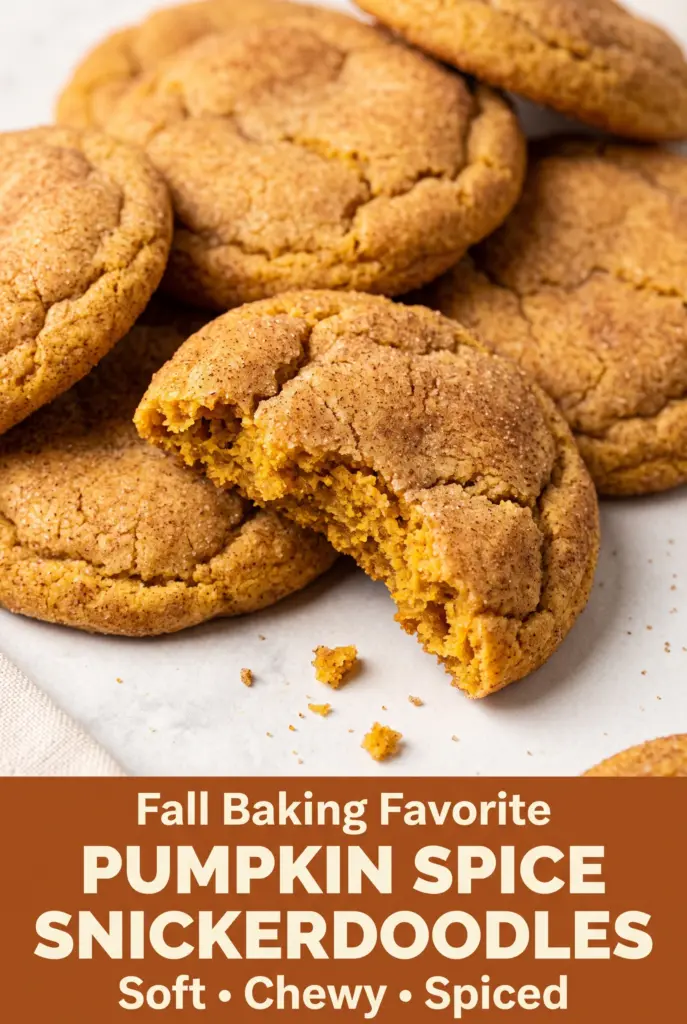
Pumpkin Spice Snickerdoodles bake up with the kind of soft, chewy center that makes people reach for a second cookie before they’ve finished the first. The outside gets that familiar snickerdoodle crackle, dusted in cinnamon sugar, while the middle stays tender and just a little plush from the pumpkin. They taste like a classic snickerdoodle that took the best parts of pumpkin pie and folded them right into the dough.
What keeps these cookies from turning cakey is the balance of pumpkin puree with an extra egg yolk and enough flour to hold the shape without drying them out. Cream of tartar matters here, too. It gives the cookies their tangy snickerdoodle flavor and helps the texture stay soft instead of leaning more like a spice cookie. Chilling the dough is not optional if you want neat, round cookies and a coating that stays put in the oven instead of melting off the pan.
Below, you’ll find the small details that make these worth baking more than once: how to keep the dough manageable, why the coating uses both cinnamon and pumpkin pie spice, and what to do if you want them a little thicker or a little softer.
The dough chilled up enough to roll easily, and the cookies came out soft in the middle with those crackly cinnamon tops. I used them for a bake sale and they disappeared fast.
Save these Pumpkin Spice Snickerdoodles for the days when you want a soft center, a crackly cinnamon-sugar shell, and that pumpkin-spice flavor without a fussy dough.
The Extra Pumpkin Pulp That Makes Cookies Spread Too Much
Pumpkin puree brings flavor and moisture, but it also brings water. That’s the part that trips people up. Too much pumpkin and the dough spreads before the cookies have time to set, which leaves you with soft little puddles instead of rounded cookies with a chewy center.
This recipe uses just enough pumpkin to give the dough its warm color and subtle flavor without overwhelming the structure. The egg yolk adds richness and helps bind the dough without adding the extra lift that a whole egg would bring. That matters because snickerdoodles should bake up soft and plush, not puffy like cake.
The other key is chilling. Warm dough smears in the oven before the coating can do its job. After a short chill, the dough is easier to scoop, the coating clings better, and the cookies hold their shape while the edges set.
What Each Ingredient Is Actually Doing in This Dough
- Unsalted butter — Softened butter creams with the sugars and traps air, which gives the cookies a lighter texture. Salted butter works in a pinch, but the flavor can skew a little flat and the salt level becomes harder to control.
- Light brown sugar — This is what keeps the cookies chewy and gives them that deep caramel note. Dark brown sugar can be swapped in if that’s what you have; the cookies will taste a little more molasses-forward and bake up slightly darker.
- Pumpkin puree — Use pure pumpkin puree, not pumpkin pie filling. Pie filling already contains sugar and spices, which throws off both the flavor and the dough texture.
- Cream of tartar — This is the ingredient that makes them snickerdoodles instead of plain spice cookies. It gives that subtle tang and helps keep the crumb soft.
- Ground spices — Cinnamon, ginger, nutmeg, and cloves build the pumpkin spice flavor inside the dough, while the coating adds an extra hit on the outside. If you only have pumpkin pie spice, you can use it in place of the individual spices in the dough, but the flavor will be a little less layered.
The Part Where the Dough Goes from Sticky to Scoopable
Creaming the Butter and Sugars
Beat the butter with both sugars until the mixture looks fluffy and a little paler than when you started. That step gives the cookies their texture before any flour goes in. If the butter is too cold, the mixture stays grainy and won’t hold air well; if it’s melted, the cookies spread too much. You want it soft enough to leave a dent when pressed, not shiny or greasy.
Bringing in the Pumpkin
Add the pumpkin puree, egg yolk, and vanilla, then mix until the dough looks smooth and evenly colored. The dough may look slightly loose at this stage, and that’s normal. Don’t keep whipping once it’s combined, because extra mixing only warms the butter and makes the next step messier.
Adding the Dry Ingredients
Stir in the flour, baking soda, cream of tartar, spices, and salt just until a soft dough forms. Stop as soon as the flour disappears. If you keep mixing after that point, the cookies can turn dense and tough instead of tender.
Chilling and Coating
Chill the dough long enough to firm it up, then scoop it into even portions and roll each one in the cinnamon-sugar mixture. The dough should feel cool and pliable, not sticky enough to coat your hands. A generous coating gives you that classic crackled exterior, so don’t be shy with it.
Three Ways to Adjust These Cookies Without Ruining the Texture
Make Them Gluten-Free
A 1:1 gluten-free baking blend works best here. The cookies will still be soft and chewy, though they may spread a touch less and finish a little more delicate around the edges. Don’t swap in almond flour alone, because it won’t give you the same structure.
Turn Up the Spice
If you want a stronger pumpkin spice flavor, add another ¼ teaspoon of cinnamon and a pinch more ginger to the dough. Go slowly with cloves, though. Too much clove takes over fast and makes the cookies taste sharp instead of warm.
Bake Them a Little Thicker
For thicker cookies, chill the scooped dough balls for another 10 minutes before baking. That gives the butter a head start on staying firm in the oven, so the cookies rise a bit more before they spread. The centers stay softer, and the edges turn just slightly firmer.
Storage and Reheating
- Refrigerator: Store baked cookies in an airtight container for up to 5 days. They soften a little as they sit, which is part of the charm.
- Freezer: Freeze the baked cookies for up to 2 months, or freeze the portioned dough balls for fresher cookies later. If freezing dough, coat them in cinnamon sugar first so they bake with the right finish right from the freezer.
- Reheating: Warm a baked cookie in the microwave for 8 to 10 seconds if you want the center soft again. Heat longer than that and the sugar coating gets sticky instead of crackly.
Answers to the Questions Worth Asking
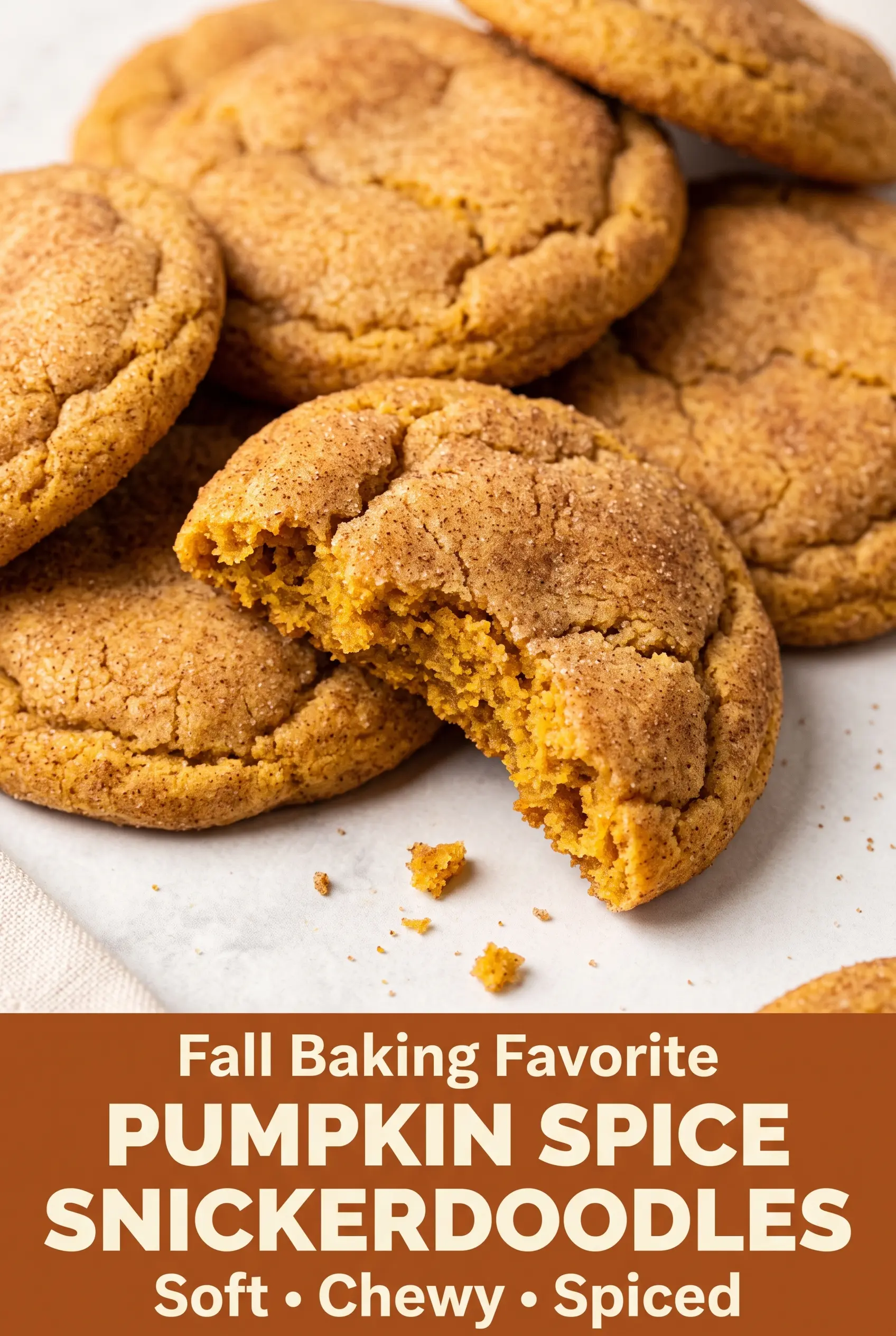
Pumpkin Spice Snickerdoodles
Ingredients
Equipment
Method
- Beat the softened unsalted butter, granulated sugar, and light brown sugar for 2–3 minutes until creamy, with a visibly smoother, lighter texture.
- Add the pumpkin puree, egg yolk, and vanilla extract, then beat until smooth and evenly combined, with no streaks.
- Whisk the all-purpose flour, baking soda, cream of tartar, ground cinnamon, ground ginger, ground nutmeg, ground cloves, and salt until evenly mixed.
- Add the dry mixture gradually to the pumpkin mixture and mix just until a soft cookie dough forms, stopping as soon as the dough comes together.
- Chill the dough for 30–45 minutes until firm enough to scoop, with the dough holding its shape.
- Preheat the oven to 350°F and line two baking sheets with parchment paper so the cookies bake evenly.
- Combine granulated sugar, ground cinnamon, and pumpkin pie spice in a shallow bowl for the cinnamon-sugar coating.
- Scoop the chilled dough into 1½-tablespoon portions and roll each portion into a ball.
- Coat each dough ball generously with the cinnamon-sugar mixture so the top looks well covered.
- Arrange the cookies about 2 inches apart on the prepared baking sheets for room to spread.
- Bake for 10–12 minutes at 350°F until the edges are set but the centers remain soft, with lightly crackled tops.
- Cool the cookies on the baking sheet for 5 minutes so they finish setting without over-browning.
- Transfer to a wire rack and cool completely until fully set and tender in the center.