
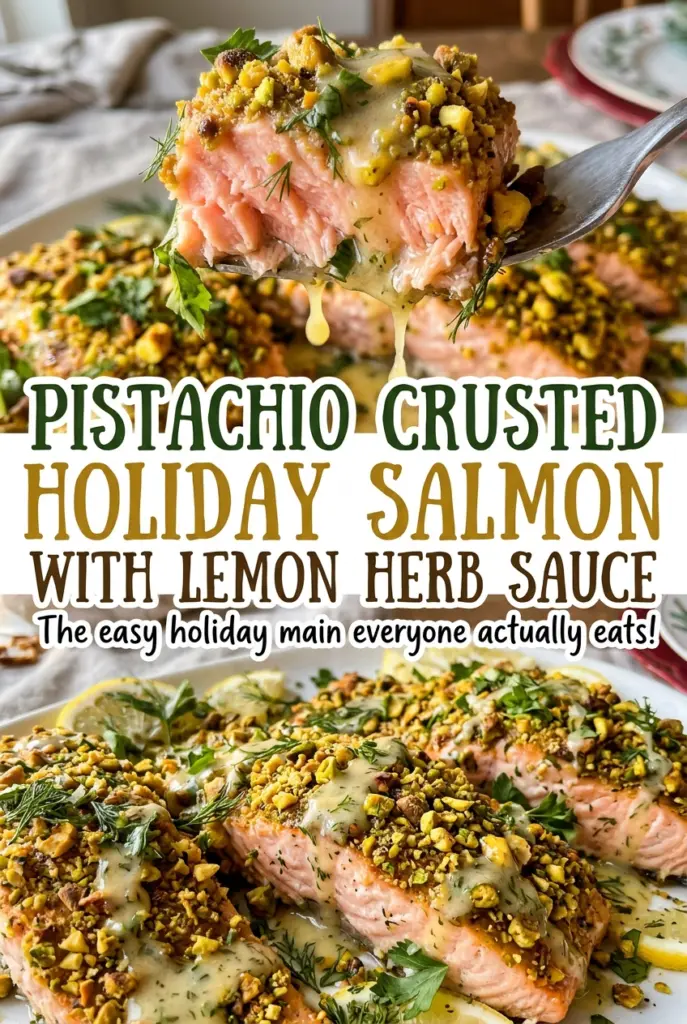
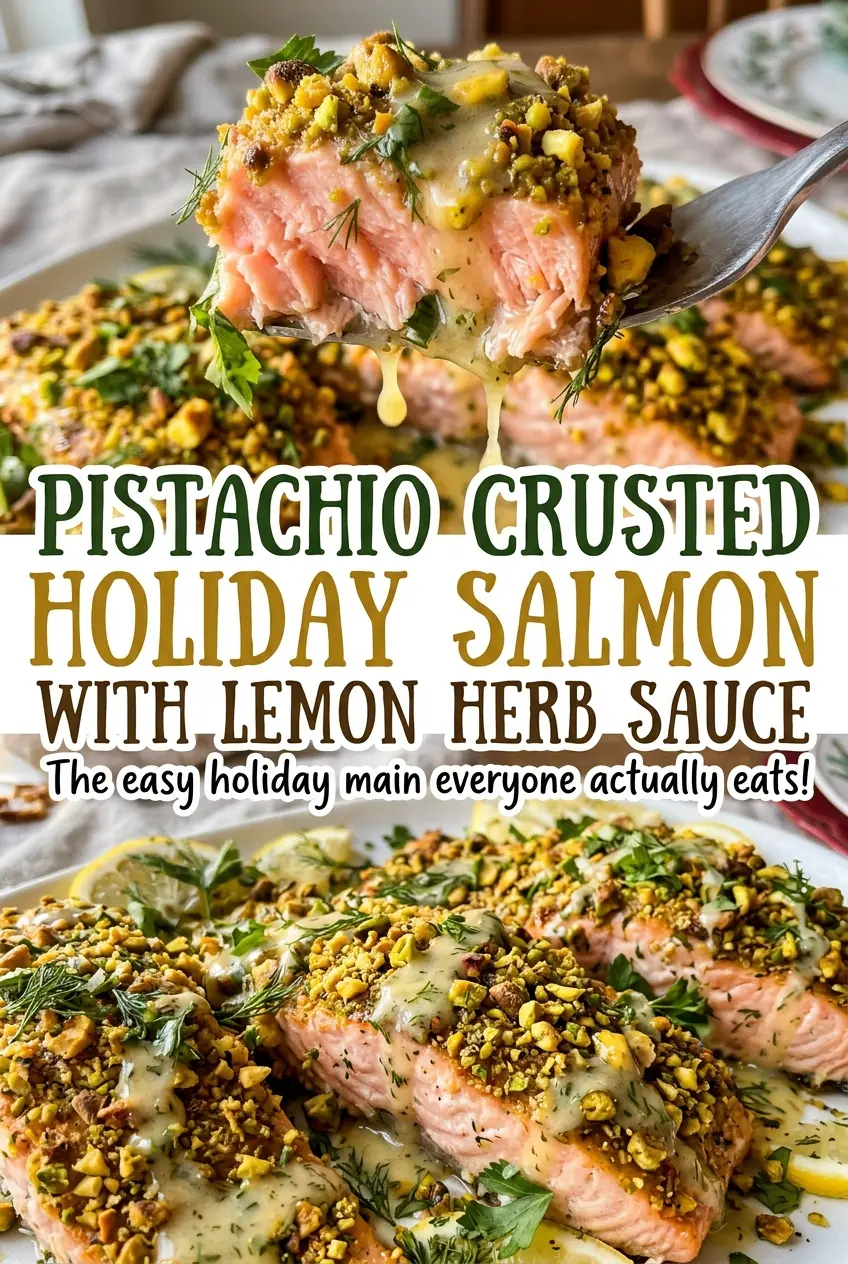
When the salmon comes out of the oven, the pistachio topping should stay in a crisp layer instead of sliding off in chunks. That’s the payoff of spreading Dijon over the fish before pressing on the crumbs. This pistachio crusted holiday salmon has a savory, nutty top, tender salmon underneath, and a cool lemon herb sauce that keeps each bite bright.
I like that the sauce comes together while the oven heats and the salmon gets its coating. Whole-milk Greek yogurt gives it a creamy base, while dill, parsley, garlic, and capers bring plenty of zip without competing with the crust. The fish rests for five minutes after baking, which gives me time to bring the sauce to the table. The finished fillet is crisp on top, moist in the center, and ready to share.
Kitchen Note
Finely grate the garlic into the yogurt instead of mincing it into noticeable bits. It disperses through the sauce, so you get a gentle garlic flavor in each spoonful rather than one sharp bite.
Save this pistachio crusted salmon with lemon herb sauce for a dinner where a crunchy topping and cool, tangy sauce belong on the same plate.
Why the Lemon Herb Sauce Belongs Beside the Crust, Not on Top
The contrast is what makes this plate work: the salmon and its pistachio topping are warm and crisp, while the yogurt sauce is cool, creamy, and tart. Spoon sauce over the crust before serving and the panko softens quickly. Keeping the sauce alongside the fish lets the topping keep its texture, and each person can add as much as they like to a forkful.
There’s a useful balance in the sauce, too. Lemon gives the yogurt a clean tang, and capers add a briny note that cuts through the richness of salmon and nuts. Dill and parsley keep that sharpness fresh rather than heavy. The sauce isn’t just a garnish; it gives the crusted fish a different, cooler finish without covering up the pistachio flavor.
When you plate the salmon, leave the top uncovered and put the sauce in a small bowl or alongside each portion. That small choice preserves the crunchy contrast from the first serving to the last.
What Gives the Crust Its Crunch—and the Sauce Its Tang
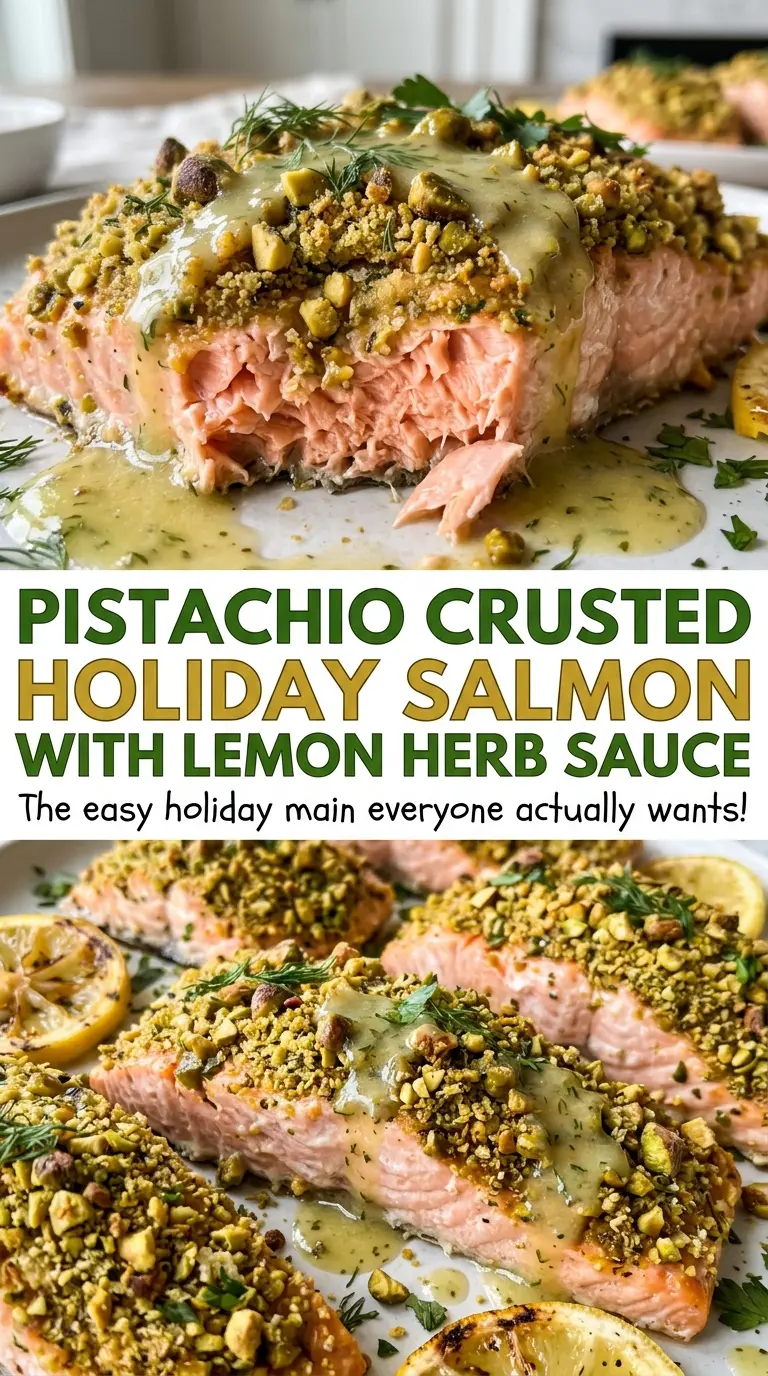
- Salmon — A skin-on fillet gives you a sturdy base to coat and bake. Have the pin bones removed before cooking; running your fingers over the surface is a good way to catch any that remain. Patting the fish dry helps the mustard spread evenly instead of slipping over a damp surface.
- Dijon mustard — Dijon brings a mild, sharp tang and gives the topping something to cling to. Yellow mustard works in a pinch, but its flavor is more vinegary and less rounded. Spread the mustard over the whole top so the crust has an even base.
- Pistachios and panko — Unsalted, shelled pistachios let the nut flavor come through without making the finished fish too salty. Panko contributes a light, crisp texture that finely ground breadcrumbs don’t quite match. Chop the nuts finely so they mix evenly with the crumbs rather than leaving large pieces that are hard to press onto the fish.
- Olive oil — A little oil coats the pistachios and panko, helping the topping bake into a cohesive crust. There’s no need to use an expensive bottle here; a standard olive oil works well.
- Whole-milk Greek yogurt — Its thick texture makes a creamy sauce that stays beside the salmon instead of running all over the plate. Plain regular yogurt is thinner and makes a looser sauce, so Greek yogurt is the better choice. Use unsweetened yogurt so the lemon, herbs, garlic, and capers stay in balance.
- Dill, parsley, and capers — Fresh herbs give the sauce its clean, green flavor, and rinsed capers add little bursts of brininess. If you’re out of fresh dill or parsley, use one-third as much dried herb; the sauce will lose some of the fresh, leafy lift. Chop the capers finely so they spread through the yogurt instead of settling in a few salty clumps.
How to Coat and Bake the Salmon Without Losing the Crust
Stir Together the Cool Sauce
Combine the Greek yogurt, lemon juice, dill, parsley, finely grated garlic, and rinsed, chopped capers in a small bowl. Stir until the herbs and capers are distributed throughout the yogurt, with no large clumps of garlic or caper. Cover the bowl and refrigerate it while you prepare the salmon. The sauce should look creamy and spoonable, not watery.
Set Up the Fillet and Oven
Heat the oven to 400°F and line an 18×13-inch rimmed baking sheet with parchment paper. Pat the salmon dry, then set it skin side down on the prepared pan. Season the surface with kosher salt and black pepper. If the fish is wet, take another moment to blot it; a damp top makes it harder to spread the mustard cleanly.
Press the Pistachio Mixture into Place
Spread Dijon mustard evenly over the top of the salmon. In a separate bowl, stir together the finely chopped pistachios, panko, and olive oil until the crumbs look lightly coated. Press the mixture onto the mustard-covered surface in an even layer. If the topping is loose, press it gently with your fingertips rather than piling it higher in one spot.
Bake, Check, and Rest
Bake for 15 to 20 minutes, until an instant-read thermometer inserted into the thickest part registers 145°F. The thickest section is the best place to check because the thinner end will cook sooner. Don’t rely on the crust’s color to judge the center; use the thermometer for the doneness check. Rest the salmon for five minutes, then serve it with the chilled lemon herb sauce.
Three Simple Ways to Adapt the Crust and Sauce
Make the Crust Gluten-Free
Replace the panko with the same amount of gluten-free panko. It keeps the light crunch that works well with chopped pistachios, though the crumbs may bake up a little differently from standard panko.
Use Pumpkin Seeds Instead of Pistachios
For a nut-free version, use the same amount of unsalted hulled pumpkin seeds, chopped finely, in place of the pistachios. The topping stays crunchy, with a more earthy, seed-forward taste. Keep the panko and olive oil the same.
Give the Sauce a Chive Note
Swap the parsley for an equal amount of finely chopped fresh chives and keep the dill. The yogurt sauce takes on a gentle onion flavor while staying cool and tangy; chop the chives small so they blend through the sauce.
Storage and Reheating
- Refrigerator: Refrigerate the salmon and sauce in separate airtight containers within 2 hours. The salmon keeps for 3 to 4 days; the crust softens in storage.
- Freezer: Freeze the cooked salmon without the yogurt sauce in an airtight container for up to 2 months for best quality. Thaw it in the refrigerator; the crust will be softer after freezing.
- Reheating: Warm salmon covered in a 275°F oven until it reaches 165°F in the center. The covering helps limit drying, but the crust won’t be as crisp as it was fresh; avoid reheating it uncovered at high heat.
Questions That Come Up When Making This Pistachio Salmon
Pistachio Crusted Holiday Salmon with Lemon Herb Sauce
Ingredients
Equipment
Method
- Stir the Greek yogurt, lemon juice, dill, parsley, garlic, and capers together in a small bowl.
- Cover and refrigerate the sauce while you prepare the salmon.
- Heat the oven to 400°F.
- Line an 18x13-inch rimmed baking sheet with parchment paper.
- Pat the salmon dry.
- Place it skin side down on the prepared baking sheet.
- Season it with the salt and pepper.
- Spread the Dijon mustard evenly over the top of the salmon.
- Stir the pistachios, panko, and olive oil together.
- Press the mixture onto the mustard-coated salmon.
- Bake for 15 to 20 minutes, until the thickest part of the salmon registers 145°F on an instant-read thermometer.
- Rest the salmon for 5 minutes.
- Serve with the lemon herb sauce.