
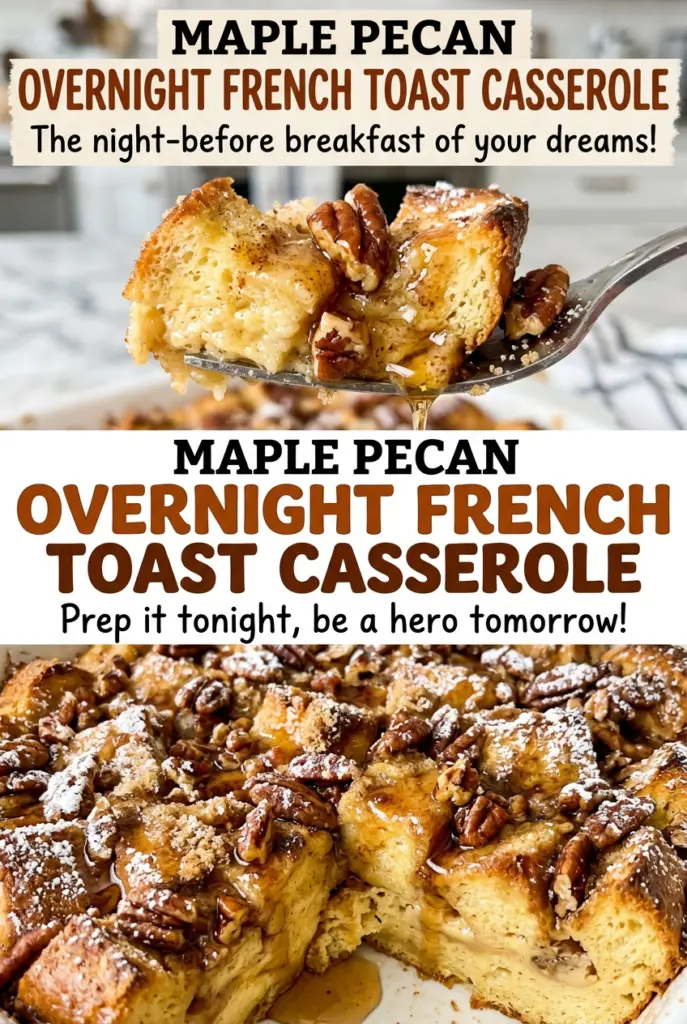
When the foil comes off, the pecans have had time to soften into the buttery topping, but they haven’t had a chance to brown yet. That last stretch in the oven is what gives Maple Pecan Overnight French Toast Casserole its contrast: soft, custardy bread underneath and a golden pecan layer on top. It’s a good fit when I want breakfast ready to bake without whisking eggs first thing in the morning.
The challah gets a long, cold soak, so the custard reaches into the cubes instead of sitting around them. I arrange the bread evenly, pour the egg mixture over every corner, and press the cubes gently to help them take it up. Give the casserole at least 8 hours and no more than 12 in the refrigerator; by morning, the bread is ready for the oven and the maple-cinnamon custard has settled through the dish.
Kitchen Note
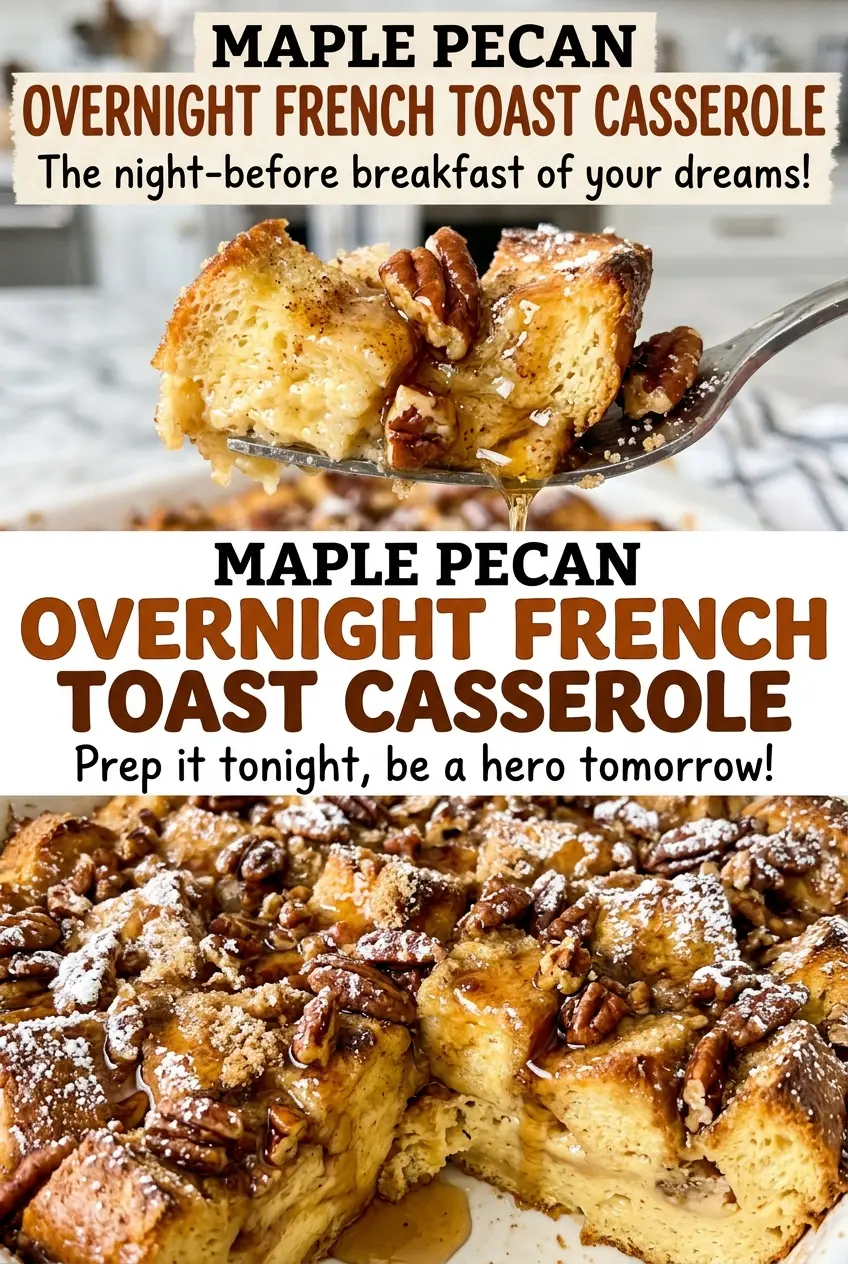
Mix the chopped pecans, brown sugar, and melted butter together before topping the casserole. You want the nuts coated, not a layer of dry sugar with butter drizzled over it.
Save this Maple Pecan Overnight French Toast Casserole for a breakfast with a crisp, buttery pecan top and a soft maple custard center.
Why the Pecans Need a Covered Start Before They Can Turn Golden
The casserole needs two different kinds of heat. For the first part of baking, foil covers the dish while the egg custard cooks through and the bread finishes absorbing it. Leave the pecans uncovered for that whole stretch and they’ll be exposed to the oven much longer than they need to be, risking an overbrowned top before the center is ready.
Uncovering for the final part lets moisture escape from the surface and gives the topping direct heat. That’s when the brown sugar and butter settle around the pecans and the surface turns golden. The center still needs to reach 160°F, so don’t use the color of the topping alone to judge doneness. If it looks ready before the middle is set, keep the baking time focused on the center rather than pulling it early.
This balance is also why an even layer of bread matters. A tall pile in one corner and a thin layer in another will cook unevenly, leaving you with different textures in the same dish. Spread the cubes across the 9×13-inch pan before adding the custard, then let the covered and uncovered baking phases do their separate jobs.
What Challah and Pure Maple Syrup Bring to This Casserole
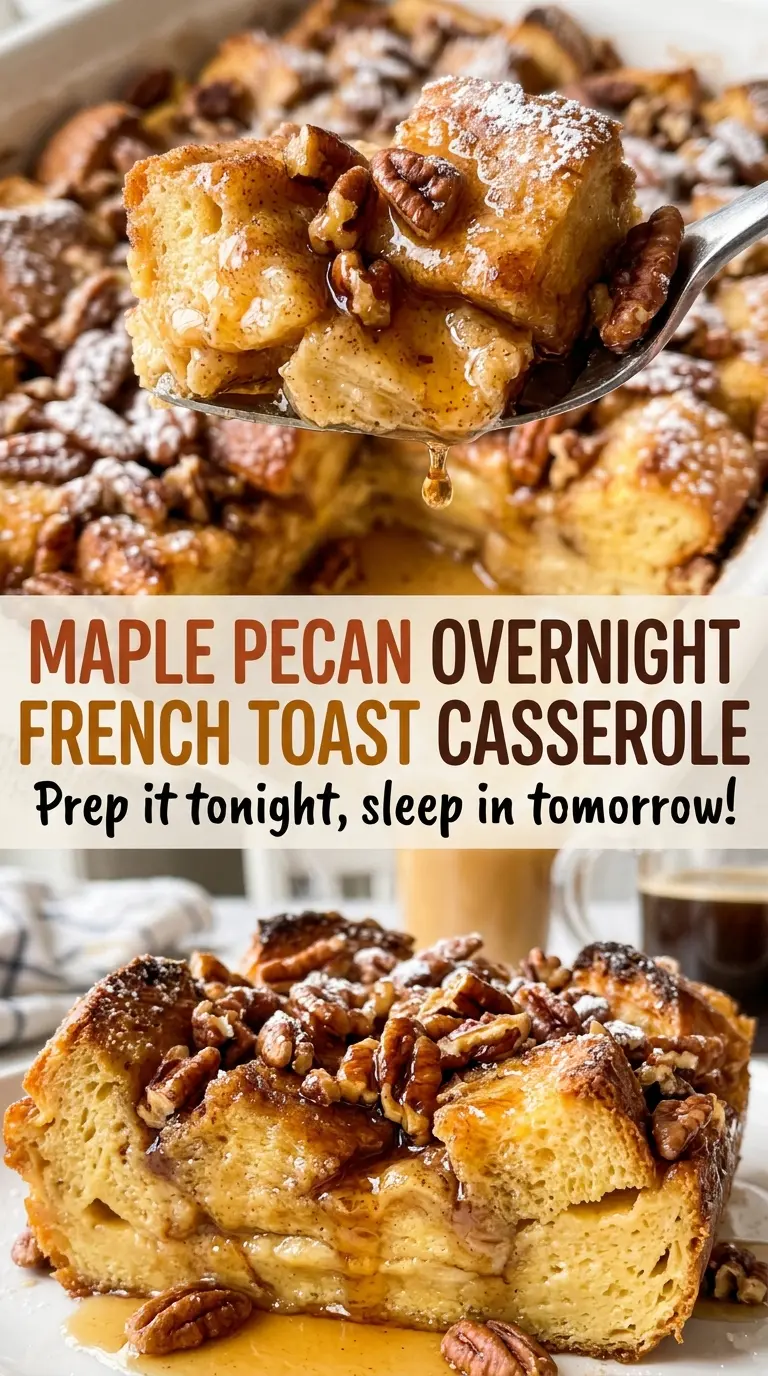
- Challah — Its tender, egg-rich crumb makes a soft-centered casserole, while 1-inch cubes hold their shape through the overnight soak. Cut the loaf into evenly sized pieces so they absorb at a similar pace. I stick with challah here; another bread can take up the custard differently and change the texture.
- Eggs, whole milk, and heavy cream — Eggs set the custard, while the milk and cream give it enough richness to surround the bread without making the whole dish as heavy as an all-cream mixture. Use the two dairy ingredients together rather than swapping one for the other; changing that balance changes the custard.
- Pure maple syrup — It adds sweetness directly to the egg mixture and gives the casserole its maple flavor. Pure maple syrup is worth choosing here because pancake syrup won’t bring the same taste. The light brown sugar in the topping supplies a separate, deeper sweetness.
- Pecans — Chopped pecans add crunch across the top instead of leaving you with a few large nut pieces in each serving. Fresh-tasting nuts matter most because their natural oils are easy to notice in a simple topping. Keep them chopped, rather than grinding them into fine crumbs.
- Unsalted butter and light brown sugar — Melted butter coats the pecans and helps the sugar cling; packed brown sugar brings a soft, caramel-like sweetness. Unsalted butter lets the casserole’s measured salt do its job without an extra salty note in the topping.
- Vanilla, cinnamon, and fine salt — Vanilla and cinnamon add warmth without taking over the maple. The salt keeps the custard from tasting flat. Whisk them into the wet ingredients so their flavor is distributed throughout the bread, not concentrated in one spot.
Build the Custard First, Then Give It Time to Soak In
Cube and Arrange the Challah
Coat a 9×13-inch baking dish with nonstick cooking spray, then cut the challah into 1-inch cubes. Spread them evenly in the dish instead of pressing them into a dense layer. Even spacing gives the custard room to travel around the bread, and evenly sized cubes are less likely to leave you with a mix of dry corners and saturated middle pieces.
Whisk and Pour the Maple Custard
In a large bowl, whisk the eggs, whole milk, heavy cream, maple syrup, vanilla, cinnamon, and fine salt until combined. You’re looking for one even mixture, not separated streaks of egg white or pools of syrup. Pour it over the challah as evenly as you can, then press the cubes gently so they absorb some of the liquid. Pressing helps; crushing the bread does not.
Let the Bread Soak Overnight
Cover the dish and refrigerate it for at least 8 hours and up to 12 hours. That window gives the custard time to soak into the challah instead of leaving the cubes dry inside. Don’t rush the chill with a short counter rest; the bread needs the full refrigerated soak. While it rests, the cubes soften and the mixture settles into the spaces between them.
Add the Pecan Topping and Bake in Two Stages
Combine the chopped pecans, packed light brown sugar, and melted butter. Heat the oven to 350°F and take the casserole out of the refrigerator while the oven warms. Scatter the topping over the bread, cover the dish with foil, and bake for 30 minutes; then uncover and bake for 20 to 30 minutes, until golden and the center reaches 160°F. Rest the casserole for 10 minutes before serving so the custard can settle after baking.
Two Ways to Change the Pecan Layer Without Changing the Custard
Make the topping without pecans
For a nut-free adaptation, leave the chopped pecans out and combine the brown sugar with the melted butter for the topping. You’ll lose the nutty crunch, but the sweet, buttery layer still gives the casserole a browned top. If you’re cooking for someone with a tree-nut allergy, prevent cross-contact with pecan residue; don’t serve it if you can’t do that safely.
Bake it without the topping
Skip the pecan mixture if you’d rather let the maple-cinnamon custard stand on its own. The top won’t have the buttery crunch or the same browned sweetness, but the bread and custard remain the focus. Keep the same baking dish and check that the center reaches 160°F.
Storage and Reheating
- Refrigerator: Store leftovers covered for 3 to 4 days. The topping softens in the refrigerator, though the custard stays tender.
- Freezer: Freeze baked portions in airtight wrapping for up to 2 months. Thaw overnight in the refrigerator; the pecan topping may be softer after thawing.
- Reheating: Warm portions in a 325°F oven, covered with foil, until hot throughout. Avoid reheating uncovered for a long stretch, which can dry the bread before the center warms.
Questions That Come Up Before This Casserole Goes in the Oven
Maple Pecan Overnight French Toast Casserole
Ingredients
Equipment
Method
- Coat a 9x13-inch baking dish with nonstick cooking spray.
- Arrange the challah cubes evenly in the prepared dish.
- Whisk the eggs, milk, cream, maple syrup, vanilla, cinnamon, and salt in a large bowl until combined.
- Pour the egg mixture evenly over the bread and press the cubes gently so they absorb the liquid.
- Cover the casserole and refrigerate for at least 8 hours and up to 12 hours.
- Combine the pecans, brown sugar, and melted butter in a bowl.
- Heat the oven to 350°F.
- Take the casserole out of the refrigerator while the oven heats.
- Scatter the pecan mixture evenly over the casserole.
- Cover with foil and bake for 30 minutes.
- Uncover and bake for 20 to 30 minutes, until golden and the center reaches 160°F.
- Rest the casserole for 10 minutes before serving.