
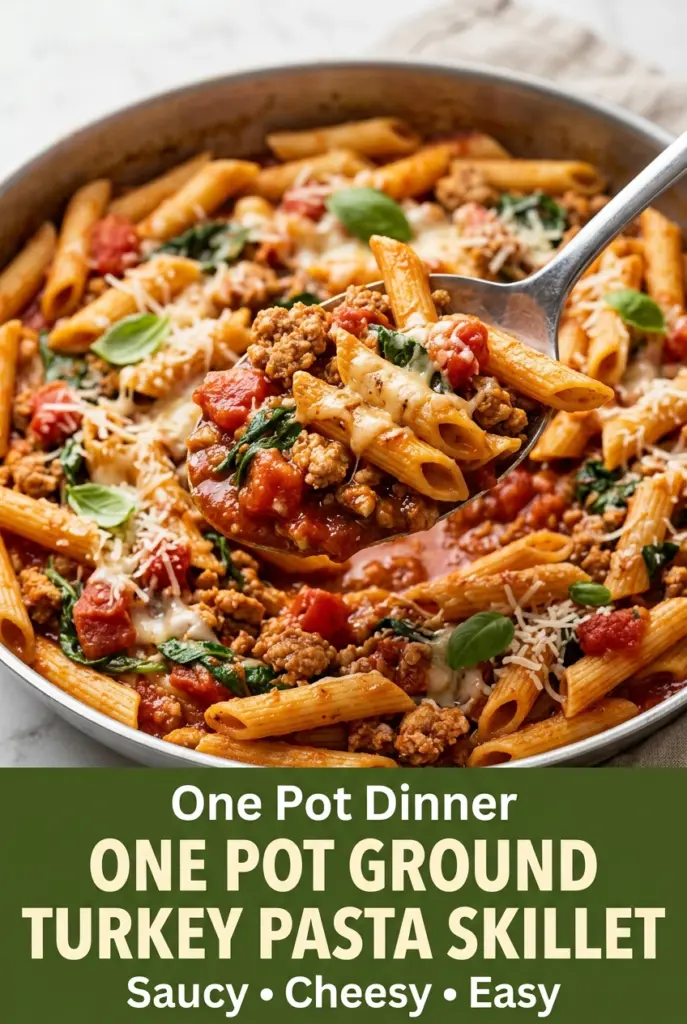
One Pot Ground Turkey Pasta Skillet is the kind of dinner that earns a permanent spot in the weeknight rotation because it gives you a full, satisfying meal without turning the kitchen upside down. The pasta cooks right in the tomato broth, so every noodle picks up the flavor of the turkey, garlic, and herbs instead of tasting like it came from a separate pot of water. By the time the cheese melts on top, the sauce has thickened just enough to cling to the penne in a glossy, hearty way.
What makes this version work is the layering. Browning the turkey first builds a savory base, and cooking the tomato paste for a full minute deepens the sauce instead of leaving it flat and sharp. The pasta finishes in the skillet, which means it releases starch into the sauce as it cooks and helps everything come together naturally. If your one-pot pasta ever turns out soupy or bland, the problem usually comes down to undercooked tomato paste or too much heat rushing the liquid away before the pasta is tender.
Below, I’ve included the small technique details that keep the skillet from drying out, plus a few smart swaps if you need to adjust the cheese, pasta, or protein. The storage notes matter here too, because this reheats better than most creamy skillet dinners if you bring it back gently.
The pasta cooked up perfectly in the sauce and I loved that it wasn’t watery at the end. I added the spinach at the very end like you said, and the skillet came out thick, cheesy, and not at all dry when I reheated leftovers the next day.
Save this one-pot ground turkey pasta skillet for nights when you want a cheesy, tomato-rich dinner with hardly any cleanup.
The Trick to Keeping One-Pot Pasta Saucy Instead of Mushy
The biggest mistake with skillet pasta is treating it like stovetop noodles and rushing straight through the simmer. In a one-pot dish, the pasta needs time to absorb the broth while the starch thickens the sauce around it. If the heat is too high, the liquid evaporates before the penne cooks through, and you end up with dry pasta sitting in a thin tomato base.
The other failure point is crowding the pan with ingredients that haven’t been built in layers. Browning the turkey, softening the onion, and cooking the tomato paste all happen before the broth goes in for a reason. Those extra minutes give the skillet a deeper, rounder flavor so the final dish tastes like more than just pasta floating in red liquid.
- Ground turkey — Lean turkey works well here because it keeps the skillet hearty without turning greasy. If you use extra-lean turkey, the olive oil matters even more for keeping the meat from tasting dry.
- Tomato paste — This is the ingredient that gives the sauce body and color. Let it cook in the pan for a full minute so it loses that raw, metallic edge.
- Chicken broth — Broth seasons the pasta as it cooks, which is why plain water won’t give the same result. Use low-sodium broth if you want more control over the final salt level.
- Penna pasta — A short, sturdy shape holds up best in the skillet and catches the sauce in the ridges and tubes. If you swap shapes, pick another pasta with a similar cook time and structure, like rotini or rigatoni.
- Spinach — Add it at the end so it wilts into the hot sauce without disappearing. Frozen spinach can work in a pinch, but squeeze it dry first or it will water down the skillet.
What Each Ingredient Is Doing in the Skillet
Olive oil starts the browning and gives the turkey a little insurance against sticking. Onion and garlic build the aromatic base, while Italian seasoning and smoked paprika keep the sauce from tasting one-note. The diced tomatoes bring acidity and moisture, and the mozzarella plus Parmesan finish the dish with enough richness to balance the lean meat.
If you want the skillet to taste layered instead of flat, don’t skip the basil at the end. Fresh basil adds a bright, herbal note that wakes up the tomato sauce after the cheese goes in. Parmesan also does more than garnish here; it sharpens the whole pan and keeps the cheese topping from tasting dull.
Building the Skillet in the Right Order
Brown the Turkey First
Heat the olive oil in a large deep skillet over medium-high heat and add the turkey. Break it into small crumbles as it cooks so it browns instead of steaming into big pale chunks. Wait until no pink remains and you see some deeper golden bits on the pan. If the turkey starts releasing a lot of liquid, keep cooking until that moisture evaporates before moving on.
Wake Up the Onion, Garlic, and Spices
Stir in the diced onion and cook until it softens and turns translucent at the edges. Add the garlic, Italian seasoning, smoked paprika, salt, and pepper, then cook just until fragrant. That short bloom pulls more flavor out of the dried spices without scorching the garlic. If the garlic browns too fast, the heat is too high and the whole pan will taste bitter.
Deepen the Sauce Before the Pasta Goes In
Tomato paste needs direct heat to lose its raw taste, so stir it into the skillet and cook it for about a minute. The paste should darken slightly and smell sweeter, not sharp. Then add the diced tomatoes, broth, and uncooked penne, stirring well so the pasta is fully submerged as much as possible. This is the moment that determines whether the noodles cook evenly or end up with dry spots above the liquid line.
Simmer Until the Pasta Finishes in the Sauce
Bring the skillet to a gentle boil, then lower the heat and cover it. Stir occasionally so the pasta doesn’t stick to the bottom and so the sauce thickens evenly. The pan is ready when the penne is al dente and most of the liquid has turned into a glossy sauce. If it looks dry before the pasta is tender, add a splash of broth; if it looks too loose, uncover it for a minute or two.
Finish with Spinach and Cheese
Fold in the spinach and let it wilt into the hot pasta. Scatter the mozzarella and Parmesan over the top, cover the pan, and let the heat melt the cheese without overcooking the pasta underneath. Fresh basil goes on at the very end so it stays bright and fragrant. Serve it straight from the skillet while the cheese is still stretchy.
How to Adapt This for Different Kitchens and Different Needs
Make It Gluten-Free
Swap in a sturdy gluten-free penne and watch the liquid closely, because gluten-free pasta can go from tender to soft faster than regular wheat pasta. Start checking a few minutes early and stop the cook when the noodles still have a little bite. The sauce will still cling nicely as long as you keep the simmer gentle.
Make It Dairy-Free
Leave off the mozzarella and Parmesan, then finish with a drizzle of olive oil and a handful of extra basil. You’ll lose the stretchy, creamy top layer, but the tomato and turkey base still tastes full and satisfying. If you want a melty finish, add your favorite dairy-free shredded cheese in the last minute of covering.
Use Ground Chicken or Beef Instead
Ground chicken behaves much like turkey and keeps the skillet light. Ground beef gives you a richer, more savory result, but you may want to drain excess fat before adding the onion if the pan looks greasy. Either swap works without changing the timing.
Storage and Reheating
- Refrigerator: Store for up to 4 days. The pasta will absorb more sauce as it sits, so expect a thicker texture the next day.
- Freezer: It freezes well, though the pasta softens a bit after thawing. Cool it completely, portion it into airtight containers, and freeze for up to 2 months.
- Reheating: Reheat gently on the stovetop or in the microwave with a splash of broth or water to loosen the sauce. High heat dries out the turkey and turns the pasta soft before the center is warmed through.
Answers to the Questions Worth Asking
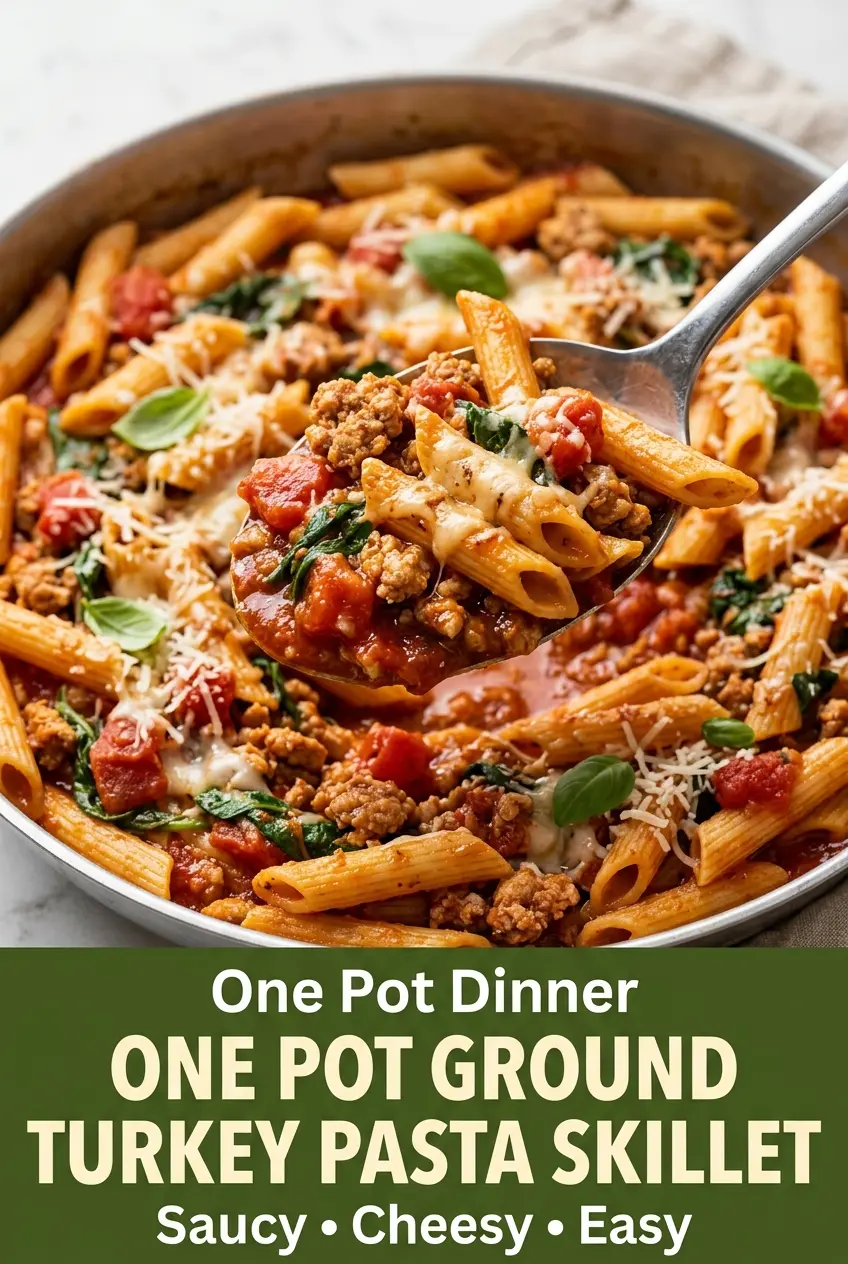
One Pot Ground Turkey Pasta Skillet
Ingredients
Equipment
Method
- Heat the olive oil in a large deep skillet over medium-high heat until shimmering.
- Add the ground turkey and cook for 5–7 minutes, breaking into small crumbles until no pink remains.
- Stir in the yellow onion and cook for 3–4 minutes until softened and lightly translucent.
- Add the garlic, Italian seasoning, smoked paprika, kosher salt, and black pepper; cook for 30 seconds until fragrant.
- Stir in the tomato paste and cook for 1 minute to deepen its flavor, coating the turkey and onions.
- Add the diced tomatoes, chicken broth, and uncooked penne, stirring until evenly combined.
- Bring to a gentle boil, then reduce heat to medium-low, cover, and simmer for 12–15 minutes, stirring occasionally, until pasta is al dente and the liquid turns into a thick sauce.
- Fold in the baby spinach and cook for 1–2 minutes until wilted, keeping the skillet covered only if needed to speed wilting.
- Sprinkle the mozzarella and Parmesan over the pasta, cover, and cook for 2–3 minutes until the cheese melts and looks glossy.
- Finish with fresh basil and serve straight from the pan.