
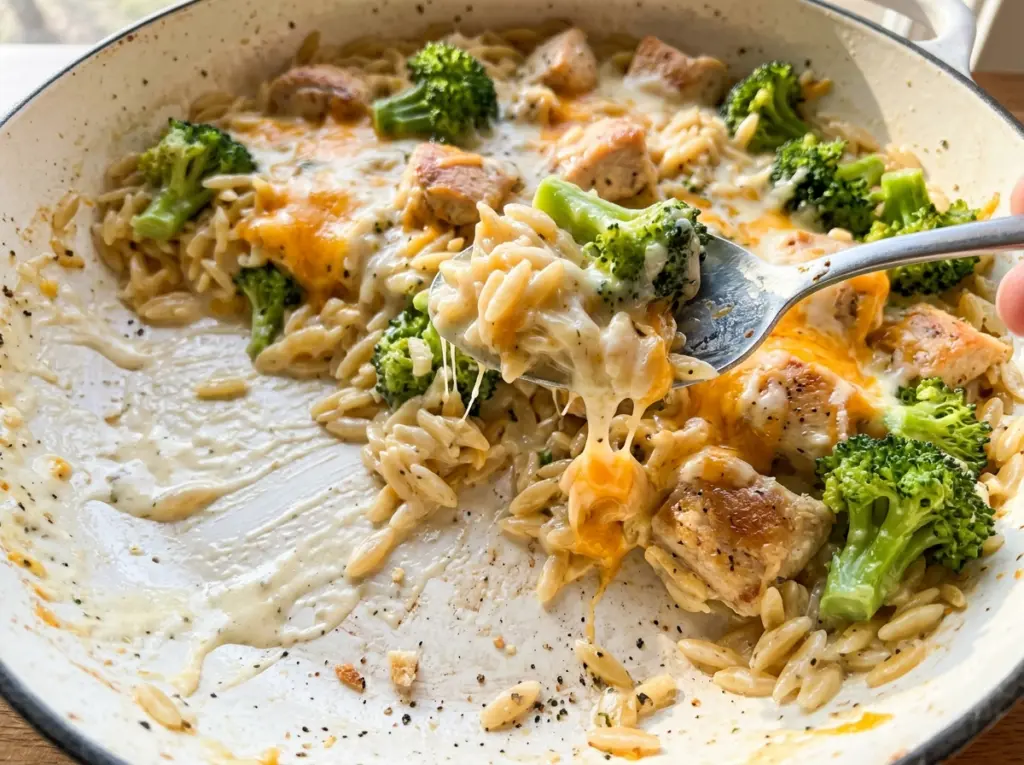
When chicken hits a hot skillet, it should sizzle and pick up a little color without cooking all the way through. I used to wait for the pieces to look finished before taking them out, which left them dry by the time the orzo was done. For this one pot cheesy chicken and broccoli orzo, the chicken gets a quick sear, then finishes gently in the broth alongside the pasta.
The timing keeps the broccoli from spending the whole simmer in the skillet. Orzo gets a five-minute head start, and the florets go in with the chicken for the final stretch. That gives the pasta time to turn tender while the broccoli stays bright and crisp-tender, all under a blanket of sharp cheddar and cream.
Kitchen Note
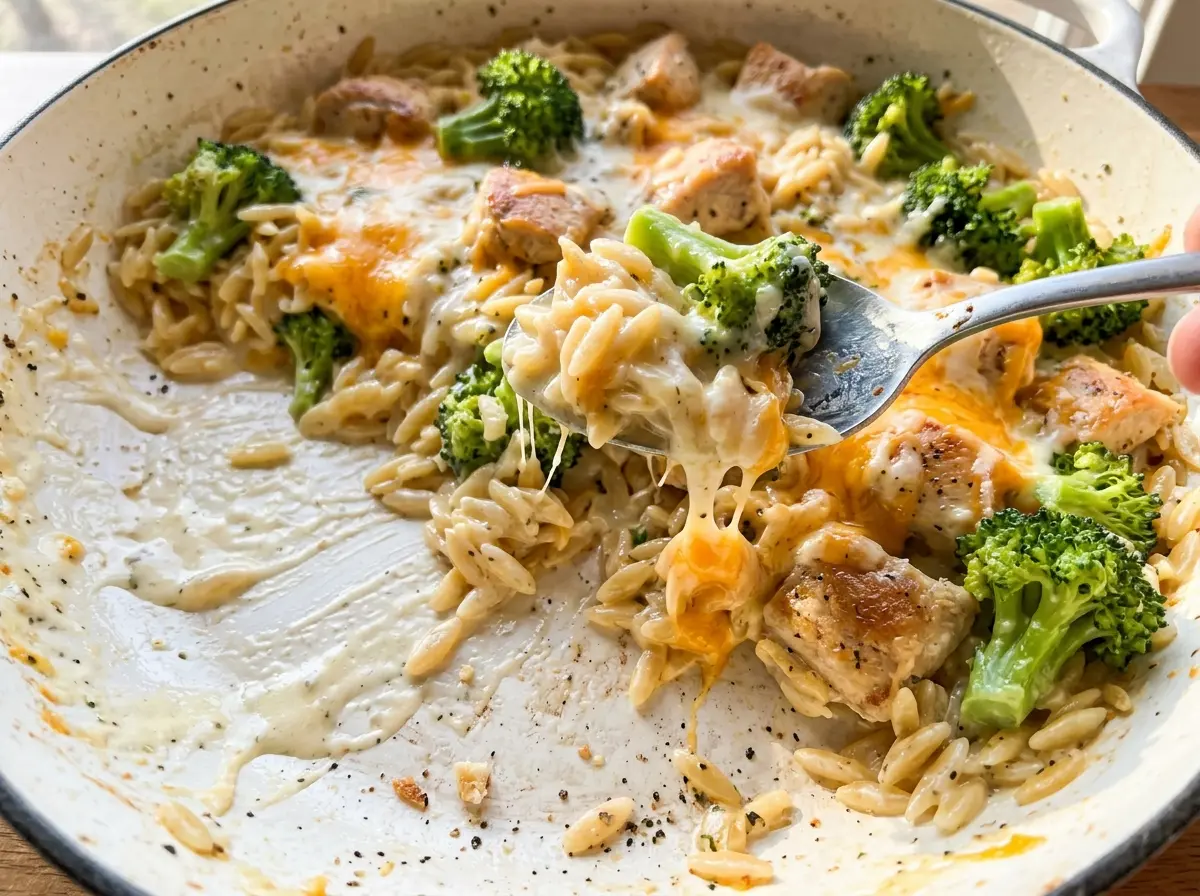
After the cream and cheddar go in, leave the skillet uncovered for the full two-minute rest. The sauce settles into the orzo during that short pause, so resist the urge to keep stirring it back up.
Save this one pot cheesy chicken and broccoli orzo for a night when you want tender pasta, crisp-tender broccoli, and a creamy cheddar finish from one skillet.
Why the Broccoli Goes In After the Orzo Has Started Cooking
Orzo looks like rice, but it’s pasta, and it needs enough time in the broth to soften all the way through. If the broccoli went in at the beginning, it would sit under the lid for the entire cook and turn too soft before the orzo was ready. Giving the pasta a short head start lets both ingredients reach their best texture in the same skillet.
The broth also does more than cook the orzo. As the pasta releases starch, the liquid takes on a little body, which helps the cream and cheddar coat everything instead of pooling at the bottom. A gentle simmer matters here: a hard boil can cook off liquid too quickly, leaving the orzo firm before it has absorbed enough to become tender.
Once the broccoli and chicken join the skillet, the covered finish brings the components together without asking the florets to endure a long cook. Look for broccoli that yields when pierced but still holds its shape. The orzo should be tender, not chalky in the middle, before the skillet comes off the heat for its creamy finish.
What Orzo, Broccoli, and Sharp Cheddar Each Bring to This Skillet

- Orzo — Its small shape cooks in the broth while releasing starch that gives the finished skillet a cohesive, creamy texture. Larger pasta shapes won’t follow the same timing or absorb the liquid in quite the same way, so orzo is the right choice for this one-pot method.
- Chicken breasts — Cutting the chicken into even pieces helps them brown at a similar pace and finish cooking during the covered simmer. Boneless, skinless chicken thighs can stand in for the breasts; they bring a richer taste and a slightly more tender bite.
- Broccoli — Small florets cook quickly enough to become crisp-tender in the final simmer. Keep the pieces close in size so a few don’t turn soft while larger ones are still firm.
- Low-sodium chicken broth — It supplies the liquid the orzo needs while leaving room for the seasoned chicken and cheddar to contribute their own saltiness. Regular full-sodium broth can make the final skillet taste saltier, so low-sodium broth gives you a steadier starting point.
- Heavy cream — It rounds out the sharp cheddar and gives the sauce its rich, smooth finish. Milk is thinner and won’t make the same creamy coating; half-and-half is a workable stand-in, but the sauce will be less rich.
- Sharp cheddar — Its pronounced cheese flavor stays noticeable against the chicken and broccoli. A block grated at home tends to melt more smoothly than pre-shredded cheese, though either can be stirred in off the heat.
- Onion and garlic — Finely diced onion softens into the skillet base, while a brief cook for the garlic gives it time to turn fragrant without burning. Fresh garlic is worth using here because it blooms quickly in the hot pan.
Build the Orzo in Stages, Then Finish It Off the Heat
Sear the Chicken Just Until Lightly Browned
Season the chicken with kosher salt and black pepper. Heat the olive oil in a 12-inch deep skillet over medium-high heat for 1 to 2 minutes, then add the chicken in an even layer. Cook for 3 to 4 minutes, stirring once, until the pieces are lightly browned but not cooked through; if they’re packed together, they’ll steam instead of taking on color. Transfer them to a plate and keep the juices there for the skillet later.
Soften the Aromatics and Toast the Orzo
Add the onion to the same skillet and cook over medium heat for 3 to 4 minutes, stirring often, until softened. Stir in the garlic and cook for 30 seconds, just until fragrant; garlic can turn bitter if it sits too long against the hot pan. Stir in the orzo and cook for 1 minute so the grains are lightly coated in the oil and aromatics. Add the chicken broth and bring it to a gentle simmer over medium-high heat.
Give the Orzo Its Head Start
Reduce the heat to medium-low, cover the skillet, and simmer for 5 minutes. Stir once halfway through so the orzo doesn’t settle and cling to the bottom. Keep the simmer gentle rather than letting the broth boil vigorously. At this point, the pasta has started to soften but still needs the final cook with the broccoli and chicken.
Finish the Covered Simmer and Melt the Cheddar
Stir in the broccoli, then return the chicken and any plate juices to the skillet. Cover and simmer for 5 to 7 minutes, stirring once, until the orzo is tender, the broccoli is crisp-tender, and the thickest chicken pieces reach 165°F. If the orzo is still firm, give it a little more time at a gentle simmer rather than raising the heat sharply. Take the skillet off the heat, stir in the heavy cream and cheddar until melted, then let it stand uncovered for 2 minutes before serving.
Two Easy Swaps That Keep the Skillet’s Creamy, Cozy Feel
Use Boneless, Skinless Chicken Thighs
Swap in an equal weight of boneless, skinless thighs, cut into the same size pieces. They bring a deeper, richer chicken flavor and stay succulent through the covered simmer; keep the pieces uniform so they cook at the same pace.
Try White Sharp Cheddar
White sharp cheddar keeps the same savory bite while giving the finished orzo a paler, more uniform color. Use the same amount and stir it in after taking the skillet off the heat, just as you would with yellow cheddar.
Storage and Reheating
- Refrigerator: Store leftovers in an airtight container for 3 to 4 days. The orzo will absorb more sauce as it sits, so it’ll be thicker the next day.
- Freezer: It can be frozen in an airtight container for up to 2 months, though the broccoli softens and the orzo loses some of its springy texture after thawing.
- Reheating: Warm it gently on the stovetop with a small splash of chicken broth, stirring until steaming throughout. Avoid a hard boil, which can make the chicken tough and the sauce less smooth.
Questions That Come Up When Cooking Chicken and Broccoli Orzo
One Pot Cheesy Chicken and Broccoli Orzo
Ingredients
Equipment
Method
- Season the chicken with the kosher salt and black pepper.
- Heat the olive oil in a 12-inch deep skillet over medium-high heat for 1 to 2 minutes.
- Add the chicken in an even layer and cook for 3 to 4 minutes, stirring once, until lightly browned but not cooked through.
- Transfer the chicken to a plate.
- Add the onion to the skillet and cook over medium heat for 3 to 4 minutes, stirring often, until softened.
- Stir in the garlic and cook for 30 seconds.
- Stir in the orzo and cook for 1 minute.
- Add the chicken broth and bring to a gentle simmer over medium-high heat.
- Reduce the heat to medium-low, cover, and simmer for 5 minutes, stirring once halfway through.
- Stir in the broccoli.
- Return the chicken and any plate juices to the skillet.
- Cover and simmer for 5 to 7 minutes, stirring once, until the orzo is tender, the broccoli is crisp-tender, and the chicken reaches 165°F in the thickest pieces.
- Remove the skillet from the heat and stir in the heavy cream and cheddar until the cheese melts.
- Let stand uncovered for 2 minutes before serving.