
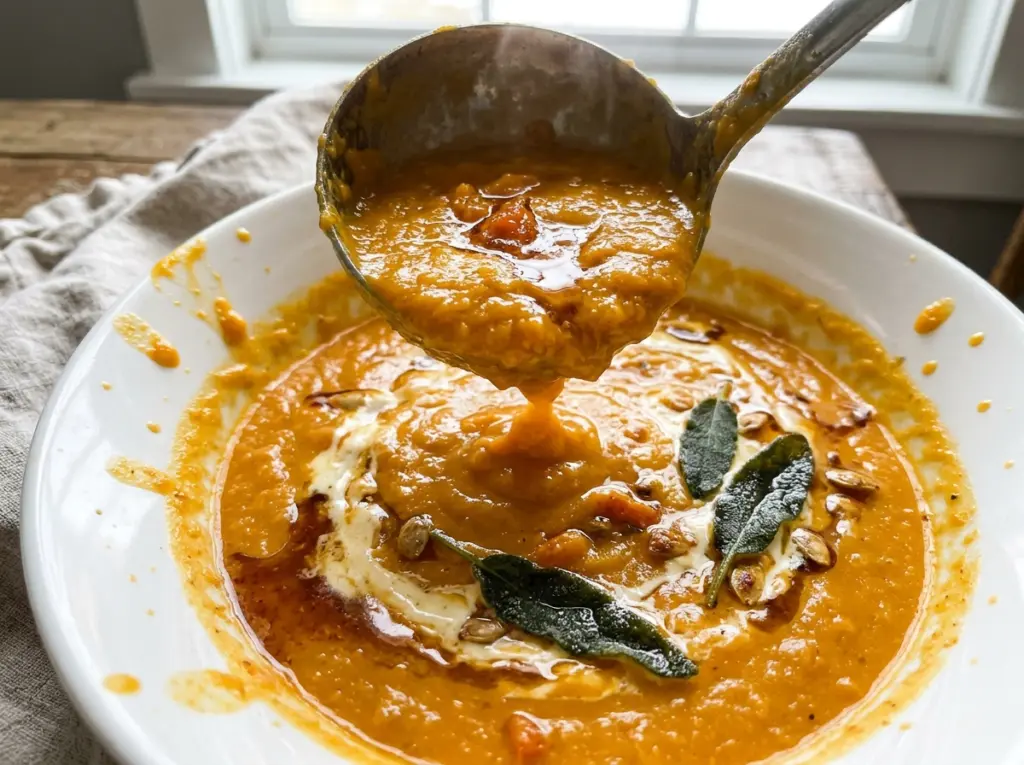
When the fork slips easily into a roasted pumpkin half, the kitchen smells warm and sweet, and the hard part is over. That’s the moment this creamy roasted pumpkin soup with brown butter starts to feel like more than a pot of blended vegetables. Roasting the pumpkin first gives the soup a rounded, toasty flavor, while the brown butter on top brings a nutty finish to each bowl.
I roast the pumpkin cut side down until the flesh is tender, then scoop it from the skin and simmer it with onion, garlic, ginger, nutmeg, and vegetable broth. Blending the pot off the heat keeps the process calm and gives you a smooth base before the cream goes in. The butter takes only a few minutes, but it changes the whole bowl: it should be golden and smell nutty, not dark or scorched. The finished soup is silky, gently spiced, and finished with warm brown butter.
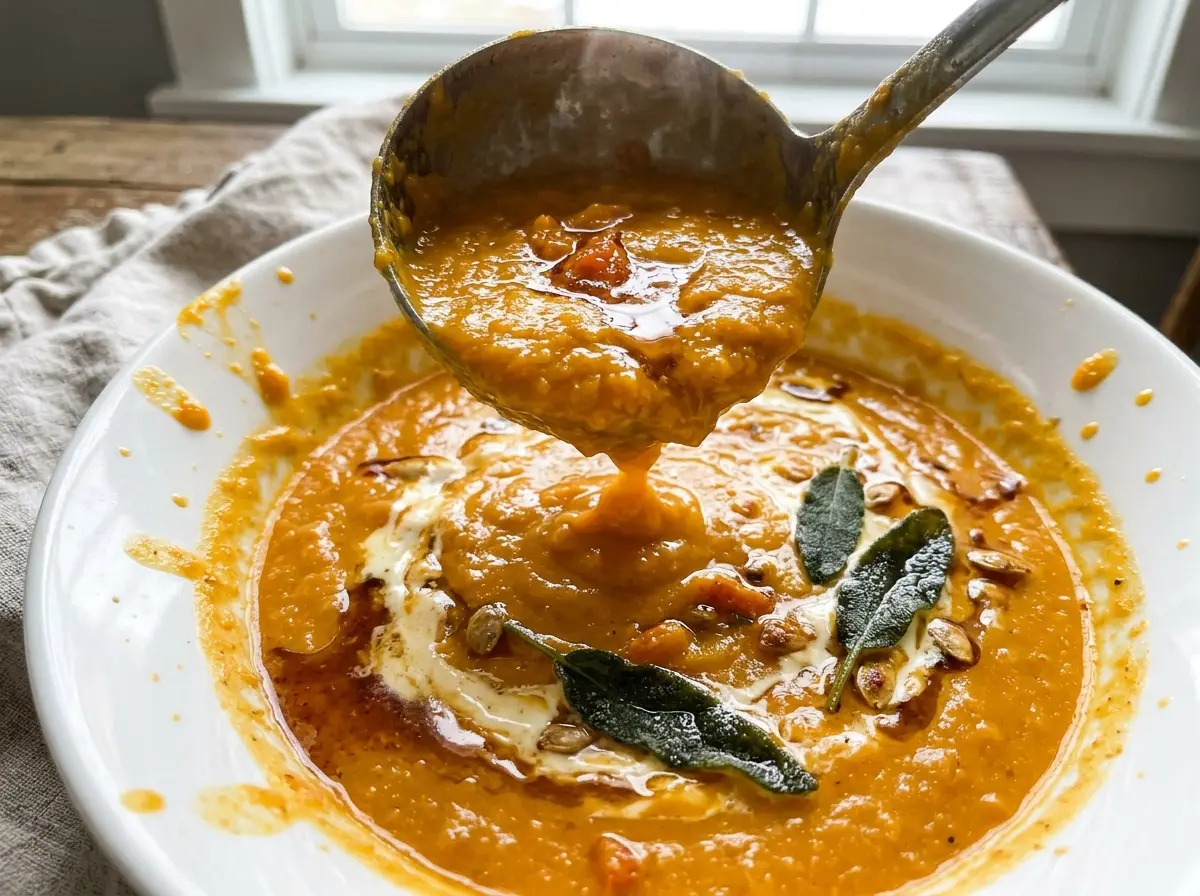
Kitchen Note
Stay close to the skillet once the butter starts bubbling. Swirl it for 3–5 minutes until it turns golden and smells nutty, then take it off the heat promptly so the milk solids don’t go from browned to burnt.
Save this creamy roasted pumpkin soup with brown butter for a smooth, gently spiced bowl finished with a nutty drizzle.
Why Canned Pumpkin Won’t Give This Soup the Same Body
This soup is balanced around the flesh of a whole sugar pumpkin that’s roasted until tender, then simmered with vegetable broth. Canned pumpkin is already cooked and has a different texture and moisture level, so swapping it in directly can leave the soup thicker or thinner than expected. It also skips the roasting, which gives the pumpkin a deeper, gently sweet flavor before it meets the onion and spices.
Roasting the pumpkin halves cut side down lets the flesh soften enough to scoop cleanly from the skin. You don’t need to peel it before it goes in the oven or cut it into small pieces. Use a sugar pumpkin rather than a large carving pumpkin; the eating pumpkin is the better choice for a smooth soup. Once the flesh is tender, the broth amount brings the pot to a spoonable, pourable consistency without burying the pumpkin flavor.
If canned pumpkin is all you have, it’s better to choose a recipe designed around canned puree than to make a straight swap here. The amount of cooked flesh from a whole pumpkin isn’t an exact cup-for-cup match, and changing the puree without adjusting the broth can throw off the final texture.
How the Pumpkin, Cream, and Brown Butter Shape Each Bowl

- Sugar pumpkin — Choose a firm pumpkin with no soft spots. Its tender roasted flesh blends into a smooth base; a carving pumpkin tends to be stringier and less suited to this texture.
- Yellow onion and garlic — The onion softens into the soup’s savory foundation, while garlic adds a mellow edge after its brief cook with the spices. A white onion can stand in for the yellow onion, though its flavor will be a little sharper.
- Ground ginger and nutmeg — These warm spices support the pumpkin without making the soup taste sugary. Freshly opened spices have a clearer aroma, but ordinary pantry jars work well here.
- Low-sodium vegetable broth — A low-sodium broth lets the pumpkin and the measured salt stay in balance. Homemade vegetable broth works too, but its salt level can vary, so taste the soup after blending before deciding whether it needs anything more.
- Heavy cream — Cream gives the blended soup a rounded, soft finish. Half-and-half can replace it in the same amount for a lighter result, though the soup won’t feel quite as rich.
- Unsalted butter — This is what creates the nutty drizzle. Unsalted butter gives you control over the soup’s seasoning, and there isn’t a true shortcut that reproduces brown butter’s toasted dairy flavor.
From Tender Pumpkin to a Smooth, Brown-Butter Finish
Roast Until the Flesh Gives Easily
Heat the oven to 400°F and line a rimmed baking sheet with parchment paper. Halve the pumpkin, scoop out the seeds, and rub the cut sides with olive oil before sprinkling them with salt. Set the halves cut side down and roast for 45–60 minutes, until a fork easily pierces the flesh. Let them cool until easy to handle, then scoop the flesh from the skin; if the fork still meets firm resistance, give the pumpkin more time.
Soften the Onion Before Adding the Spices
Warm the remaining olive oil in a 5-quart Dutch oven over medium heat, then add the chopped onion. Cook for 6–8 minutes, stirring occasionally, until it’s softened rather than browned. Add the minced garlic, ground ginger, and nutmeg, and stir for 30 seconds until fragrant. Don’t let the garlic sit unattended in the hot pot; this short cook is enough to wake up the spices without scorching it.
Simmer the Pumpkin into the Broth
Add the scooped pumpkin flesh and vegetable broth to the pot, then bring everything to a simmer. Cook uncovered for 10 minutes so the pumpkin and aromatics have time to mingle. Keep the heat at a steady simmer rather than a hard boil. The pumpkin should look soft and settled into the broth before you blend.
Blend Off the Heat, Then Stir in the Cream
Take the Dutch oven off the heat before blending the soup until smooth with an immersion blender. If you’re using a standard blender, puree in batches and handle the hot liquid carefully. Stir in the cream, black pepper, and remaining salt, then warm the soup over low heat for 2–3 minutes without boiling. A low, gentle warm-through keeps the cream from being pushed into a boil.
Drizzle with Fresh Brown Butter
Melt the butter in an 8-inch skillet over medium heat, swirling the pan for 3–5 minutes. It’s ready when it turns golden brown and smells nutty. Take the skillet off the heat promptly, ladle the soup into bowls, and drizzle the brown butter over the top. The butter is best made close to serving so it stays fluid enough to pour.
Two Easy Ways to Change the Flavor or Make It Dairy-Free
A dairy-free coconut version
Replace the heavy cream with unsweetened full-fat coconut milk, and finish with a little olive oil instead of brown butter. The soup stays creamy, but the coconut brings its own flavor and you’ll lose the toasted-butter note.
A ginger-forward bowl
Leave out the nutmeg and keep the ground ginger. That small change makes the spice taste more direct and less sweetly warm, while the roasted pumpkin and brown butter still anchor the soup.
Storage and Reheating
- Refrigerator: Cool promptly and refrigerate within 2 hours. Store in an airtight container for 3–4 days; the soup may thicken as it chills.
- Freezer: Freeze portions in airtight containers for up to 2 months. The cream can separate a little after thawing, but gentle reheating and stirring help bring the texture back together.
- Reheating: Warm on the stovetop over low heat, stirring until hot, and avoid boiling. High heat can make the creamy soup less smooth.
Questions That Come Up While Making Pumpkin Soup
Creamy Roasted Pumpkin Soup with Brown Butter
Ingredients
Equipment
Method
- Heat the oven to 400°F and line a rimmed baking sheet with parchment paper.
- Halve the pumpkin and scoop out the seeds. Rub the cut sides with 1 tablespoon olive oil and sprinkle with 1/2 teaspoon salt, then place cut side down on the baking sheet.
- Roast for 45–60 minutes, until a fork easily pierces the flesh.
- Cool until easy to handle and scoop the flesh from the skin.
- Heat the remaining 1 tablespoon olive oil in a 5-quart Dutch oven over medium heat. Add the onion and cook for 6–8 minutes, stirring occasionally, until softened.
- Add the garlic, ginger, and nutmeg and cook for 30 seconds, stirring, until fragrant.
- Add the pumpkin flesh and broth, bring to a simmer, and cook uncovered for 10 minutes.
- Remove the pot from the heat.
- Blend until smooth with an immersion blender, or carefully puree in batches in a standard blender.
- Stir in the cream, pepper, and remaining 1/2 teaspoon salt, then warm over low heat for 2–3 minutes without boiling.
- Melt the butter in an 8-inch skillet over medium heat, swirling the pan for 3–5 minutes, until the butter is golden brown and smells nutty. Remove from the heat promptly.
- Ladle the soup into bowls and drizzle with the brown butter.