
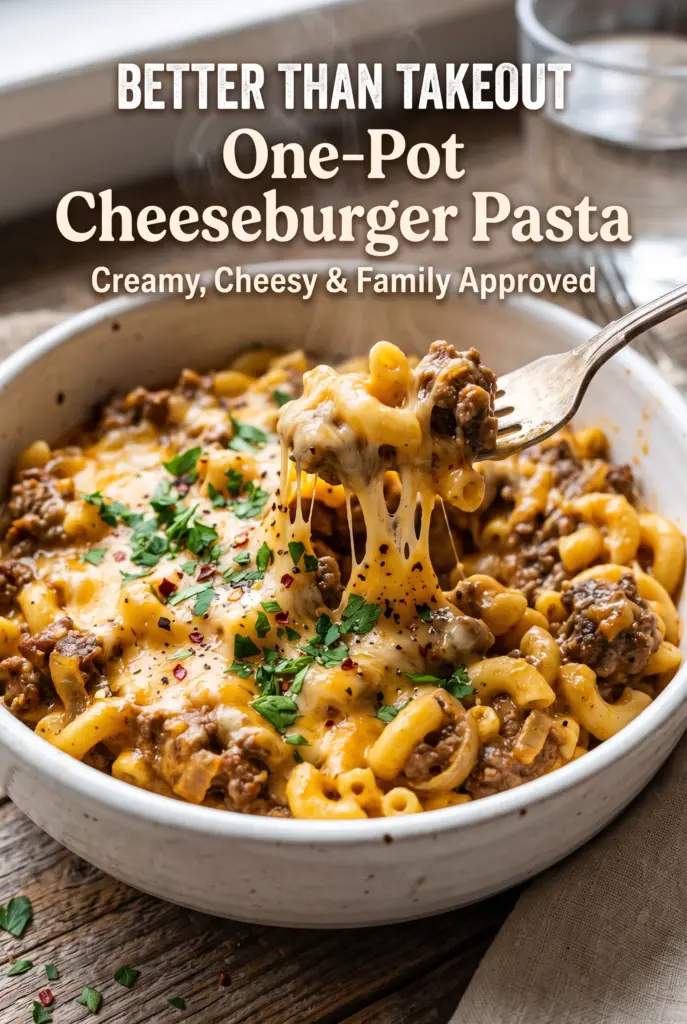
Cheeseburger pasta hits the table with the kind of comfort that makes everyone come back for a second scoop. The sauce clings to every noodle, the beef stays savory and rich, and the cheddar melts into a creamy finish that tastes like a cheeseburger in forkful form. The best part is that it all happens in one pot, so you get a full dinner without a sink full of pans waiting for you afterward.
What makes this version work is the balance. Tomato paste builds a deep base, ketchup and mustard bring that classic burger tang, and Worcestershire gives the sauce the salty backbone it needs to taste finished instead of flat. I also use freshly shredded cheddar instead of the bagged stuff, because pre-shredded cheese can turn grainy when it melts. The cream cheese goes in at the end and smooths everything out without making the sauce heavy.
Below, I walk through the points that matter most: how to keep the pasta from going mushy, when to add the cheese so the sauce stays silky, and a few smart swaps if you need to adjust what’s in your fridge.
The sauce thickened up perfectly and the pasta stayed tender without turning mushy. My husband went back for seconds and asked if I could make it again next week.
Save this one-pot cheeseburger pasta for the nights when you want creamy beef, melty cheddar, and easy cleanup in the same pan.
The Cheese Sauce Breaks When You Rush the Final Stir
This dish only looks simple from the outside. The most common failure is dumping the cheese into a boiling pot and ending up with a grainy sauce that separates instead of turning creamy. Once the pasta is tender, the heat needs to come down before the dairy goes in. That gives the sauce time to melt smoothly instead of seizing around the fat in the cheese.
The other thing that matters is the liquid ratio. Pasta absorbs more than you think as it sits, so the sauce should look a little loose before the cheese goes in. By the time the cheddar melts and the pasta rests for a minute, it will thicken into that glossy, scoopable texture you want. If it looks perfect in the pot before the cheese, it usually turns too tight at the table.
What Each Ingredient Is Actually Doing in This Dish

- Lean ground beef — This gives the pasta its cheeseburger backbone. Lean beef works well here because there’s already plenty of richness from the cheese and milk; if your beef is fattier, drain off the excess so the sauce doesn’t turn greasy.
- Tomato paste — This is where the savory depth comes from. Let it cook for a minute with the beef so the raw edge softens and the sauce tastes cooked through instead of tinny.
- Ketchup, yellow mustard, and Worcestershire sauce — These are the burger notes. Ketchup adds sweetness and body, mustard brings sharpness, and Worcestershire adds a dark, salty hit that keeps the whole pot from tasting one-dimensional.
- Sharp cheddar — Use freshly shredded cheddar if you can. It melts smoother than pre-shredded cheese, which is coated to prevent clumping and can leave the sauce a little sandy.
- Cream cheese — This doesn’t make the dish taste like cream cheese. It rounds out the cheddar and helps the sauce cling to the pasta without breaking.
- Elbow macaroni — The classic shape works because the sauce gets trapped inside and around the curves. Other short pastas work too, but stick with a similar size so the timing stays on track.
How to Build the Pot So the Pasta Cooks and the Sauce Stays Smooth
Brown the Beef and Soften the Onion
Cook the ground beef until it loses its pink color and starts to pick up some browned bits on the bottom of the pan. That browned layer is flavor, not something to scrub away. Add the onion and let it soften until it turns translucent and sweet, then stir in the garlic just long enough for it to smell fragrant. Garlic burns fast, so the pan should not be screaming hot when it goes in.
Cook Out the Tomato Paste
Stir in the tomato paste, ketchup, mustard, Worcestershire sauce, and seasonings and let them coat the meat for a minute. The paste should darken slightly and lose its raw edge. This is where the sauce gets its depth, and if you skip that quick cook, the finished dish can taste sharp instead of rounded.
Simmer the Pasta in the Sauce
Pour in the broth and milk, then add the uncooked macaroni. Bring the pot to a gentle boil, then lower the heat and cover it so the pasta can cook evenly. Stir once or twice while it simmers so nothing sticks to the bottom. If the heat is too high, the milk can scorch and the pasta can absorb the liquid too fast before it has a chance to soften evenly.
Finish With the Cheese Off the Heat
When the pasta is tender, turn the heat to low and stir in the cream cheese first. Once it melts, add the cheddar and mozzarella a handful at a time. The sauce should turn glossy and thick, not oily. If it ever looks rough, pull the pot off the burner for a minute and keep stirring until the cheese comes together.
How to Adapt It When You Need to Work With What You Have
Make It Gluten-Free
Use your favorite gluten-free short pasta, but watch the pot closely because some brands soften faster than regular macaroni. Start checking a few minutes early and keep a little extra broth nearby in case the sauce tightens before the pasta is done. The flavor stays the same; the texture just needs a little more attention.
Swap the Beef for Ground Turkey
Ground turkey works if you want a lighter version, but it needs a little help because it has less built-in flavor than beef. Add an extra pinch of salt and keep the Worcestershire sauce in the mix so the sauce still tastes savory and full. A tablespoon of butter added with the turkey also helps replace some of the richness you lose.
Use a Different Cheese Blend
If you don’t have mozzarella, use all cheddar or swap in Monterey Jack for a softer melt. Cheddar brings the strongest flavor, while a milder melting cheese gives the sauce a silkier finish. Stay away from strongly aged cheeses as the only cheese in the pot, because they can turn the sauce grainy.
Storage and Reheating
- Refrigerator: Store leftovers for up to 4 days. The pasta will keep absorbing sauce, so expect it to thicken as it sits.
- Freezer: It freezes, but the dairy sauce can turn a little grainy after thawing. If you do freeze it, cool it completely first and pack it in airtight containers for up to 2 months.
- Reheating: Warm it gently on the stove or in the microwave with a splash of milk or broth. High heat is what dries it out and makes the cheese separate, so reheat in short bursts and stir well between each one.
Answers to the Questions Worth Asking
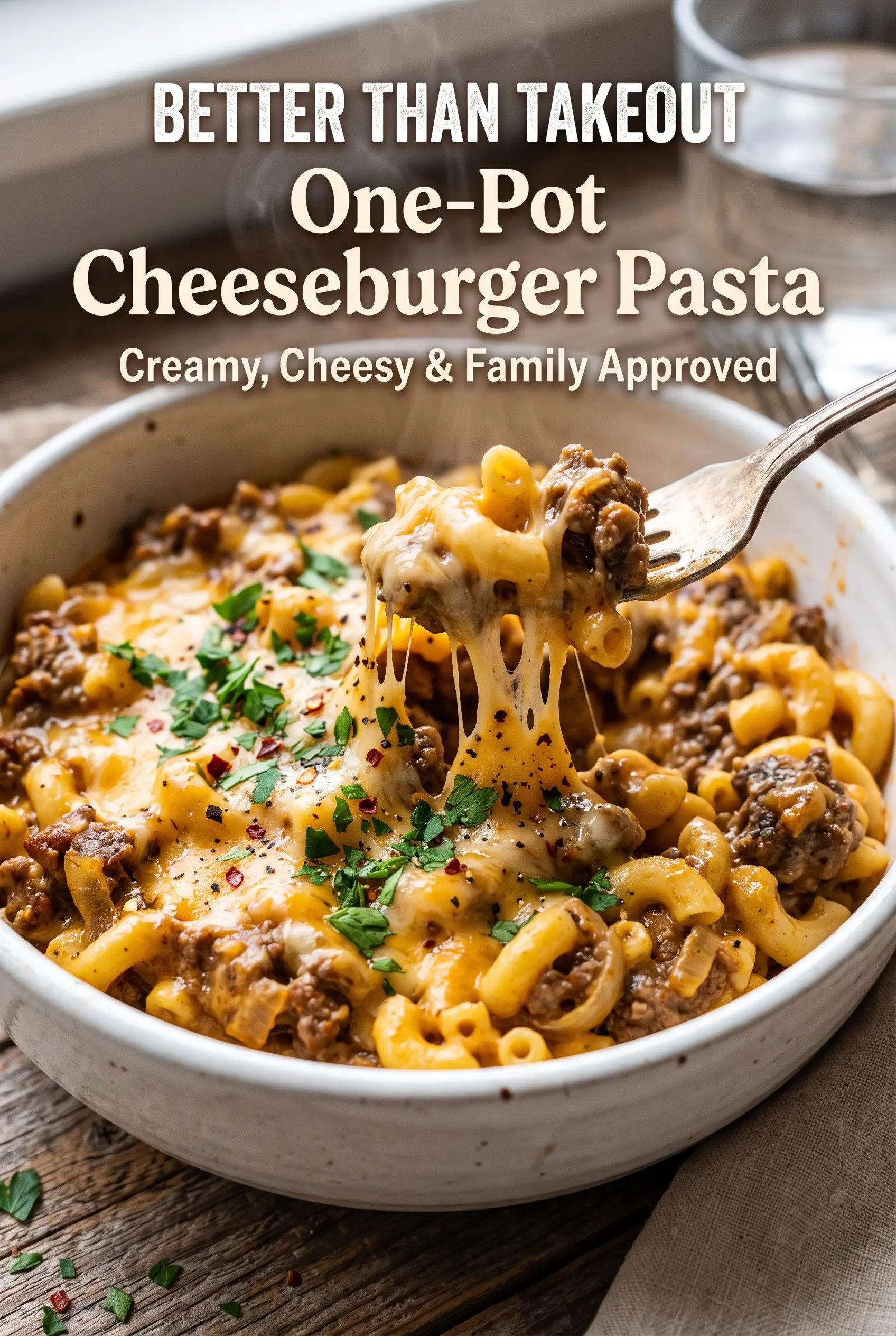
One-Pot Cheeseburger Pasta
Ingredients
Equipment
Method
- Brown the ground beef in a large skillet or Dutch oven over medium-high heat until cooked through and no longer pink. You should see browned bits forming on the bottom of the pot.
- Add the diced onion and cook for 4 minutes. Stir until the onion softens and turns slightly translucent.
- Stir in the minced garlic for 30 seconds. Keep it moving so it becomes fragrant without browning too much.
- Mix in the tomato paste, ketchup, yellow mustard, Worcestershire sauce, paprika, onion powder, garlic powder, black pepper, and salt. Cook for about 1 minute until the mixture looks evenly combined and thickened.
- Pour in the beef broth and milk, stirring to combine with the seasoned beef. Scrape up any browned bits from the bottom.
- Stir in the uncooked elbow macaroni until submerged. Make sure the pasta is evenly distributed in the liquid.
- Bring the mixture to a gentle boil over medium-high heat. Look for steady bubbles across the surface rather than a hard rolling boil.
- Cover and simmer for 10–12 minutes until the pasta is tender. Watch for the pasta to soften while the sauce thickens.
- Reduce heat to low. This prevents the milk proteins from separating as you melt the cheese.
- Stir in the cream cheese. Stop when it fully disappears into the sauce and looks smooth.
- Add the cheddar and mozzarella gradually until completely melted. Keep stirring so the cheese melts in without clumping.
- Garnish with chopped fresh parsley and optional dill pickle slices before serving. Add the pickles for a tangy, burger-style bite.