
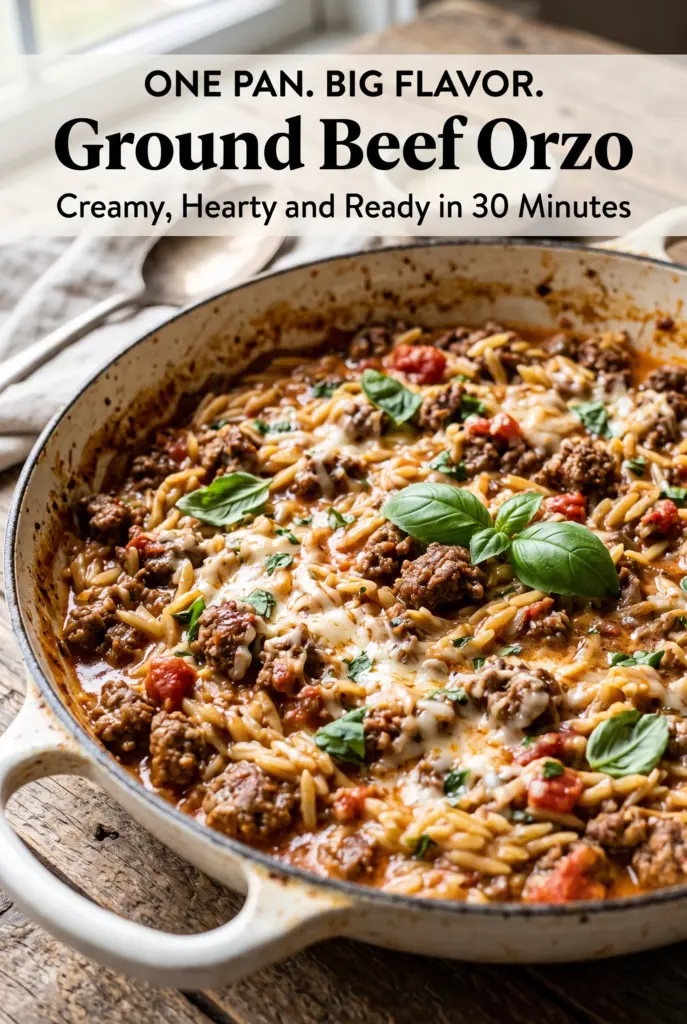
Ground beef orzo with creamy tomato Parmesan sauce hits that sweet spot between weeknight practical and genuinely comforting. The orzo cooks right in the pan, so it swells up with beef broth and tomato sauce instead of sitting off to the side like a separate starch. What you end up with is tender pasta, a savory, spoon-coating sauce, and enough richness from the cream and Parmesan to make the whole pan taste finished.
The part that matters most here is the sequence. Browning the beef first gives you the savory base, then the onion and garlic soften into those drippings before the dry orzo goes in for a quick toast. That little toast adds a faint nutty edge and helps the pasta hold its texture instead of turning soft and muddy. The cream and Parmesan go in at the end, after the simmer, so the sauce stays smooth instead of tightening up or turning grainy.
Below you’ll find the timing that keeps the orzo tender but not bloated, the small ingredient choices that make the sauce taste deeper, and a few ways to adjust the pan if you’re cooking for different diets or leftovers.
The orzo stayed perfectly tender and the sauce thickened up without getting gluey. I used the full 12 minutes and the Parmesan melted in smooth at the end. My husband went back for seconds before I even sat down.
Save this ground beef orzo for the nights when you want a creamy one-pan dinner with tomato sauce, Parmesan, and almost no cleanup.

The Reason the Orzo Stays Creamy Instead of Pasting Up
Orzo is small enough to overcook fast, and that’s where a lot of one-pan versions go wrong. If the pan is boiling hard the whole time, the liquid reduces too quickly before the pasta has time to soften evenly. You end up with dry spots at the edge of the skillet and a gummy center. A gentle simmer is what keeps the sauce and pasta moving together.
The other mistake is adding the cream too early. Tomato sauce and cream can live together just fine, but only after the orzo is already tender. If you add dairy while the pasta is still cooking hard, the sauce can separate or thicken unevenly before the liquid has done its job. Wait until the broth has mostly absorbed and the orzo is just tender, then finish with cream and Parmesan so the sauce turns silky instead of heavy.
- Lean ground beef — Lean is enough here because the pan gets built with onion, tomato sauce, and cream. If you use a fattier grind, drain off some of the excess after browning so the sauce doesn’t turn greasy.
- Orzo — This pasta cooks in the sauce and gives the dish its body. Long-grain substitutes won’t absorb liquid the same way, so the timing changes completely.
- Tomato sauce — Use plain tomato sauce, not seasoned spaghetti sauce. You want control over the seasoning so the Parmesan and smoked paprika can do their work without the dish turning overly sweet.
- Heavy cream — This is what softens the tomato and gives the sauce its velvety finish. Half-and-half works in a pinch, but the sauce will be thinner and a little more fragile.
- Parmesan cheese — Freshly grated Parmesan melts smoother and brings a saltier, nuttier finish than the shelf-stable kind. Pre-grated cheese can work, but it won’t disappear into the sauce as cleanly.
- Beef broth — This adds depth that water can’t replace. If all you have is water, add a small extra pinch of salt and expect a slightly flatter sauce.
Building the Pan in the Right Order
Browning the Beef First
Heat the olive oil, then add the ground beef and let it sit long enough to brown before you start breaking it up completely. You want some caramelized bits, not gray steam-cooked crumbles. If a lot of liquid pools in the pan, keep cooking until it evaporates, because that moisture will dilute the sauce later.
Softening the Onion and Garlic
Once the beef is browned, stir in the onion and cook until it turns translucent and picks up the savory drippings. Garlic goes in last and only needs about 30 seconds; any longer and it can turn bitter under the heat. This is the moment that gives the base enough sweetness to balance the tomato sauce.
Toast the Orzo Before the Liquid Goes In
Stir the dry orzo through the beef mixture for about a minute so it gets coated in fat and starts to toast. This step keeps the pasta from tasting flat, and it helps the grains stay separate in the final dish. Pour in the broth and tomato sauce right away once you smell that faint nutty aroma, because dry orzo can go from toasted to scorched fast.
Finish Low and Slow
Cover the skillet and simmer gently until the orzo is tender and the liquid is mostly absorbed. Stir every few minutes so the pasta at the bottom doesn’t stick. When the orzo has just a little bite left, take the pan off the heat, stir in the cream and Parmesan, and let the residual heat melt everything into a smooth sauce.
How to Adapt This for Different Kitchens and Diets
Dairy-Free Version
Swap the cream for full-fat coconut milk or an unsweetened dairy-free cooking cream, then leave out the Parmesan or use a dairy-free alternative. The sauce will be a little less sharp and a touch richer in texture, but it still coats the orzo nicely if you keep the simmer gentle.
Gluten-Free Adjustment
Use gluten-free orzo if you can find it, but watch the liquid closely because different brands soften at different rates. If you can’t find gluten-free orzo, small gluten-free pasta shapes can work, though they may need a little extra broth and a shorter simmer.
Make It Spicier
Add a pinch of red pepper flakes with the garlic or stir in a little Calabrian chili paste with the tomato sauce. That gives the dish a cleaner heat than hot sauce, which can thin out the cream sauce and throw off the balance.
Storage and Reheating
- Refrigerator: Store in an airtight container for up to 4 days. The orzo will keep soaking up sauce, so expect it to thicken as it sits.
- Freezer: It freezes, but the cream sauce can loosen a little after thawing. Freeze in portions and stir well after reheating to bring the sauce back together.
- Reheating: Warm it gently on the stove or in the microwave with a splash of broth or water. High heat dries out the orzo and can make the sauce split, so reheat in short bursts and stir between each one.
Questions I Get Asked About This Recipe
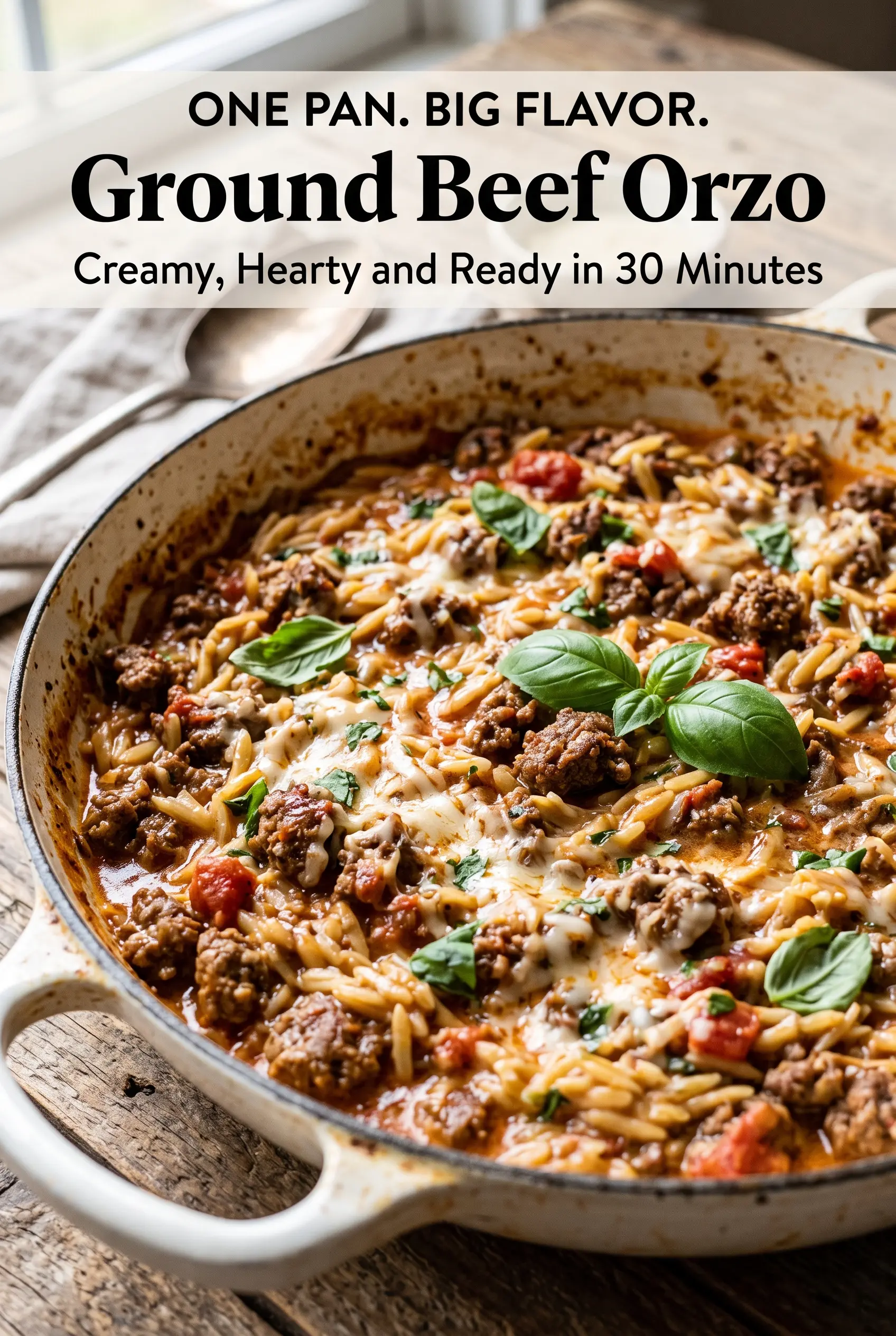
Ground Beef Orzo with Creamy Tomato Parmesan Sauce
Ingredients
Equipment
Method
- Heat olive oil in a large skillet over medium-high heat until shimmering, about 1 minute. A light flow of oil should move easily across the pan surface.
- Add the ground beef and cook until browned, breaking it up as it cooks. Continue until no longer pink and the surface looks browned, 6–8 minutes.
- Stir in the diced onion and cook for 3 minutes. The onion should soften and turn slightly translucent.
- Add the minced garlic and cook for 30 seconds, stirring constantly. It should smell fragrant without turning dark.
- Stir in the dry orzo and toast for 1 minute. The orzo should look slightly dry and fragrant.
- Pour in the beef broth and tomato sauce, scraping up any browned bits from the bottom. Stir until the mixture looks evenly combined.
- Add the Italian seasoning, smoked paprika, garlic powder, onion powder, kosher salt, and black pepper. Stir to distribute the spices throughout.
- Bring the mixture to a gentle simmer over medium-high heat. You should see small bubbles around the edges.
- Cover and cook for 10–12 minutes, stirring occasionally. The orzo should be tender and most of the liquid absorbed.
- Stir in the heavy cream and grated Parmesan cheese until smooth and combined. The sauce should thicken as the cheese melts, about 1 minute.
- Simmer for 2–3 minutes until creamy, stirring gently to prevent sticking. The mixture should look glossy and cohesive.
- Garnish with chopped parsley and fresh basil before serving. Finish with a fresh green color on top.