
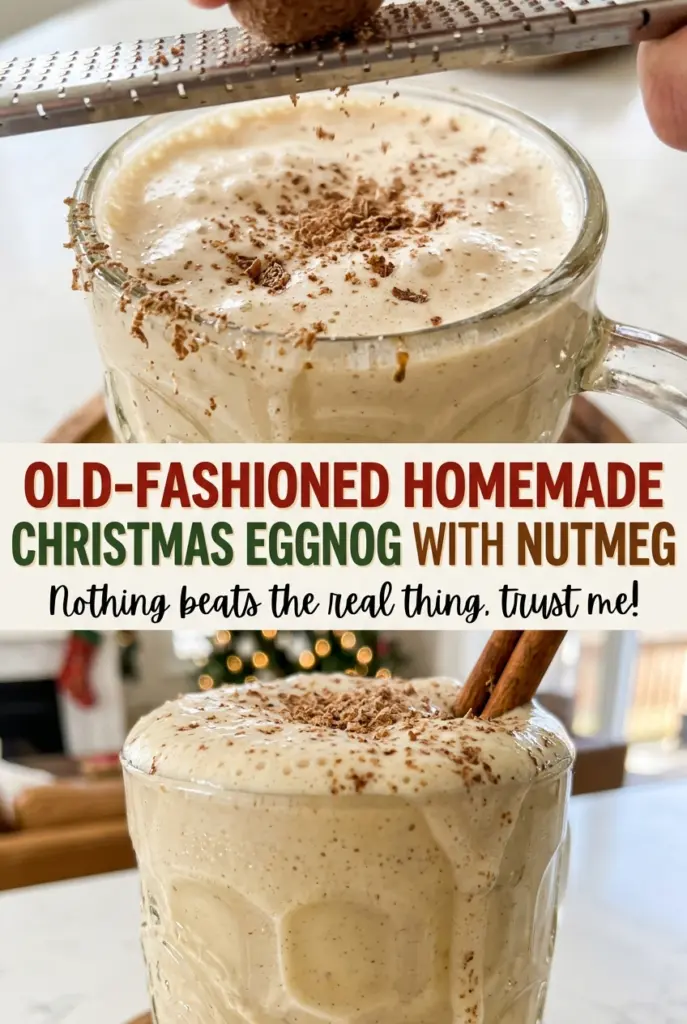
The first wisps of steam rise from the saucepan before the milk ever bubbles, and the nutmeg starts to smell warm and woodsy. That’s the moment I watch closely: eggnog needs gentle heat, not a rolling boil. This old-fashioned homemade Christmas eggnog with nutmeg gets its rich, custardy body from egg yolks and cream, then chills until it’s ready to pour.
I whisk the yolks with sugar until they’re thick and pale, then temper them with a little of the hot milk mixture before the two meet in the pan. That gradual change in temperature helps the yolks thicken the eggnog instead of turning into scrambled bits. Freshly grated nutmeg gives the drink a lively spice aroma, and vanilla stirred in off the heat rounds out each chilled sip.
Kitchen Note
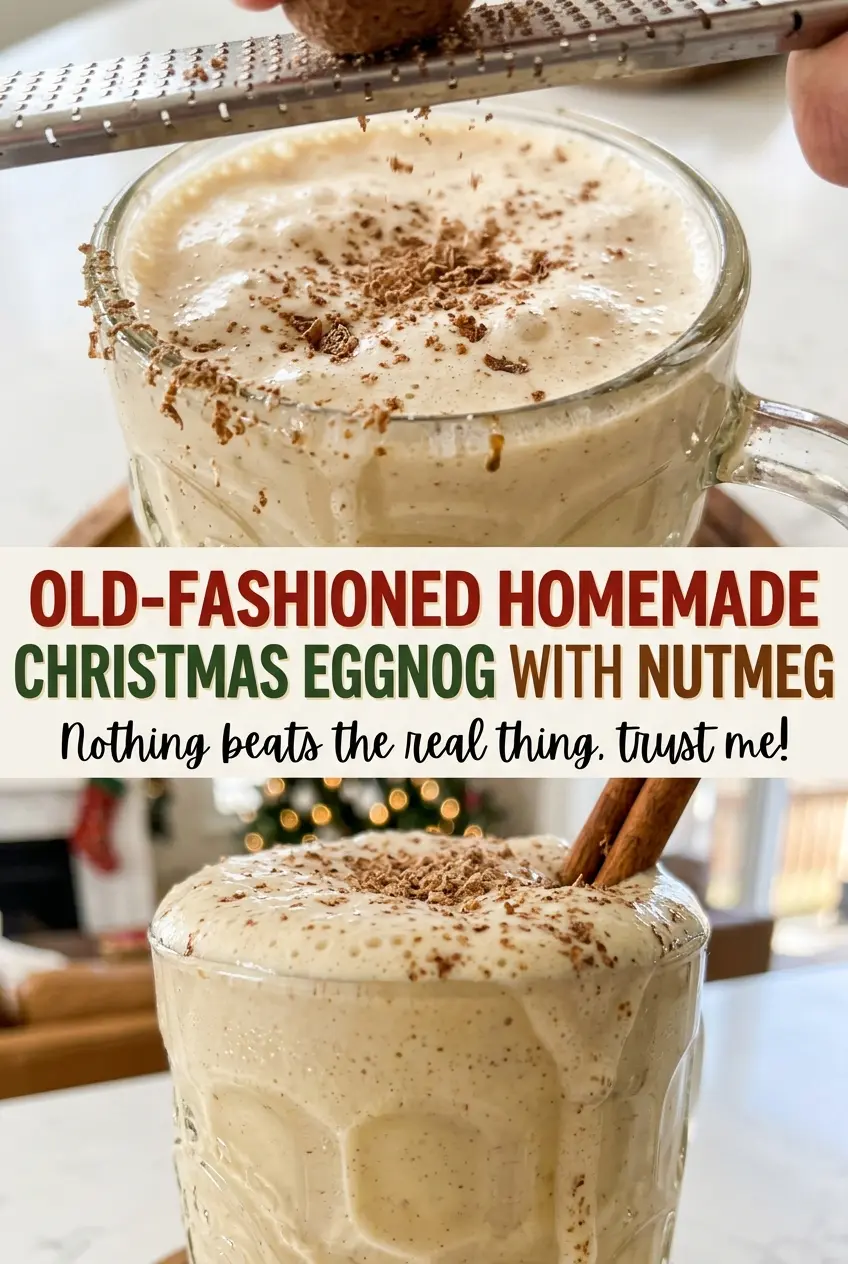
Keep the ice-bath water below the rim of the heatproof bowl. A splash into the eggnog would thin the custard, so stir the eggnog itself as it cools instead of sloshing the bowl around.
Save this old-fashioned Christmas eggnog for a creamy, nutmeg-scented drink you can make ahead and serve chilled.
Why Tempering Keeps the Yolks Silky Instead of Scrambled
Egg yolks thicken this eggnog, but they’re sensitive to a sudden rush of heat. If you pour all the steaming milk mixture straight into the bowl, the outside of the yolks can cook before the mixture has a chance to warm evenly. That’s where the tiny cooked-egg flecks come from.
Tempering bridges that temperature gap. Whisking a small amount of hot milk into the yolks first warms them gradually, so they can join the rest of the milk and cream without seizing. Once everything is back in the saucepan, steady stirring helps the custard heat evenly across the bottom rather than catching in one hot spot. The result should be smooth and lightly thickened, not a firm pudding. A thermometer gives you a dependable endpoint; guessing from thickness alone is less reliable because the mixture is still fairly fluid while hot.
This gentle approach also gives the nutmeg time to scent the dairy without boiling it hard. Keep the heat controlled through the whole process, and you’ll have a pourable custard with a soft, creamy finish instead of a grainy one.
What the Yolks, Cream, and Fresh Nutmeg Each Bring
- Egg yolks — They provide the custard’s body and silky mouthfeel. Separate them cleanly; even a little white makes the yolk mixture harder to whisk into a thick, pale base. The yolks don’t need to be a specialty brand, but fresh eggs with intact yolks are easier to handle.
- Whole milk and heavy cream — Whole milk keeps the drink fluid enough to pour, while heavy cream gives it a round, rich texture. Standard grocery-store dairy works well here. Swapping all the cream for milk will make a noticeably thinner eggnog; for a dairy-free adaptation, use the separate variation below rather than treating those two ingredients as interchangeable.
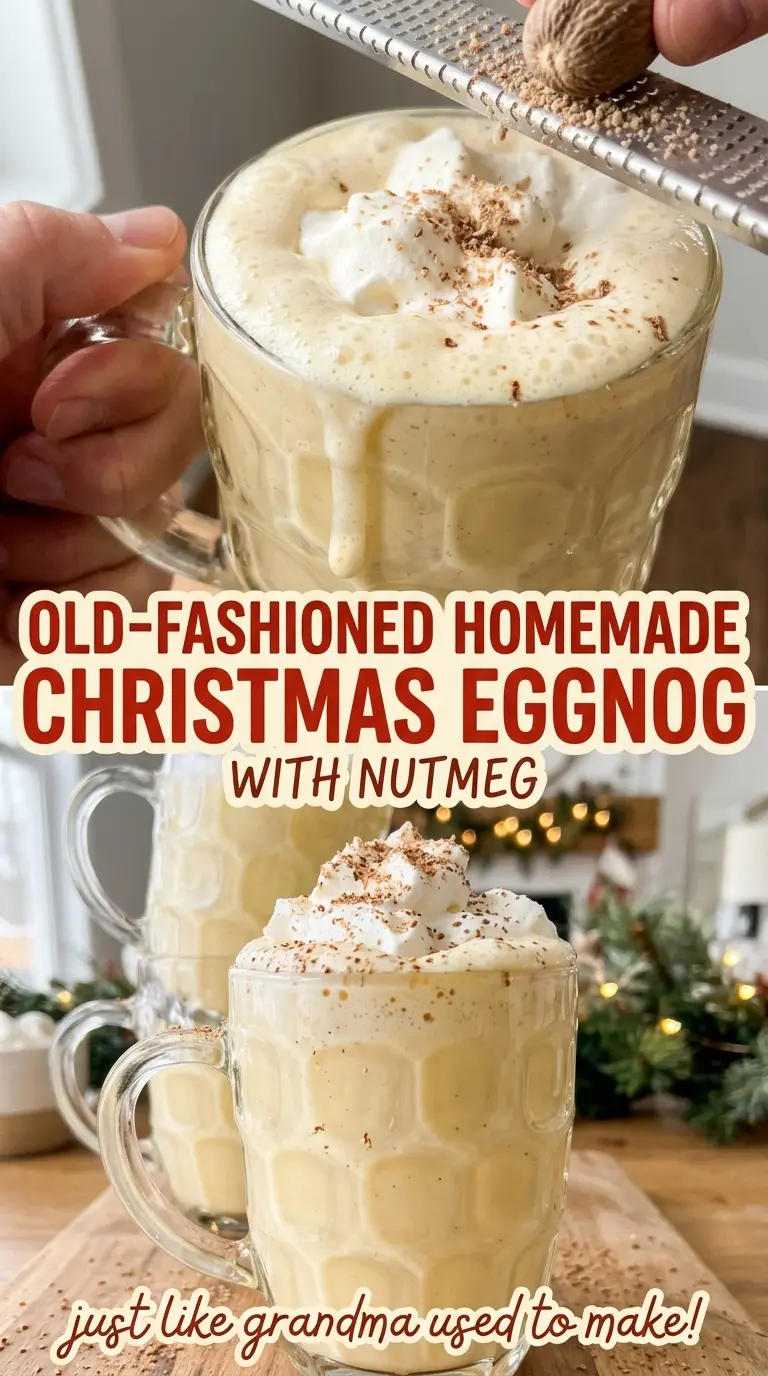
- Freshly grated nutmeg — Grating it directly into the dairy gives the spice a brighter aroma than a jar that’s been open for months. If you only have ground nutmeg, use it in place of the freshly grated nutmeg; the flavor will be a little less fragrant and more direct.
- Granulated sugar and vanilla extract — The sugar sweetens the custard and helps the yolks become thick and pale when whisked. Vanilla adds a mellow finish after cooking. Imitation vanilla extract works in the same amount if that’s what’s in your cabinet, though its aroma is less rounded.
Building a Smooth Eggnog Custard from the First Whisk
Whisk the Yolks Until Pale
In a medium bowl, whisk the egg yolks, granulated sugar, and kosher salt until the mixture looks thick and pale. Scrape the whisk through the center and watch the ribbons fall back into the bowl; they should linger briefly instead of disappearing at once. This gives the sugar time to combine with the yolks before the warm dairy goes in. If the mixture still looks dark and loose, keep whisking before moving on.
Warm the Dairy Until It Steams
Add the whole milk, heavy cream, and freshly grated nutmeg to a 3-quart saucepan. Heat over medium for 5–7 minutes, watching for steam to rise from the surface. The mixture should be hot but not boiling; active bubbles around the edge mean the heat has gone too far. Stirring now helps distribute the nutmeg through the dairy.
Temper, Then Thicken the Custard
Slowly whisk about 1 cup of the hot milk mixture into the yolk bowl, adding it in a steady stream while whisking. Pour the warmed yolk mixture back into the saucepan, then cook over medium-low heat, stirring constantly, for 5–8 minutes. The custard is ready when a thermometer reads 160°F. Don’t walk away during this stage; egg can catch on the bottom of the pan if it sits over the heat without stirring.
Strain, Cool, and Chill
Take the saucepan off the heat and strain the eggnog through a fine-mesh strainer into a heatproof bowl, then stir in the vanilla extract. Set the bowl in an ice bath and stir occasionally for 20–30 minutes, until the eggnog is cool. Cover and refrigerate it for at least 4 hours before serving chilled. The strained custard should pour smoothly once it’s cold.
Three Easy Ways to Adapt This Christmas Eggnog
Make It Dairy-Free with Oat Milk and Coconut Cream
Replace the whole milk with the same amount of unsweetened oat milk, and replace the heavy cream with the same amount of canned coconut cream. The yolks still provide the custard body, while coconut adds a gentle flavor of its own and the finish won’t taste quite as classically dairy-rich.
Use Ground Nutmeg When Fresh Isn’t Handy
Use 1 teaspoon of ground nutmeg in place of the freshly grated nutmeg. It still gives the eggnog its familiar warm spice, though the aroma won’t be as bright. Stir it into the milk and cream as they heat so it disperses through the base.
Add a Little Bourbon or Dark Rum
For an adult version, stir a small splash of bourbon or dark rum into the cooled eggnog, then taste before adding more. Adding it after cooking keeps the spirit’s aroma from cooking off, and the drink will be a touch looser than the alcohol-free batch.
Make-Ahead and Storage
- Make-ahead: Prepare it in advance, cover the bowl, and keep it chilled until serving.
- Refrigerator: Store covered and use within 3 days. The cold custard may thicken slightly as it rests.
- Freezer: I don’t recommend freezing it; the dairy-and-egg custard can separate and turn grainy after thawing.
- Serving: Serve it chilled, straight from the refrigerator. A gentle stir before pouring brings the custard back together if it has settled.
Questions I Get Asked About Homemade Eggnog
Old-Fashioned Homemade Christmas Eggnog with Nutmeg
Ingredients
Equipment
Method
- In a medium bowl, whisk the egg yolks, sugar, and salt until thick and pale.
- In a 3-quart saucepan, heat the milk, heavy cream, and nutmeg over medium heat for 5–7 minutes, until steaming but not boiling.
- Slowly whisk about 1 cup of the hot milk mixture into the yolk mixture to temper it.
- Pour the tempered yolk mixture into the saucepan and cook over medium-low heat, stirring constantly, for 5–8 minutes, until a thermometer reads 160°F.
- Remove the saucepan from the heat and strain the eggnog through a fine-mesh strainer into a heatproof bowl, then stir in the vanilla extract.
- Set the bowl in an ice bath and stir occasionally for 20–30 minutes, until cool.
- Cover and refrigerate for at least 4 hours, then serve chilled.