
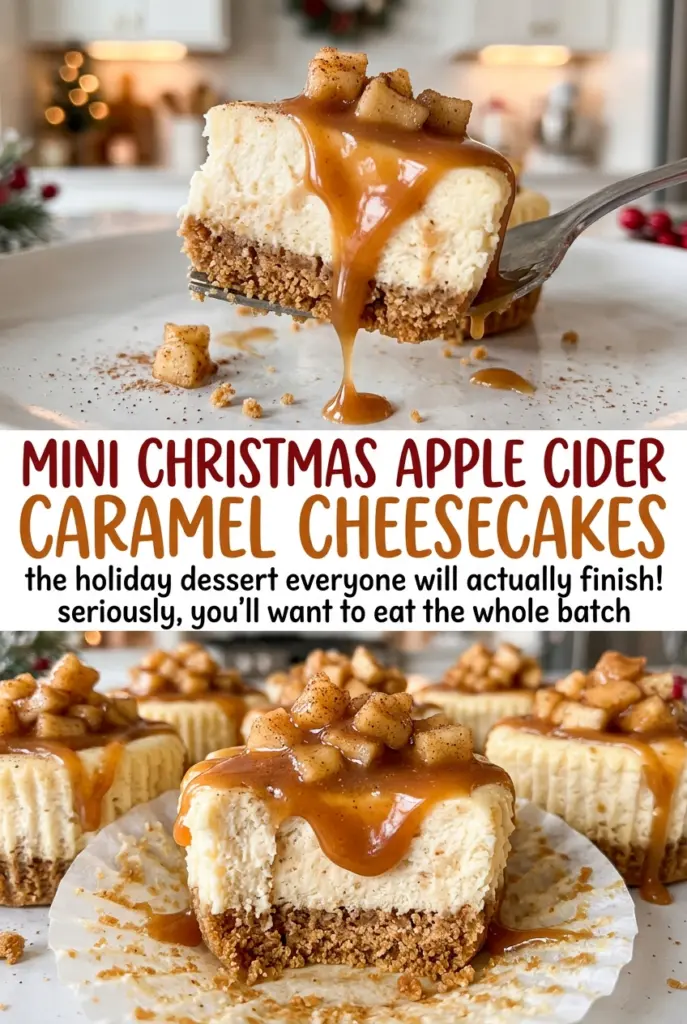
The centers still have a little wobble when the muffin tin comes out of the oven, even though the edges look set. That’s the cue I watch for with these mini Christmas apple cider caramel cheesecakes; baking them until the middle looks completely firm can leave the filling dry instead of creamy.
Each one has a buttery graham cracker crust with a touch of ginger, a spiced sour cream filling, and a spoonful of caramel made with reduced apple cider. I like the contrast of the tart pomegranate arils against the sweet caramel, especially once the cheesecakes have had time to chill and the flavors settle into those neat little layers.
Kitchen Note
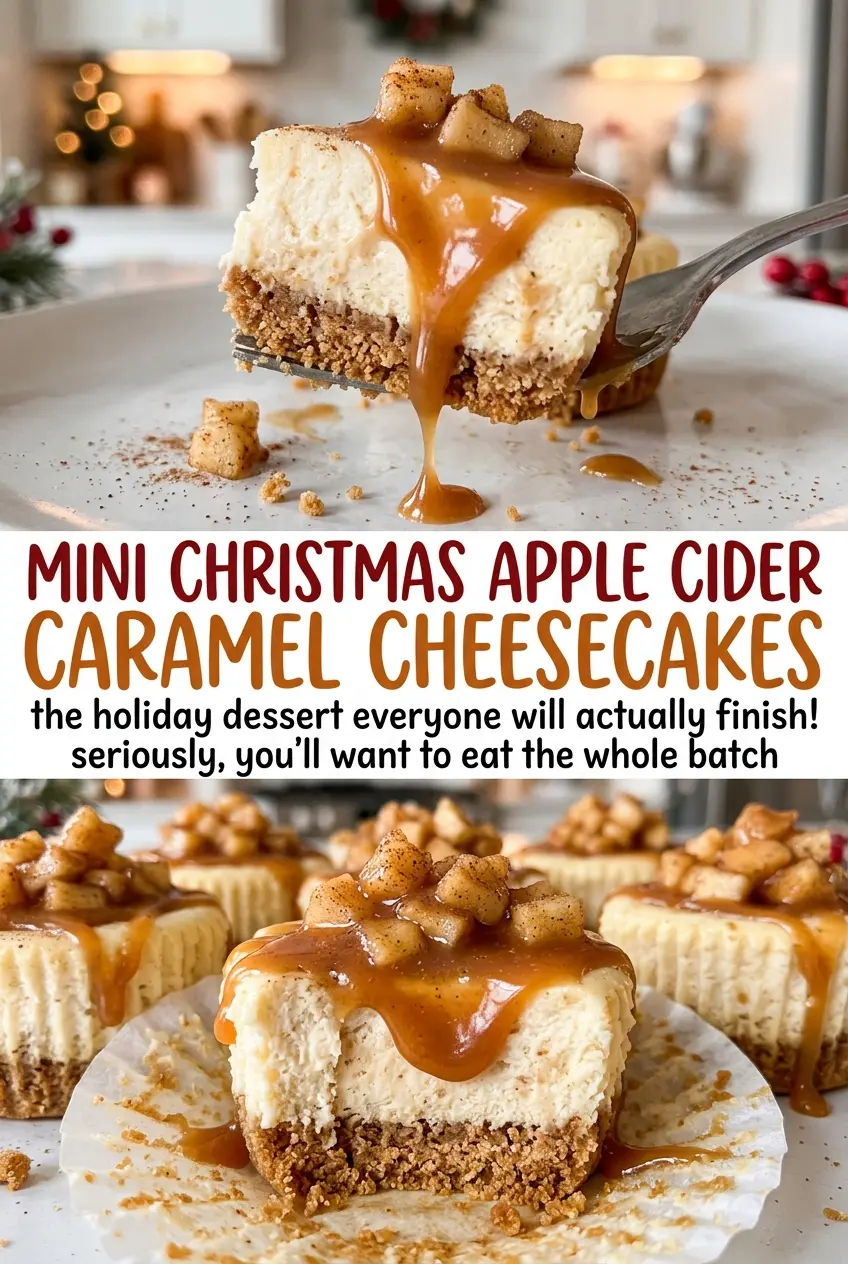
I wait until the cheesecakes are fully chilled before peeling off the paper liners. The crust is tender while warm, and giving it time in the refrigerator makes the liners much easier to remove cleanly.
Save these mini Christmas apple cider caramel cheesecakes for a festive bite-sized dessert with spiced filling and tart pomegranate on top.
Why the Caramel Goes on Only After the Cheesecakes Chill
These little cheesecakes need to be cold before the caramel goes on. A warm cheesecake is soft at the surface, so a warm, pourable topping can sink into it rather than sitting in a smooth layer. Chilling gives the filling time to firm up and makes each cheesecake easier to top and serve.
The caramel has its own cooling moment, too. It should be warm enough to spoon, not hot straight from the saucepan. That gives you a glossy topping that settles over the chilled filling without turning the top of each cake soft. If the caramel cools until it’s too stiff to pour, warm it gently until it loosens again.
There’s a nice contrast in the finished dessert: a firm, spiced cheesecake underneath, sweet apple cider caramel in the middle of each bite, and bright pomegranate on top. Keeping the toppings separate until the cakes are cold helps those textures stay distinct.
What Gives the Filling and Cider Caramel Their Character
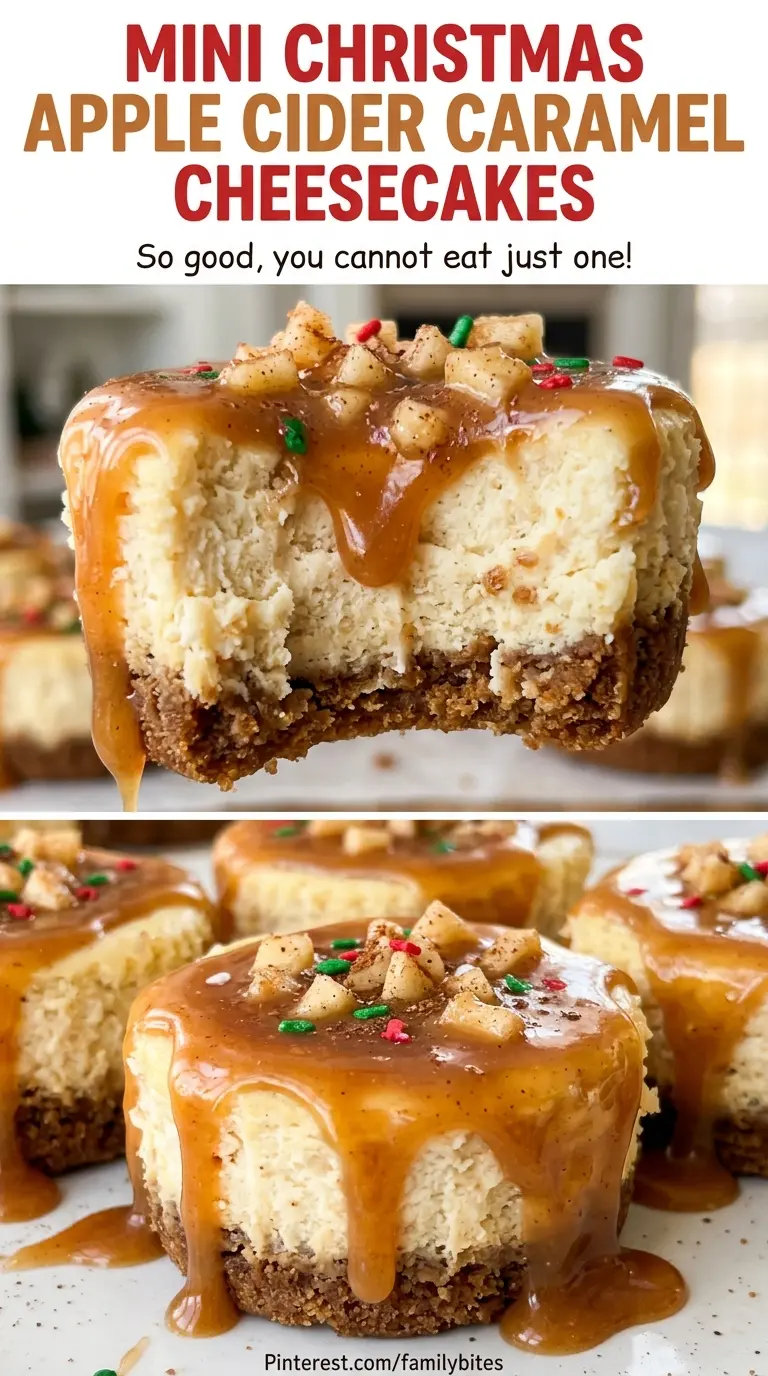
- Graham cracker crumbs and ginger — Fine crumbs make a compact base, and ground ginger gives the crust a gentle warmth that suits the cinnamon and nutmeg in the filling. Store-brand crumbs work well. For a gluten-free version, use gluten-free graham cracker crumbs in place of the regular crumbs.
- Cream cheese and sour cream — Cream cheese gives the filling its cheesecake structure; use regular softened cream cheese rather than whipped cream cheese, which is aerated and can make the texture less dense. Sour cream softens the richness and adds a little tang. Plain Greek yogurt can replace the sour cream, though the filling will taste slightly tangier.
- Light brown sugar and warm spices — Packed light brown sugar adds a mellow molasses note without overwhelming the cinnamon, nutmeg, and ginger. Fresh spices make a noticeable difference in a small dessert like this, so check that yours still smell fragrant when you open the jars.
- Apple cider and heavy cream — The cider is reduced before it goes into the caramel, concentrating its apple character. Use apple cider rather than hard cider; heavy cream gives the caramel a richer, smoother finish than a thinner milk would. The cider reduction and cream both need to be warmed before they meet the hot sugar.
- Pomegranate arils — Their tartness cuts through the sweet topping, and their color makes each cheesecake look finished. Choose plump arils and scatter them on after the caramel so they stay visible on top.
Building the Crust, Filling, and Cider Caramel in Order
Press a compact ginger crumb base
Heat the oven to 325°F and line a standard 12-cup muffin tin with paper liners. Stir the graham cracker crumbs, melted butter, and ground ginger until the crumbs are evenly moistened. Divide them among the liners and press firmly into the bottoms so the crusts hold together when you peel away the paper. Bake for 5 minutes, then set the tin aside while you mix the filling.
Mix the filling until smooth, not airy
Beat the softened cream cheese and packed light brown sugar on medium speed, scraping down the bowl as needed, until smooth. Add the room-temperature eggs one at a time and mix on low just until each is incorporated. Mix in the sour cream, vanilla, cinnamon, and nutmeg until the batter looks even. Divide it among the liners, about 1/4 cup per cup.
Bake to a slight center wobble
Bake for 18–22 minutes, until the edges are set and the centers still have a slight wobble. The centers shouldn’t look liquid, but they won’t be completely firm in the oven. Cool the cheesecakes in the tin on a wire rack for 30 minutes, then cover and refrigerate for at least 4 hours, until fully chilled.
Reduce the cider before starting the sugar
Simmer the apple cider in a small saucepan over medium heat until it’s reduced to about 1/4 cup, which takes 10–15 minutes. Transfer the reduction to a heatproof measuring cup. Warm the heavy cream and cider reduction separately in the microwave until hot but not boiling, about 20–30 seconds each; having them ready before you cook the sugar keeps the caramel stage moving smoothly.
Cook the caramel and finish the tops
Put the granulated sugar in a clean, dry 2-quart saucepan over medium heat. Cook without stirring, swirling the pan occasionally, for 6–9 minutes, until the sugar melts and turns deep amber. Take the pan off the heat and slowly whisk in the warm cream, then whisk in the cider reduction and kosher salt. Return the pan to low heat and stir until smooth if the caramel seizes; let it cool until warm and pourable, about 10–15 minutes. Spoon about 1 tablespoon over each chilled cheesecake and scatter the pomegranate arils on top.
Simple Swaps for Different Tastes and Needs
Make the crust gluten-free
Replace the graham cracker crumbs with gluten-free graham cracker crumbs, using the same volume. The crust keeps the same buttery, gently spiced character, though the exact crunch depends on the brand of crumbs.
Use dark brown sugar in the filling
Swap the light brown sugar for packed dark brown sugar. The filling takes on a deeper molasses flavor that stands up nicely to the cider caramel, with a slightly darker color.
Leave off the pomegranate
Skip the arils if you’d rather keep the topping smooth and focused on apple and caramel. The cheesecakes still have plenty of spice and sweetness; you’ll just lose the tart, juicy contrast on top.
Make-Ahead and Storage
- Refrigerator: Keep the covered cheesecakes refrigerated for up to 4 days. The pomegranate arils may soften as they sit.
- Freezer: Freeze the chilled cheesecakes without caramel or pomegranate in an airtight container for up to 2 months. Thaw them overnight in the refrigerator, then add the toppings.
- Serving: Serve these chilled; the cheesecakes don’t need reheating. If refrigerated caramel has firmed up, warm it briefly in the microwave until it’s pourable, then let it cool until warm before topping.
Questions That Come Up While Making These Mini Cheesecakes
Mini Christmas Apple Cider Caramel Cheesecakes
Ingredients
Equipment
Method
- Heat the oven to 325°F.
- Line a standard 12-cup muffin tin with paper liners.
- Stir the graham cracker crumbs, melted butter, and ground ginger until evenly moistened.
- Divide the crumb mixture among the liners and press firmly into the bottoms.
- Bake the crusts for 5 minutes.
- Set the tin aside while you prepare the filling.
- Beat the cream cheese and brown sugar in a large bowl with an electric mixer on medium speed until smooth, scraping down the bowl as needed.
- Add the eggs one at a time, mixing on low just until incorporated.
- Mix in the sour cream, vanilla, cinnamon, and nutmeg until smooth.
- Divide the filling evenly among the liners, about 1/4 cup per cup.
- Bake for 18–22 minutes, until the edges are set and the centers still have a slight wobble.
- Cool the cheesecakes in the tin on a wire rack for 30 minutes.
- Cover and refrigerate for at least 4 hours, until fully chilled.
- Simmer the apple cider in a small saucepan over medium heat until reduced to about 1/4 cup, 10–15 minutes.
- Transfer the cider reduction to a heatproof measuring cup.
- Warm the heavy cream and cider reduction separately in the microwave until hot but not boiling, about 20–30 seconds each.
- Put the granulated sugar in a clean, dry 2-quart saucepan over medium heat.
- Cook without stirring, swirling the pan occasionally, for 6–9 minutes, until the sugar is melted and deep amber.
- Remove the pan from the heat and slowly whisk in the warm cream; it will bubble vigorously, so pour carefully.
- Whisk in the cider reduction and kosher salt.
- Return the pan to low heat and stir until smooth if the caramel has seized.
- Let the caramel cool until warm and pourable, about 10–15 minutes.
- Spoon about 1 tablespoon of caramel over each chilled cheesecake.
- Scatter the pomegranate arils on top.