
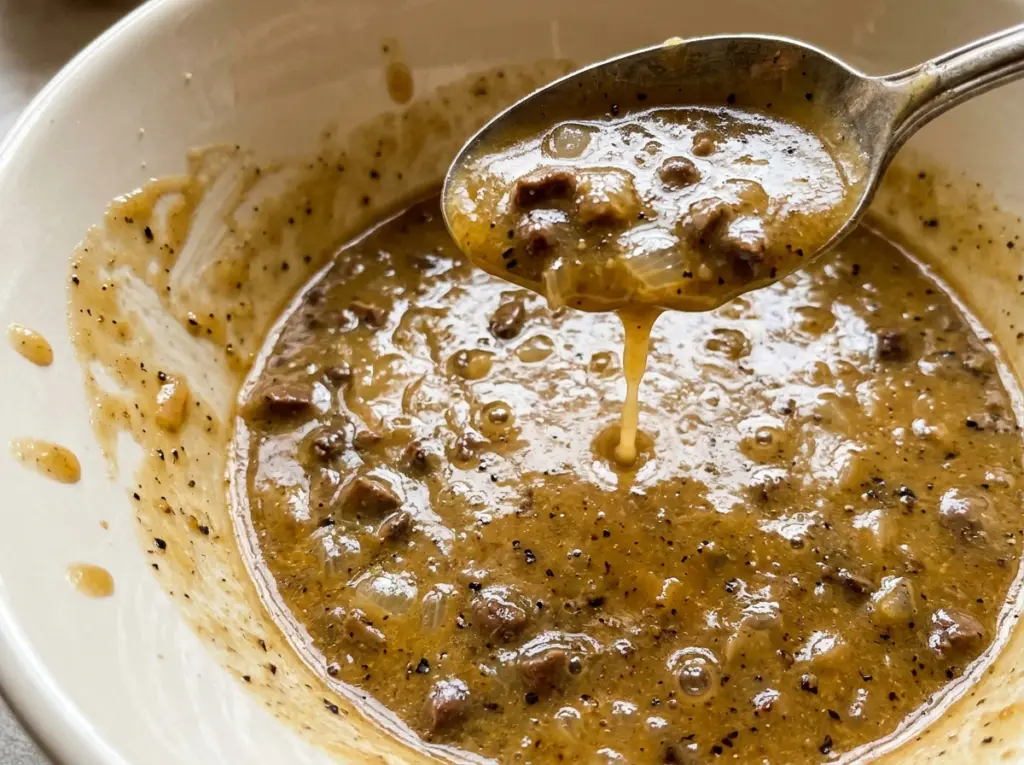
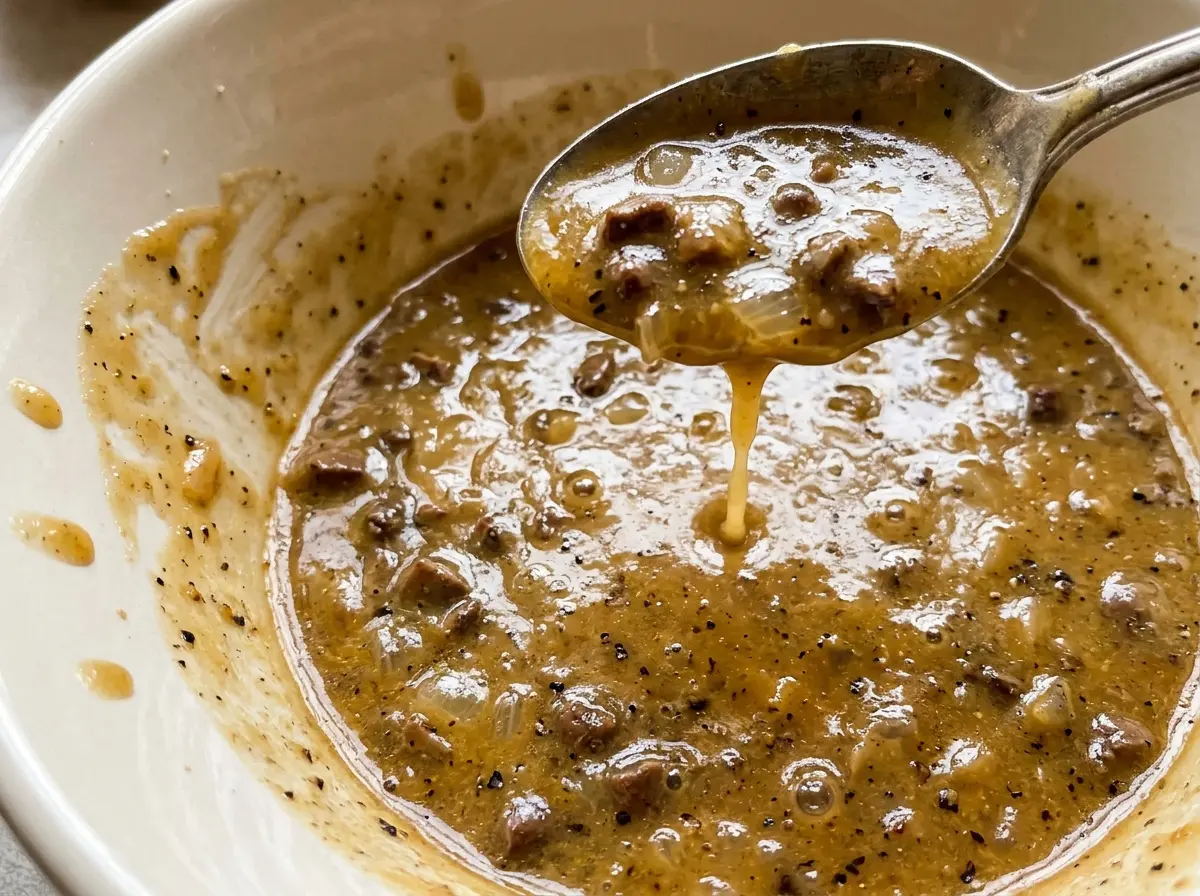
A pot of giblet stock starts out looking plain, but after a long, gentle simmer it turns into the savory backbone this gravy needs. I keep the liver separate from the start and add it near the end; it cooks faster than the heart and gizzard, and that small timing choice keeps its flavor from taking over. The finished gravy has finely chopped giblets in every spoonful, not just a turkey-stock base.
This old fashioned giblet gravy makes eight servings and doesn’t depend on pan drippings, which is handy when the turkey is still in the oven. The stock and gravy come together in the same 4-quart saucepan, and butter and flour give the broth a smooth, substantial body. Take your time whisking in the stock, and you’ll have a warm, savory gravy ready for the table.
Kitchen Note
Wait until the giblets are cool enough to handle before pulling meat from the neck. It’s easier to separate the meat carefully, and you won’t have to rush around hot bones.
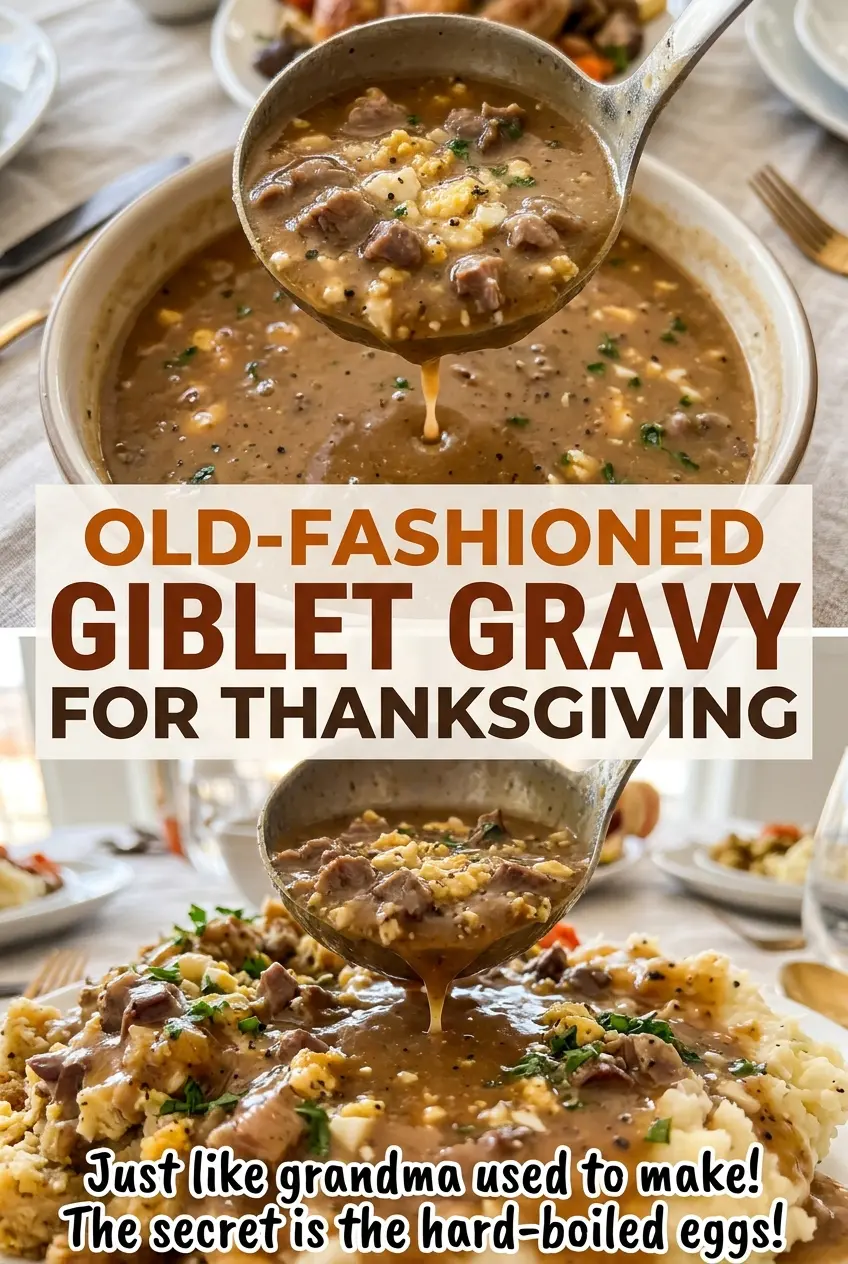
Save this old fashioned giblet gravy for Thanksgiving: rich turkey stock, tender chopped giblets, and a smooth butter-flour base.
Why the Liver Goes In After the Gizzard Has Had Its Time
The heart and gizzard need a long simmer to become tender and lend their flavor to the stock. Liver is more delicate. If it cooks for the entire stock-making stretch, its stronger taste can dominate the broth, and the cooked liver may become overly firm once it’s chopped and simmered again in the gravy.
Adding the liver for only the final 15 minutes gives it time to cook while keeping its flavor in balance with the neck, heart, and gizzard. That staggered timing also makes the finished gravy taste like turkey giblet gravy, rather than liver gravy. Keep the stock at a gentle simmer instead of a rolling boil; the slow heat gives the tougher pieces time to soften without roughing up the broth.
This is a small distinction, but it’s what makes the giblets work as both a stock ingredient and the hearty pieces stirred into the finished sauce. You get the depth from simmering them, then keep their individual textures in the bowl.
What Gives This Gravy Its Turkey Flavor and Body
- Turkey neck, heart, and gizzard — These build the stock’s savory base, and the neck supplies meat to pull off and return to the gravy. Keep the liver separate so you can add it for the shorter cooking window. The package is meant to provide both flavor for the stock and chopped pieces for serving.
- Liver — It adds the distinct, earthy note people expect in old-fashioned giblet gravy. Since it has a stronger flavor than the other giblets, its shorter simmer matters more than choosing a particular brand or size of package.
- Onion, celery, bay leaf, and whole peppercorns — These flavor the stock while it simmers, then get strained out. Their job is to make the liquid taste rounded before it meets the roux; you don’t need to chop the vegetables finely because none of them go into the finished gravy.
- Unsalted butter and all-purpose flour — Together they form the roux that thickens the stock. Unsalted butter lets the kosher salt be added at the end, when you can taste the finished gravy. Ordinary all-purpose flour is the dependable choice here; specialty flour isn’t needed for this version.
- Whole and ground black pepper — Whole peppercorns season the stock and are discarded after straining; ground pepper goes into the finished gravy. They aren’t interchangeable in the method, since the whole peppercorns are removed before the sauce is made.
Building the Stock and Roux Without Rushing Either
Simmer the Giblets in Stages
In a 4-quart saucepan, combine the neck, heart, and gizzard with the water, onion, celery, bay leaf, and whole peppercorns. Bring everything to a boil over medium-high heat, then lower the heat to maintain a gentle simmer for 1 1/2 hours. Add the liver for the final 15 minutes, and cook the giblets to at least 165°F and until the gizzard is tender. If the liquid boils hard, lower the heat so the simmer stays gentle.
Strain and Measure the Stock
Strain the stock into a heatproof bowl, discarding the vegetables and peppercorns. Measure out 4 cups of stock, adding water if needed to reach that amount. Once the giblets are cool enough to handle, pull the meat from the neck and finely chop it with the heart, gizzard, and liver. Keep the pieces small and even so they’re easy to spoon up in the gravy.
Cook the Butter-Flour Roux
Melt the butter in the same saucepan over medium heat, then whisk in the flour. Keep whisking constantly for 2 minutes so the flour cooks evenly and doesn’t catch on the bottom. The mixture will look thick and paste-like before the stock goes in. If you see dry flour at the edges, bring it into the center with the whisk.
Whisk in Stock and Finish the Gravy
Gradually whisk in the measured stock and bring it to a gentle simmer over medium heat. Cook for 5 to 8 minutes, whisking often, until the gravy thickens; it should look smooth rather than watery. Stir in the chopped giblets, kosher salt, and ground black pepper, then simmer for 2 minutes before serving. Taste after the giblets are stirred in, since their flavor is part of the finished seasoning.
Small Changes for a Different Kind of Giblet Gravy
Make It Gluten-Free
Replace the all-purpose flour with a cup-for-cup gluten-free flour blend intended for baking. Cook it with the butter as a roux, whisking steadily, and expect the gravy’s final texture to vary a little by blend; keep it at a gentle simmer until it thickens.
Keep the Liver Out of the Finished Gravy
For a milder, less liver-forward taste, leave the liver out of the stock and don’t stir it into the finished gravy. The neck, heart, and gizzard still give the stock a deep turkey flavor, though you’ll have fewer chopped giblet pieces in each serving.
Make the Giblet Pieces More Noticeable
Chop the cooked giblets a little more coarsely instead of finely if you prefer larger pieces in each spoonful. The gravy will feel more rustic, with a more pronounced contrast between its smooth base and the tender meat.
Storage and Reheating
- Refrigerator: Store leftover gravy in a covered container for 3 to 4 days. It will thicken as it chills.
- Freezer: Freeze it in an airtight container for up to 2 to 3 months. Thaw it in the refrigerator; the texture may look separated until it’s stirred and warmed.
- Reheating: Warm the gravy gently in a saucepan, stirring often. If it’s too thick, whisk in a little water; avoid heating it aggressively, which can make the bottom catch before the gravy loosens.
Questions That Come Up While Making Giblet Gravy
Old Fashioned Giblet Gravy for Thanksgiving
Ingredients
Equipment
Method
- Combine the neck, heart, and gizzard with the water, onion, celery, bay leaf, and peppercorns in a 4-quart saucepan.
- Bring to a boil over medium-high heat.
- Reduce the heat to maintain a gentle simmer for 1 1/2 hours, adding the liver for the final 15 minutes. Cook the giblets to at least 165°F and until the gizzard is tender.
- Strain the stock into a heatproof bowl and measure out 4 cups, adding water if needed; discard the vegetables and peppercorns.
- When the giblets are cool enough to handle, pull the meat from the neck and finely chop it with the heart, gizzard, and liver.
- Melt the butter in the same saucepan over medium heat.
- Whisk in the flour and cook for 2 minutes, whisking constantly.
- Gradually whisk in the 4 cups stock and bring to a gentle simmer over medium heat.
- Cook for 5 to 8 minutes, whisking often, until the gravy thickens.
- Stir in the chopped giblets, salt, and ground black pepper.
- Simmer for 2 minutes before serving.