
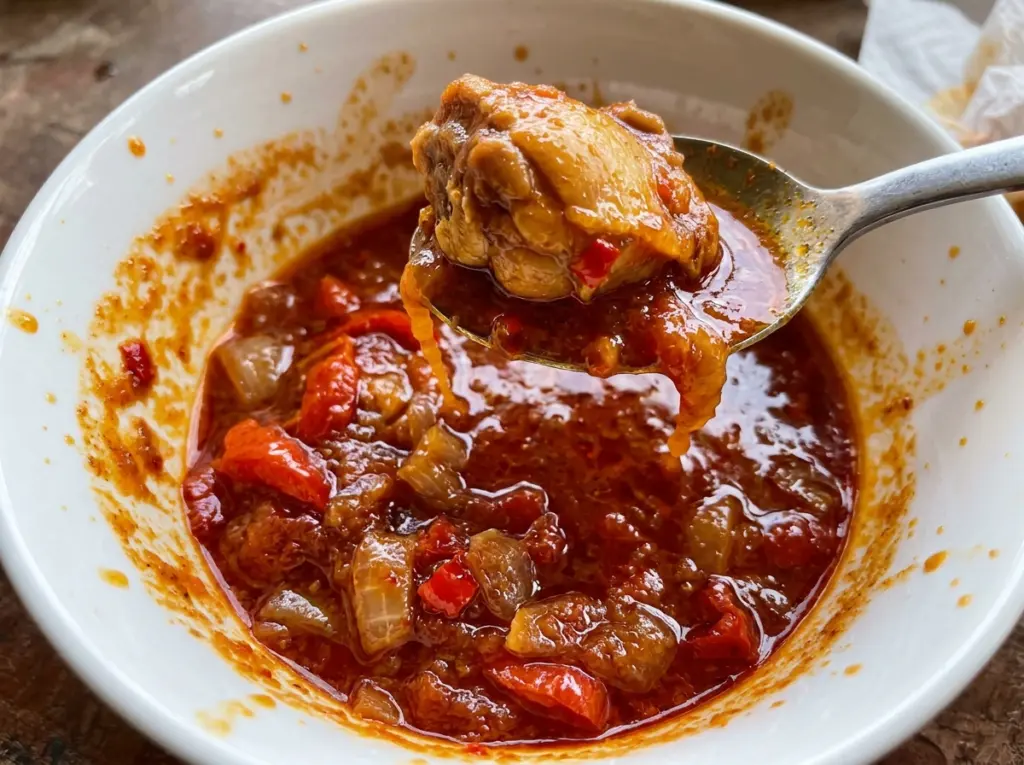
The pepper puree goes into the Dutch oven bright and loose, and for a while it looks more like a smoothie than a stew. I used to wonder whether it would ever turn into the deep, clingy sauce I wanted. It does, but the change takes patience: as the liquid cooks away, the color deepens and the oil starts to show at the edges. That’s the moment this Nigerian chicken stew begins to look like itself.
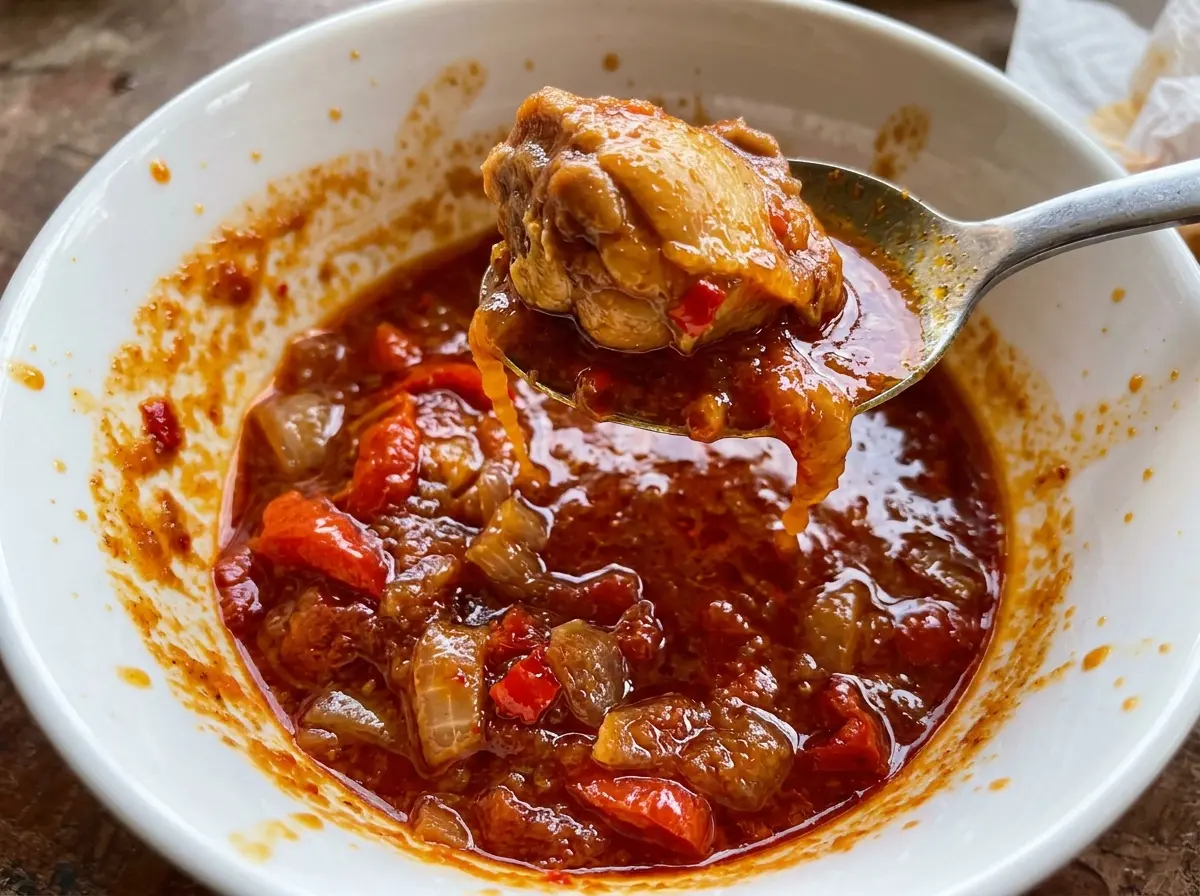
Bone-in chicken cooks first with onion, thyme, curry powder, and bouillon, giving you a savory cooking liquid to stir back into the pepper sauce at the end. Meanwhile, the blended red peppers, Roma tomatoes, onion, and scotch bonnet reduce uncovered in the same Dutch oven. The finished sauce coats the chicken instead of running off it, with pepper flavor up front and warmth from the chile. A bowl of this stew is all rich red sauce and tender chicken.
Kitchen Note
After reserving the cooking liquid, wipe the Dutch oven dry before adding the oil. Even a little water left in the pot can make hot oil spit, and a dry surface gives the tomato paste a clean start.
Save this Nigerian chicken stew for its deep pepper-tomato sauce and chicken coated in every spoonful.
Why the Sauce Needs Time to Reduce Before the Chicken Goes Back In
Blended peppers and tomatoes carry plenty of water. If you add the chicken while that liquid is still thin, the finished stew won’t have the concentrated texture that makes the sauce cling to the meat. Reducing the puree uncovered gives that moisture a way to escape, while stirring helps keep the bottom from scorching as the mixture thickens.
Watch for a change in the sauce, not just the clock. At first it bubbles loosely and looks uniformly wet; later, the bubbles become thicker and slower, and you’ll see oil begin to separate. That separation isn’t a sign that the stew has failed. It’s a useful cue that the pepper mixture has cooked down and its flavors have concentrated. The chicken goes in after this stage, so it warms through in a finished sauce rather than watering down a sauce that still needs time.
Why Roma Tomatoes, Red Peppers, and Tomato Paste Work as a Team

- Bone-in, skin-on chicken — The bones and skin make the chicken’s cooking liquid more savory, which gives the finished sauce a fuller base. Thighs and drumsticks both work well here; boneless cuts won’t produce quite the same broth or follow the same timing.
- Red bell peppers and Roma tomatoes — The peppers bring body and a mellow sweetness, while Roma tomatoes add tomato flavor without making the puree as watery as juicier tomato varieties can. Choose firm, ripe produce; there’s no need to seek out specialty varieties.
- Scotch bonnet — This chile brings the stew’s distinctive heat and a fruity aroma. For less heat, leave it out or remove its seeds before blending; leaving it out gives a milder sauce but also removes some of that characteristic chile flavor.
- Tomato paste and vegetable oil — Cooking the paste briefly in the oil deepens its tomato flavor before the fresh puree goes in. Standard canned tomato paste works well, so there’s no need for a premium brand. The oil also helps carry the pepper mixture as it cooks down.
- Bouillon powder, thyme, and curry powder — These season the chicken and its cooking liquid, which later becomes part of the stew. If you need a gluten-free version, use gluten-free chicken bouillon powder in place of the regular bouillon powder; the savory base remains, though the exact seasoning can vary by brand.
From Seasoned Chicken to Thick, Clinging Pepper Sauce
Simmer the Chicken Until Tender
Put the chicken in a 6-quart Dutch oven with 1 teaspoon of the salt, the bouillon powder, thyme, curry powder, sliced onion, and 1 1/2 cups water. Bring it to a boil over medium-high heat, then cover the pot and reduce the heat to low. Simmer for 25 to 35 minutes, turning the chicken once, until the thickest piece registers 165°F. Transfer the chicken to a plate and reserve 1 cup of the cooking liquid.
Blend the Pepper Mixture
While the chicken rests, blend the bell peppers, tomatoes, roughly chopped onion, scotch bonnet, and remaining 1/2 cup water. Stop when the mixture is mostly smooth; a little texture is fine, but large pieces of pepper or onion make the finished sauce less even. Keep the chile in the mixture for its full heat, or remove its seeds first for a gentler result. The puree should pour easily into the pot.
Cook the Paste, Then Reduce the Puree
Discard the extra cooking liquid and sliced onion, then wipe the Dutch oven dry. Heat the vegetable oil over medium heat, add the tomato paste, and stir for 1 to 2 minutes. Stir in the pepper mixture and cook uncovered for 30 to 40 minutes, stirring often. As it cooks, the sauce thickens; if you leave it unattended, the bottom can catch before the surface looks reduced.
Return the Chicken to the Finished Sauce
Stir in the remaining 1/2 teaspoon salt, bay leaf, black pepper, and reserved cooking liquid, then bring the sauce to a simmer. Add the chicken and simmer uncovered for 10 to 15 minutes, turning the pieces to coat them. The chicken should be hot throughout, and the sauce should cling to its surface rather than slide off in a thin stream. Remove the bay leaf before serving.
Simple Changes for a Milder, Smoother, or Gluten-Free Stew
Leave Out the Scotch Bonnet for a Milder Bowl
Omit the scotch bonnet before blending if you want the tomato and bell pepper to lead without chile heat. The sauce will still be rich, but it won’t have the same fruity, warming edge.
Make the Sauce Gluten-Free
Replace the chicken bouillon powder with a gluten-free chicken bouillon powder. It keeps the savory chicken base while making this adaptation suitable for a gluten-free meal; seasoning strength differs between products.
Blend for a Silky Finish
Blend the pepper mixture until completely smooth instead of stopping when it’s mostly smooth. The sauce will have a more uniform texture, with fewer small pieces of pepper and onion.
Storage and Reheating
- Refrigerator: Keep leftovers in a covered container for 3 to 4 days. The sauce may firm up as it chills.
- Freezer: Freeze the chicken and sauce together in an airtight container for up to 2 to 3 months. Thaw in the refrigerator before reheating.
- Reheating: Warm gently in a covered saucepan, turning the chicken in the sauce until steaming throughout. Avoid high heat, which can make the thick sauce catch on the bottom.
Questions That Come Up While Making Nigerian Chicken Stew
Nigerian Chicken Stew Deep Pepper Tomato Sauce
Ingredients
Equipment
Method
- Put the chicken in a 6-quart Dutch oven with 1 teaspoon salt, the bouillon powder, thyme, curry powder, sliced onion, and 1 1/2 cups water.
- Bring to a boil over medium-high heat.
- Cover, reduce the heat to low, and simmer for 25-35 minutes, turning the chicken once, until the thickest piece registers 165°F.
- Transfer the chicken to a plate.
- Reserve 1 cup of the cooking liquid; discard the remaining liquid and onion, then wipe the pot dry.
- Blend the bell peppers, tomatoes, roughly chopped onion, scotch bonnet, and remaining 1/2 cup water until mostly smooth.
- Heat the oil in the Dutch oven over medium heat.
- Add the tomato paste and cook for 1-2 minutes, stirring.
- Stir in the pepper mixture and cook uncovered for 30-40 minutes, stirring often, until thickened and the oil begins to separate.
- Stir in the remaining 1/2 teaspoon salt, bay leaf, black pepper, and reserved cooking liquid, then bring to a simmer.
- Add the chicken and simmer uncovered for 10-15 minutes, turning to coat, until hot throughout and the sauce is thick enough to cling to the chicken.
- Remove the bay leaf before serving.