
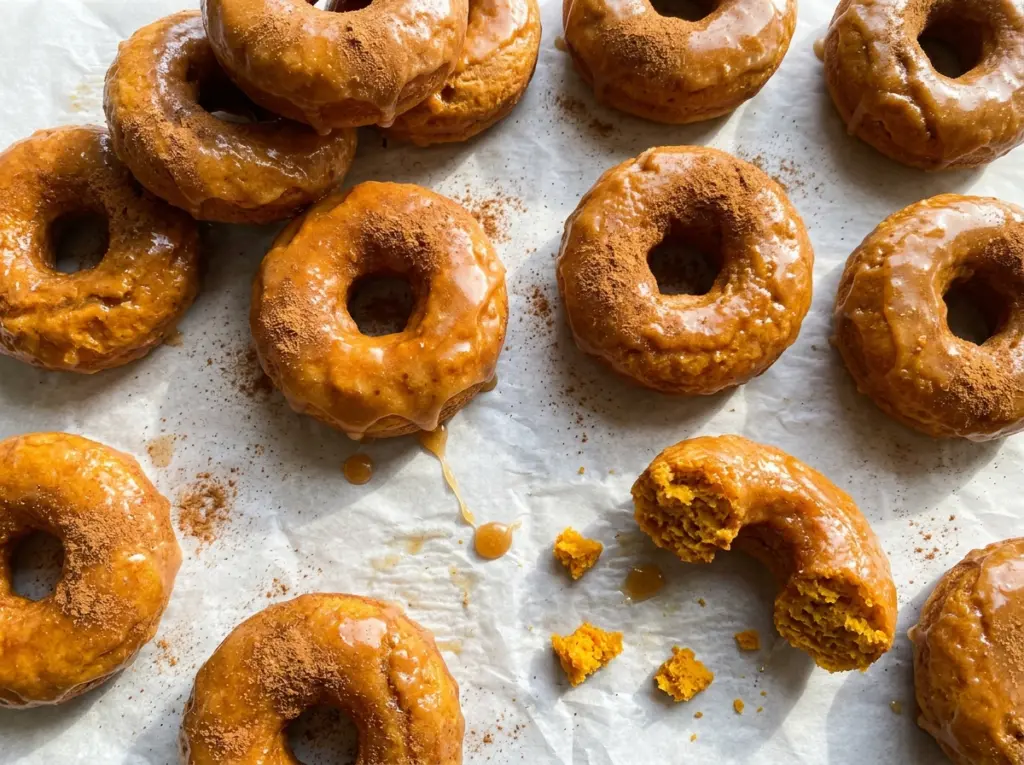
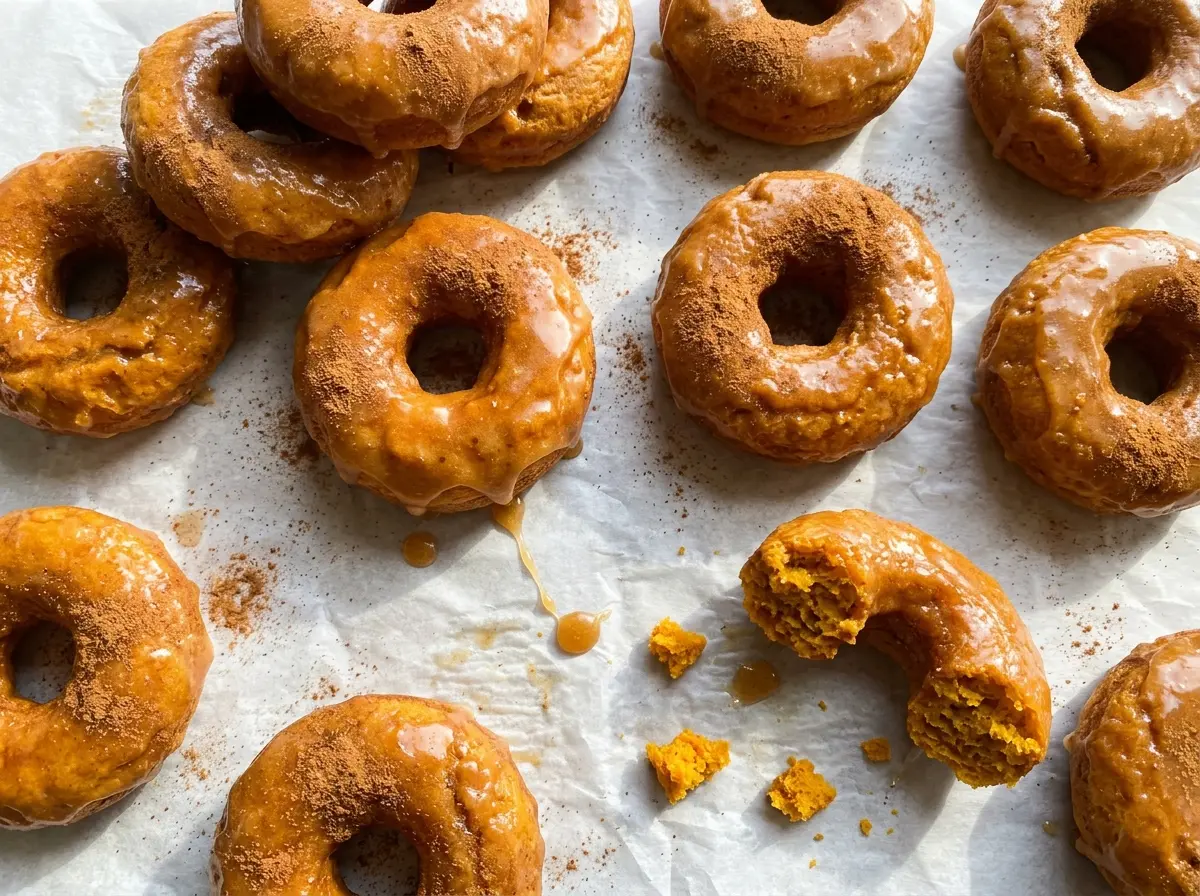
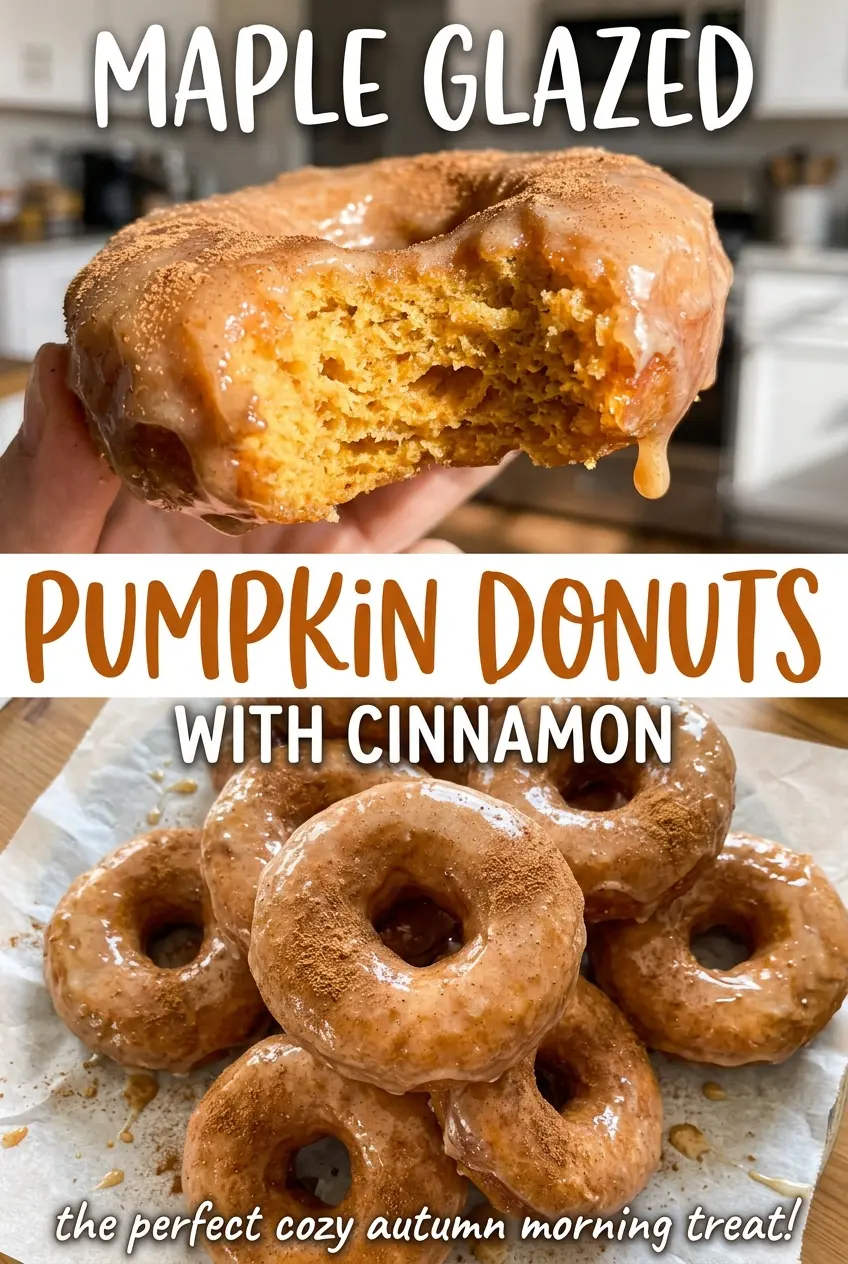
The oven stays quiet while these bake—no bubbling oil, just pumpkin batter rising gently in the donut pans. The first time I made Maple Glazed Pumpkin Donuts with Cinnamon, what stood out was how tender the crumb felt beside the thin maple coating. They’re baked cake donuts, so you get a soft bite rather than the chewy crust of a fried donut.
The batter comes together with a quick whisk and a gentle fold, which keeps the texture light without asking you to knead or proof anything. Canned pumpkin gives each donut its color and moisture, while cinnamon carries through from the batter into the glaze. Once the tops are glazed and the coating has set, they’re soft, warmly spiced, and just sweet enough to let the maple come through.
Kitchen Note
Let the melted butter cool before it goes into the pumpkin and egg mixture. Butter that’s still hot can warm the eggs too quickly, so I melt it first and give it time to cool while I measure the other ingredients.
Save these maple glazed pumpkin donuts with cinnamon for a soft, pumpkin-rich bake finished with a smooth maple coating.
Why These Pumpkin Donuts Should Be Soft, Not Chewy
These donuts get their lift from baking powder, not yeast. That makes them closer to a tender little cake than a fried doughnut: the crumb should be soft and moist, without a chewy pull or a crisp outer shell. Pumpkin contributes body as well as moisture, so the batter is naturally thicker than a pourable cake batter. That texture is part of the design, not a sign that it needs extra liquid.
Keeping that expectation in mind helps you judge the result fairly. A baked donut won’t have the same browned surface as one cooked in oil, and the maple glaze adds a delicate finish rather than a thick candy shell. The balance comes from letting the pumpkin and warm spices lead, then adding just enough glaze to coat the top. If you’re used to fried donuts, think soft cake crumb first, maple-cinnamon finish second.
What Gives the Pumpkin Batter Its Tender Crumb and Maple Finish
- Canned pumpkin puree — It brings moisture, color, and the familiar pumpkin character. Choose plain puree rather than a sweetened or seasoned pumpkin product, since the batter’s sugar and spices are already measured for this version.
- All-purpose flour — This gives the donuts enough structure to rise in the pan while staying tender. A measure-for-measure gluten-free blend can work as a substitution; the texture may be a little more delicate.
- Light brown sugar — Its hint of molasses rounds out the pumpkin and keeps the sweetness warm rather than sharp. Pack it into the measuring cup so the amount is consistent.
- Cinnamon and nutmeg — Cinnamon is the main spice, while a smaller amount of nutmeg adds warmth in the background. Freshly opened spices smell more fragrant, but ordinary ground spices work well here.
- Unsalted butter — Butter gives the crumb a richer, softer feel than a leaner batter would have. Unsalted butter lets the measured salt stay in control; the melted butter should be cooled before mixing.
- Pure maple syrup — This is what gives the glaze its maple flavor, not just sweetness. Use real maple syrup when you can; pancake syrup tends to taste more sugary and won’t bring the same maple character.
From Thick Pumpkin Batter to a Smooth Maple Dip
Whisk the Dry and Pumpkin Mixtures Separately
Heat the oven to 350°F and generously coat two 6-cavity donut pans with nonstick cooking spray. In a large bowl, whisk together the flour, brown sugar, baking powder, cinnamon, salt, and nutmeg, breaking up any packed brown sugar lumps. In a medium bowl, whisk the pumpkin puree, eggs, milk, cooled melted butter, and vanilla until the mixture looks smooth. Keeping the two mixtures separate at this point makes it easier to combine the batter gently.
Fold Just Until the Flour Disappears
Add the pumpkin mixture to the flour mixture and fold until no dry flour remains. The batter will be thick; don’t keep stirring to make it look silky, because a little extra mixing can make baked donuts less tender. Divide it evenly among the prepared wells, filling each about two-thirds full. That leaves room for the batter to rise without burying the center opening.
Bake Both Pans and Cool the Donuts Fully
Bake for 12 to 15 minutes, switching the pans between racks and rotating them front to back halfway through. The tops should spring back lightly when touched; avoid waiting for a deep brown color, which isn’t the cue for these pumpkin donuts. Cool them in the pans for 5 minutes, then transfer them to a wire rack. Let them cool completely before glazing so the coating stays on top instead of melting into the surface.
Whisk, Dip, and Let the Glaze Set
Whisk the confectioners’ sugar, maple syrup, milk, and cinnamon in a medium bowl until smooth. Dip the top of each cooled donut into the glaze, then return it to the rack. If a little glaze drips down the sides, let it fall away rather than turning the donut over. Leave the donuts on the rack for 15 to 20 minutes before serving, giving the coating time to set.
Three Smart Ways to Adapt the Maple-Cinnamon Finish
Make the Donuts Gluten-Free
Replace the all-purpose flour with a measure-for-measure gluten-free flour blend that includes a binder such as xanthan gum. Use the same volume and fold gently; the finished donuts may be a little more fragile, so let them cool completely before lifting them from the rack.
Make a Dairy-Free Batch
Use unsweetened oat milk in place of the whole milk in both the batter and glaze, and use the same amount of plant-based butter in place of the unsalted butter. The donuts will be a touch less rich, while oat milk keeps the glaze smooth and easy to dip.
Let the Maple Stand Out
Leave the cinnamon out of the glaze while keeping the cinnamon and nutmeg in the donuts. The maple flavor comes through more clearly, and the spiced pumpkin crumb still gives each bite its cinnamon warmth.
Storage and Reheating
- Refrigerator: Keep glazed donuts in an airtight container for up to 3 days. The crumb will firm up slightly, and the glaze may soften.
- Freezer: Freeze fully cooled, unglazed donuts in a sealed freezer-safe container for up to 2 months. Thaw at room temperature, then glaze before serving.
- Reheating: Warm an unglazed donut in the microwave for 8 to 10 seconds, then dip it in glaze. Don’t microwave a glazed donut; the coating can melt and turn sticky.
Questions That Come Up While Baking Pumpkin Donuts
Maple Glazed Pumpkin Donuts with Cinnamon
Ingredients
Equipment
Method
- Heat the oven to 350°F.
- Generously coat two 6-cavity donut pans with nonstick cooking spray.
- Whisk the flour, brown sugar, baking powder, cinnamon, salt, and nutmeg in a large bowl.
- Whisk the pumpkin puree, eggs, milk, melted butter, and vanilla in a medium bowl until smooth.
- Add the pumpkin mixture to the flour mixture and fold just until no dry flour remains.
- Divide the batter evenly among the prepared wells, filling each about two-thirds full.
- Bake for 12 to 15 minutes, switching the pans between racks and rotating them front to back halfway through, until the tops spring back lightly when touched.
- Cool the donuts in the pans for 5 minutes.
- Transfer the donuts to a wire rack and cool completely.
- Whisk the confectioners' sugar, maple syrup, milk, and cinnamon in a medium bowl until smooth.
- Dip the top of each cooled donut into the glaze and return it to the rack.
- Let the glaze set for 15 to 20 minutes before serving.