
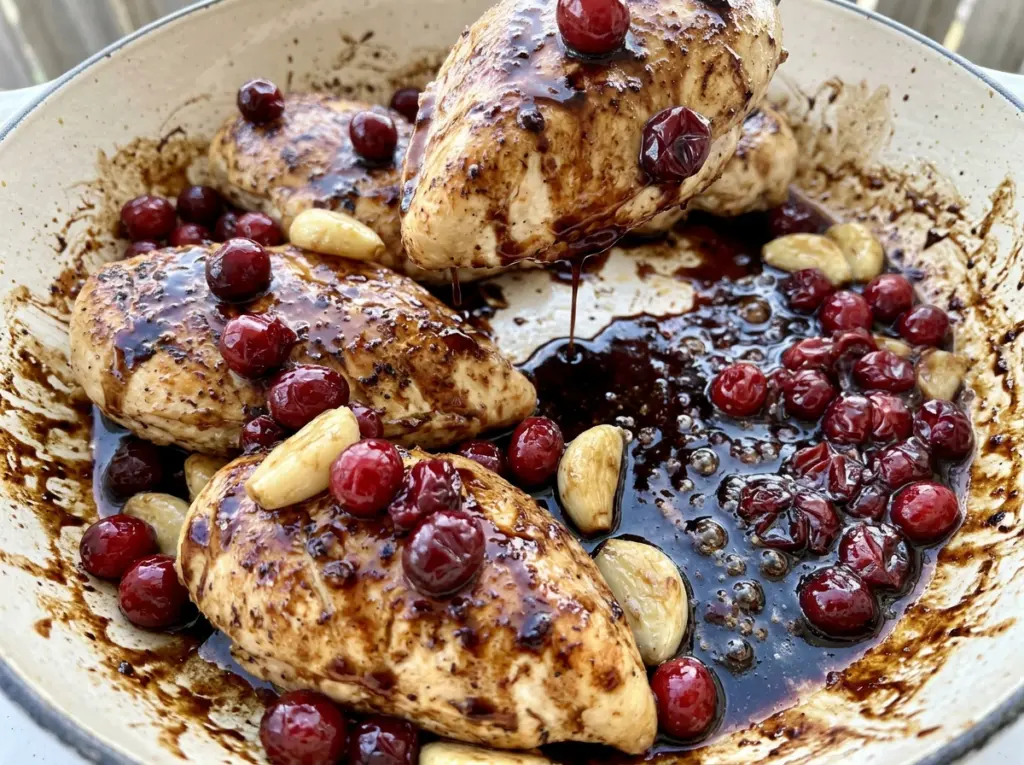
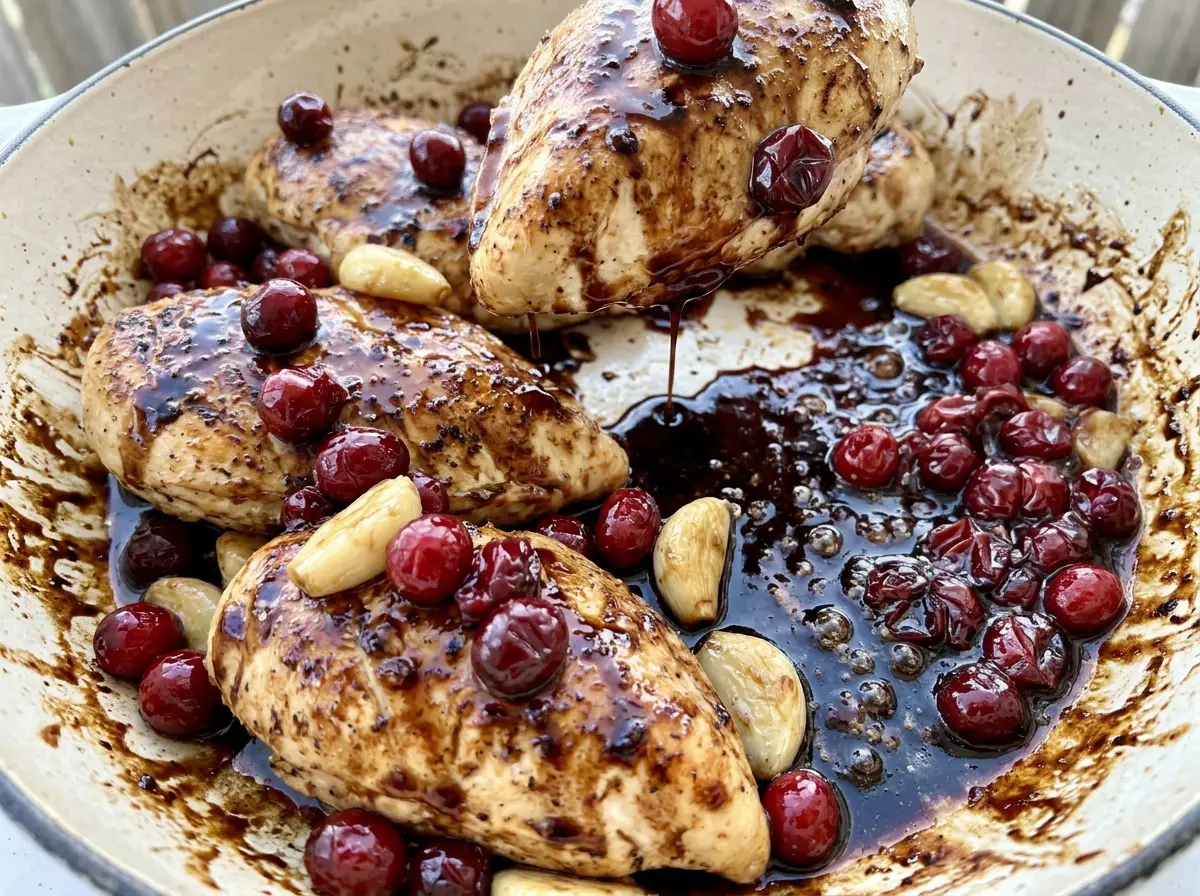
As chicken cutlets turn golden in the skillet, little browned bits collect underneath them. Those bits are worth keeping: they give the cranberry balsamic sauce a savory backbone instead of letting it taste like cranberry sauce poured over plain chicken.
Easy Skillet Chicken with Cranberry Balsamic Sauce gets its balance from whole-berry cranberry sauce, balsamic vinegar, and a little Dijon. The sauce simmers right in the chicken skillet, where the broth loosens it and the pan drippings become part of the flavor. Keeping the chicken in even cutlets helps it cook through without drying out before the sauce is ready.
It’s a straightforward stovetop dinner for four, with a glossy, tart-sweet sauce that clings to each piece of chicken. The skillet goes from searing to saucing without an extra pan to wash.
Kitchen Note
Pat the chicken dry before seasoning it. A damp surface takes longer to brown, so drying the cutlets first helps you get that golden skillet color during the short sear.
Save this skillet chicken with its tart-sweet cranberry balsamic sauce for a cozy dinner that comes together in one pan.
Why the Browned Bits Belong in the Cranberry Sauce
The chicken leaves more behind than a little color in the pan. Those browned bits are concentrated savory flavor, and the sauce gets much more depth when they’re loosened into the broth instead of wiped away. After the shallot and garlic soften, the broth goes in with the cranberry sauce, balsamic, Dijon, and thyme; stirring and scraping the skillet brings everything together.
Whole-berry cranberry sauce also does useful work here. It gives the sauce fruit and body, while the broth keeps it from turning into a thick layer of jam. Balsamic brings a sharp edge, and Dijon adds a savory note that helps the sweetness feel balanced. You don’t need flour or another thickener. A short simmer is enough to make the mixture smooth and slightly thickened, with a texture that coats the chicken rather than sitting in a stiff mound beside it.
If the skillet has black, burnt spots instead of brown bits, don’t scrape those into the sauce; they can make the finished dish taste bitter. The goal is the browned residue left from searing, not anything scorched.
What Each Ingredient Brings to This Cranberry Balsamic Skillet
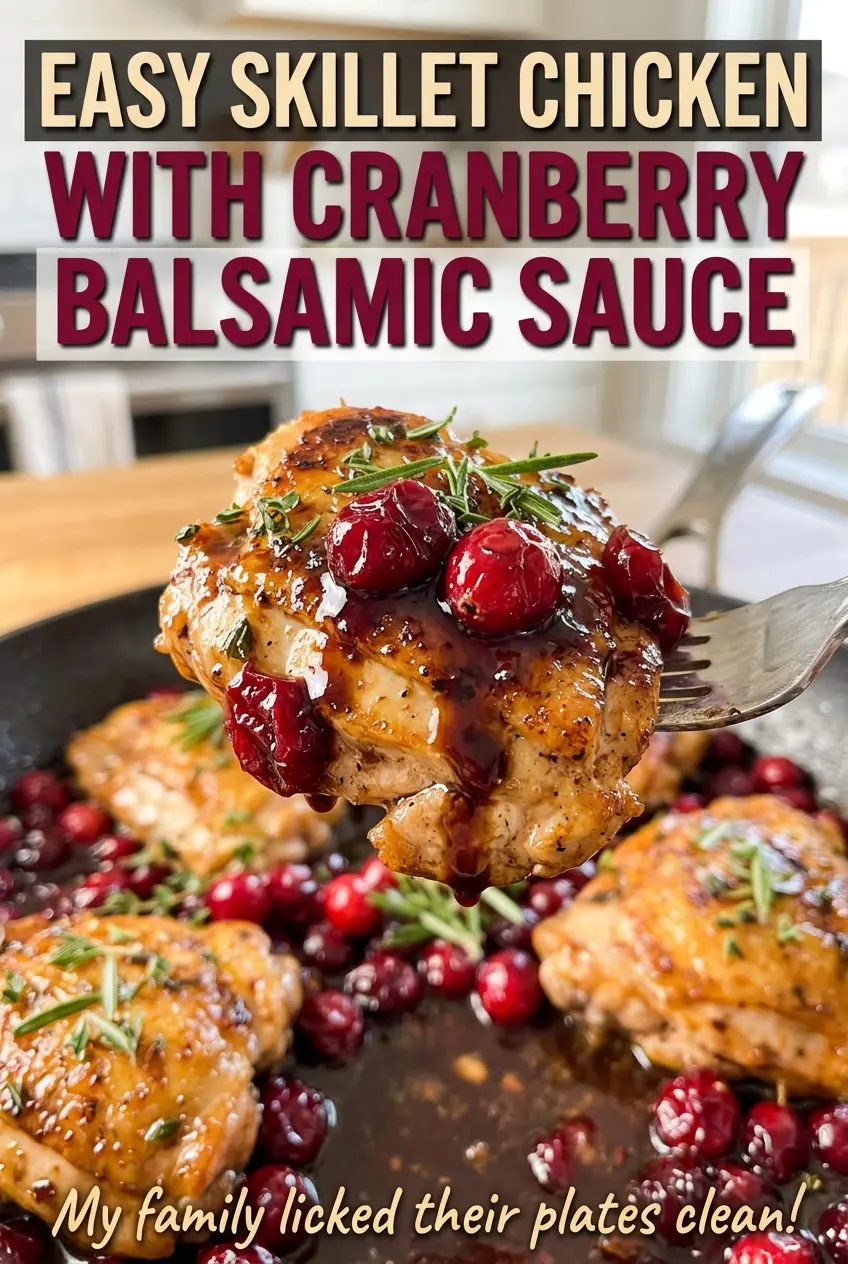
- Boneless, skinless chicken breasts — They’re lean and take on the sauce without making it greasy. The cut and thickness matter more here than buying a premium brand; keep the breasts for the listed skillet timing, since a different cut won’t cook at the same rate.
- Olive oil — It helps the chicken brown in the skillet. A neutral cooking oil can stand in one-for-one if that’s what you keep on hand; the sauce has enough character that a delicate or expensive oil isn’t necessary.
- Shallot and garlic — The shallot gives the sauce a mild onion base, and garlic brings a more rounded savory aroma. Mince both finely so they soften quickly in their short cooking window. A small amount of minced yellow onion can replace the shallot, though its flavor is more direct.
- Low-sodium chicken broth — Broth loosens the cranberry sauce and carries the browned skillet bits into the sauce. Low-sodium broth leaves more control over the salt; unsalted chicken broth works in the same amount, while regular salted broth can make the final sauce saltier.
- Whole-berry cranberry sauce — The berries give the sauce its fruit and a little texture. A smooth cranberry sauce works as a swap if you prefer a more uniform finish; it won’t have the same visible berry pieces.
- Balsamic vinegar — Regular pantry balsamic is a good fit; an expensive aged bottle isn’t needed for a quick pan sauce. Red wine vinegar can replace it one-for-one, but the sauce will taste sharper and less rounded.
- Dijon mustard — Dijon brings a mellow tang that keeps the cranberry from reading as purely sweet. Yellow mustard can replace it in the same amount, though its sharper, more familiar mustard flavor will stand out more.
- Dried thyme — Its earthy herb note works well with the cranberry and balsamic in a quick simmer. Dried thyme is convenient here because it can go straight into the sauce without extra prep.
From Golden Chicken to a Smooth, Coating Sauce
Make Even Cutlets Before They Hit the Skillet
Slice the chicken breasts horizontally into cutlets, or pound them to an even 1/2-inch thickness. Pat the pieces dry, then season both sides with the kosher salt and black pepper. Even thickness helps the chicken cook at a similar pace across the pan. If the pieces are noticeably uneven, the thinner parts can finish before the thickest part is ready.
Sear in a Single Layer
Heat the olive oil in a 12-inch skillet over medium-high heat. Add the chicken in a single layer, working in batches if the pieces don’t fit without crowding. Cook for 3–5 minutes per side, until golden and 165°F in the thickest part. Transfer the cooked chicken to a plate and let it rest while you make the sauce.
Soften the Aromatics, Then Build the Sauce
Reduce the heat to medium and add the minced shallot, stirring as it cooks for 2 minutes. Add the garlic and cook for 30 seconds; garlic can turn bitter if it gets too dark, so keep it moving. Stir in the chicken broth, cranberry sauce, balsamic vinegar, Dijon mustard, and dried thyme. Scrape up the browned bits as you stir so they become part of the sauce.
Simmer, Coat, and Finish
Let the sauce simmer for 3–5 minutes, stirring until it’s smooth and slightly thickened. It should look cohesive rather than watery, but it doesn’t need to reduce to a paste. Return the chicken and any juices on the plate to the skillet, turn the pieces to coat, and simmer for 1–2 minutes. Serve while the sauce is glossy and clinging to the chicken.
Two Practical Ways to Adapt the Skillet
Use Smooth Cranberry Sauce for a Sleeker Finish
Replace the whole-berry cranberry sauce with the same amount of smooth cranberry sauce. The sauce will have a more even texture and no distinct berry pieces, while the balsamic and Dijon still provide the tart, savory balance.
Make a Gluten-Free Version
Choose gluten-free low-sodium chicken broth, whole-berry cranberry sauce, and Dijon mustard. The rest of the ingredient list stays the same, and the sauce cooks to the same smooth, lightly thickened texture.
Storage and Reheating
- Refrigerator: Store the chicken and sauce together in an airtight container for 3–4 days. The sauce may thicken as it chills.
- Freezer: Freeze in an airtight, freezer-safe container for up to 3 months. Thaw it in the refrigerator; the cranberry sauce may be a little less glossy after thawing.
- Reheating: Warm the chicken and sauce gently in a skillet over low heat, turning the pieces so they heat evenly. Avoid high heat, which can dry out the chicken before the sauce loosens.
Questions That Come Up With This Skillet Chicken
Easy Skillet Chicken with Cranberry Balsamic Sauce
Ingredients
Equipment
Method
- Slice the chicken breasts horizontally into cutlets, or pound them to an even 1/2-inch thickness, then pat dry.
- Season both sides of the chicken with the salt and pepper.
- Heat the olive oil in a 12-inch skillet over medium-high heat.
- Cook the chicken in a single layer, in batches if needed, for 3–5 minutes per side, until golden and 165°F in the thickest part; transfer to a plate and rest while you make the sauce.
- Reduce the heat to medium and cook the shallot in the skillet for 2 minutes, stirring.
- Add the garlic and cook for 30 seconds.
- Stir in the chicken broth, cranberry sauce, balsamic vinegar, Dijon mustard, and thyme, scraping up any browned bits.
- Simmer for 3–5 minutes, stirring, until the sauce is smooth and slightly thickened.
- Return the chicken and any accumulated juices to the skillet and turn to coat.
- Simmer for 1–2 minutes, then serve.