
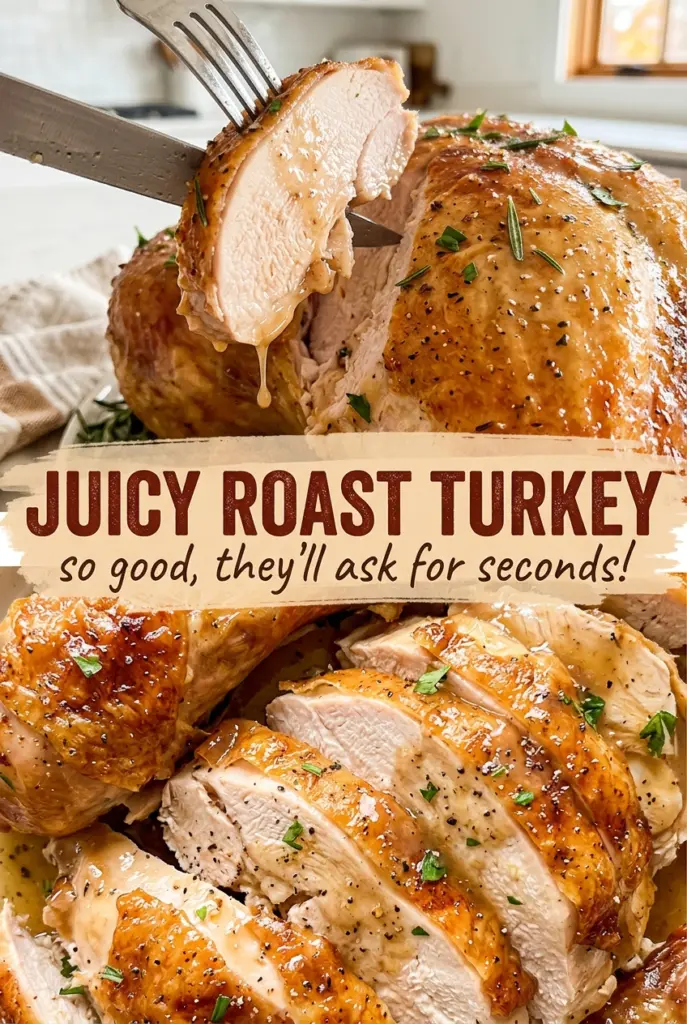
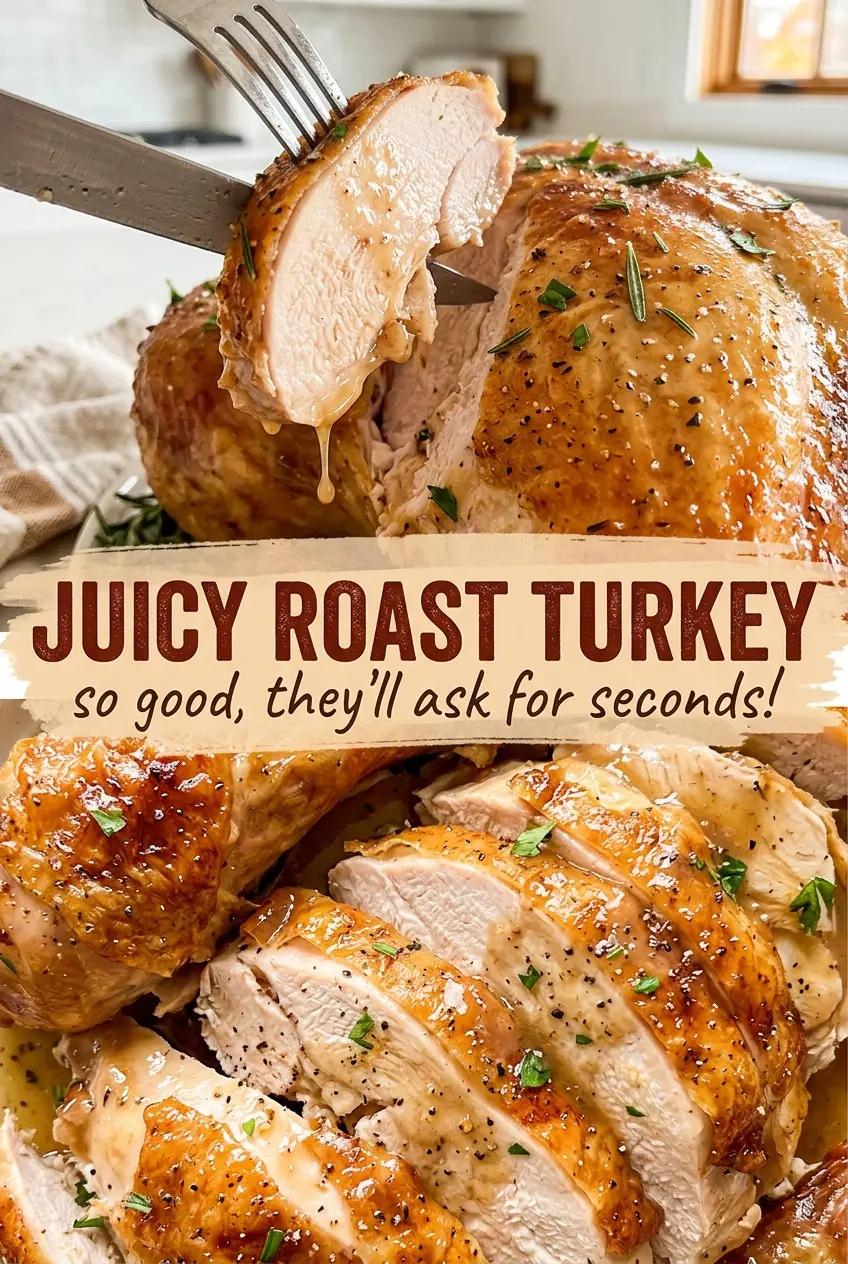
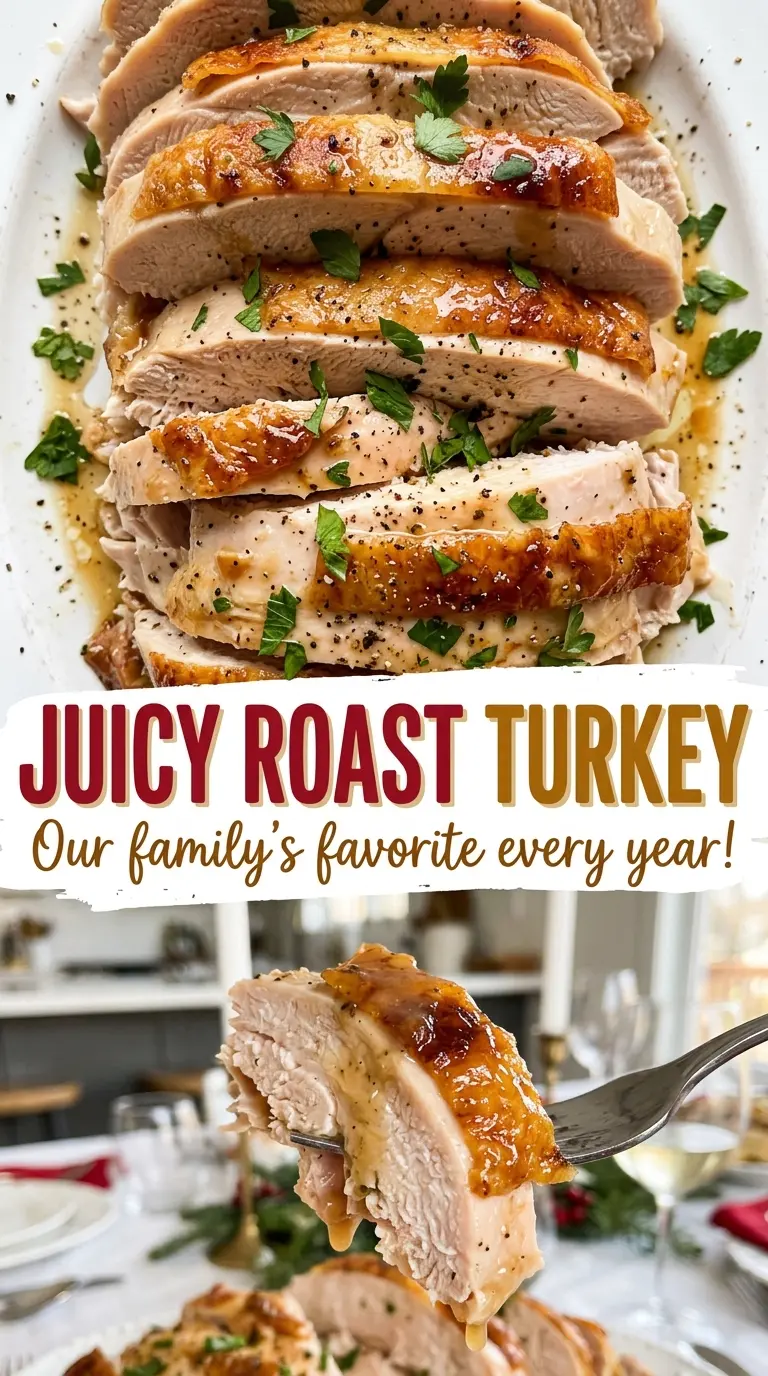
A roast turkey can look golden on the outside and still turn out dry at the table. The difference isn’t a complicated trick: it’s giving the salt time to work before the bird goes into the oven. For this Juicy Roast Turkey, I salt the whole bird ahead, then tuck softened herb butter under the skin where it can flavor the breast and thighs as they roast.
The method is straightforward, but a few details matter. An uncovered rest in the refrigerator dries the skin’s surface, and a thermometer—not the clock alone—tells you when the thickest parts are ready. I also leave the turkey alone for a full 30 minutes after roasting; that gives the meat time to settle before carving. The result is a beautifully browned bird with fragrant herbs and tender slices.
Kitchen Note
Start with a completely thawed turkey, including the area inside the cavity. The 3 to 3 3/4 hour roasting window assumes the bird is thawed before it goes into the oven.
Save this Juicy Roast Turkey for a golden, herb-buttered centerpiece with a make-ahead salt rest.
Why the Uncovered Salt Rest Matters More Than a Thick Butter Layer
Butter adds richness and carries the thyme and rosemary, but it can’t season a whole turkey deeply on its own. Salting ahead gives the seasoning time to reach beyond the skin. The salt first draws a little moisture to the surface; as it dissolves, that salty moisture moves back into the meat during the long, uncovered refrigerator rest.
Leaving the turkey uncovered also helps the outside dry. A damp surface takes longer to brown, so this rest sets up better color before the herb butter goes on. Salt the cavity as well as the outside so the seasoning isn’t concentrated only on the skin.
- Set the turkey breast-side up on its rack before refrigerating it.
- Leave it uncovered for 12 to 24 hours; don’t wrap it during this rest.
- Apply the butter after the salt rest, rather than trying to use butter as the seasoning step.
This advance step is mostly hands-off, and it gives the outside a head start on browning without asking the oven to do all the work.
Why Unsalted Butter and Fresh Herbs Matter on This Turkey
- Whole turkey — The 12- to 14-pound size suits the 16×13-inch roasting pan and the roasting window here. Choose a fully thawed bird so it’s ready for the salt rest and cooks evenly.
- Kosher salt — Its coarse crystals are easy to spread over the broad skin and into the cavity. Keep the salt distributed evenly rather than leaving heavy patches in one spot.
- Unsalted butter — Butter carries the chopped herbs and adds richness beneath the skin. Softened butter blends smoothly and spreads without tearing the skin; unsalted butter also keeps the salt level controlled.
- Fresh thyme and rosemary — Chopped fresh herbs bring a fragrant, savory character to the butter. Their flavor is clearest when they’re freshly chopped and mixed in just before you rub the butter over the bird.
- Onion and lemon — Quartered and placed in the cavity, they perfume the turkey as it roasts. They’re aromatics, not stuffing, so leave space around them rather than packing the cavity tightly.
- Water — The water goes into the roasting pan, not over the turkey. It sits beneath the rack while the bird roasts.
Building Flavor Under the Skin Before the Turkey Goes Into the Oven
Salt the Bird and Let the Surface Dry
Remove the giblets and neck, then pat the turkey dry. Set it breast-side up on a rack in a 16×13-inch roasting pan and sprinkle the kosher salt evenly over the skin and inside the cavity. Refrigerate it uncovered for 12 to 24 hours; keep the salt spread across the bird rather than rubbing it into a few concentrated areas.
Mix and Spread the Herb Butter
Heat the oven to 325°F and stir the softened butter with the black pepper, thyme, and rosemary. Rub half of the mixture under the skin over the breast and thighs, working gently so the skin stays intact. Spread the remaining butter over the outside. If the butter is melted, it runs off more easily; softened butter is easier to place where you want it.
Set Up the Cavity and Roasting Pan
Put the quartered onion and lemon in the cavity. Tuck the wing tips under the turkey, then tie the legs together with kitchen twine to hold the bird in a compact shape. Pour the water into the roasting pan around the rack, not over the buttered skin.
Roast Until Both Thick Areas Are Ready
Roast for 3 to 3 3/4 hours. If the turkey browns too quickly, tent it loosely with foil; a loose tent slows the color without pressing against the skin. Check the thickest part of the breast and the inner thigh with a thermometer, keeping the probe away from bone. The turkey is ready when both readings reach 165°F.
Rest Before You Carve
Transfer the turkey to a cutting board and tent it loosely with foil. Let it rest for 30 minutes before carving. Set up your carving space during this pause, and use a sharp knife so the rested meat comes away in clean slices.
Small Changes That Keep the Roast Turkey’s Method Intact
Make the Butter Thyme-Forward
Leave out the rosemary and keep the thyme in the softened butter. The result is a gentler, more delicate herbal aroma, without changing how the butter is spread or how the turkey roasts.
Let Rosemary Lead
Use the rosemary in the herb butter and leave out the thyme. Rosemary has a more pronounced, woodsy aroma, so the finished turkey tastes bolder and less softly herbal.
Make It Dairy-Free
For a dairy-free version, leave out the butter and the herbs mixed into it; keep the salt, onion, lemon, and water. The turkey will still roast, though the skin won’t have the same rich herb coating or brown in quite the same way.
Storage and Reheating
- Refrigerator: Refrigerate leftover turkey within 2 hours and use it within 3 to 4 days. The skin softens after chilling, while the meat stays easy to slice.
- Freezer: Freeze carved turkey in airtight freezer-safe containers or bags for up to 6 months for best quality. Thaw it in the refrigerator before reheating.
- Reheating: Put slices in a covered baking dish with a spoonful of water and warm in a 325°F oven until steaming hot throughout. Keep the dish covered so the edges don’t dry out before the center warms.
Questions That Come Up While Roasting a Whole Turkey
Juicy Roast Turkey
Ingredients
Equipment
Method
- Remove the giblets and neck from the turkey.
- Pat the turkey dry and place it breast-side up on a rack in a 16x13-inch roasting pan.
- Sprinkle the kosher salt evenly over the turkey, including inside the cavity.
- Refrigerate the turkey uncovered for 12 to 24 hours.
- Heat the oven to 325°F.
- Stir together the softened butter, black pepper, thyme, and rosemary.
- Rub half the herb butter under the skin over the breast and thighs.
- Rub the rest of the herb butter over the outside of the turkey.
- Put the onion and lemon in the cavity, tuck the wing tips under the bird, and tie the legs together with kitchen twine.
- Pour the water into the roasting pan.
- Roast for 3 to 3 3/4 hours, until a thermometer in the thickest part of the breast and inner thigh reads 165°F without touching bone.
- Tent the turkey loosely with foil if it browns too quickly.
- Transfer the turkey to a cutting board and tent it loosely with foil.
- Let it rest for 30 minutes before carving.